

A rare weather event recently suspended operations of the Atacama Large Millimeter/submillimeter Array (ALMA), one of the most powerful instruments on Earth for radio-wave astronomical observations. A snowstorm hit the Atacama Desert.
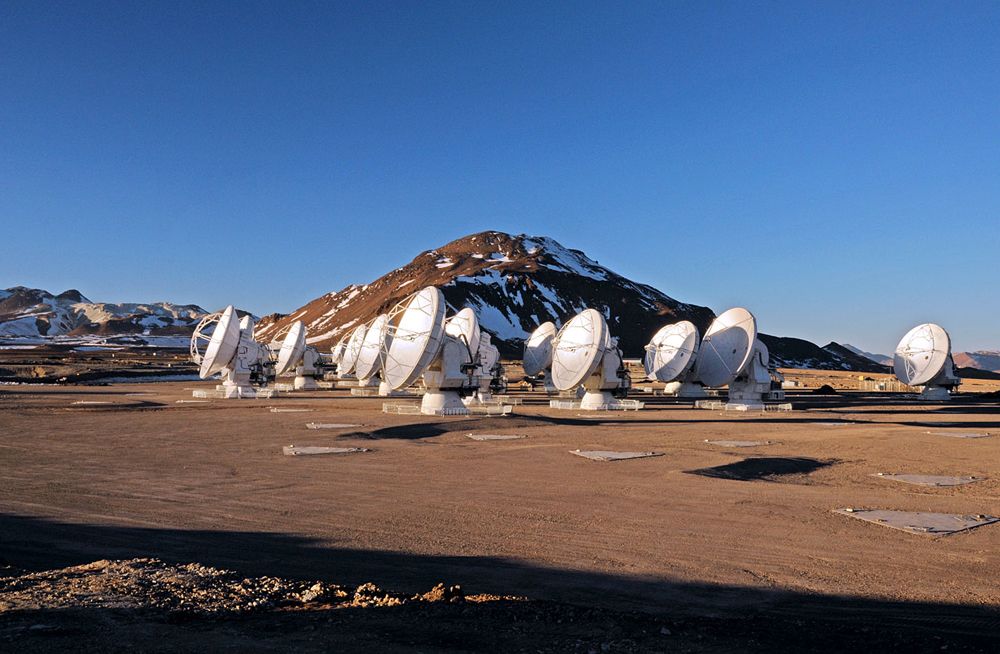
Snowstorm in the desert
On Friday, July 4, a snowstorm hit the Atacama Desert in South America. This event is quite rare, but it would not have attracted much attention if it had not caused the ALMA radio telescope array to stop working.
The latter is one of the most powerful instruments on Earth for studying the sky in the radio range. Research in which scientists discover something important with its help appears every week. It consists of 66 separate antennas that work as a single unit.
In general, the reason why ALMA is located in Atacama is precisely because of its climate. It snows there a few times a year, and the sky is super clear because it’s about 5,104 meters high in the Antofagasta region of Chile — where it usually snows three times a year.
Weather anomaly?
In total, snow can fall twice a year in the Andes: in February, when moist air masses heated by the scorching Amazonian summer sun rise there from the east, and in June-August from the west, from the Pacific Ocean. At this time, winter reigns in the Southern Hemisphere.
Therefore, the snowfall actually occurred precisely when it was supposed to happen. Another thing was that it reached such a scale that it was observed not only near the antennas but also in the base camp, located at an altitude of 3,000 meters.
This week’s snowfall was caused by unusual atmospheric instability affecting northern Chile. The Chilean Meteorological Directorate announced a snow and wind warning due to the passage of a “cold core” through the region, meteorologist Elio Brufort said. “We issued a wind alert for the Antofagasta region and areas further north, with gusts reaching 80 to 100 km/h [50-62 mph],” Brufort told the local press.
This phenomenon was accompanied by heavy rains further north, which led to flooding and damage to several buildings. Schools were ordered to close, and there were reports of power outages and landslides. There are no reports of casualties at this time. Events of this magnitude have not been seen in nearly a decade.
According to www.space.com

