

For more than 60 years, humanity has been peering into the endless depths of space, trying to catch even a hint of a radio transmission from another civilization. We have built giant antennas and supercomputers, but the Universe continues to maintain its “great silence.” New research by scientists at the SETI (Search for Extraterrestrial Intelligence) Institute sheds light on this mystery: perhaps we cannot hear aliens not because they do not exist, but because “space weather” literally distorts their messages, turning a clear signal into indistinguishable noise.
Problem of the perfect signal
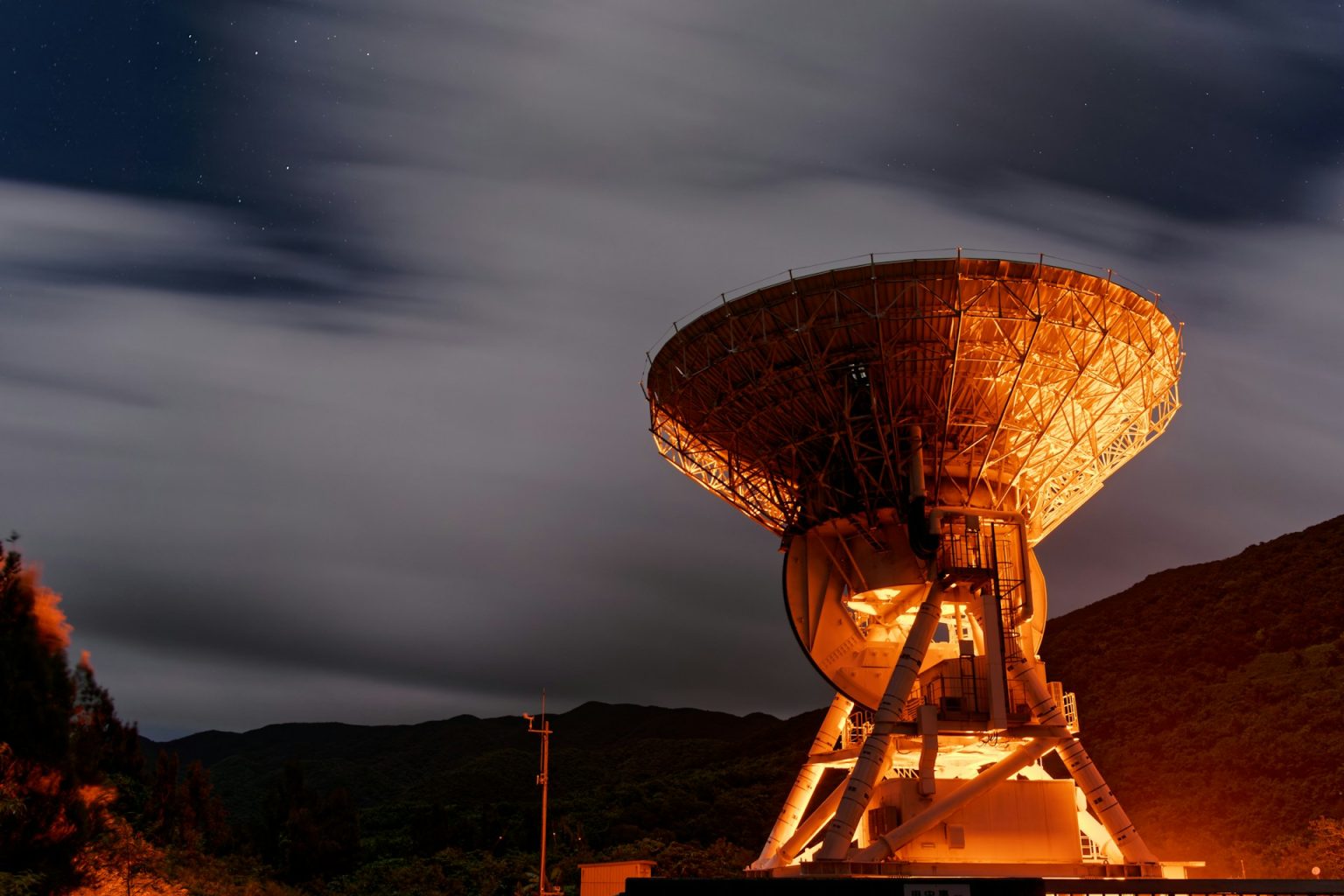
Traditionally, the search for extraterrestrial intelligence has been based on the assumption that an advanced civilization would use extremely narrowband signals for communication. Why? Because it is energy efficient. A narrow signal is easy to distinguish from natural radio noise, which is usually “smeared” across the entire spectrum. That is why SETI algorithms have been tuned for decades to search for thin, clear lines in the radio spectrum.
However, Vishal Gajjar, an astronomer at the SETI Institute and lead author of the study published in the Astrophysical Journal, notes that we may have fallen victim to our own perfectionism. It turns out that the path of a radio wave from a distant star to Earth is not a walk in the park, but a real obstacle course.
Spectral expansion: when space “humms”
Every star constantly emits streams of charged particles into space — stellar wind. It is superheated plasma whose density is constantly changing. When an artificial radio signal passes through such a medium (especially near the sending star or our Sun), it undergoes spectral broadening.
Imagine shining a narrow laser beam through thick fog. The result will not be a point, but a blurred bright spot. The same thing happens with radio waves in plasma. Powerful coronal mass ejections or simply dense plasma flows “blur” the energy of a narrow signal across several neighboring frequencies.
“If the signal is amplified by the environment of its own star, it may simply not pass through our detection thresholds,” explains Gajjar. The SETI computer sees such a blurred signal and marks it as normal natural interference or simply ignores it as too weak.
Lessons from interplanetary probes
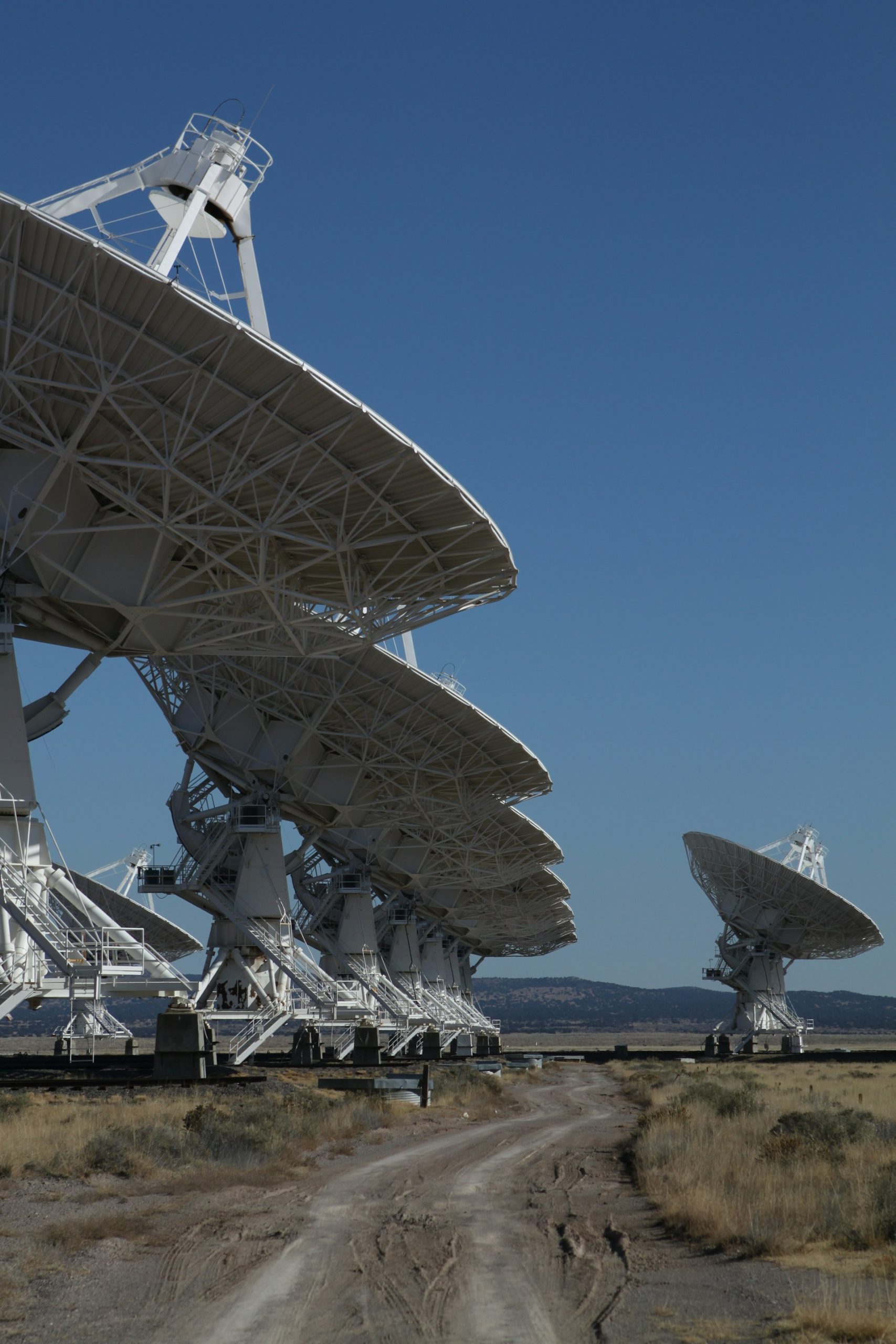
To prove their theory, the SETI team did not search for aliens, but turned to the experience of our own spacecraft. Scientists analyzed data from old NASA probes that flew close to the Sun or operated in conditions of intense solar activity.
The study was based on data from the following missions:
- Mariner IV and Pioneer 6. Data from these spacecraft showed that when transmitting in the S-band range (around 2.3 GHz) at short distances from the Sun, their signals became noticeably “noisier.” This was particularly pronounced during solar storms.
- Helios 1 and 2. These probes operated in orbits around the Sun. They confirmed that the closer the transmitter is to the star, the greater the signal blurring across the frequency spectrum. Even during the solar minimum, the effect of proximity to the star remained significant.
- The Viking program. Martian probes helped determine the limits of this effect. It turned out that spectral expansion drops sharply at a distance of more than 2 million km from the Sun and is almost completely eliminated at a distance of about 7 million km.
These figures have become a kind of “ruler” for scientists, which can now be used to measure potential signals from other star systems.
A new look at red dwarfs
The data obtained allows SETI to create a new model of expectations. Astronomers now understand that a signal from a civilization living near a turbulent star will never be “clean.”
Researchers pay particular attention to red dwarf stars of M class. These are the most common type of stars in the Milky Way, and planets in the habitable zone are often found around them. However, red dwarfs only appear to be calm — they generate super-powerful flares and plasma ejections that are significantly more intense than those of the sun.
Researcher Grace K. Brown notes that the team is now working on algorithms that will be able to recognize “blurred” technosignatures. Instead of looking for the perfect needle in a haystack, we start looking for a specific pattern in the ashes. We should not be looking for what was sent, but for what could actually have reached Earth after thousands of light years of cosmic weather.
Are we alone in the Universe?
This research is a significant step forward in solving the Fermi paradox. Perhaps we have already received hundreds of messages, but our instruments were not tuned to recognize them.
Calibrating algorithms for space weather effects means that the next sky scan may bring results where there was previously silence. We are learning to see the light through the fog, and perhaps soon, amid the blurred radio noise, the first clear “We are here” will emerge.
Earlier, we explained why we still haven’t found aliens.
According to Gizmodo

