

US lunar missions will require wireless communication and internet, something like Wi-Fi. Solstar Space has already signed an agreement with NASA to develop such a system for $150,000 as part of the CLPS program.
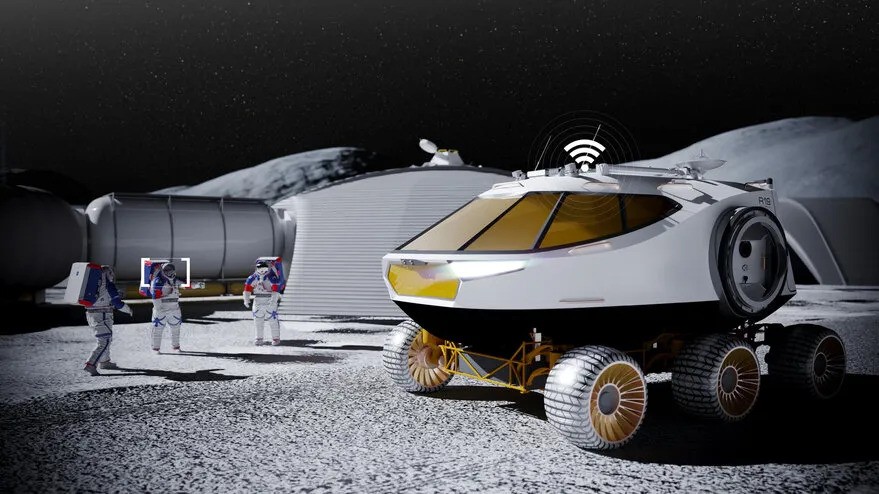
Lunar Wi-Fi
There has been conversation for several years about the need for modern communication systems for astronauts during the Artemis program’s lunar missions. It is clear that in modern conditions this should not be just a radio, but a system that provides wireless transmission of digital packets between rovers, stations, and landing modules. And now NASA has a contractor who is ready to do this work for them.
On September 29, Solstar Space signed an agreement with the US aerospace administration to develop a lunar Wi-Fi project. The amount allocated for this is $150,000, but it should be remembered that this is a preliminary project, based on the results of which a decision will be made on carrying out the main work.
It is expected that Solstar Space will first create a system that can be tested on the International Space Station and then during one of the short-term missions to the Moon. At this stage, companies will have to demonstrate that their equipment actually works.
Full version
The full version of lunar Wi-Fi will be available after NASA experts submit a complete list of requirements for all elements of the Artemis project. It is expected to provide for the creation of a system that will enable Wi-Fi communication between vehicles, landing modules, and living facilities.
It is expected that the main focus will be on the long-term stability of systems against cosmic radiation. They also have to withstand repeated and sudden transitions from extreme cold to extreme heat and back again.
Space Wi-Fi is being developed as part of the CLPS program. It provides for the involvement of private companies in solving certain technical tasks under the Artemis program. It should be noted that previous attempts have not always been successful. However, it is quite possible that this time everything will work out.
According to spacenews.com

