

NASA has completed the final inspection of the primary mirror of the Nancy Grace Roman Space Telescope. The spacecraft will soon launch into space and take up a position 1.5 million kilometers from Earth, from where researchers will observe the universe in the infrared spectrum.
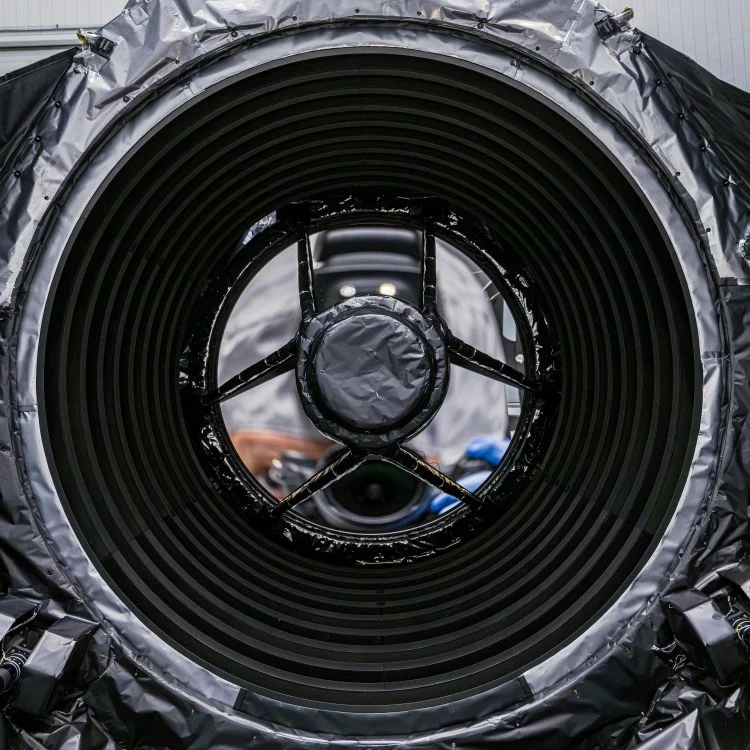
Main mirror
The mirror has a diameter of 2.4 meters and is coated with a layer of silver just 400 nanometers thick. That is hundreds of times thinner than a human hair. It is this coating that ensures the effective reflection of near-infrared radiation, which is the primary tool for observations.
Final inspection of the Nancy Grace Roman Space Telescope’s primary mirror before shipment to the launch site. Source: NASA Goddard
Using this space telescope, researchers plan to study dark matter and dark energy, discover exoplanets, and analyze the formation of galaxies and stellar populations. To search for planets, researchers will use direct imaging as well as gravitational microlensing, a phenomenon in which a massive object between the observer and the light source bends and amplifies the light rays, making it possible to detect planets that would otherwise remain hidden from view.
Path to launch
Once the inspection is complete, NASA will prepare to transport the spacecraft to the Kennedy Space Center. The launch is scheduled for September 2026.
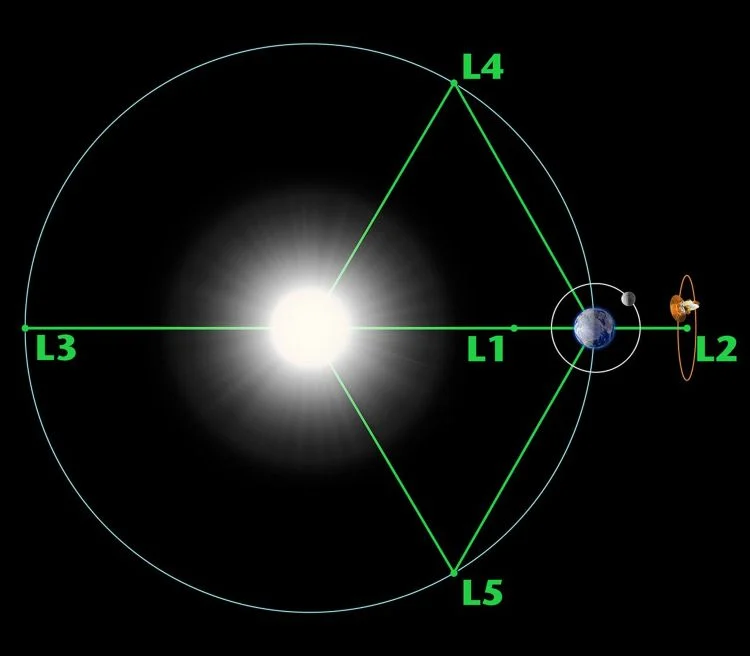
The telescope will take up a position at the L2 Lagrange point, a gravitationally stable region in space formed by the interaction of two massive bodies—in this case, the Earth and the Sun. At this point, the spacecraft requires minimal fuel to maintain its orbit. That is exactly where the James Webb Space Telescope is currently operating.
Where does the name come from?
The telescope was named after NASA’s chief astronomer, Nancy Grace Roman. Development began in 2014, and the project was originally called the Wide-Field Infrared Survey Telescope (WFIRST).
The total cost of the mission is approximately $4 billion, which accounts for more than half of the cost of the James Webb Space Telescope.
According to phys.org

