
Astronomers at the European Southern Observatory (ESO) have captured the formation of a new planet. It is carving a complex spiral pattern in the gas and dust disk surrounding it.
Planet sculptor
To date, astronomers have discovered numerous newborn stars surrounded by protoplanetary disks. They often feature intricate patterns such as rings, gaps, or spirals. Scientists have long predicted that these structures are created by young planets that collect material as they orbit their parent star. But so far, they have not been able to catch one of these “sculptors” in action.
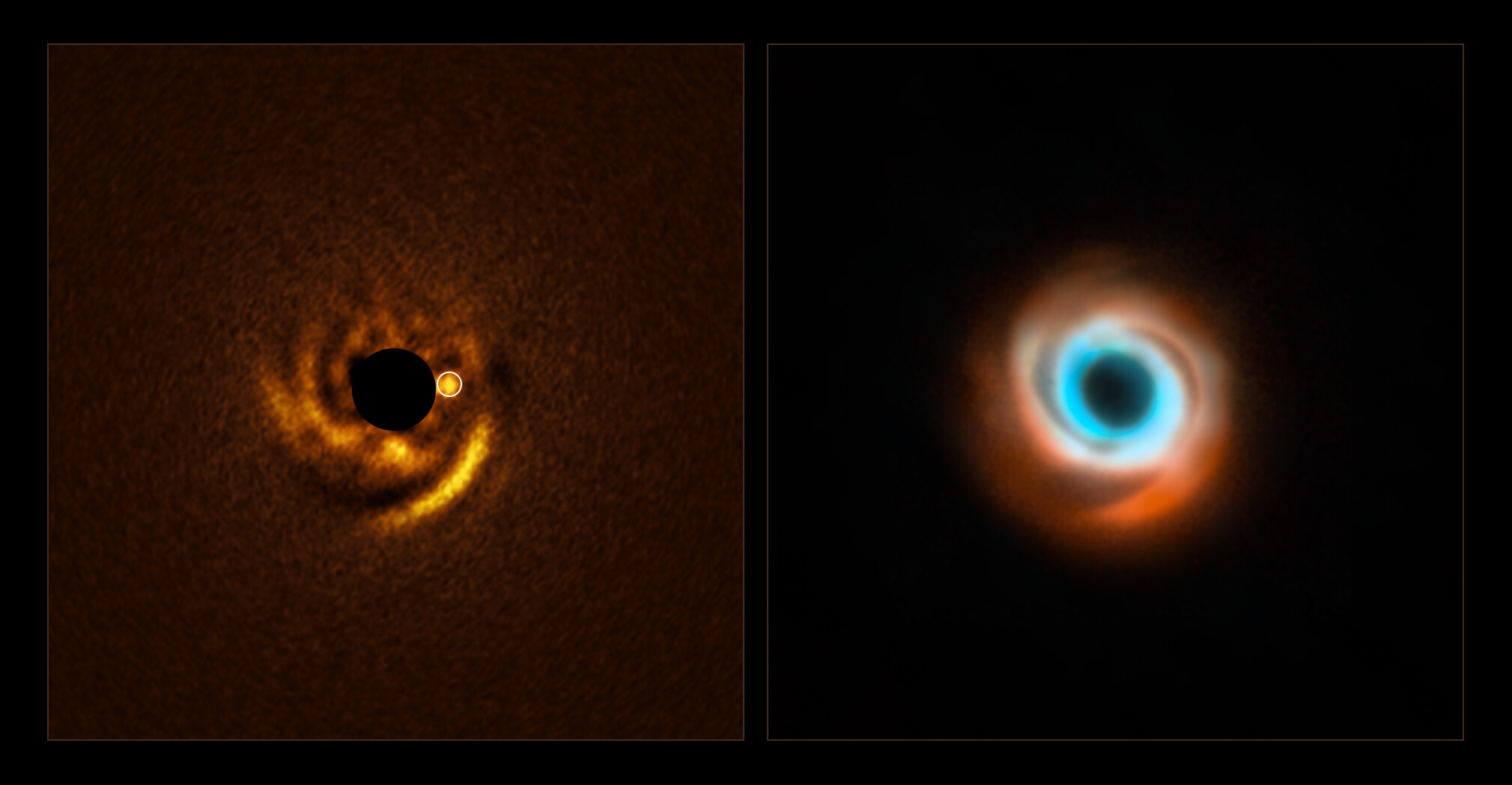
The situation has changed thanks to the young star HD 135344B, which is located 440 light-years from the Sun. During previous observations, astronomers managed to detect spiral structures in its protoplanetary disk — but they had no evidence that they were created by a planet forming within it.
To obtain them, another team of researchers used a new instrument called ERIS, installed on ESA’s Very Large Telescope. It managed to detect a signal coming from the base of one of the spiral arms of the disk. According to theory, that is precisely where the planet responsible for forming such a pattern should be located.
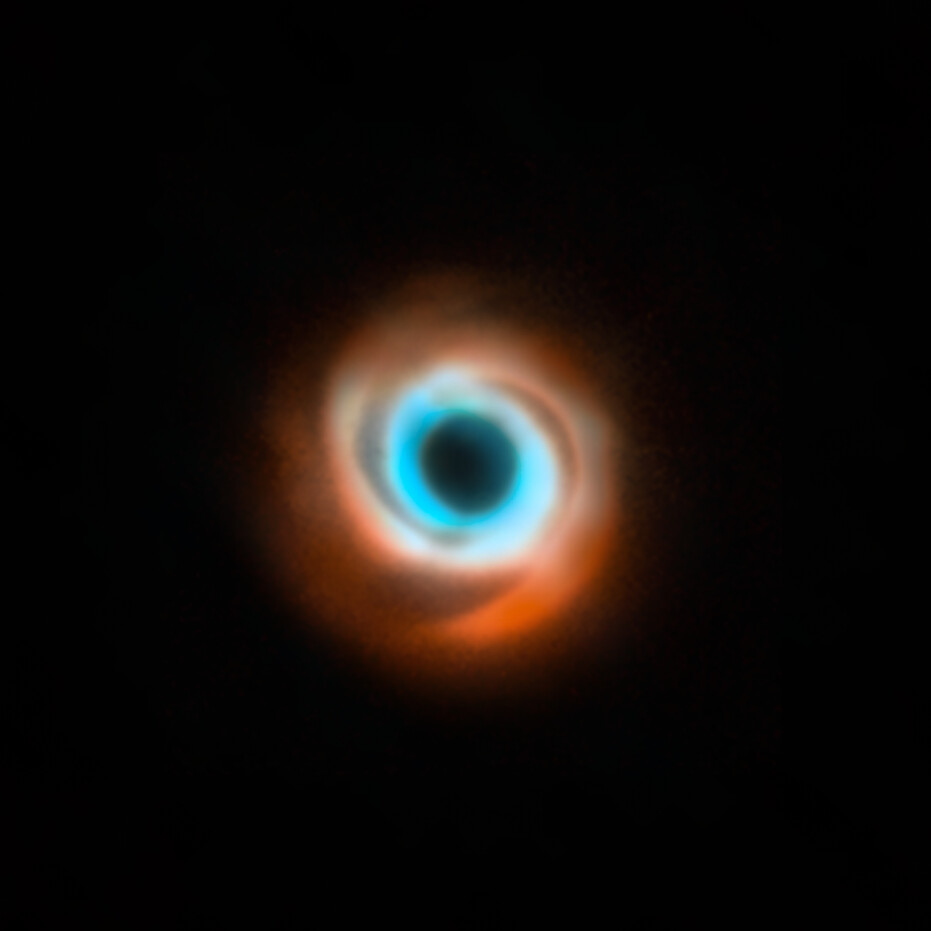
According to estimates, the size of the nascent planet is twice that of Jupiter, and its distance from its host star is equal to the distance from Neptune to the Sun. This is the first time astronomers have discovered a potential planet located inside the spiral structure of a protoplanetary disk.
Hidden companion of a star
Another group of astronomers also recently used the ERIS instrument to study another star, V960 Mon. This star is still in the very early stages of its existence. Observations, which also involved the Atacama Large Millimeter/submillimeter Array (ALMA), showed that the material around it has a complex spiral shape. They also found that the substance fragments in a process known as “gravitational instability,” when large clumps of matter around a star contract and collapse. Each of them may form a planet or a larger object in the future.
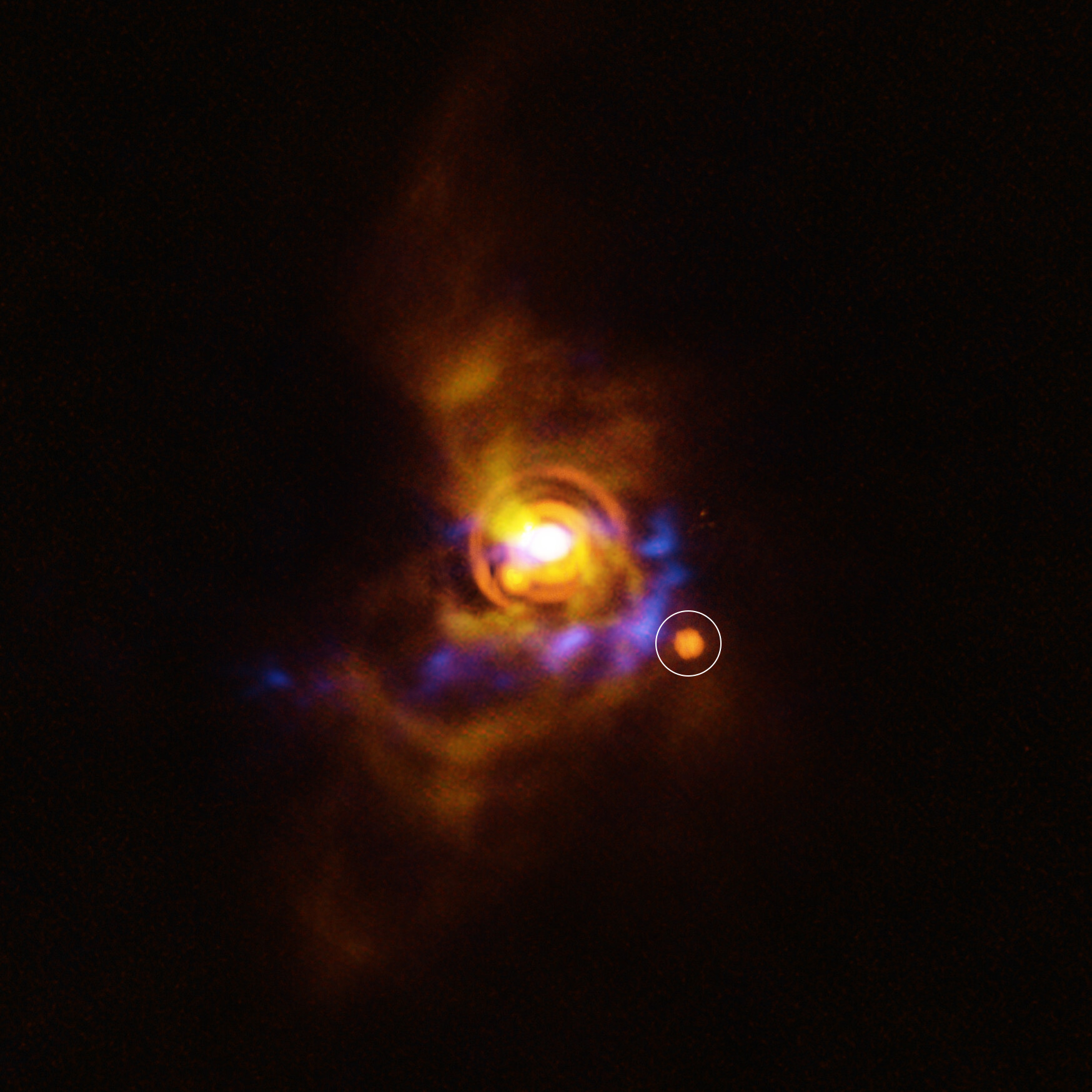
During further observations, the team discovered a potential companion to V960 Mon. Its exact nature is still unknown: it is either a large gas giant or a brown dwarf. If the discovery is confirmed, it will be the first time such an object, formed as a result of gravitational instability, has been detected.
According to ESO

