

Unique experiments to study the effects of space on the human body are continuing aboard the International Space Station. The analysis of astronauts’ blood in microgravity conditions plays a key role in these studies.
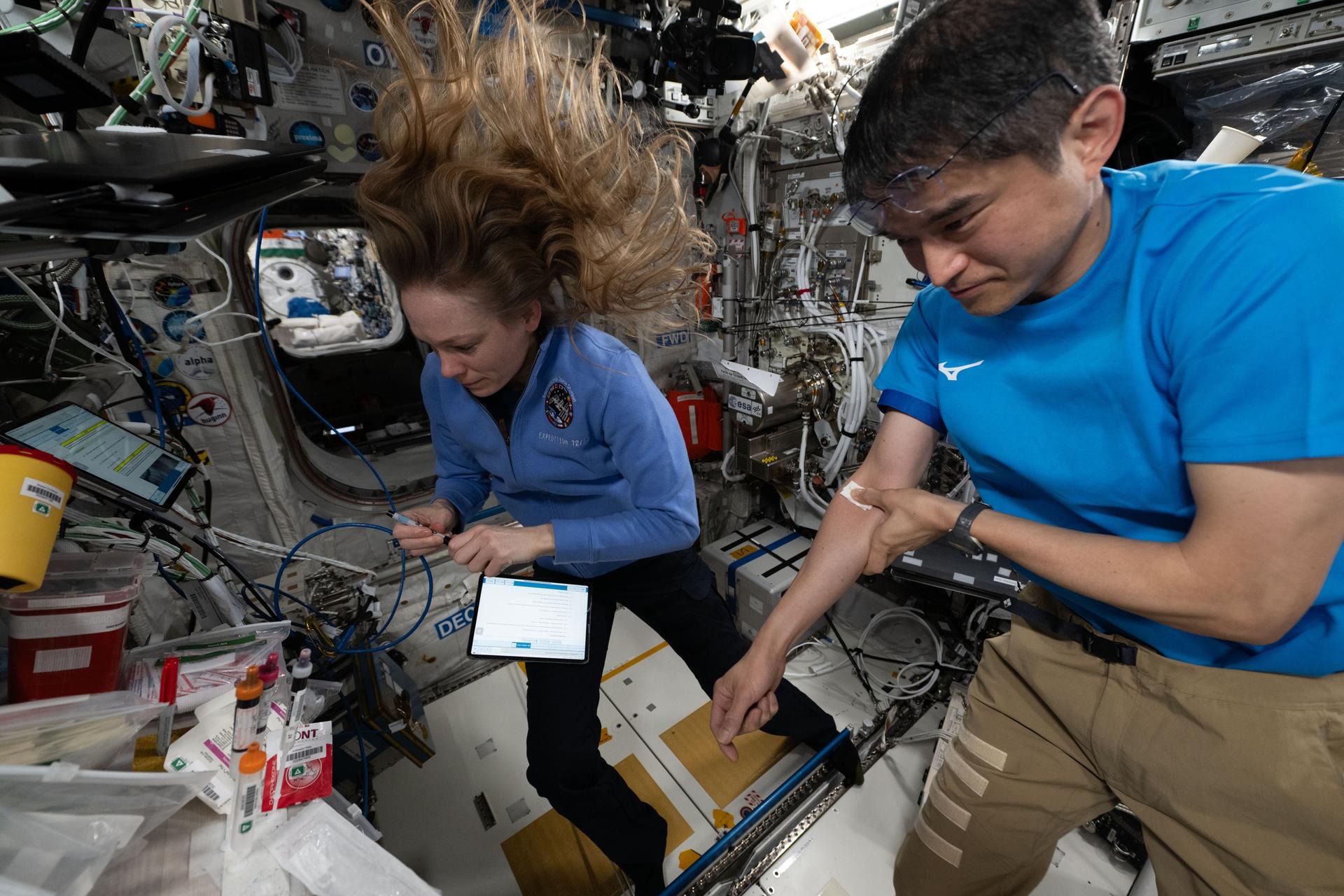
Performing even simple medical procedures in space becomes a challenge. There is virtually no gravity on the ISS, so objects, including medical equipment for blood sampling, tend to “fly away.” In order to successfully collect a sample, astronauts have to carefully record everything they need. In a photo taken at an altitude of about 400 km above Earth, station commander Takuya Onishi (Japan, JAXA) and flight engineer Nichole Ayers (NASA) demonstrate this complex procedure.
Space stress
This blood sampling is part of a large-scale project called Immunity Assay. Scientists are trying to figure out how the harsh space environment affects human cells. Microgravity, increased radiation, limited space, and disruption of normal sleep cycles create a powerful combination of stress factors. It can suppress the immune system, making space explorers more vulnerable to disease during and after long missions.
Key to health in space
By analyzing blood samples, scientists look for specific stress markers, measure immune cell levels, and other biological indicators. This provides invaluable data on how the body adapts to extreme conditions. The information obtained allows doctors to adjust treatment and prevention protocols for ISS crew members in real time, ensuring their well-being.
Moreover, these studies have enormous potential for medicine on Earth, helping to better understand the mechanisms of stress and immune disorders under normal conditions.
Earlier, we reported on the impact of space on human health.
According to NASA

