

NASA has published a couple of striking images taken by the James Webb Space Telescope (JWST). They show the little-known PMR 1 nebula, also known as the Cranium Nebula.
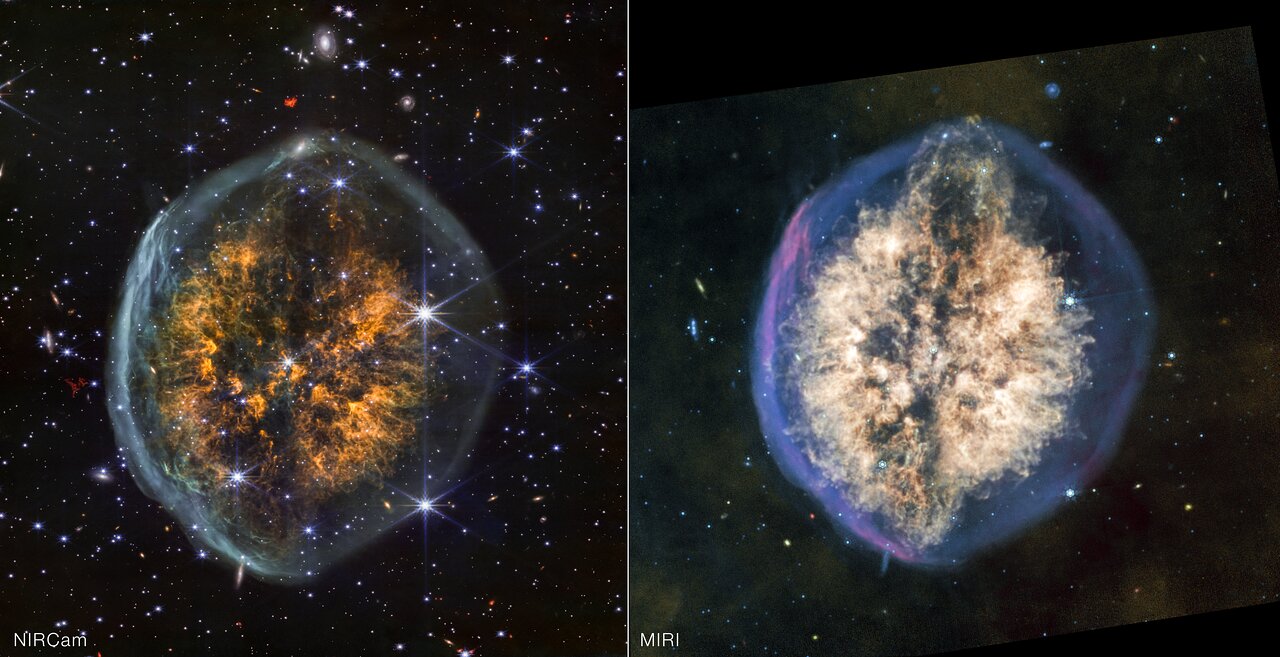
PMR 1 is located about 5,000 light-years from Earth. It got its distinctive nickname thanks to its appearance: the nebula resembles a transparent cosmic skull, inside which the “brain” is visible.
Thanks to its powerful instruments and ability to capture infrared waves, which, unlike visible light, pass through dust and gas much better, JWST is the ideal candidate for performing “tomography” on the Cranium Nebula. During the observations, it was possible to observe a number of previously unknown details of its structure.
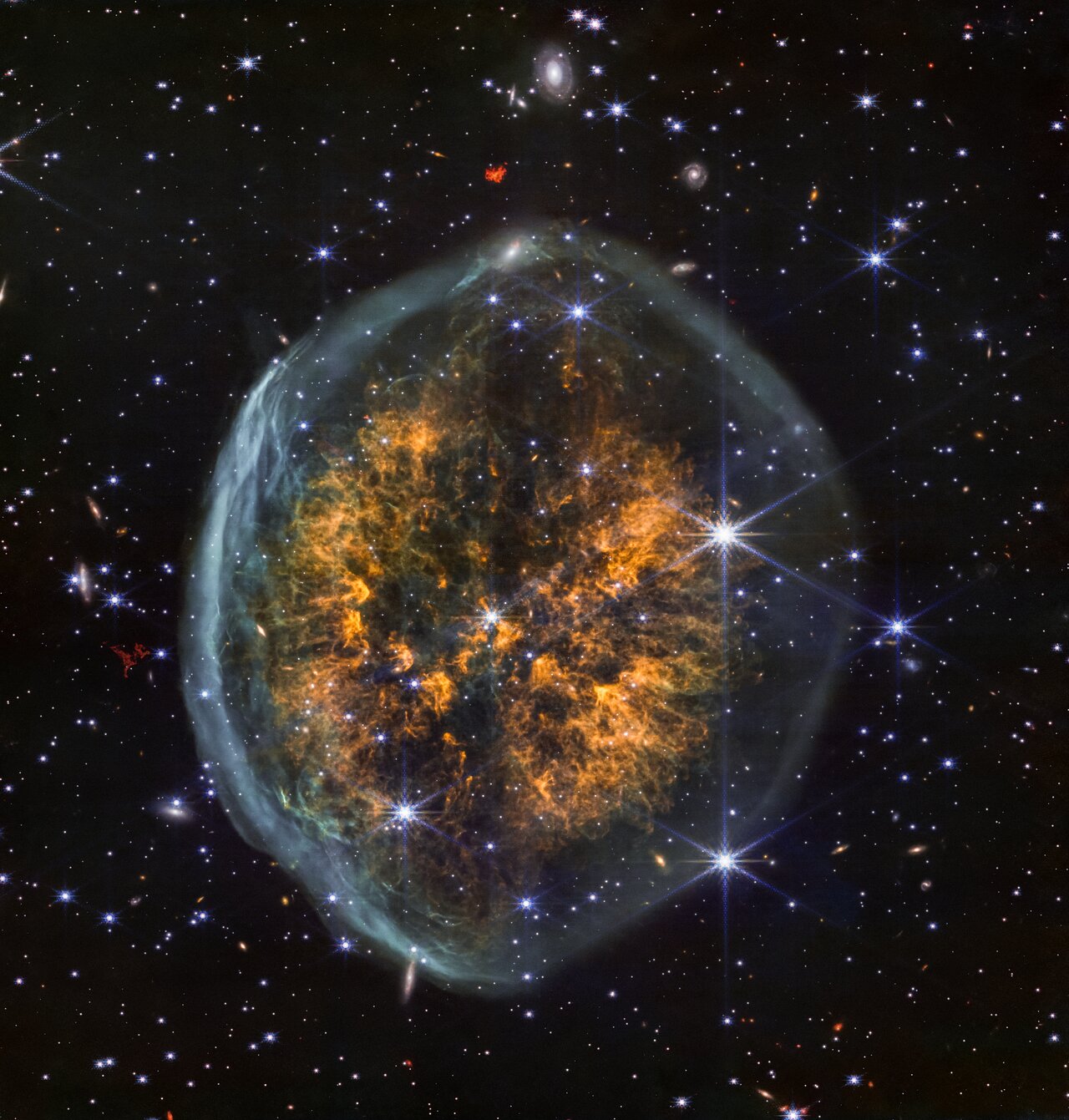
The Cranium Nebula was created by a dying star that began to shed its material. Its regions reflect different phases of its evolution. The outer gas envelope, which was ejected first, consists mainly of hydrogen. The inner cloud, with a more complex structure, contains a mixture of different gases.
JWST also managed to photograph a distinctive dark band running vertically through the middle of the nebula, which gives it a brain-like appearance with left and right “hemispheres.” It may be associated with an explosion or ejection of material from the central star, which usually occurs in the form of two jets shooting out in opposite directions. Evidence of this is particularly noticeable in the upper part of the nebula, where it appears as if the internal gas is being ejected outward.
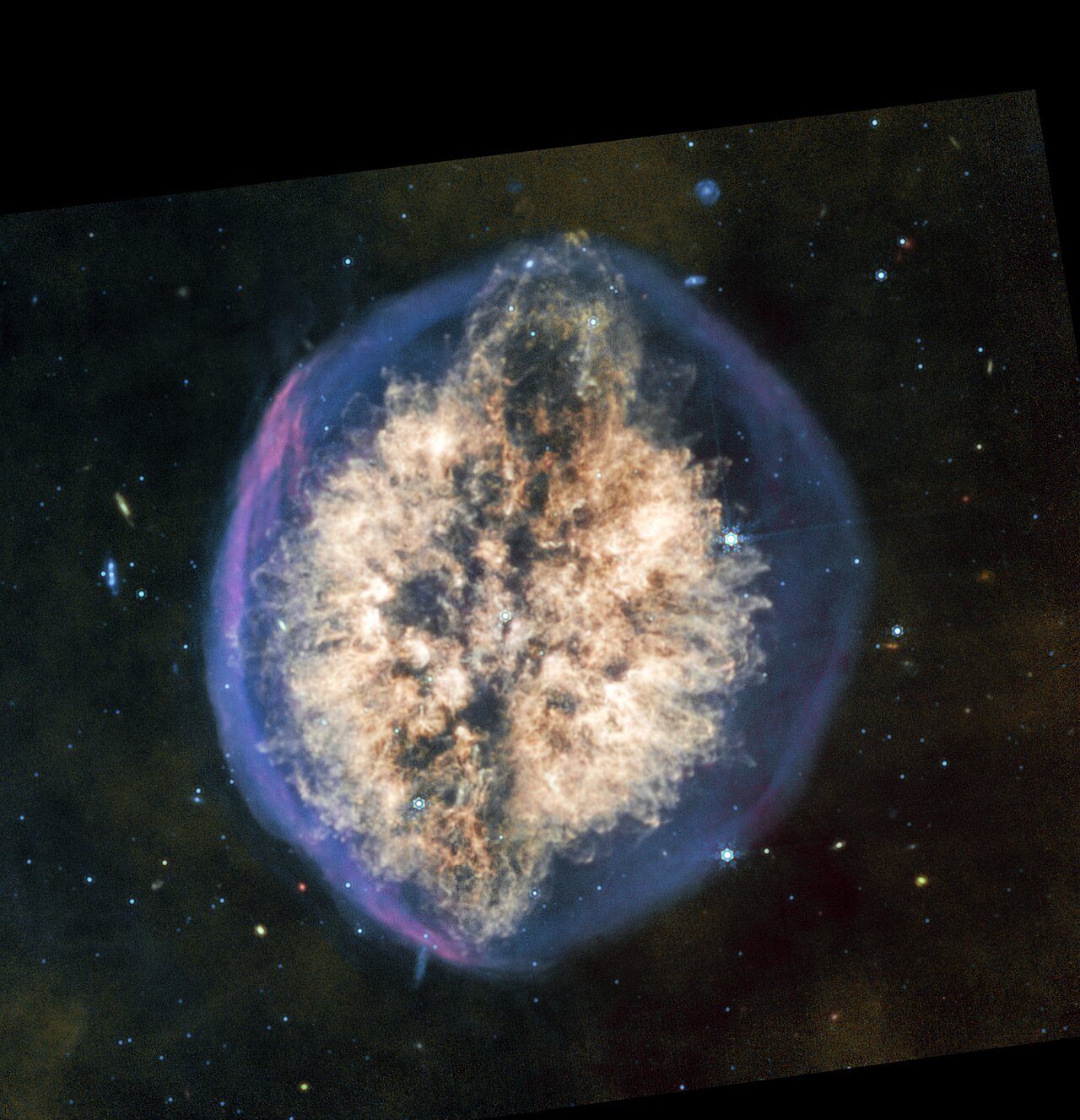
Although there is still much to learn about this nebula, it is clear that the star that gave birth to it has reached the end of its life cycle. JWST captured the moment of its demise. What will ultimately happen will depend on its mass, which has not yet been determined. If it is massive enough, it will explode as a supernova. A less massive star, similar to the Sun, will continue to shed layers until only its core remains in the form of a dense white dwarf, which will cool over the next billion years. The same fate will await our Sun in the future.
According to Esawebb

