

During a mission to the International Space Station, NASA astronaut Don Pettit captured some unique footage. The footage clearly shows a long “train” of Starlink satellites gradually flying past the orbital outpost. This rare shot from space gained widespread publicity, but it also served as a reminder of the serious problem these artificial constellations pose for science.
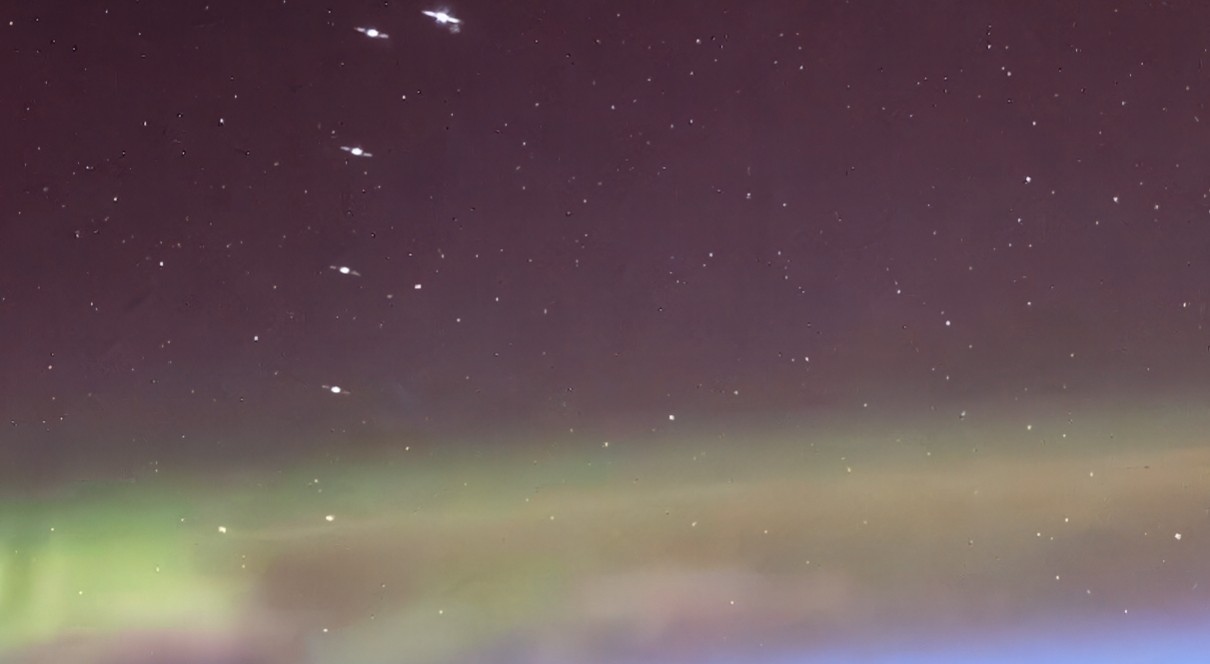
Since 2019, SpaceX has launched more than 8,000 Starlink satellites. Their goal is to provide global broadband Internet access. However, the long-term plan to expand the network to 42,000 vehicles is causing concern in the scientific community.
The main problem is sunlight reflecting off the mirrored surface of satellites. They form bright moving streaks in the night sky. These “sky trains” interfere with ground-based telescopes, preventing astronomers from observing deep space objects. The impact is so serious that even the Hubble Space Telescope, which is in Earth orbit, has begun to suffer from these bright glare. The second problem is radio interference, which hinders the work of radio astronomers.
My best sighting of a Starlink satellite "train" from orbit! pic.twitter.com/WratClL8NJ
— Don Pettit (@astro_Pettit) October 7, 2025
Searching for a solution
SpaceX is attempting to mitigate the impact. The company has installed special visors on the satellites to reduce glare and is suspending signal transmission over major radio astronomy observatories. Countermeasures have had limited effect so far.
Scientists warn that without effective measures, the consequences for astronomy, especially radio astronomy, could be catastrophic. Since not only SpaceX but also other companies, such as Amazon, are planning to deploy their own networks, the issue of light and radio pollution needs to be solved immediately before the situation becomes irreversible.
Earlier, we reported on how scientists called for a halt to Starlink launches.
According to Digital Trends

