

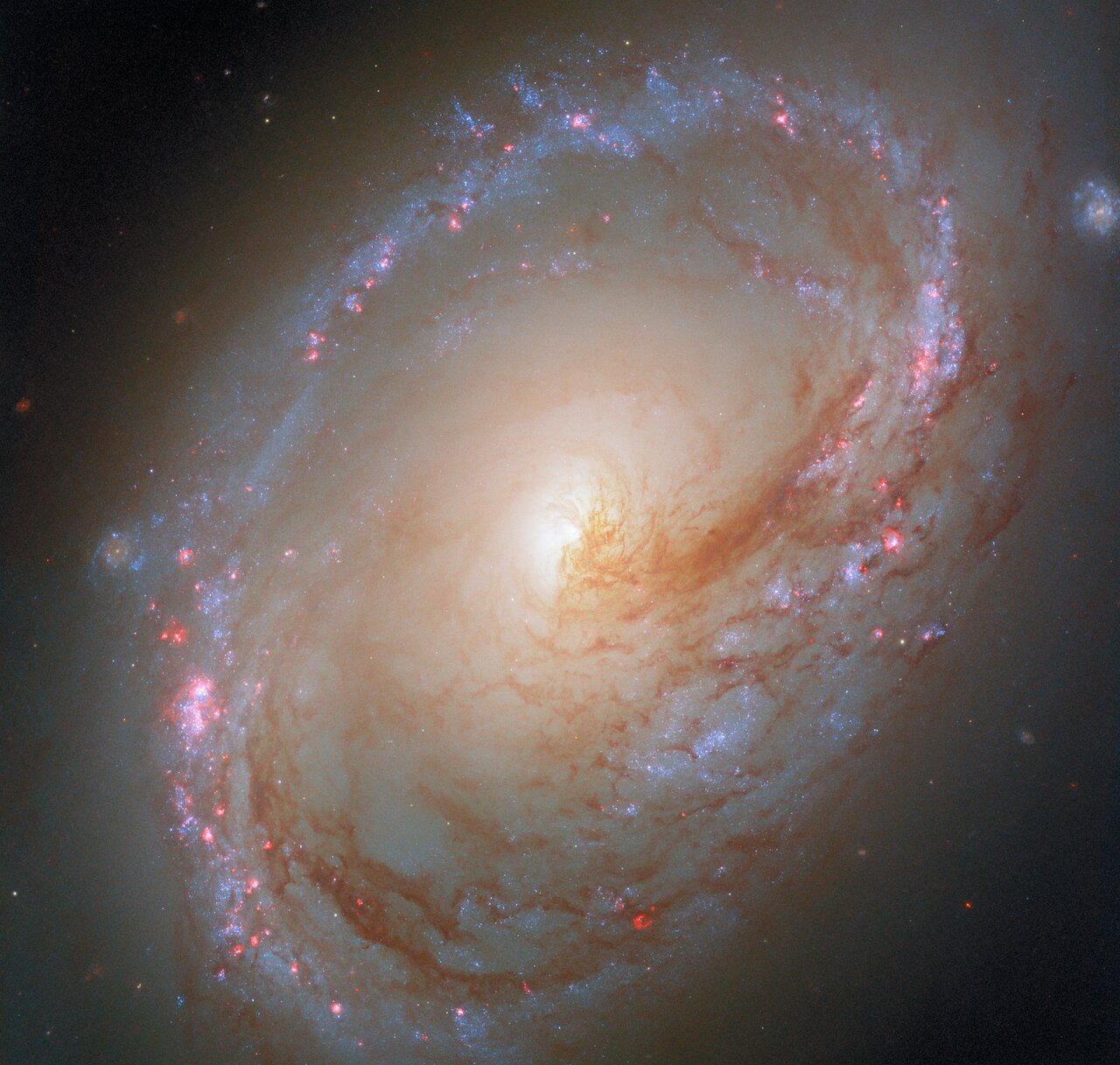
Astronomers working with the Hubble Space Telescope have published a new image. It shows the asymmetrical galaxy M 96.
M 96 is located about 35 million light-years from Earth in the direction of the constellation Leo. It is the brightest galaxy in the group of the same name, which, according to various estimates, contains between 8 and 24 galaxies. This, in turn, is one of the many galactic groups that make up the Virgo Supercluster.
The gravitational pull of neighboring galaxies, manifested in a kind of cosmic “tug-of-war,” probably explains the appearance of M 96. It has an asymmetrical shape: gas and dust are unevenly distributed within it, the structure of the spiral arms is disrupted, and they are shifted away from the center.
The M 96 core shows a low level of activity. Based on variations in the ultraviolet radiation it emits, astronomers believe that it contains a supermassive black hole with a mass ranging from 150,000 to 4.5 million solar masses.
Hubble had previously photographed M 96 twice, in 2015 and 2018. The new version includes data in the ultraviolet and visible ranges and provides insight into star formation in M 96. The pink gas bubbles in the photo surround hot, young, massive stars, illuminating a ring of star formation at the edge of the galaxy. These young stars are still in the gas clouds from which they were born. The image also shows strands of dark red dust swirling around the core and extending into spiral arms.
According to researchers, the data collected during observations of M 96 will be used to better understand how stars are born in giant dusty gas clouds, how dust filters starlight, and how stars affect their surroundings.
According to Esahubble

