

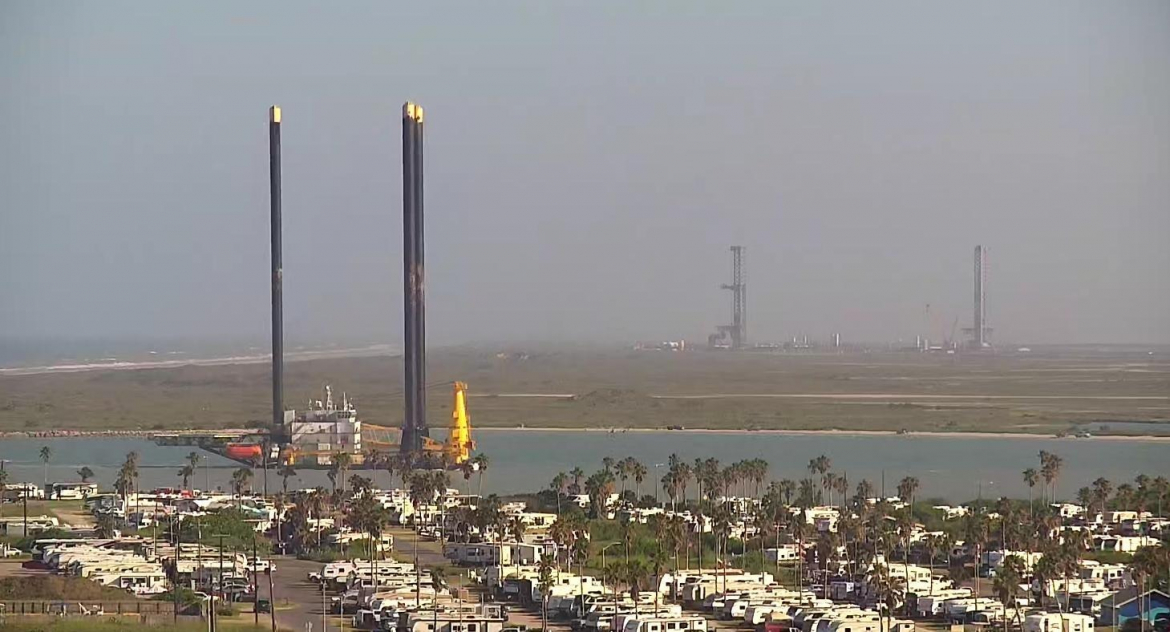
SpaceX successfully lifted fragments of the Super Heavy B13 booster from the bottom of the Gulf of Mexico/Gulf of America. The LB Jill vessel was used for this purpose.
The B13 booster was used in the sixth Starship mission, which took place on November 19, 2024. The flight plan called for its return. However, due to damage to the launch tower during launch, the operation was canceled. Instead, the booster was directed toward the Gulf of Mexico/Gulf of America, where it made a controlled splashdown. After that, B13 drifted near the coast for almost a day until it finally sank.
Eight months later, SpaceX decided to raise the wreckage of the B13 engine compartment from the bottom. For this purpose, LB Jill was used, a ship normally used for offshore oil production, gas well drilling, or construction work. The ship is equipped with telescopic supports that descend to the seabed, lifting the hull above the water and creating a stable working platform.
On July 12, the ship arrived in Brownsville from Louisiana, and the next day it sailed to an area in Mexican territorial waters where the debris from the booster had been carried by the current, and began underwater operations. A few days later, photos appeared on social media showing fragments of the B13 fuel compartment that had been successfully salvaged from the site.
B13 on deck on the spud barge : pic.twitter.com/SFHQADzW00
— SIGNAL : noise (@BocasBrain) July 21, 2025
SpaceX did not disclose the reason why it decided to raise B13. Possible objectives include engineering research, environmental protection, and even the preservation of historical heritage. However, it is worth noting that this is far from the first time the company has salvaged Starship debris from the seabed. Previously, the propulsion compartment of the B11 booster and the transition compartment of the B12 booster were raised for examination.
According to Nasaspaceflight

