

On March 1, spring arrives in Ukraine and throughout the northern hemisphere of the Earth – a time associated with renewal and positive mood. However, this season is not unique to Earth; it also occurs on some other planets and satellites of the Solar System.
When does spring come?
This winter has been difficult, but spring is just around the corner. According to the calendar, it will arrive in Ukraine on March 1. Of course, in reality, things are a little more complicated, and the warmth, melting snow, arrival of birds, and appearance of grass and flowers – in other words, everything we associate with this time of year – will not happen all at once.
However, March is the month when the weather and the biosphere make a turn toward all of this. At least in the northern hemisphere, because in the southern hemisphere, everything is exactly the opposite: autumn is just beginning there.
To understand why this happens, we need to remember why the seasons change on Earth. The reason for this is the orientation of our planet’s axis of rotation relative to its orbital plane. If it were perpendicular to it, there would be no change in the seasons.
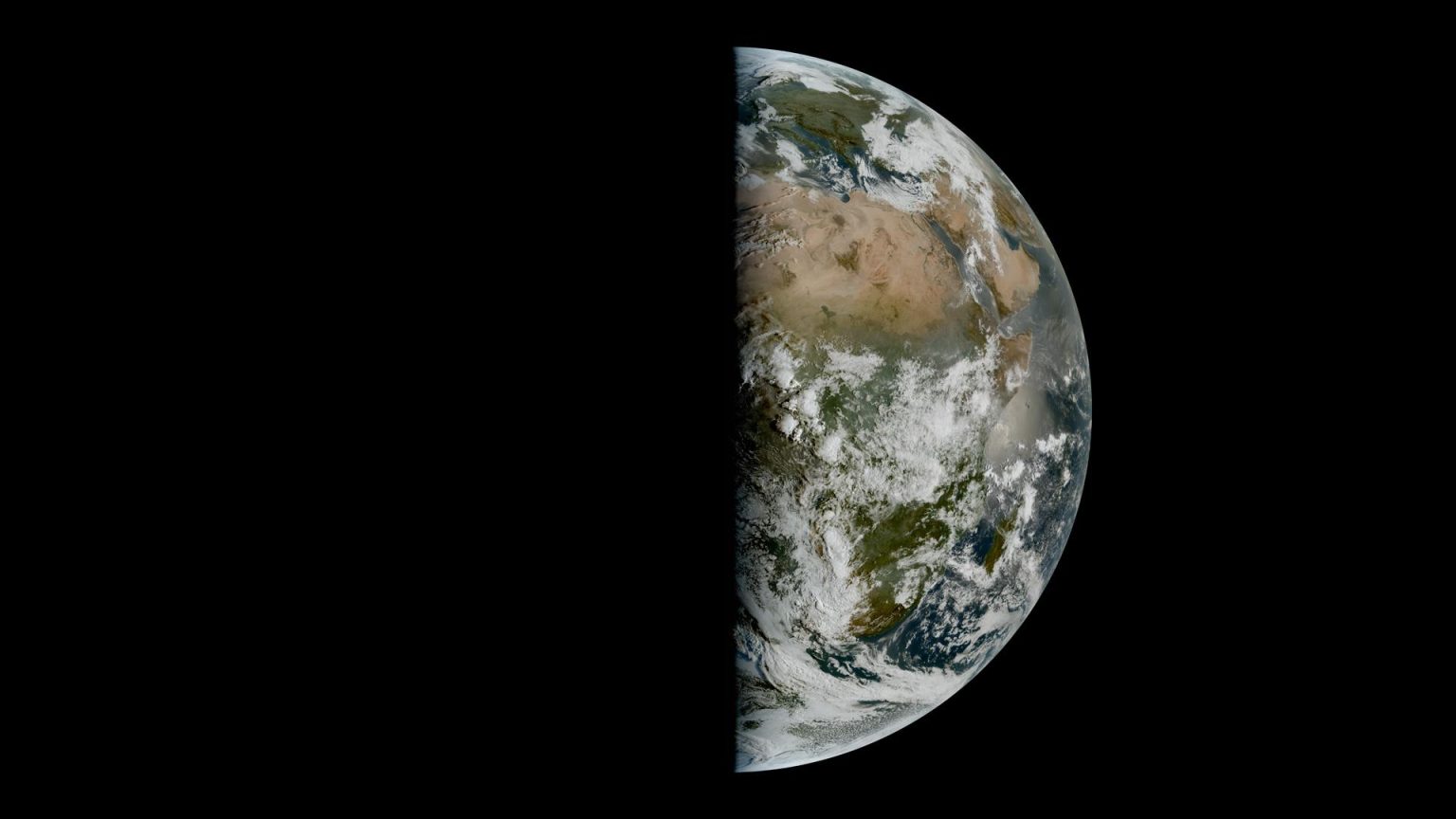
However, in reality, the Earth’s axis is tilted at an angle of 23.5° to the perpendicular, and this position remains unchanged throughout our planet’s rotation around the Sun. As a result, from time to time, one of the poles is turned towards it, and the total amount of light that these territories receive during the day increases. We call this situation summer.
At the same time, the area of the other pole is turned away from the Sun and does not receive enough heat. This is winter. In six months, the poles switch places, and the transitional periods between them, when both hemispheres receive approximately the same amount of energy, are called autumn and spring.
Both hemispheres are most evenly lit when the Sun crosses the celestial equator. These moments are called equinoxes, and the next one is coming up on March 20. For the Northern Hemisphere, it will be spring, and for the Southern Hemisphere, it will be fall.
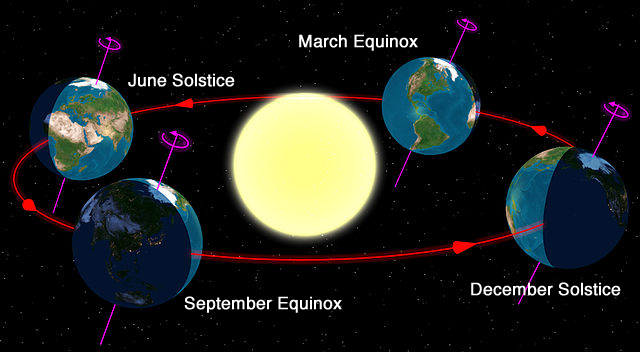
In fact, astronomical spring will begin with the spring equinox, but for now, winter is still here in the Northern Hemisphere, which is quite logical considering that we are moving from the shortest day of the year (the solstice in December) to the equinox. And even though the length of daylight hours is now the same as it was in early September, we may still experience spring blizzards and frosts.
In other words, the average outdoor temperature is not directly linked to the length of the day, but occurs with a delay and fluctuations. This is because soil, ice, water, and even air have different thermal inertia, and the latter two are also in constant motion, acting as heat carriers.
That is why the actual arrival of spring can occur at different times in different locations. But eventually, grass and flowers appear everywhere, even in the Arctic.
Where is there no spring?
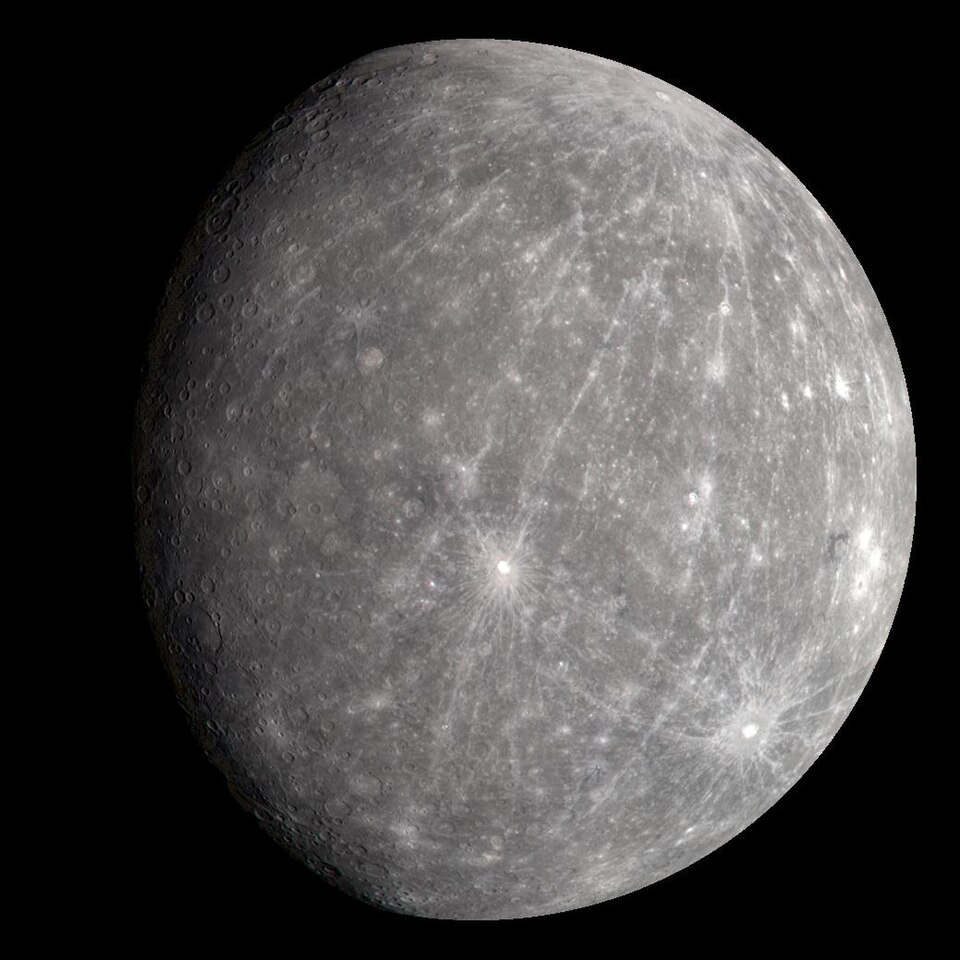
However, there are no grasses or flowers on other celestial bodies. At least, we have not discovered any yet. However, this does not mean that spring does not exist anywhere else but on Earth. Some planets really do not have anything like this. For example, Mercury has virtually no atmosphere to provide inertia. In addition, its axis is almost perpendicular to the plane of its orbit, causing a change in the tilt of its poles relative to our sun.
The opposite problem exists with Venus. It has an extremely dense atmosphere and rotates very slowly. The planet completes one rotation around its own axis in 249 Earth days, and around the Sun in 225 days. In essence, there is no difference between its daily and annual rotation and the latter.
But in reality, there are no serious changes in the weather. This is due to the extremely dense atmosphere and thick layer of clouds. They function almost like an ocean covering the entire planet. Powerful winds blow in the atmosphere, carrying heated gas masses from warm places to colder ones and evening out the temperature on the planet. Therefore, nothing like spring happens here.
Spring on Mars
But spring does exist on Mars. There are no grasses or flowers there, but the situation is generally very similar to Earth’s due to the presence of an atmosphere and the tilt of the axis to the orbital plane. There, too, one pole or the other turns toward the Sun, causing the length of daylight hours and the amount of solar radiation to change. During the transition from the winter solstice to the spring solstice, the air warms up, winds blow, some of the ice evaporates, and some may even melt.
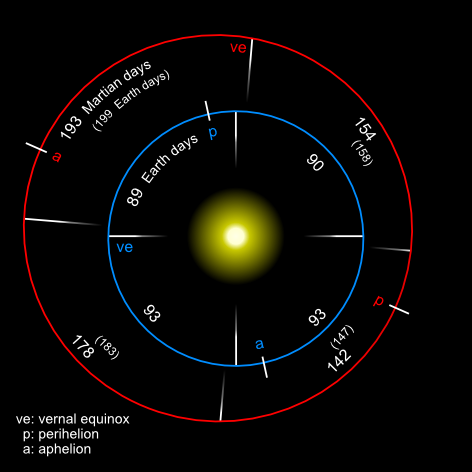
The difference is that a Martian year lasts 686.08 Earth days, and the planet’s orbit has a much higher eccentricity than Earth’s. This means that the seasons there are, first, significantly longer than ours, and second, they vary greatly in length.
Specifically, the season that is considered spring in the northern hemisphere and autumn in the southern hemisphere is the longest. It lasts a full 194 Earth days. At the same time, its opposite – the season that is autumn in the northern hemisphere and spring in the southern hemisphere – is the shortest. It lasts only 142 days. In other words, how long spring lasts depends on where you are. It is worth remembering that the idea that the northern hemisphere is primary and the southern hemisphere is secondary is just a quirk of Earth’s history and has no significance for Mars.
Spring on giant planets
Spring unfolds in a very special way on the gas giants of the solar system. All of them are characterized by the absence of a solid surface and very long periods of rotation. This means that even theoretically, the processes that are common for our planet do not occur on them, but changes in the flow of matter in the atmosphere are possible. However, this happens differently in each case.
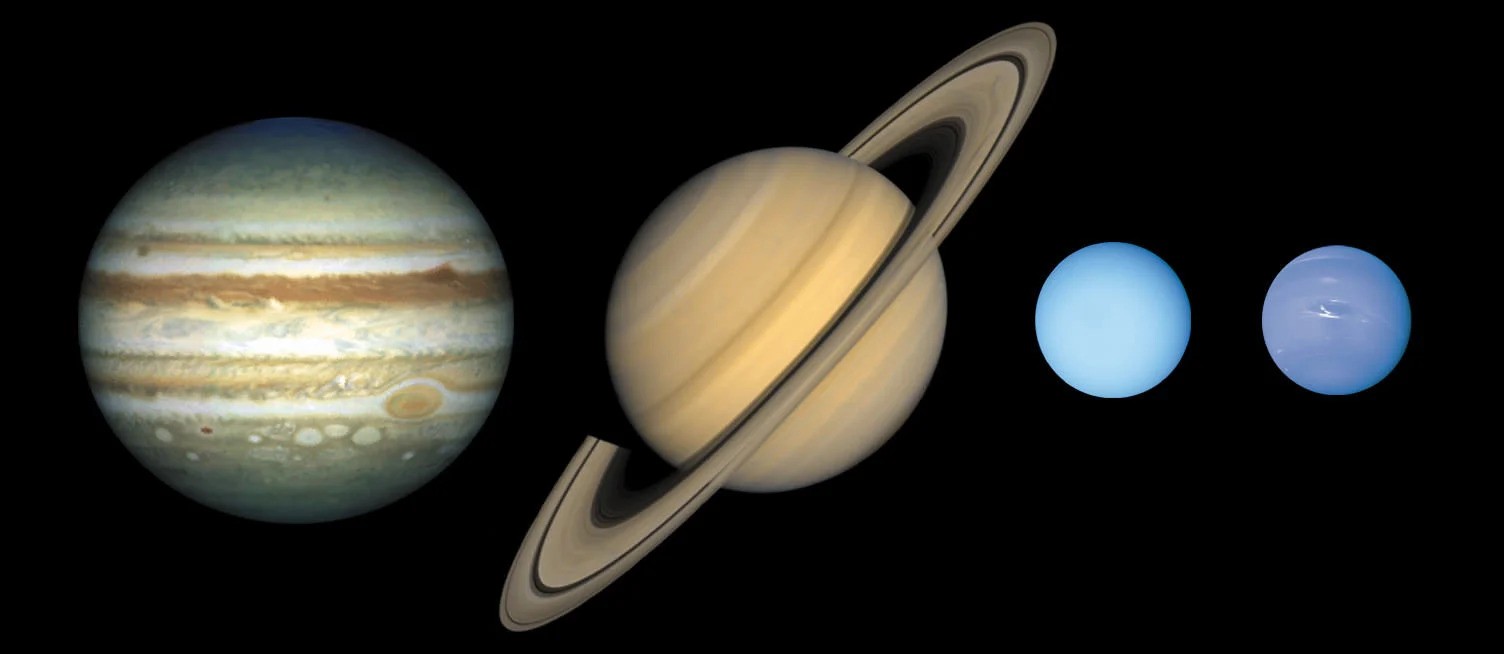
For example, Jupiter experiences virtually no seasonal changes. The reason for this is that the tilt of its axis of rotation relative to the perpendicular to its orbit is only 3°. Saturn, on the other hand, inclines 27°. Therefore, its atmosphere can experience significant disturbances during the spring-autumn transitions, which last for 7.5 Earth years. This leads to the formation of powerful storms, the size of which is comparable to entire continents on Earth.
In addition, seasonal changes on Saturn are also visible on its famous rings. As the equinox approaches, mysterious radial stripes become visible on them. They are called spokes, and scientists believe that they are the result of the interaction of the magnetic field with the solar wind.
Of all the planets, Uranus experiences the most dramatic transitions as the seasons change. Its axis of rotation is tilted so much that it is effectively “lying on its side.” At the same time, as on Earth, the orientation of its poles in space remains the same throughout the year. This means that when it turns toward the Sun with one of its poles, it stays that way for a long time.
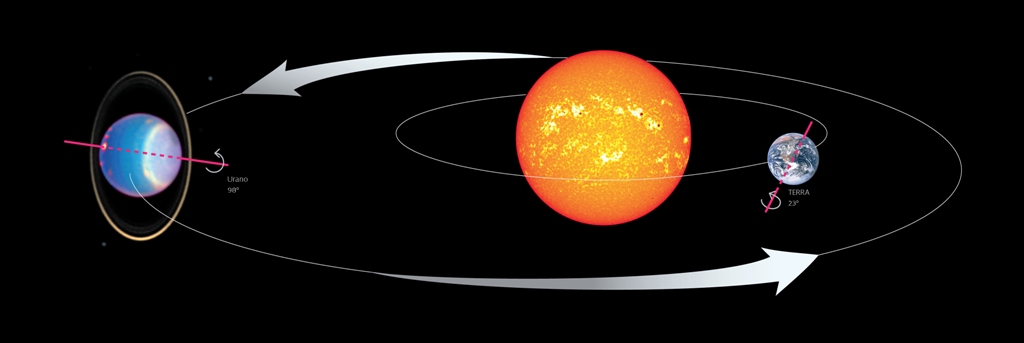
Specifically, for 21 years. That is a quarter of its 84-year period of rotation around the Sun. At the same time, very large areas around its other pole are plunged into darkness. And when spring arrives there, it looks as if the sun has risen above the horizon for the first time in decades. As you might guess, this would have an even greater impact on temperature fluctuations than the second. All this is accompanied by strong temperature changes and, consequently, winds.
A distinctive feature of spring on Neptune is that it is the longest among all the planets in the Solar System because one year there is equal to 165 Earth years. This means that spring lasts more than forty years there.
It would seem that the planet is so far from our sun that a tiny increase in the brightness of one of its hemispheres should not affect it. However, observations show that, in fact, there is a noticeable increase in the number of clouds and the reflectivity of the atmosphere.

