

Astronomers at the University of Warwick found solid proof that a nearby white dwarf was actually formed when two stars merged. The Hubble Telescope helped them achieve this.
Mystery of the white dwarf
White dwarfs are dense cores that remain after stars exhaust their hydrogen fuel and eject their atmospheres into space. These stellar remnants, which are about the size of Earth, typically have a mass half that of the Sun and consist of carbon-oxygen cores with surface layers of helium and hydrogen.
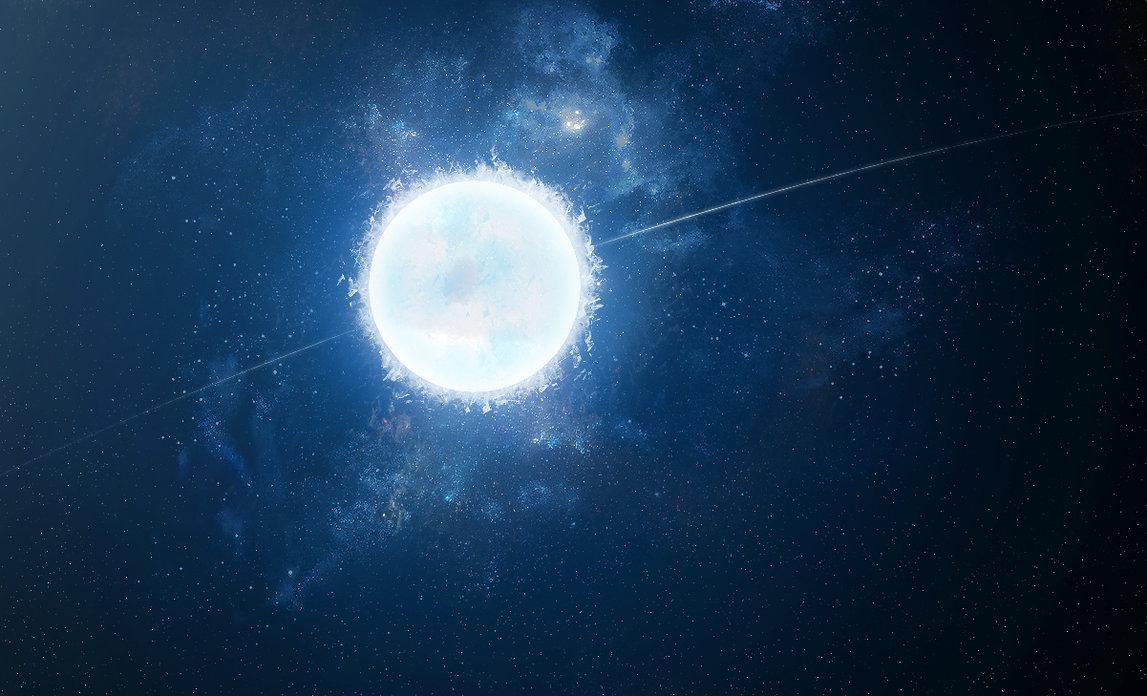
Although white dwarfs are widespread throughout the Universe, those with exceptionally high masses (greater than the Sun) are very rare. One of their representatives is WD 0525+526, located 130 light years from Earth. Its mass exceeds the sun’s by 20%, placing it in the “ultra-massive” category.
Until recently, astronomers were unsure how WD 0525+526 was formed. In theory, it could have formed as a result of the death of a massive star. However, during ultraviolet observations, the Hubble telescope managed to detect a small amount of carbon rising from its core into the hydrogen-rich atmosphere. This led to the assumption that the white dwarf was formed as a result of a merger.
The fact is that hydrogen and helium usually form a thick shell, similar to a barrier, around the core of a white dwarf, hiding elements such as carbon. However, when two stars merge, the layers of hydrogen and helium can burn up almost completely. The result is a single star with a very thin shell that no longer prevents carbon from reaching the surface. This is exactly what is observed on WD 0525+526.
Abnormal composition
This is far from the only mystery surrounding WD 0525+526. Hubble’s surface contains approximately 100,000 times less carbon than other white dwarfs formed as a result of mergers. The low carbon content combined with the star’s high temperature (almost four times higher than that of the Sun) suggests that WD 0525+526 is at a much earlier stage of evolution after the merger than previously discovered objects.
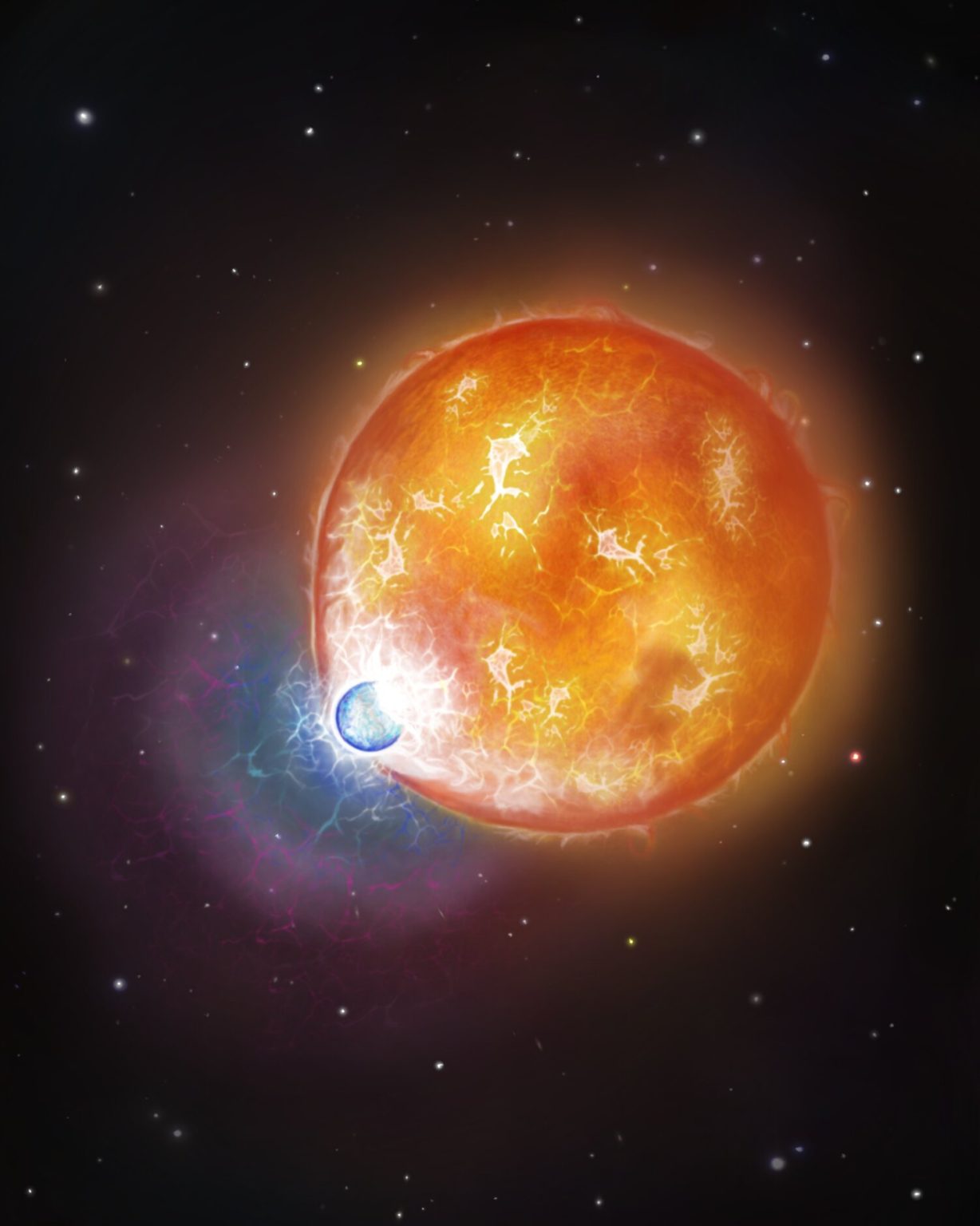
What adds even more mystery is how carbon ends up on the surface of this much hotter star at all. Other merger remnants are at a later stage of evolution and have cooled enough for convection to carry carbon to the surface. But WD 0525+526 is too hot for this process.
Instead, the team discovered a more subtle form of mixing called semiconvection, which is being observed for the first time in a white dwarf. This process allows small amounts of carbon to slowly rise into the star’s hydrogen-rich atmosphere.
As WD 0525+526 continues to cool, it is expected that more carbon will appear on its surface over time. At present, its ultraviolet glow provides a rare opportunity to glimpse the earliest stage of the aftermath of a stellar merger — and to establish a new benchmark for how binary stars end their lives.
According to Phys.org

