

On May 28, 2025, another SpaceX Starship super-heavy rocket test ended in an accident. The ninth test launch of the promising Starship, which is the subject of high hopes in the Moon and Mars exploration programs, ended with the uncontrolled disintegration of the vehicle during reentry. Despite the failure, the flight set several interim records: the rocket reached outer space for the first time and performed stage separation as planned. In this article, we will look at the Flight 9 flight timeline, detailed technical malfunctions of the first and second stages, SpaceX’s preliminary conclusions on the causes of the accident, and possible implications for the Artemis lunar program and SpaceX’s Mars ambitions.
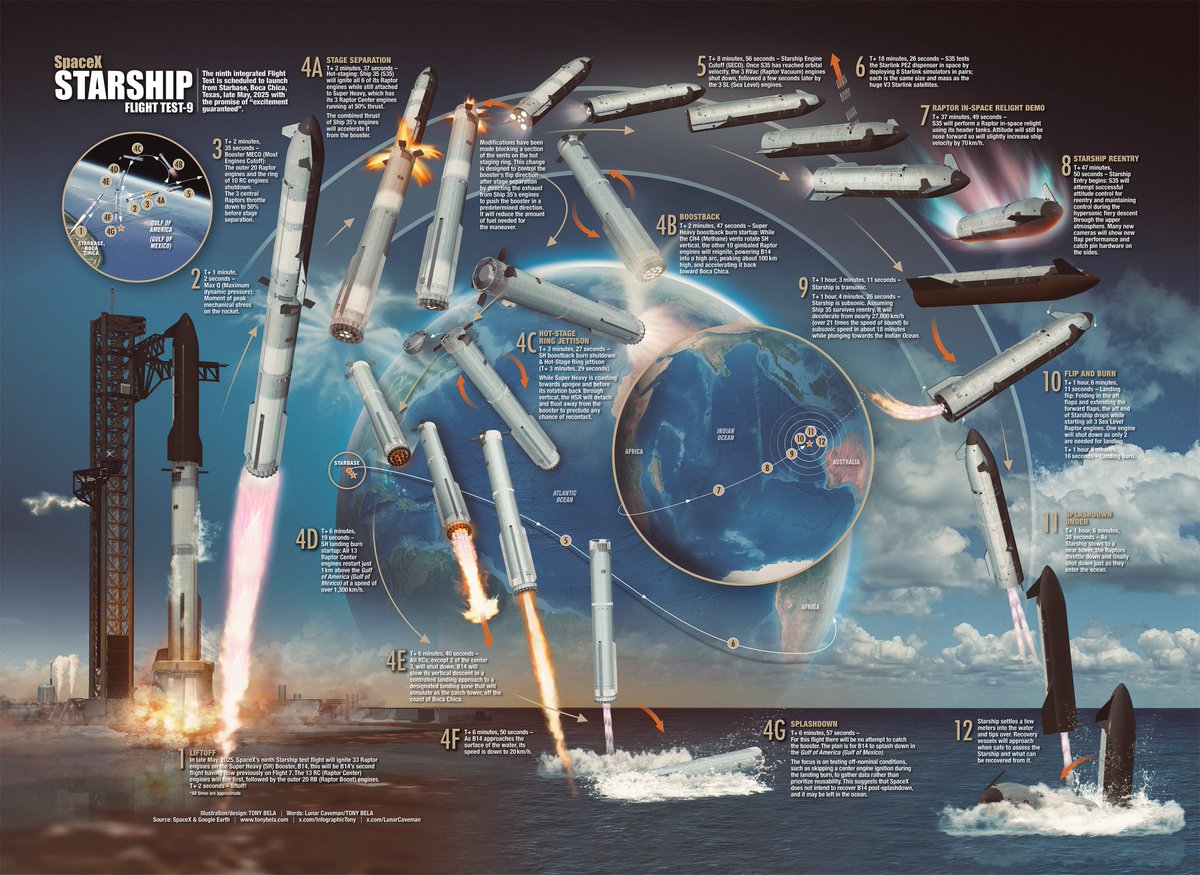
Flight chronology and technical malfunctions
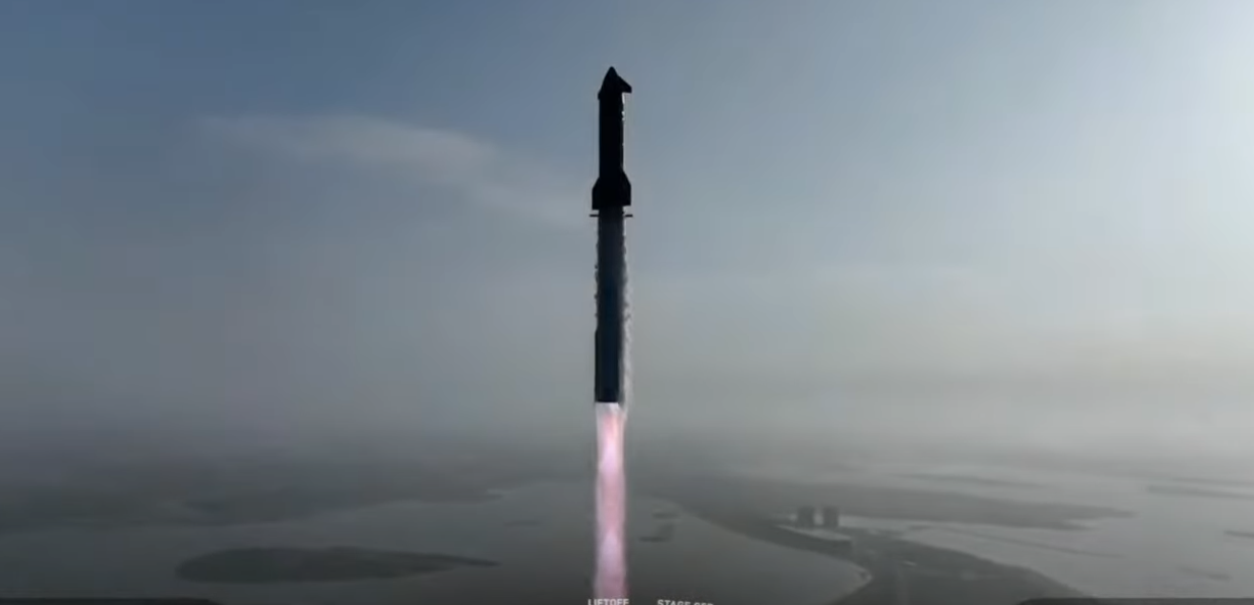
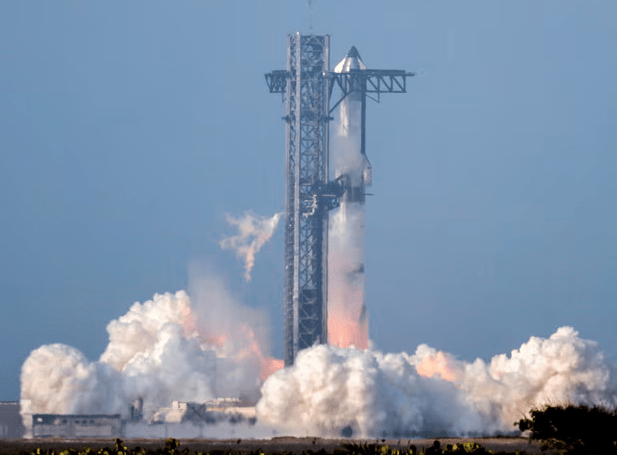
Launch and ascent (T 0-3 min). On May 27, at 6:36 p.m. CDT, Starship Flight 9 lifted off flawlessly from Starbase: all 33 Super Heavy raptors worked properly, and three minutes later the stages successfully separated for the first time in the program’s history.
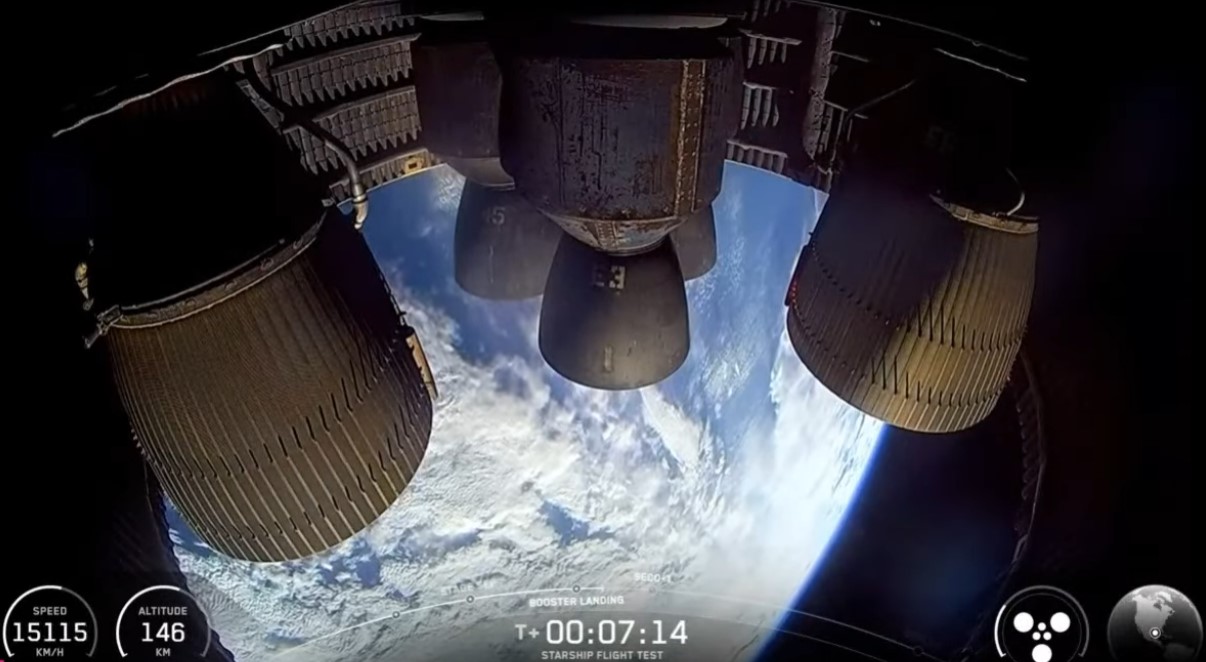
First stage accident (T ≈ 6 minutes 20 seconds). During a turn for a hard thrust, the booster began a braking maneuver, but telemetry communication was lost almost immediately, and the booster disintegrated in midair. The controlled launch failed; the debris fell into the Gulf of Mexico/Gulf of America without causing damage.
Flight of the second stage (T 3-18 minutes). The stage correctly entered a suborbital trajectory over the Atlantic. At ~18.5 minutes, the spacecraft tried to open the PEZ door of the nose compartment, but the flap jammed one-third of the way through, so the Starlink satellite models remained inside.
Loss of pressure and orientation (T ≈ 30 minutes). During the space drift, the autogenous boost system detected a leak: the pressure in the methane tank dropped sharply, the spacecraft began to rotate, and the software controller canceled the engine re-ignition. The control crew emergency vented the remaining fuel by switching the vehicle to safe mode.
Decay in the atmosphere (T ≈ 35 minutes). Without stabilization, the Starship entered the dense atmosphere at an incorrect angle, experienced destructive thermal and aerodynamic loads, and disintegrated at an altitude of approximately 59 km above the Indian Ocean. The flight concluded with an abrupt unplanned disassembly, but the wreckage remained in a previously restricted offshore area.
Flight 9 bottlenecks that SpaceX must now “cure”
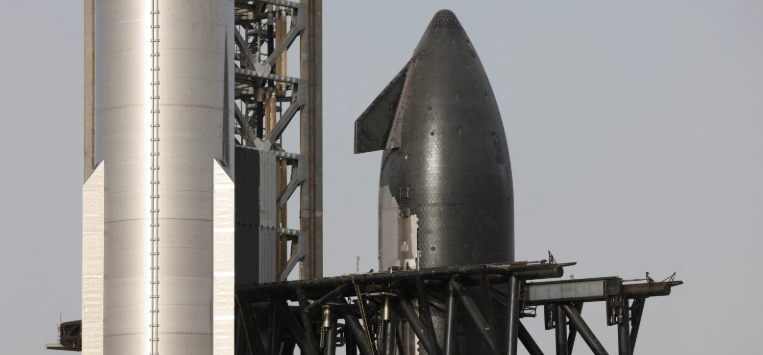
Cargo compartment door jams – what went wrong? Hidden under the Starship’s nose heat shield are PEZ hatches – large sliding doors that first slide upward with linear electric drives and then open outward with a hinge. Normally, this mechanism opens a 6 × 8 m opening and allows satellites to be “shot” like a cylindrical dispenser, which is why Starship has been nicknamed Chomper in the community.
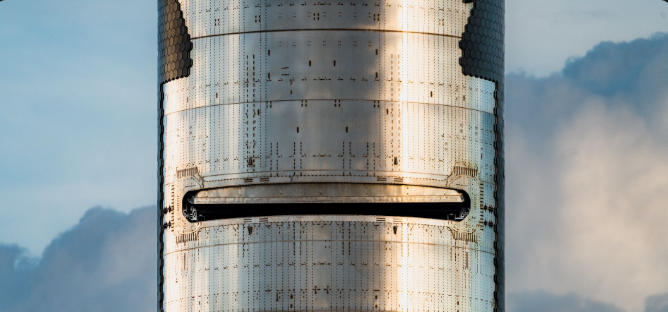
During Flight 9, the flight control center confirmed that the FULL OPEN command had been received, but the encoders detected movement only about 30% of the way through the stroke; the safety algorithm blocked further opening to protect the thermal protection and the skin.
Probable reasons:
- Thermal “snacking”. The stainless steel guides are in contact with the Inconel inserts; cycles of -170°C ➜ +120°C result in different α coefficients and micro-displacements.
- Ice in the grooves. During the 20-minute drift, the CH4/O2 vapor partially condensed in the doorway and froze.
- Voltage reset. When the ship switched to backup batteries, the drive could lose momentum and hang in an intermediate position.
Solutions:
- Active heaters – band heaters along the rails and a “heat jacket” on the gearboxes.
- Switching from helical gearing to hydraulic cylinders with pyro-locks (such as Dragon 2): they are less prone to misalignment and do not require a stable voltage.
- Fail-open 25° logic: If the actuator does not reach the far end within 2 seconds, the door stops in the “half position”, which is sufficient to discharge the payload without risking tearing out the tiles.
As soon as the doors are guaranteed to open, Starship will be able to show for the first time that it can actually “release” cargo in orbit, a critical step towards commercial launches.
Pressure drop in the fuel system is the Achilles’ heel of autogenous supercharging. Starship relies almost exclusively on autogenous supercharging: a portion of liquid methane and oxygen is taken, heated, and returned to the tanks as hot gas at 5-8 bar. This saves weight, but leaves little safety margin. On Flight 9, telemetry recorded a sharp drop in pressure in the main CH4 tank during drift, and with it, a loss of attitude control and the disruption of the planned engine re-light. SpaceX called a leak in the tank system the main cause of the ship’s RUD.
Possible sources of leakage:
- A microcrack in the welded seam of the ring after hundreds of cryo-heating cycles.
- The supercharging valve is blocked by ice chips, so the gas goes straight into a vacuum.
- Gas cooling after Raptor Vac is turned off: not enough heat to hold the pressure.
- Erroneous vent-down-to-stow algorithm – the software opened the safety valve earlier than necessary.
Solutions:
- A small “helium buffer”. It is more expensive to return He ≈ 150 kg cylinders only for the drift phase, but it ensures against a sharp subsidence.
- Strain gauges and mass spectrometers in gas pipelines: detect leaks in seconds and activate the “backup” mode with reduced RCS pulses.
- Nitride-silicon valve seats (Si3N4) are resistant to ice formation.
- AMTEC mini-heat pumps on boost lines: maintain gas temperature even with the engines off.
If the backup helium and active thermal control are added to the current “clean” autogenous circuit, the chance of a sudden pressure loss will be significantly reduced. This, in turn, will allow Starship to successfully restart engines in space and move from suborbital demonstrations to real orbital missions.
Flight 9 has shown that the main barriers are no longer the launch or the heat shield, but the reliability of small but critical systems: the cargo bay door and autogenous boost. By solving these two problems, SpaceX will have the tools for the first full-fledged orbital flight with a payload and will return the Artemis schedule and Martian plans to the “green” sector.
Preliminary conclusions
Despite the failure, SpaceX emphasizes that Flight 9 provided valuable experience and confirmed several improvements to the Starship system. The company’s founder, Elon Musk, noted the progress compared to the previous test: “Starship has achieved the planned shutdown of the ship’s engines – a great progress compared to the last flight! Also, there was no significant loss of heat shielding tiles during the climb”, Musk wrote on social media. According to him, the key technical cause of the accident was a fuel leak: “Leaks led to a loss of pressure in the main tank during the drift and reentry phase. We have a lot of valuable data to analyze”. That is, the premature pressure loss deprived the ship of the ability to steer normally and brake with the engine. The company also said that it had noticed the problem during the flight and took action: when it became clear that the orientation was lost, the fuel was drained from the tanks to avoid a powerful explosion. This step, however, eliminated the chance for a soft reentry of Starship – the vehicle had to be written off.
SpaceX traditionally adheres to the approach of “quick failures for quick progress” and considers each test launch as an opportunity to learn something new. After the accident, the company emphasized in an official statement: “With a test like this, success is measured by what we learn, and today’s flight will help improve Starship’s reliability”. Engineers are already analyzing the telemetry and debris to make adjustments to the next prototypes. During the broadcast, a SpaceX representative assured the audience: “This is the SpaceX way: we will learn, make changes, and repeat until we find a solution”.
Despite three emergency launches in a row (in January, March, and May of this year), SpaceX is optimistic and ready to accelerate the pace of testing. Immediately after Flight 9, Musk announced his intention to speed up the launch of new prototypes: “The pace of launches for the next three flights will be faster – about one every 3-4 weeks”. The U.S. Federal Aviation Administration (FAA) recently approved an increase in the annual number of Starship launches from 5 to 25 per year, recognizing that the increased testing will not have a critical impact on the environment. This decision paves the way for a series of rapid re-launches as soon as SpaceX makes the necessary technical improvements and receives permission to fly again. The FAA has confirmed that it is working closely with SpaceX to investigate the Flight 9 incident, and there have been no reported injuries or property damage as a result of the accident. Thus, the regulator sees no obstacles to continuing the test program after the causes of the current failure are identified and eliminated.
Finally, Starship has demonstrated real progress. The rocket successfully used a reusable booster for the second time and reached space, indicating that the early problems of the project are gradually being overcome. The ship stayed in flight much longer than during the two previous tests. This time, Starship was able to complete the flight program by almost half, and every failure brings engineers closer to success.
So Flight 9 was another test of strength for humanity’s space ambitions. The accident demonstrated the complexity of the task of creating the largest rocket in history capable of multiple flights beyond Earth. Despite the explosion, the flight brought important lessons: new elements were successfully tested (stage separation, booster re-launch, space reach), weaknesses were identified (problems with the fuel system, door mechanism, orientation control), and valuable data was collected for modernization. SpaceX, in the spirit of its philosophy, is already preparing to put these lessons into practice – the next Starship prototypes are waiting at the launch, and the pace of launches will only increase.
Failure will have a wide resonance: NASA will have to adjust the plans for the Artemis III mission and take into account possible delays, international partners are closely monitoring Starship’s progress, and competitors like Blue Origin are encouraged to accelerate their development. At the same time, the successes and failures of this flight have once again emphasized that space is not conquered without a struggle. Each accident is a step towards future triumphs. If SpaceX succeeds in taming the Starship, humanity will have a powerful tool for exploring the Moon, Mars, and deep space. That is why, despite all the risks, the Starship program is moving forward: setbacks are temporary, and the goal is great. In the coming months, the world is expecting new launches of this silver giant, which should pave the way for us to reach other worlds. SpaceX has once again proved that it can learn from mistakes, so each subsequent Flight brings the Starship closer to its dream goal.

