

On the International Space Station (ISS), scientists tested whether microorganisms could extract metals directly from meteorite material in microgravity conditions. As part of the BioAsteroid project, a team from Cornell University and the University of Edinburgh worked with L-chondrite material (a common type of meteorite) and two “biominers” — the bacterium Sphingomonas desiccabilis and the fungus Penicillium simplicissimum (as well as a mixture of the two).
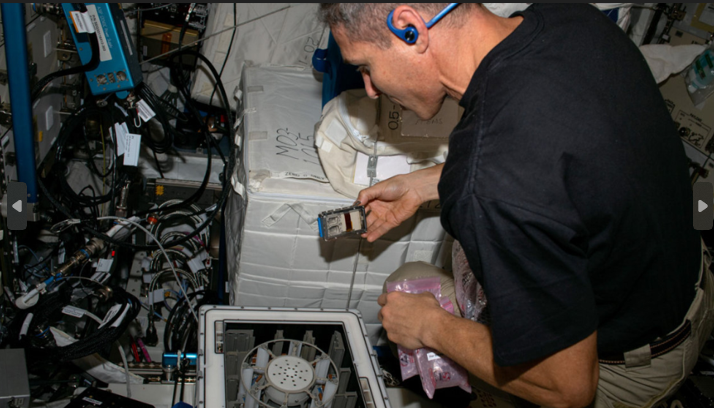
The study was published in npj Microgravity. The authors tracked the leaching of 44 elements and showed that the fungus P. simplicissimum is capable of enhancing the release of palladium and a number of other elements, in particular platinum, compared to abiotic (non-microbial) leaching. The experiment on the ISS was conducted by NASA astronaut Michael Scott Hopkins, while parallel controls were conducted on Earth for comparison with 1g conditions.
The mechanism is associated with metabolites: microbes (especially fungi) form organic (carboxylic) acids that bind to minerals and help convert metals into solution. The analysis showed that microorganisms’ metabolism changes significantly in microgravity, meaning that future bioreactors can be more precisely adjusted to specific species and target elements.
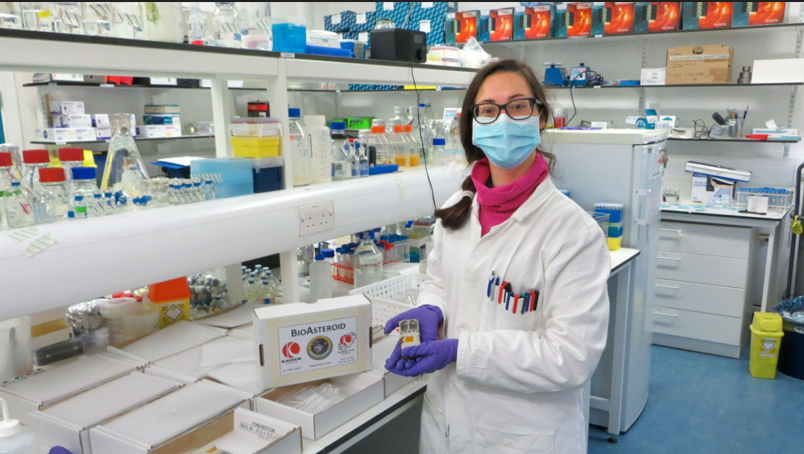
How does it work? Microorganisms settle on the surface of meteorite rock and form a thin biofilm. During their life cycle, they release organic acids and molecules that chemically bind metal ions in minerals, gradually dissolving them and converting the metals into solution. These ions can then be collected from the liquid (by filtration/precipitation/ion exchange) and converted into useful raw materials. In microgravity, substance transport and metabolism change, so the efficiency of the process and the composition of the products may differ from terrestrial conditions — this is important for future bioreactors in space.
Why is this important? This approach supports ISRU (in-situ resource utilization): instead of delivering heavy mining equipment and reagents, it is potentially possible to obtain the necessary metals on site — for catalysts, sensors, electronics, repairs, and even the production of components for long-term missions and orbital observatories. At the same time, this provides astrobiologists with real data on how microbes interact with cosmic rocks, which is important for interpreting chemical traces and potential biosignatures on other bodies in the Solar System.

