

Asteroid 99942 Apophis has been frightening people for many years with the possibility that it could collide with Earth in 2029. However, in reality, it will fly a record-breaking short distance, and a group of engineers, including students from the Chiba Institute of Technology (Japan), propose to use this fact to satisfy scientific interests.
Landing on the asteroid
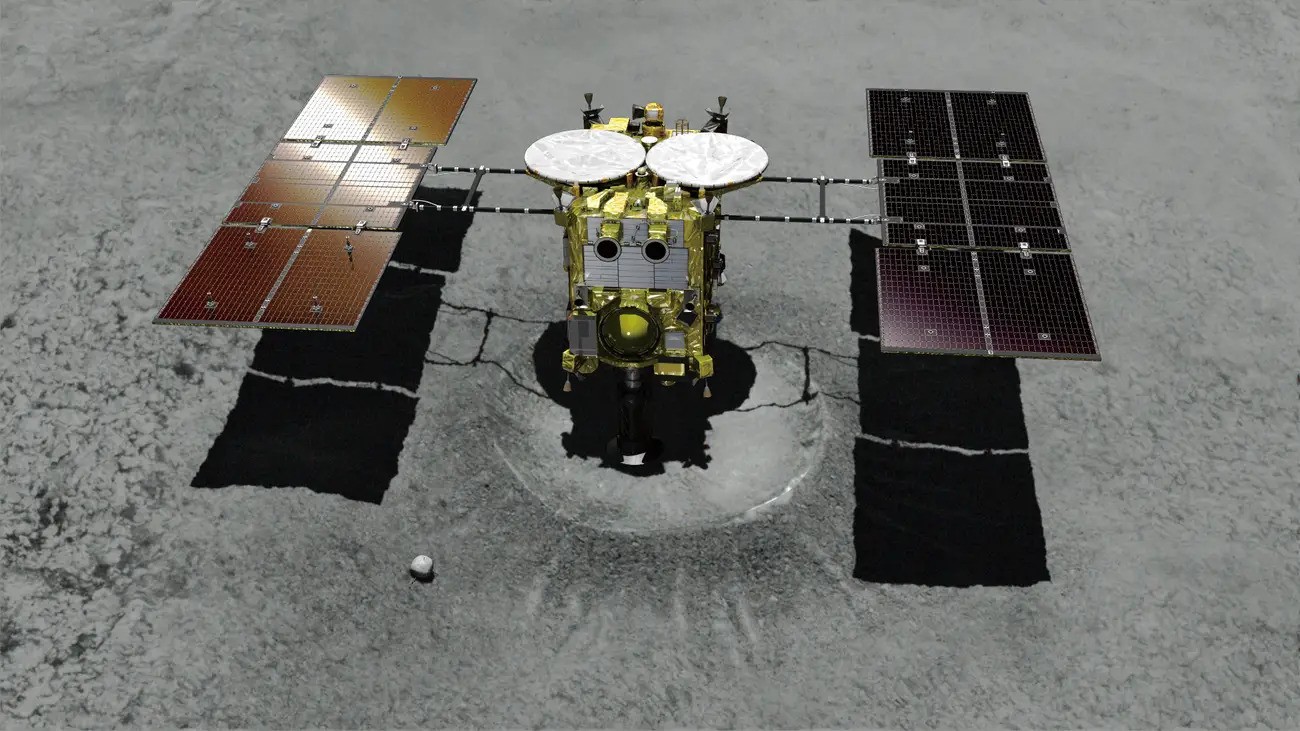
ExLabs, in collaboration with the Chiba Institute of Technology, is proposing that NASA launch a mission called ApophisExL into space in 2029. It is intended to reach the asteroid Apophis, land on it, and explore this celestial body.
Apophis, which has a diameter of 325 meters, belongs to the group of asteroids and regularly approaches Earth. Because of this, in the past it was considered a potential killer asteroid capable of causing serious damage to our civilization. However, scientists are certain that there will be no catastrophe on April 13, 2029, when it flies past Earth.
However, now they have another interest. The minimum distance between the space rock and our planet will be only 32,000 km. This is ten times less than the distance to the Moon, and it is incomparable to the distance that spacecraft exploring asteroids usually have to travel.
That is why projects to fly to Apophis are appearing one after another, because such an opportunity cannot be missed. And this is precisely what NASA’s Jet Propulsion Laboratory advocates. Although they are not the main developers, this is what makes it so special.
Maximum open project
According to Chiba University President Tomoko Arai, the ApophisExL mission will consist of a pair of payload modules that will land on the surface of Apophis. These will be very small CubeSat modules weighing only a few kilograms.
CubeSats have long been used in missions in Earth orbit. Their low mass not only significantly reduces launch costs, but also attracts a wider range of engineers, such as students, to participate in their development.
However, this approach has not yet been applied to deep space missions due to the high risks involved in interplanetary flights. Nevertheless, students also participated in the design of the ApophisExL mission. And all thanks to how close Apophis will pass by us. Therefore, it is quite possible that this mission will revolutionize approaches.
According to www.spacedaily.com

