

China has launched its first Long March 12A partially reusable rocket. It successfully delivered cargo into orbit, but the attempt to land the stage failed.
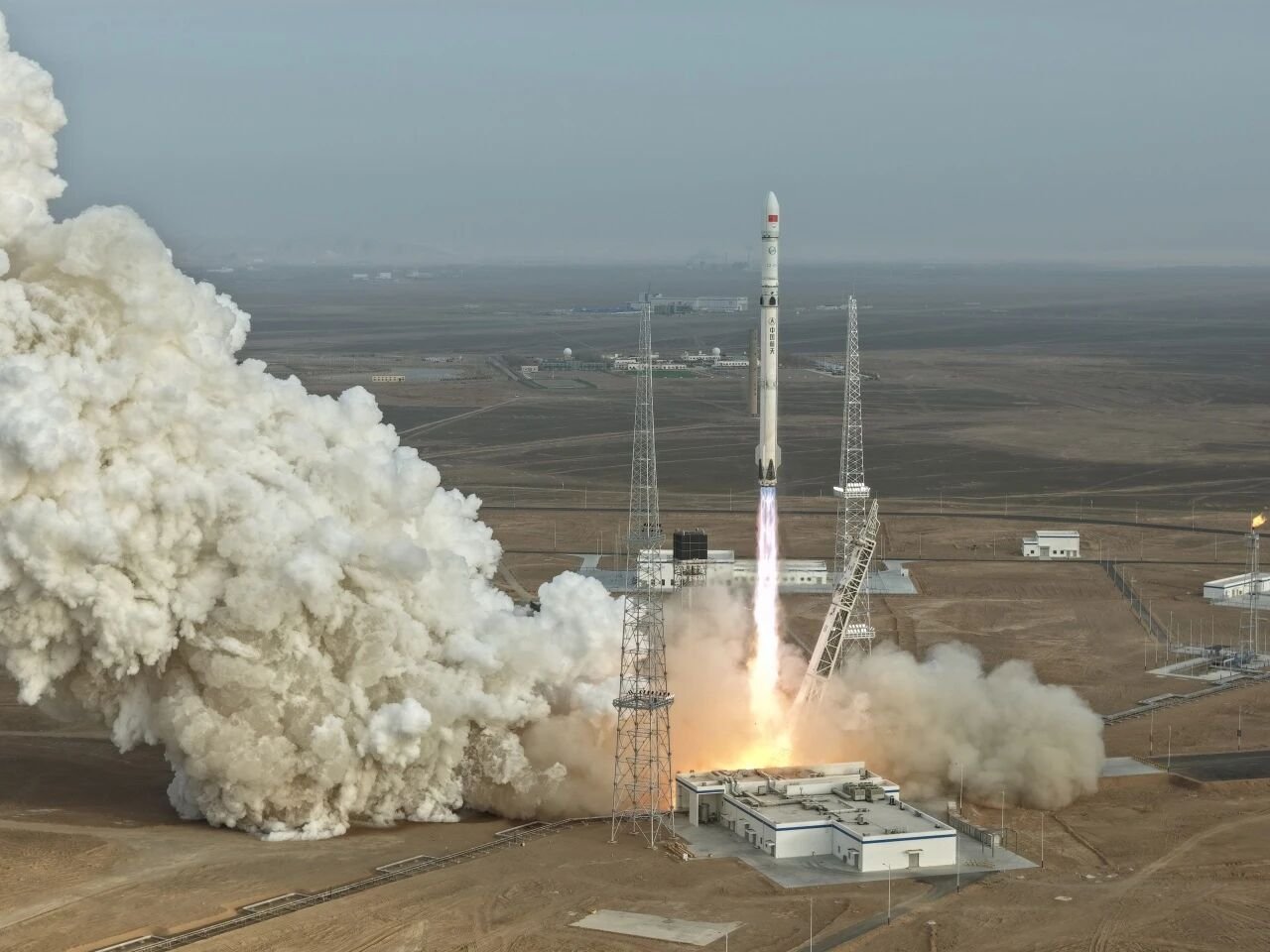
Long March 12A was developed by the Shanghai Academy of Space Technology (SAST) under the China Aerospace Science and Technology Corporation (CASC), China’s main state contractor in the space sector. It has a two-stage design and uses methane as fuel and liquid oxygen as an oxidizer. The rocket is 70 meters long, 3.8 meters in diameter, and capable of carrying up to 5 tons of cargo into sun-synchronous orbit.
In January 2025, SAST conducted tests during which the Long March 12A prototype rose to an altitude of 75 km and then splashed down. The results of this test were not reported. CASC has been actively experimenting with lattice stabilizers on rockets since at least 2019.
The first Long March 12A space launch took place on December 23 from the Jiuquan Satellite Launch Center. According to official reports, it successfully delivered a payload in the form of a demonstration satellite into orbit.
As for the first stage, it was expected that after separation, it would perform a re-entry maneuver and land at a site located approximately 250 kilometers from the launch site in Minqin County, Gansu Province. Images and satellite photos posted on social media indicate that the landing was unsuccessful and the rocket likely fell about two kilometers from the landing site. SAST later confirmed the failed landing, noting that engineers had obtained valuable data during the mission that would enable them to complete the task in the future.
Chinese aerospace companies (both state-owned and private) are actively working on the creation of reusable rockets. In early December, Landspace launched its first methane rocket, Zhuque-3. Although it also failed to land on the stage, China is demonstrating tremendous progress in this area overall. It is already safe to say that in 2026, one of the Chinese companies will succeed in solving this problem and take the stage.
Provided by Spacenews

