

Scientists have discovered that when the Sun’s illumination of Earth’s orbit reaches its peak, it slows down the objects in orbit. In particular, this effect causes space debris orbiting our planet to fall toward it more quickly.
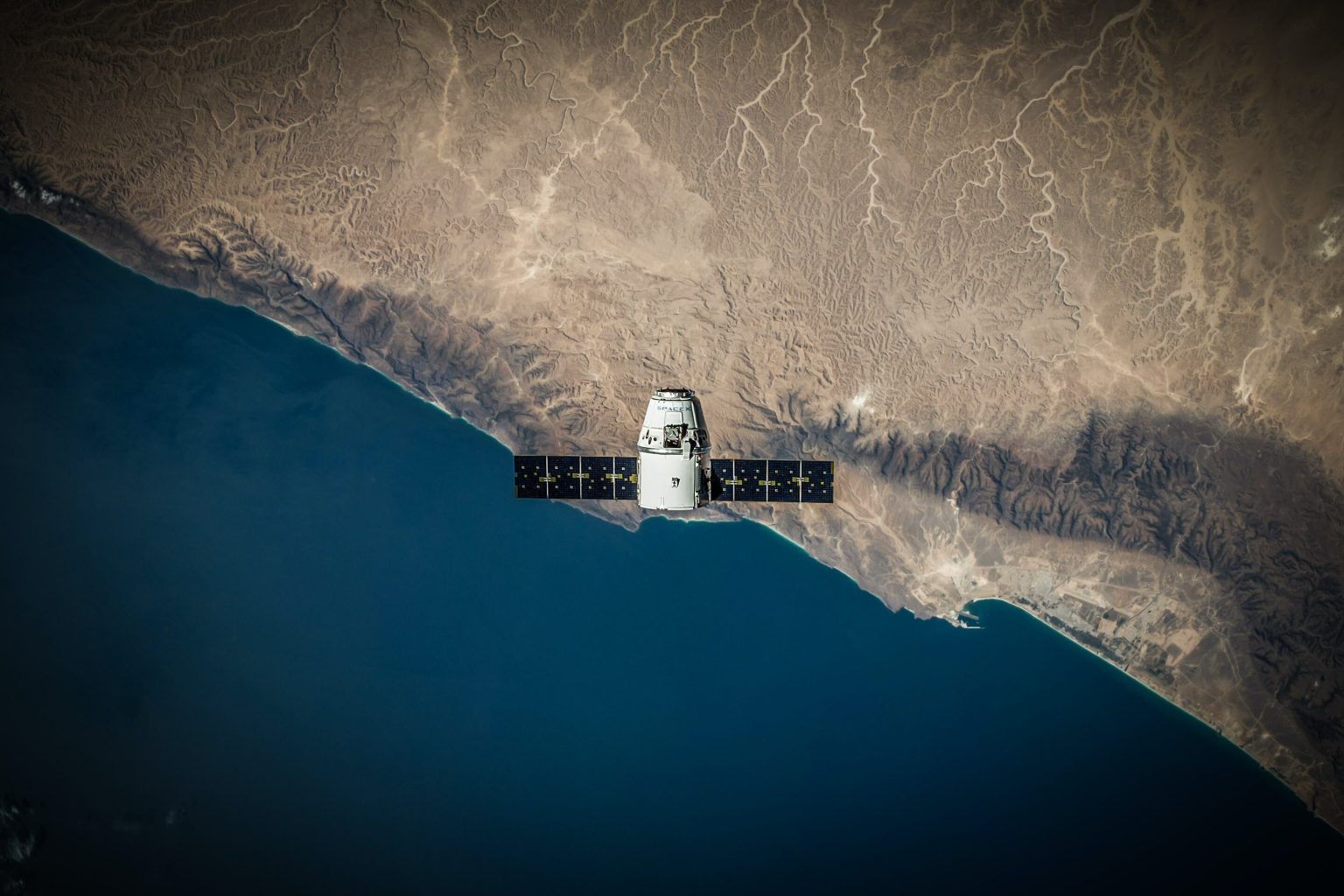
Link between solar activity and the amount of falling debris
Low Earth orbit (LEO), at altitudes ranging from 400 to 2,000 km, is ideal for imaging and observation satellites, as well as for internet constellations such as Starlink. Unfortunately, it is also currently cluttered with debris, such as fragments of old satellites and rocket stages, which poses a risk to new space launches.
For example, even a single collision can set off a chain reaction. Since missions to capture space debris using robots are still in their early stages, scientists are currently focusing primarily on tracking debris more accurately in order to identify the most dangerous objects for future removal.
“Here we show that space debris orbiting Earth loses altitude much faster when solar activity is higher,” said Ayisha M Ashruf, a scientist and engineer at the Space Physics Laboratory of the Vikram Sarabhai Space Centre, Thiruvananthapuram, India, and lead author of the new study, published in Science.
“For the first time, we find that once solar activity passes a certain level, this loss of altitude happens noticeably more quickly. This observation is expected to be key for planning sustainable space operations in the future.”
Fluctuations in thermospheric density
The Sun has an 11-year cycle of active and quiet phases that correlate with the number of sunspots, leading to changes in the intensity of solar radiation. When the intensity of this radiation peaks, as it did in late 2024, solar radiation heats and expands Earth’s thermosphere (located at an altitude of approximately 100 to 1,000 km, with temperatures ranging from 500 to 2,500 °C). This, in turn, increases the density of the atmosphere around objects in orbit (at altitudes ranging from 350 to 36,000 km) and increases the drag or thrust acting on them, thereby slowing them down and causing them to fall faster.
Ayisha and her colleagues from the same institute tracked the historical trajectories of 17 pieces of space debris in low Earth orbit (LEO) over a 36-year period, beginning in the 1960s, during solar cycles 22 through 24. These objects orbit the Earth every 90 to 120 minutes at an altitude of 600 to 800 km and have not yet entered the atmosphere, where they will burn up.
Since space debris does not perform active maneuvers to maintain its orbit, as satellites do, changes in its rate of descent (“orbital decay”) depend solely on fluctuations in the density of the thermosphere. “This makes space debris an excellent tool for tracking the long-term effects of solar activity on aerodynamic drag,” the authors write.
The scientists correlated the trajectories with long-term data from the German Research Centre for Geosciences in Potsdam, which tracks the number of sunspots and daily variations in the Sun’s radio and extreme ultraviolet (EUV) radiation.
Space Mission Planning
The results showed that when the number of sunspots exceeds two-thirds of the maximum value, space debris crosses a “tipping point”—a threshold beyond which its rate of decline accelerates significantly. This threshold does not appear to be linked to a fixed level of solar radiation, but rather to the Sun’s approach to the peak of its activity. Near this point, the Sun emits more intense extreme ultraviolet radiation, which may be due to changes in intensifying solar processes near the peak.
The authors emphasize that their findings are expected to help cosmologists better plan satellite trajectories and avoid collisions with space debris.
“Our results show that when solar activity exceeds certain levels, satellites—just like space debris—tend to lose altitude more quickly, which means their orbits need to be adjusted more frequently. This directly affects the duration of a satellite’s time in orbit and the amount of fuel required, especially for missions launched near the solar maximum,” explained Ashruf.
According to “Our results show that when solar activity exceeds certain levels, satellites—just like space debris—tend to lose altitude more quickly, which means their orbits need to be adjusted more frequently. This directly affects the duration of a satellite’s time in orbit and the amount of fuel required, especially for missions launched near the solar maximum,” explained Ashruf.
According to phys.org

