

Chemists at the University of Albany have announced the synthesis of a new high-energy compound, manganese diboride (MnB₂), which could make rocket fuel lighter and more efficient. According to their measurements, MnB₂ releases 20% more energy per unit mass and approximately 150% more per unit volume than aluminum*, which is currently used as a metal fuel in solid-fuel boosters. The material is stable in storage and burns only when in contact with an ignition agent (e.g., kerosene), which potentially increases safety and allows for a reduction in fuel mass or an increase in payload for the mission.
*In solid rocket fuel, aluminum is a fine powder mixed with an oxidizer (usually ammonium perchlorate) and a polymer adhesive binder (HTPB or PBAN). This type of fuel is called composite (APCP): the oxidizer provides oxygen, the binder also burns as fuel, and the aluminum particles melt and burn in the flame, forming aluminum oxide (Al₂O₃) and releasing a lot of heat. The prepared mixture is placed in the engine body and ignited with a fuse. Thus, aluminum in fuel is a technologically controlled metallization of solid propellant to produce more energy-dense and compact boosters.
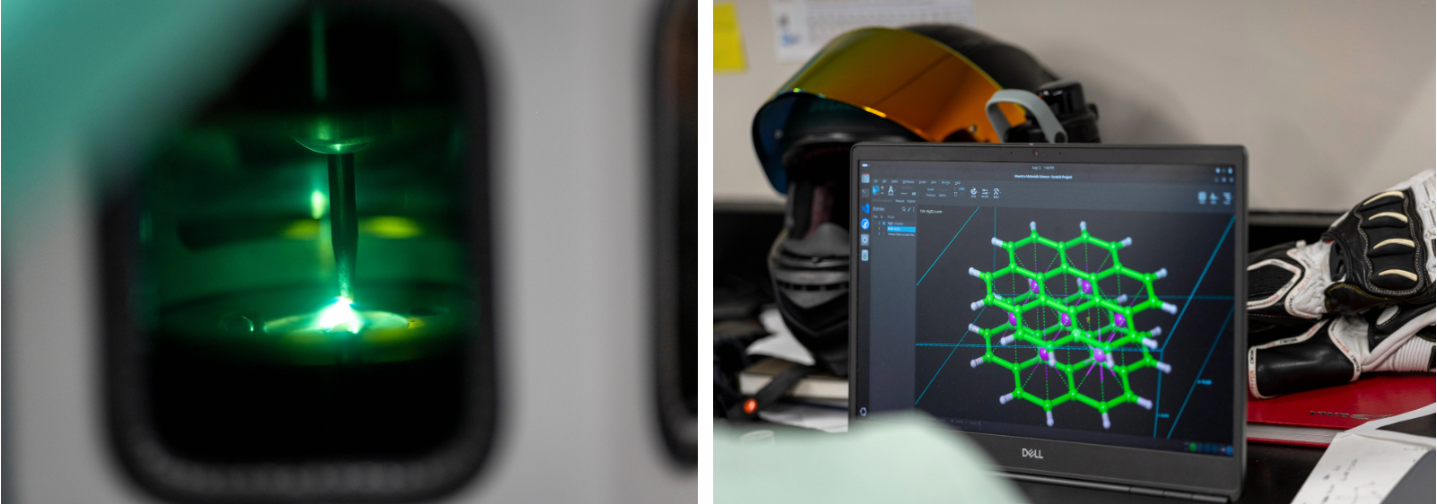
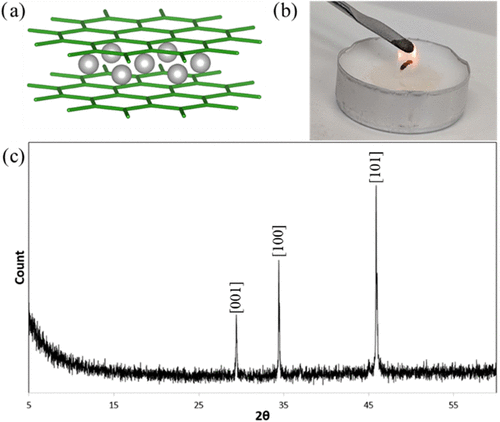
The team obtained the compound using arc melting: a compact made of manganese and boron powders was heated to ~3000°C, then rapidly cooled, locking in a metastable structure. Computational modeling showed a slight deformation of the hexagonal boron layers, which is responsible for the high energy savings. The results are published in the Journal of the American Chemical Society: the authors provide a specific heat effect of about 39 kJ/g and a record volumetric heat of combustion of ~208 kJ/cm³, which corresponds to an increase of ≈26% by mass and ≈148% by volume relative to aluminum.
More energy-dense metallic fuel without complicating logistics could reduce the mass of boosters or increase the weight of returnable scientific instruments and samples in missions to the Moon and Mars. This also paves the way for more compact probe platforms for long-distance flights, where every liter of volume counts and increased energy density directly converts into additional Δv or resources for onboard experiments.
Rockets burn the most fuel in the first few minutes of flight —t o escape the gravitational pull. What if we could transfer this initial momentum to a magnetic catapult and save tons of fuel, reducing launch costs and environmental impact?
In the article “Magnetic catapult: How to save tons of fuel for launching rockets into space,” read about how a mass driver works, why the Moon could be the ideal testing ground for such systems, what engineering barriers remain, and what this means for space logistics in the next decade.
According to acs, albany, interestingengineering

