

Have you ever wondered why the moon sometimes looks so huge in the sky? It is not an optical illusion, but one of the most accessible and at the same time most spectacular celestial shows – the Supermoon.
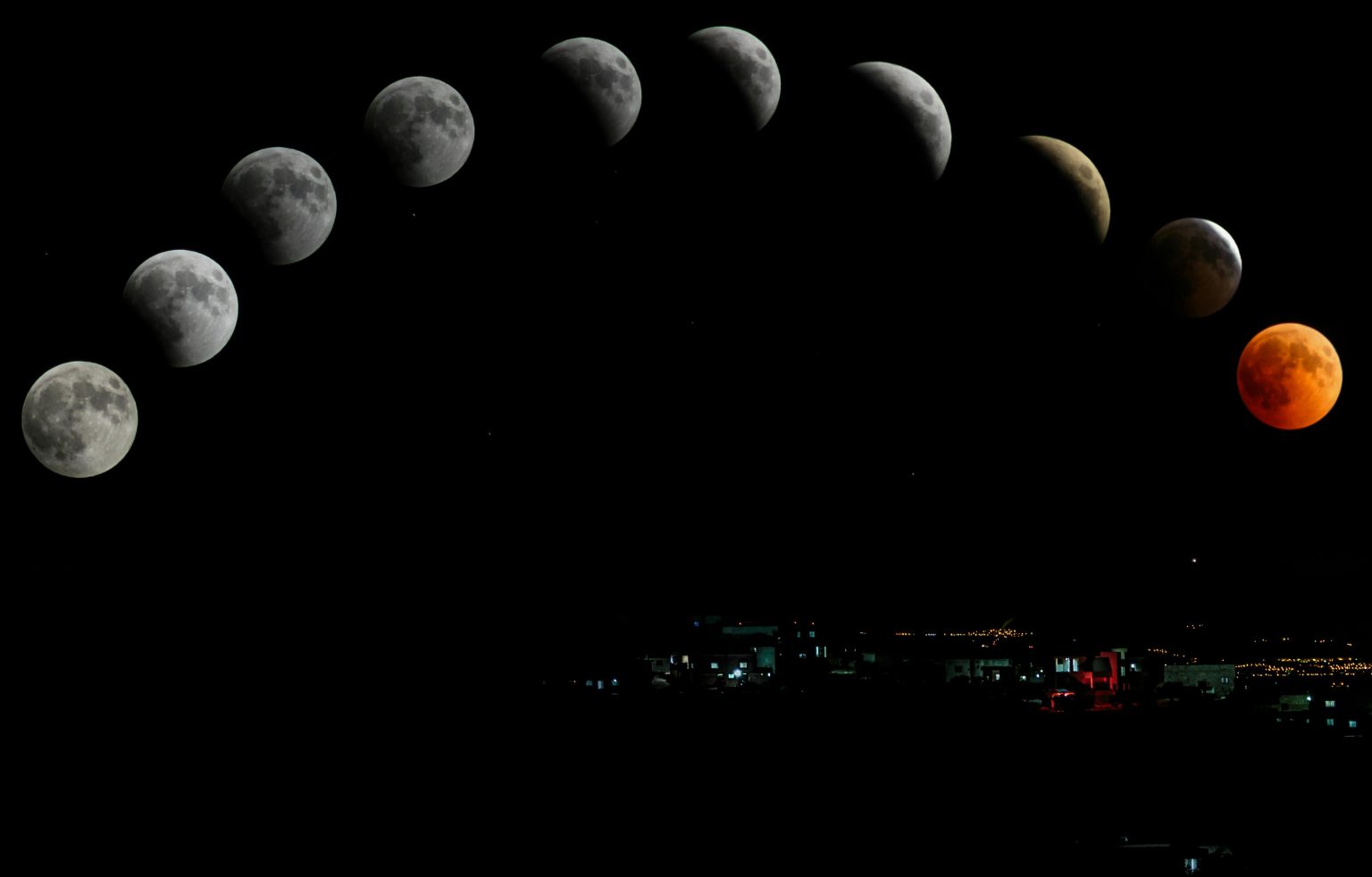
Image Credit & Copyright: Pexels / Samer Daboul
Now imagine: autumn 2025 will bring us not just one such show, but a whole series in a row! So, in this article, we will delve into the physics of the process, dispel myths about discrepancies in calendars, and suggest the best ways to observe this cosmic wonder.
Why does a Supermoon happen?
No magic, just the laws of gravity. It is all due to the elongated, elliptical orbit of the Moon. Because of this, it sometimes moves away from us to its maximum distance – the apogee (from the Greek words apo, meaning “far,” and ge, meaning ‘Earth’) – and sometimes comes close to us – the perigee (peri, meaning “near”). The Earth performs a similar dance around the Sun, passing its furthest point – aphelion – and its closest point – perihelion – every year.
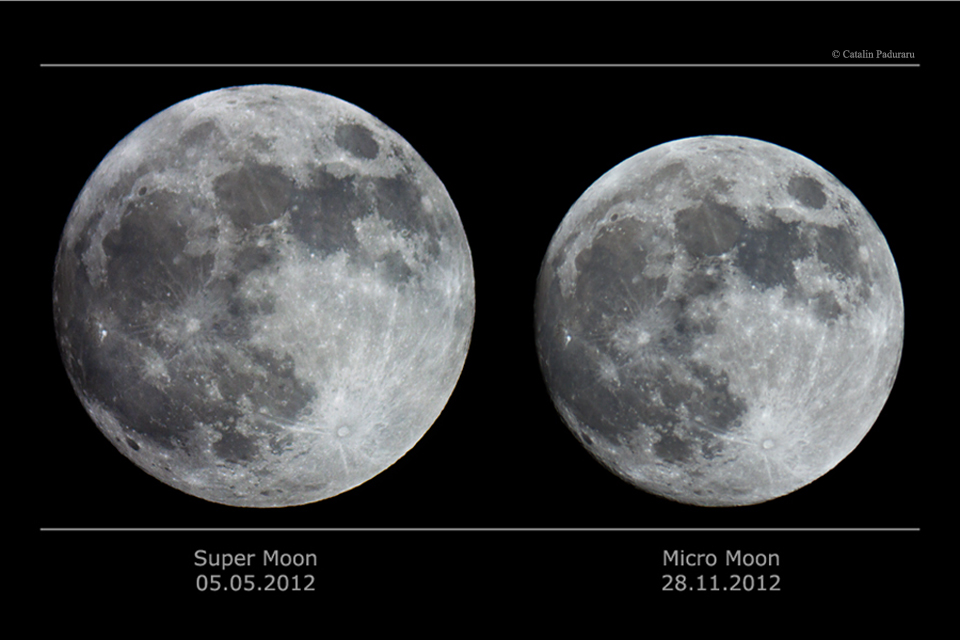
Image Credit & Copyright: Catalin Paduraru
A supermoon appears in the sky when the full moon coincides with perigee. For observers, this means that the disk of our satellite becomes noticeably larger (up to 14%) and significantly brighter (by as much as 30%).
A supermoon is not an astronomical phenomenon
It should be noted that Supermoon is not a scientific term. At least, you will not hear it used in astronomical circles. There, they use a more complex and somewhat boring construction: “perigee syzygy” (where syzygy is the alignment of three celestial bodies in a straight line). The name “Supermoon” was coined by astrologer Richard Nolle in 1979. For him, this phenomenon was much more than just a regular full moon; he saw it as the cause of earthquakes and other natural disasters.
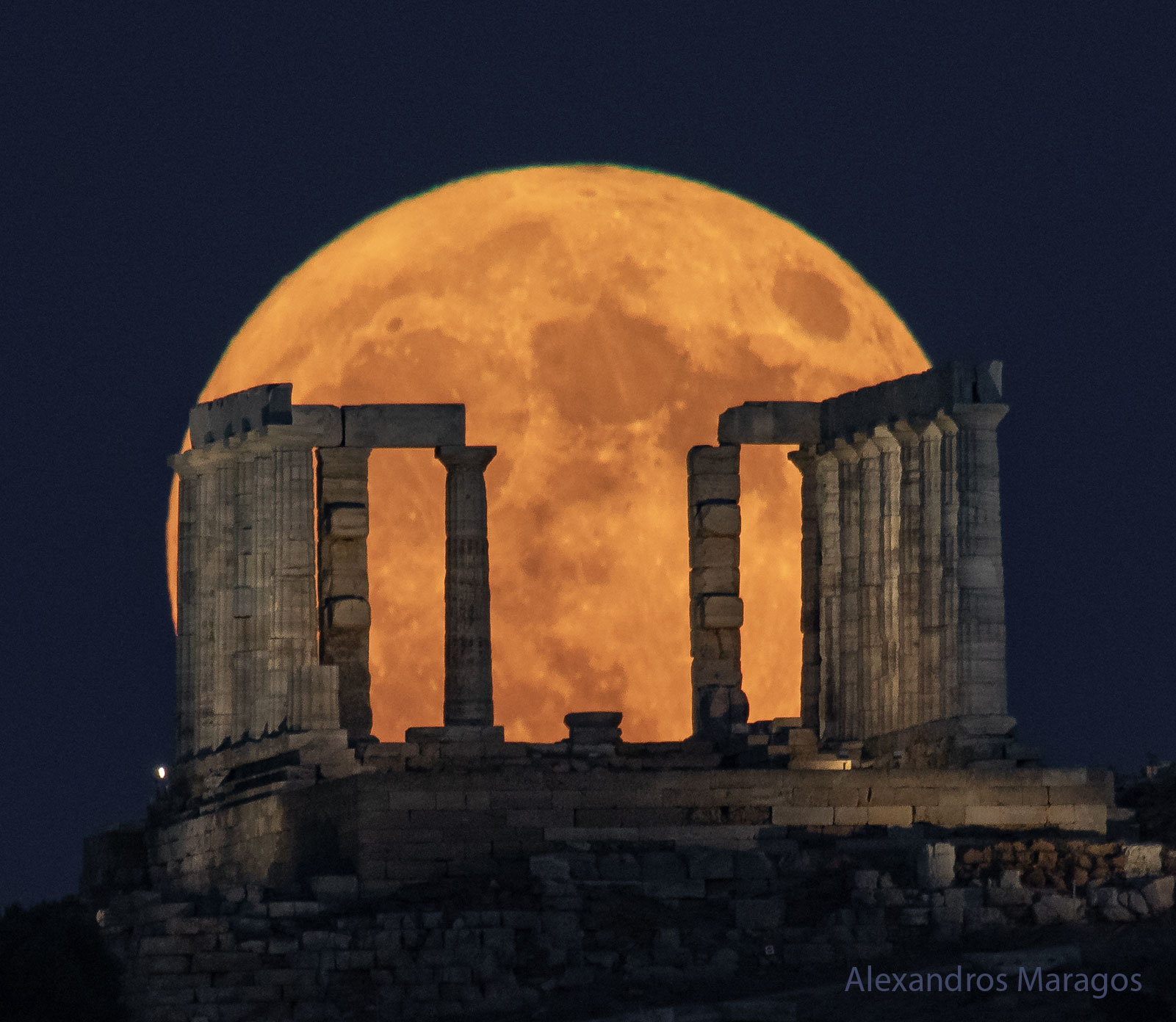
Image Credit & Copyright: Alexandros Maragos
Sounds apocalyptic, doesn’t it? Fortunately, scientists have long disproved these horror stories. The only proven effect is that tides become a few centimeters higher. Not much for the end of the world. But you have to admit, the name Supermoon turned out to be surprisingly successful, unlike its scientific counterpart.
How often does a supermoon happen?
Usually, there are three to five such events per year. The reason for this frequency lies in the fact that orbital cycles are not synchronized with lunar phases, and only their fortunate coincidence gives us another Supermoon. Sometimes there is a real “jackpot” when the Supermoon coincides with a total lunar eclipse. Then we see an incredible sight – a “blood” Supermoon.
Repeating cycle of supermoons
Although these events seem chaotic, they actually follow a clear rhythm. There is a basic astronomical cycle that lasts approximately 14 lunar revolutions (just over a year). It is this pattern that explains why the Supermoon does not come alone, but in whole “seasons,” giving us several spectacular floods in a row. Just such a season awaits us at the end of 2025.
Supermoon dates in 2025
Now let’s get to the main point — the dates. And this is where the confusion begins, because different sources provide different information. The fact is that there is no official definition of what a supermoon is.
There are two approaches. The first, astrological, uses Richard Noll’s broad criterion (within 90% of perigee). According to this criterion, more full moons fall into the “Supermoon” category. The second is astronomical. For example, renowned astronomer Fred Espenak and the Time and Date website use a specific distance of no more than 360,000 km as a basis. This is a much stricter selection.
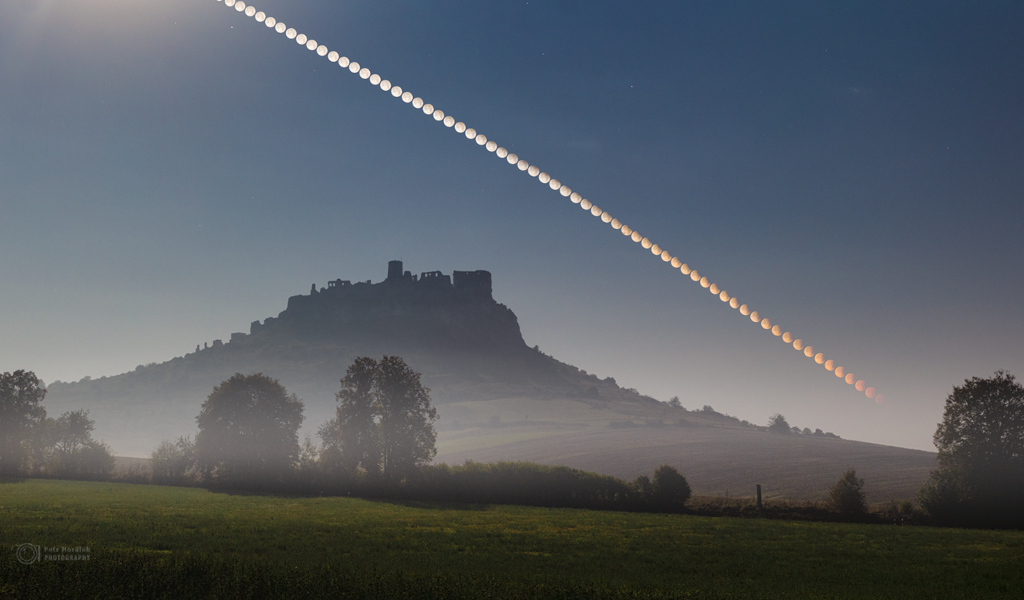
Image Credit & Copyright: Petr Horálek / Institute of Physics in Opava
We will trust the astronomers. According to their calculations, in the fall of 2025, we will see a real series called “Supermoon”:
- October 6 (Hunter’s Moon)
- November 5 (Beaver Moon)
- December 4 (Cold Moon)
Be sure to remember the date of November 5. On this night, our satellite will be at its closest, so this Supermoon promises to be the biggest and brightest spectacle of the year.
How to observe the supermoon?
You do not need special equipment to get the most out of the experience. Just a few simple tips.
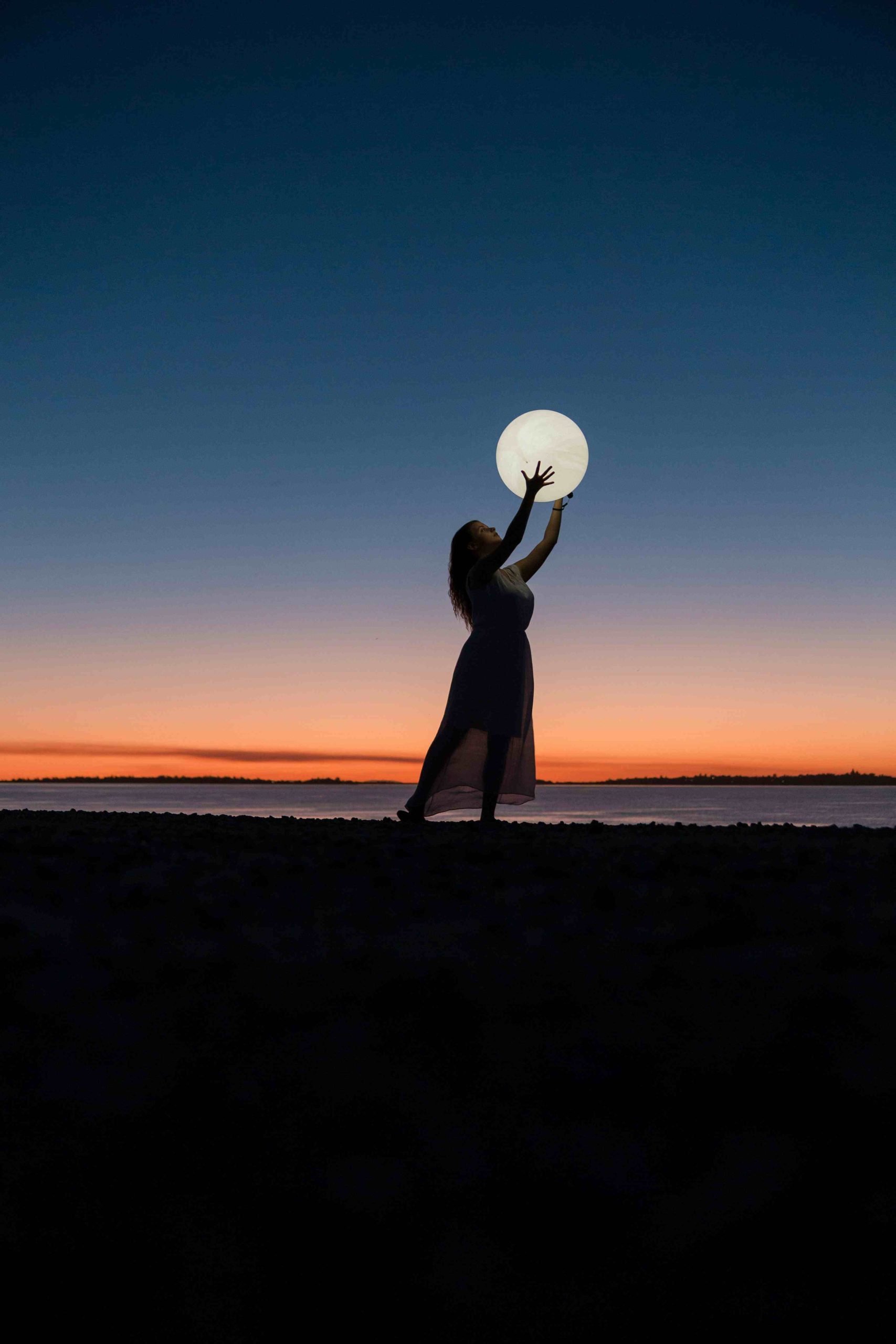
Image Credit & Copyright: Pexels / Ruvim
- Catch the moment of sunrise. Just above the horizon, the moon always looks largest due to the so-called “lunar illusion” – a peculiarity of our perception when the brain compares its size to objects on the ground.
- Get away from city lights. The darker it is around you, the brighter and more contrasting your Supermoon will be. The ideal place is outside the city, as far away from light pollution as possible.
- Equip yourself with binoculars. Even simple optics will allow you to see much more detail: lunar seas, large craters.
- Try taking photos. The camera’s automatic mode will not help here. The best results are achieved by shooting from a tripod in manual mode.
Now that you know everything you need to know, do not miss the next Supermoon. Mark the dates on your calendar and clear skies to you!

