It is no secret that many engineering solutions were created thanks to observations of nature and its diversity of living organisms and structures. Let’s take a look at the amazing behaviors of animals and insects on our planet and find out where humanity got the idea to create swarm robotics – a field of engineering that has been developing for over twenty years, inspired by the laws of nature.
How swarms, flocks, and hives find common ground
Imagine hundreds of starlings moving across the sky like a living cloud: shimmering, spreading out, and merging again to form bizarre shapes. This harmony has no conductor; each bird reacts only to a few neighbors, following a simple set of rules (flocking behavior): do not crash, stay on course, keep your distance.

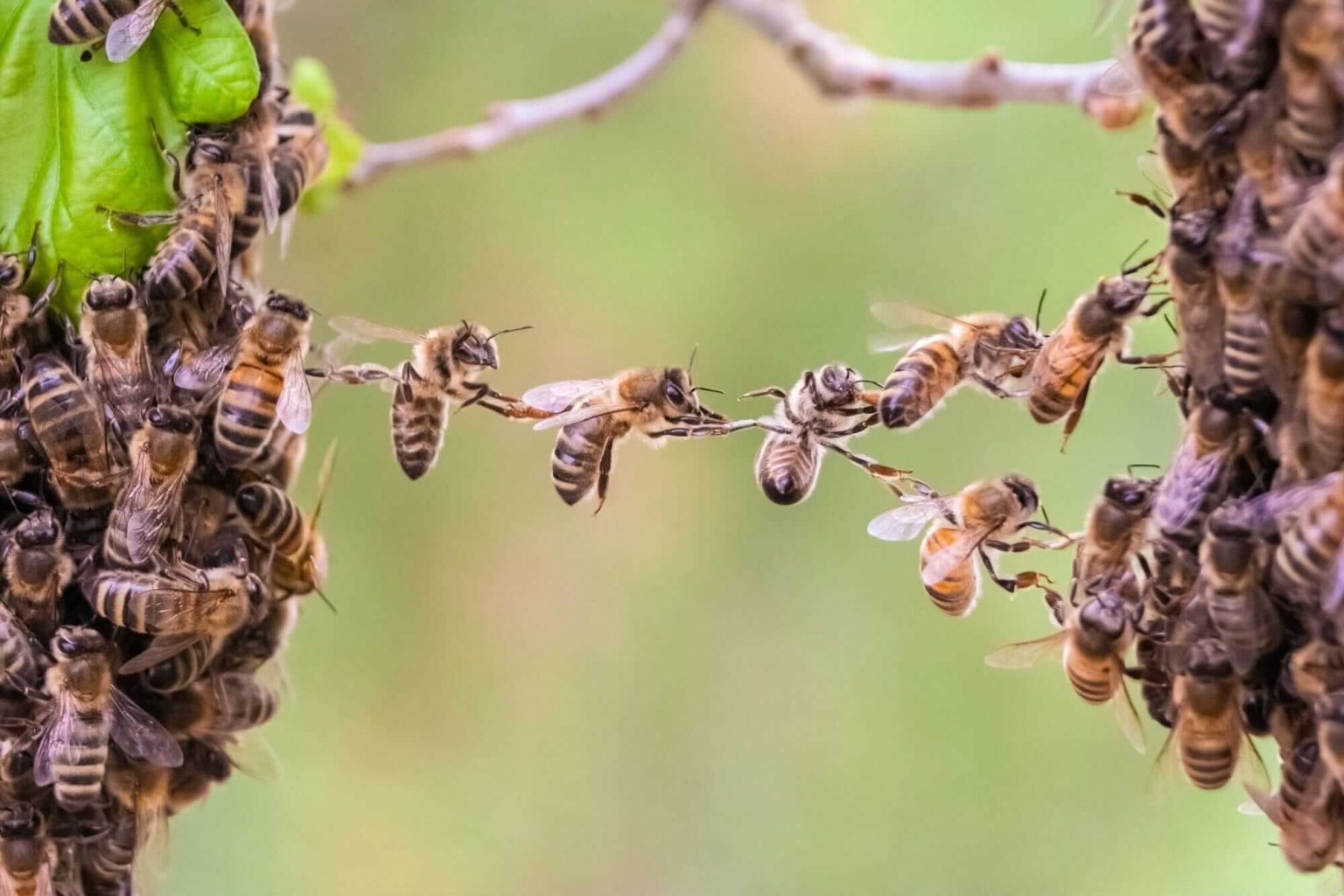
We see similar coordination in ants, which find the shortest routes thanks to pheromones; in bees, which collectively choose a location for a new hive; in fish, which instantly change direction to avoid predators; and even in the cells of the human body, which work together to form organs. Despite the absence of a leader or “central brain,” each acts independently, responding only to local signals and simple rules. Together, they form a system capable of actions that no individual could perform alone.
It is this simple but ingenious interaction that is the essence of swarm intelligence – a natural phenomenon that has inspired engineers and researchers of autonomous systems.
The mathematics of cooperation: principles of swarm engineering
So how do you create a “swarm” of robots capable of acting in unison, like birds in the sky or ants on the march? Drawing on knowledge gained from nature, engineers have identified several key principles without which swarm intelligence is impossible:
- Decentralization: There is no central controller or decision maker. Each robot operates based on local information, ensuring reliability and fault tolerance.
- Scalability: the system can be expanded or reduced without significant changes to the basic architecture. The productivity of the swarm usually increases/decreases when new robots are added/removed.
- Self-organization: Robots in a swarm self-organize to perform tasks efficiently. This includes aspects such as task distribution, formation management, and environment mapping.
- Flexibility and adaptability: swarms can adapt to dynamic environments and cope with uncertainty, making them suitable for a variety of applications.
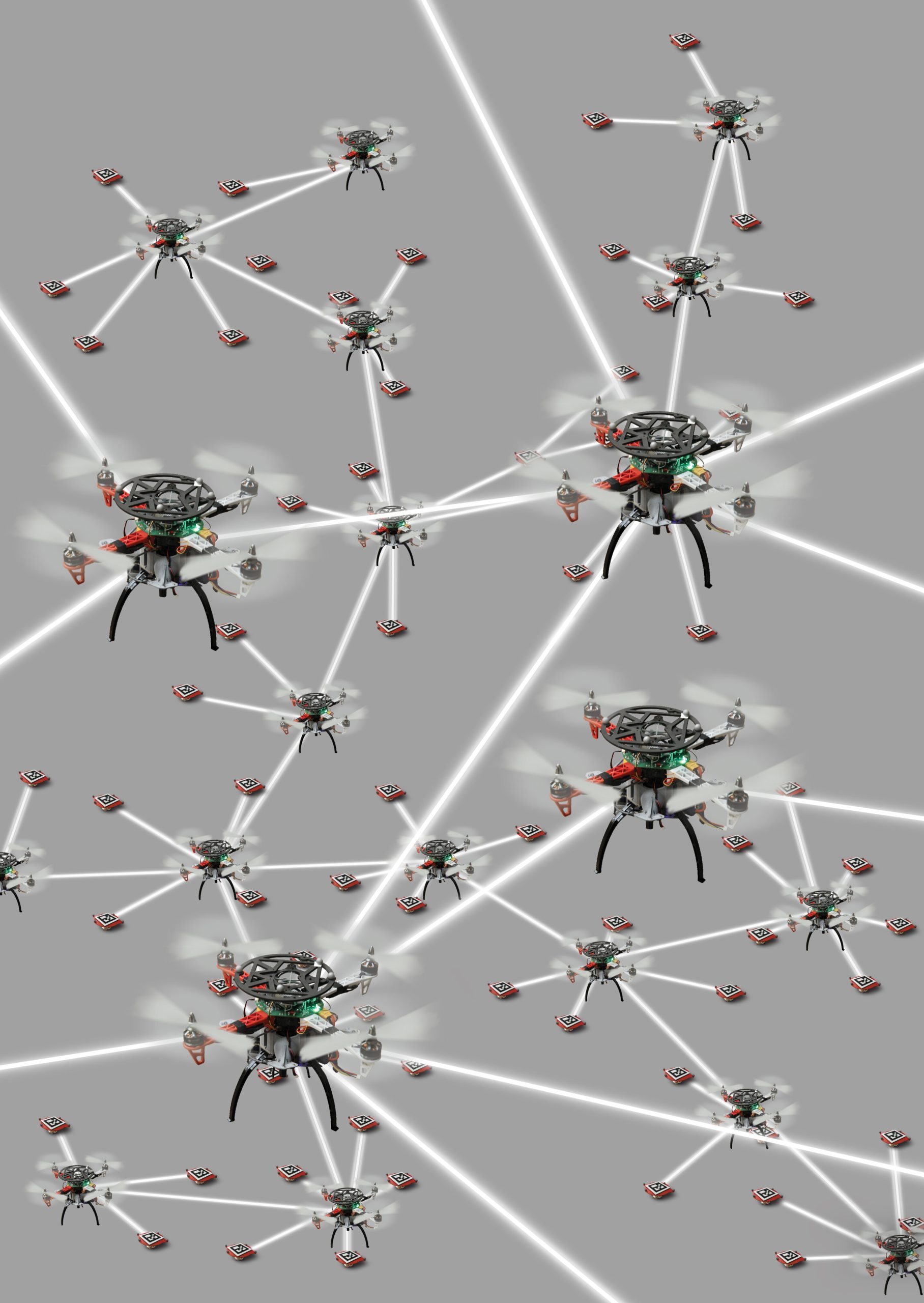
Logically, robots do not have noses, do not emit pheromones, and do not have microvilli on their feet to sense the slightest vibrations. Therefore, they had to use completely different methods of communication.
Radio communication (RF, LoRa, Wi-Fi) is the most common way to share info. Each robot can have a transmitter and receiver that lets it chat with its closest neighbors about where it is, how its battery’s doing, what it is up to, and stuff like that. Some swarms use infrared sensors or LEDs to exchange signals over short distances. Such “light conversations” work well indoors or in laboratory environments where there is no radio interference. In close-knit swarms, such as microbots, even “tactile” communication is possible: the exchange of information through collisions or magnetic fields. This mimics the behavior of insects that transmit signals through physical contact.
The most interesting thing is the attempts to recreate pheromone-based indirect communication (stigmergy) in digital form. Robots create and “scatter” virtual markers on a shared map of space, which are used by others, similar to how ants leave pheromone trails.
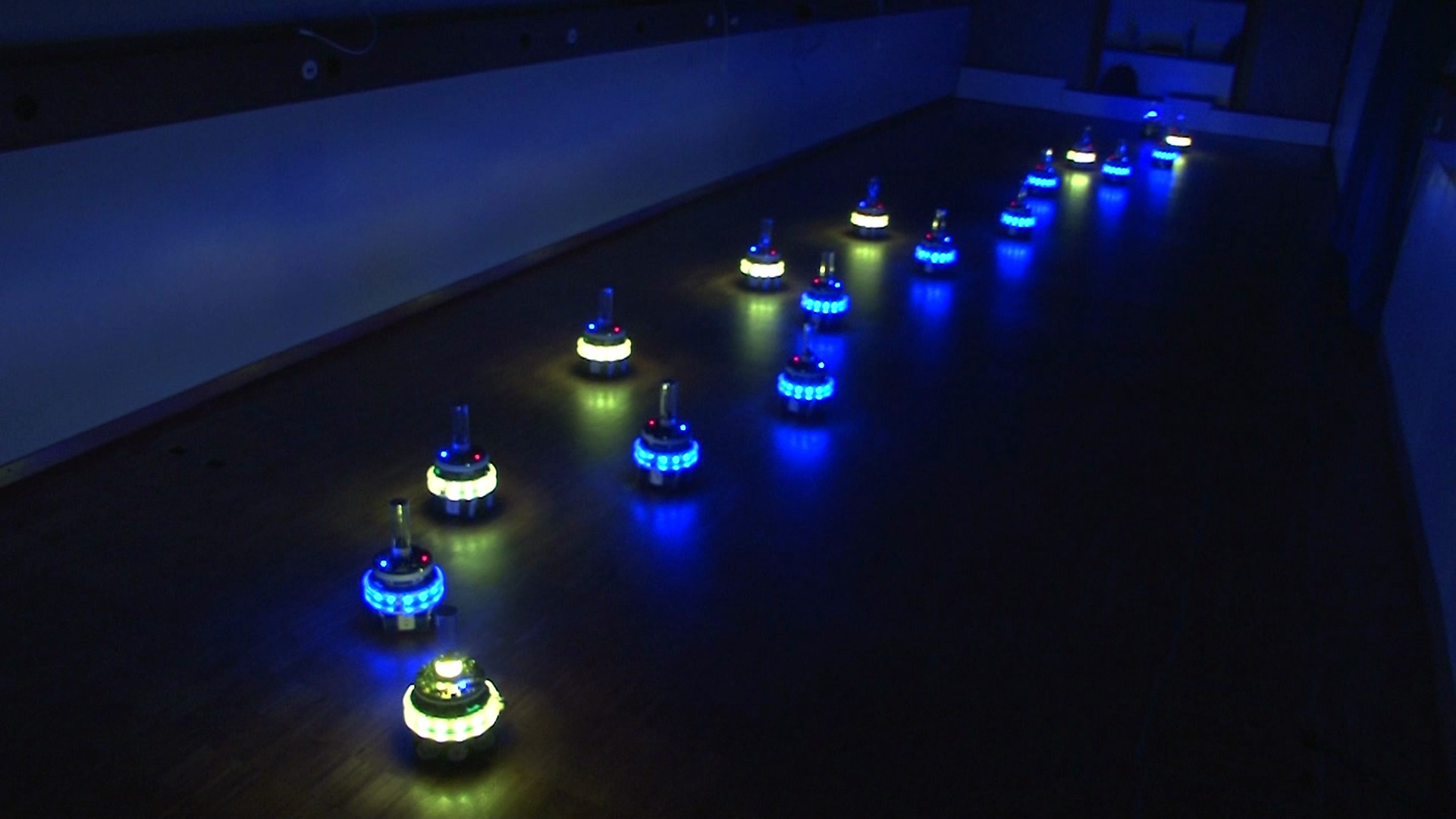
Localization also plays an important role in the effective operation of a swarm. To perform tasks in a coordinated manner, each robot must know where it is in relation to others and what objects or obstacles surround it. Otherwise, the swarm would turn into a chaotic stream. This is often achieved through distance-based localization and/or sensors such as cameras, lidars, infrared sensors, or GPS, depending on the scale of the swarm. Most modern systems combine several methods, known as sensor fusion. This allows data from different sensors to be combined to obtain a more accurate picture of the space. In this way, even without central control, the swarm can maintain a shared spatial awareness, know where each element is located, and coordinate its actions accordingly.
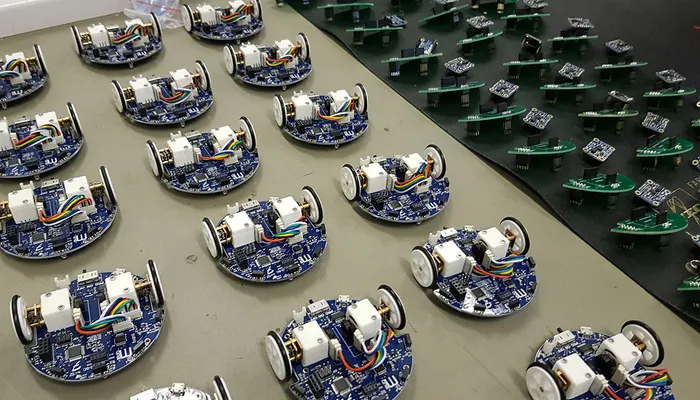
When it comes to decision-making, the main principle of swarm engineering applies: autonomy. Each robot must independently analyze information and make decisions without human intervention. Accordingly, the decision-making process is usually based on a combination of local sensors, communication, and pre-programmed algorithms.
Locally, robots can make decisions based on their own observations of the environment and the behavior of neighboring robots. These decisions are usually simple, but can lead to complex collective behavior. At the same time, algorithms such as consensus protocols (mechanisms that help robots “agree” on a joint decision), swarm algorithms (rules that allow a swarm to move in unison, like a flock of birds), and formation control (maintaining a certain structure or shape while moving) help coordinate actions without central control. They allow the swarm to respond flexibly to changes in the environment and task requirements.
The swarm itself must collectively distribute tasks in such a way as to maximize efficiency. But here a problem arises in that the capabilities of each robot are limited, since we are not talking about complex and expensive machines, but about simple, yet numerous agents, whose strength lies precisely in their swarm behavior. Their advantage is that the cost of each unit is minimal, and together they are capable of performing tasks that a single “intelligent” robot would not be able to handle.
There are several approaches to task distribution:
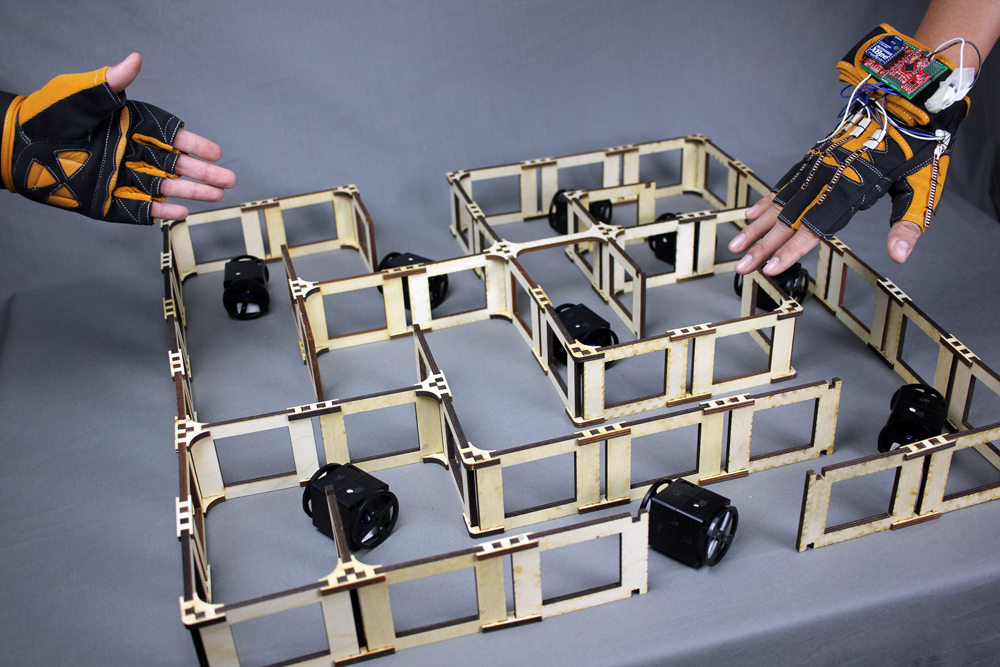
- Task partitioning: Each robot takes on the part of the job it can perform most efficiently, for example, due to its proximity to the target or available sensors. In a rescue operation, some robots can scout the area, others can transmit data, and still others can transport useful materials or victims.
- Role allocation: Roles such as “leader,” “followers,” or specialized performers may appear in a swarm. The hierarchy can be either predefined or arise naturally in the process of interaction. For example, a drone with the strongest GPS signal may temporarily become the coordinator for others, who orient themselves to its position.
- Behavioral coordination: Swarms operate according to common rules of behavior that resemble natural patterns: flocking, foraging, grazing, or patrolling territory. Thus, in the study area, some robots can expand the boundaries of the map while others collect and transmit data; their interaction automatically creates an effective system of collaboration.
From theory to practice: how swarms are changing engineering
Now that we understand how a robotic swarm functions, how it navigates, communicates, makes decisions, and collectively distributes tasks, it is time to look at the most striking examples of its application in the world. And although swarm robotics seems futuristic, it has already gone beyond the confines of laboratories and is gradually becoming part of modern research, from search operations on Earth to expeditions into space.
Kilobot Swarm (Harvard, 2011–2014): a thousand little minds
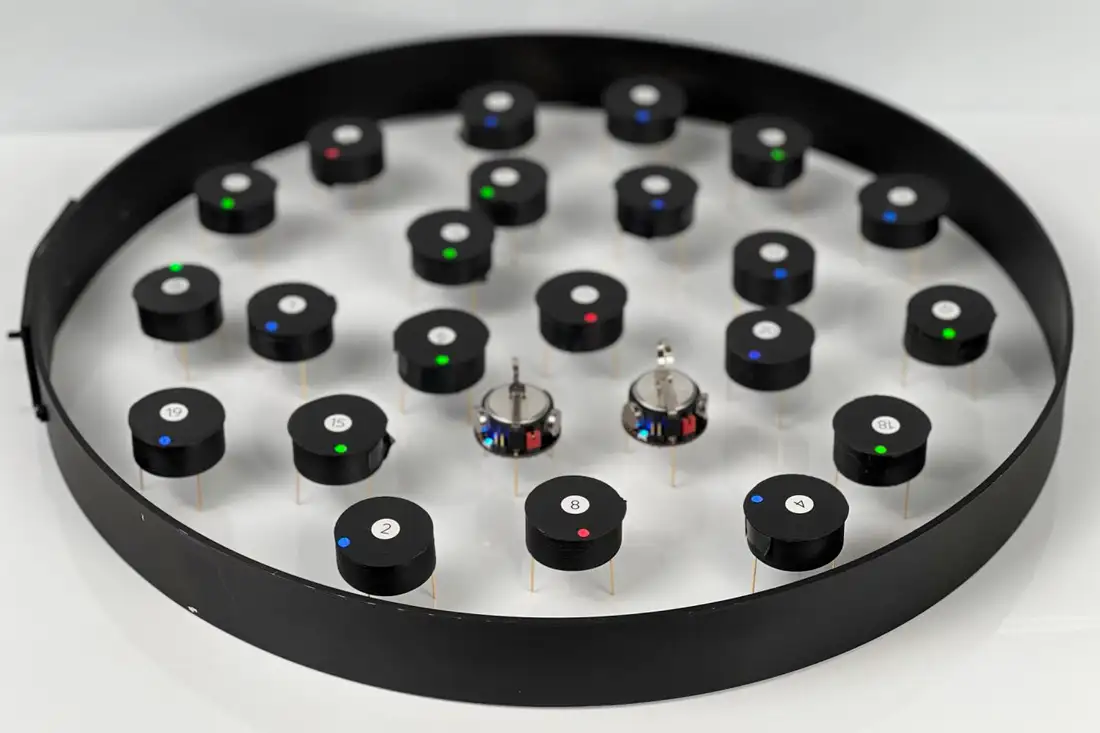
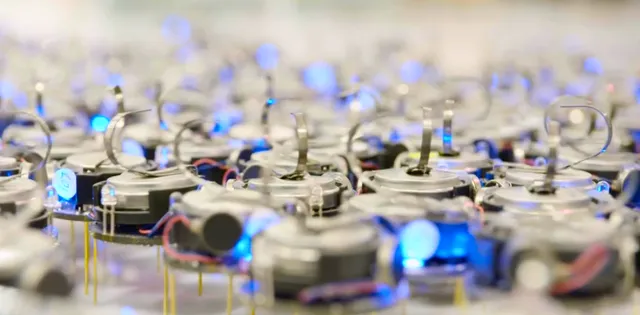
At the Wyss Institute laboratory at Harvard University, researchers created a swarm of 1,024 tiny Kilobot robots. Each had only three functions: movement, measuring distance to neighbors, and exchanging simple signals. However, together they could self-organize into shapes, form formations, and respond to changes in the environment. This project became one of the most famous in the field of swarm robotics and demonstrated that even the simplest agents can create complex behavioral systems.
In this video, kilobots self-organize into a swarm of thousands of robots. Source: Harvard School of Engineering and Applied Sciences
NASA Swarmies (USA, 2013–2016): ants searching for resources on other planets
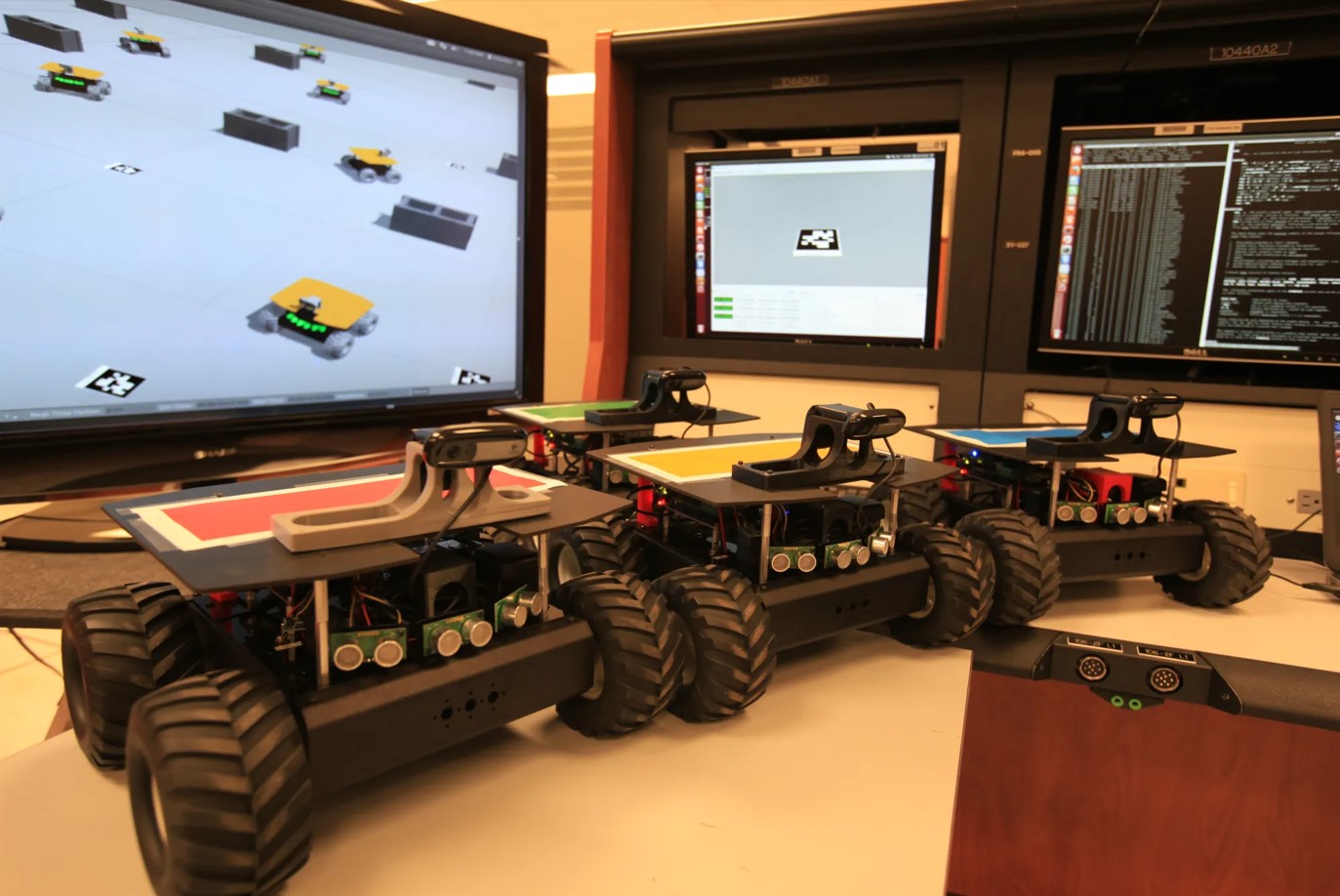
The NASA Swarmies project was developed at the Kennedy Space Center as an experiment to simulate ant behavior in a technical environment. Each robot is a small platform equipped with GPS, a camera, Wi-Fi, and distance sensors. Swarmies exchanged coordinates of found “resources” and changed their trajectory according to virtual pheromones (digital markers on a shared map).
Source: NASA
The goal of the experiment was to develop algorithms for autonomous search for water or minerals on the Moon or Mars.
ESA Daedalus (European Space Agency, 2019 – present): autonomous balloon for lunar exploration
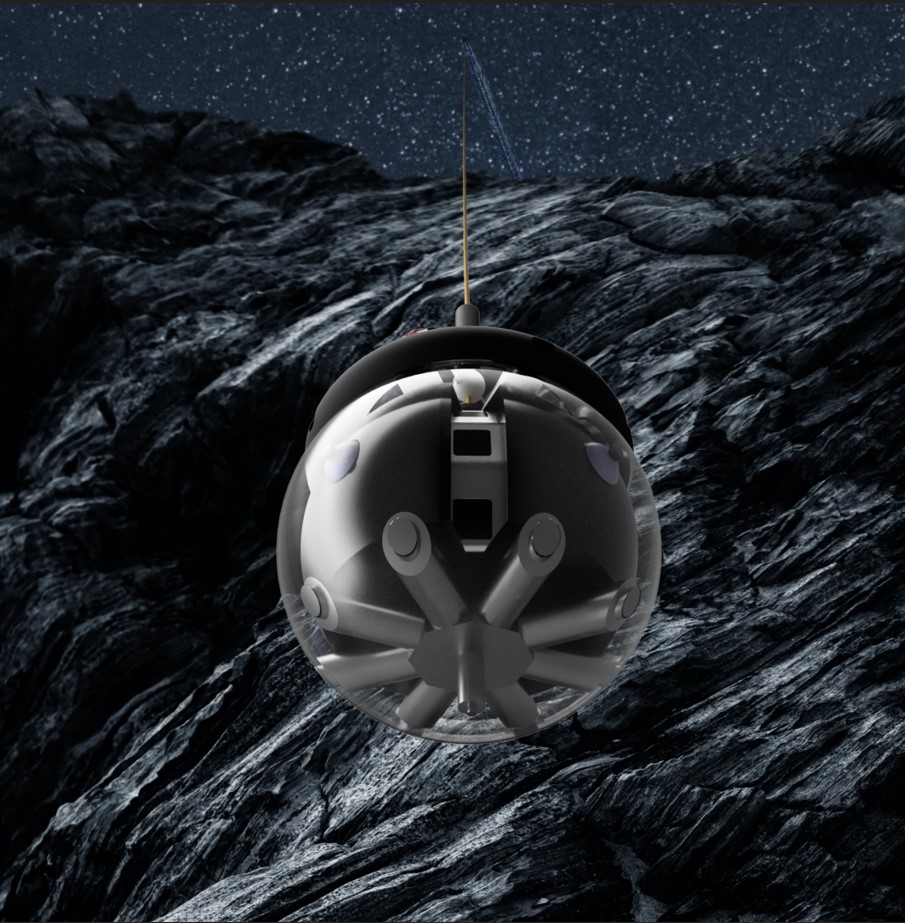
The Daedalus concept was developed as part of the European Space Agency’s (ESA) Lunar Caves Exploration program. It is a spherical robot with a diameter of about 50 cm that will be able to descend into lunar lava tubes, which are considered potential sites for future bases. The robot will be able to roll, scan the surface with lidar, analyze temperature, and create a 3D map of the interior spaces. In the future, several such spheres will be able to work collectively, like a swarm of explorers.
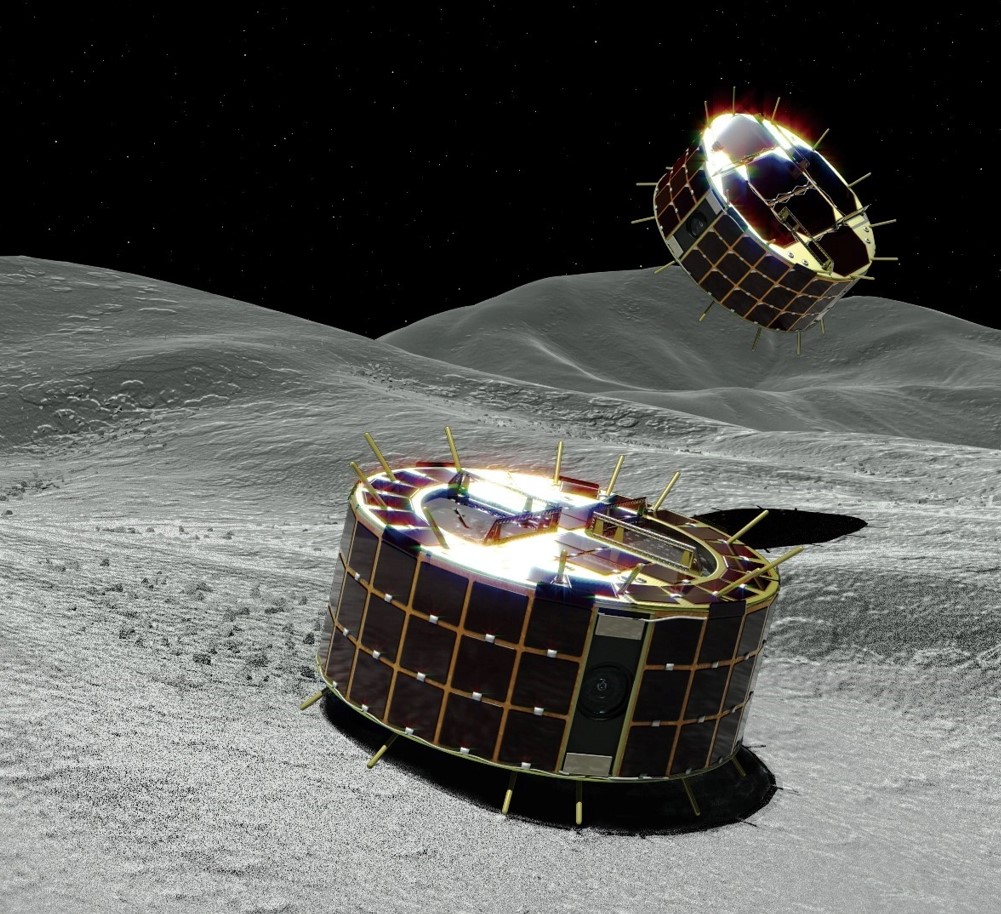
JAXA MINERVA-II (Japan Aerospace Exploration Agency, 2018): the first “jumping” swarms on an asteroid
The Japanese space agency JAXA is experimenting with miniature autonomous probes for operation in low-gravity conditions on asteroids. Such swarms will be able to disperse across the surface, collect soil samples, measure magnetic fields, and transmit data to each other in a communication chain. Similar technologies have already been tested during the Hayabusa2 missions and are now being considered for future expeditions to Jupiter’s moons.
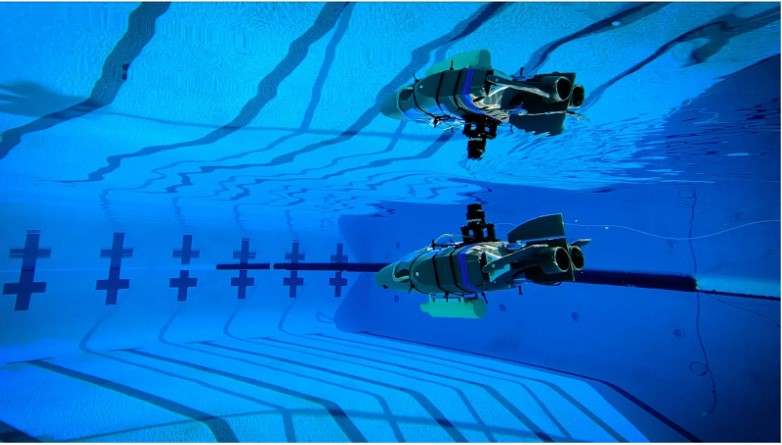
NASA SWIM (USA, 2022 – present): microbots for oceans on other worlds
The NASA Jet Propulsion Laboratory (JPL) is developing the SWIM (Sensing With Independent Micro-swimmers) concept – a swarm of tiny autonomous robots capable of exploring the subglacial oceans of moons such as Europa and Enceladus. Each robot is planned to be the size of a cell phone and will have sensors to analyze the chemical composition of water and possible biomarkers of life. SWIM is planned to be placed inside larger probes that will penetrate beneath the ice surface, releasing the swarm into the liquid environment for collaborative mapping.
Of course, it is impossible to cover all swarm robotics projects in a single article, as their number is growing every year. But perhaps that is the beauty of this field, which is constantly growing and expanding its horizons.
Challenges and horizons
Despite their potential, swarm systems face many challenges. One of the main ones is coordinating a large number of robots in a real environment, where signals are delayed, sensors give errors, and communication can disappear at any moment. Another problem is energy efficiency: each robot has limited resources, and the swarm must learn to “conserve” energy without losing efficiency. Safety and reliability are equally important issues, as even a simple algorithm failure can lead to chaotic system behavior.
However, all these difficulties do not deter researchers; on the contrary, they stimulate them. Every year, new approaches emerge: bio-inspired algorithms, synthetic teams that are capable of independently adapting, learning, and collaborating.
Perhaps it is thanks to such technologies that humanity will be able to create autonomous missions on other planets, self-repairing infrastructure on Earth, or even communities of robot explorers.
And perhaps by studying them, we will better understand ourselves.