

Almost all ground-based astronomical observations face an unpleasant reality: Earth has an atmosphere that imposes certain limitations on research. Radio waves longer than 10 m are reflected by the ionosphere. Our atmosphere is also opaque to most infrared radiation. And optical images are blurred by turbulence, which negatively affects the resolution of images. The ideal solution to all these problems is to place astronomical instruments where there is no atmosphere. For example, on the Moon. Its low gravity and lack of wind would allow for the construction of more cumbersome and efficient structures than on Earth or in orbit.
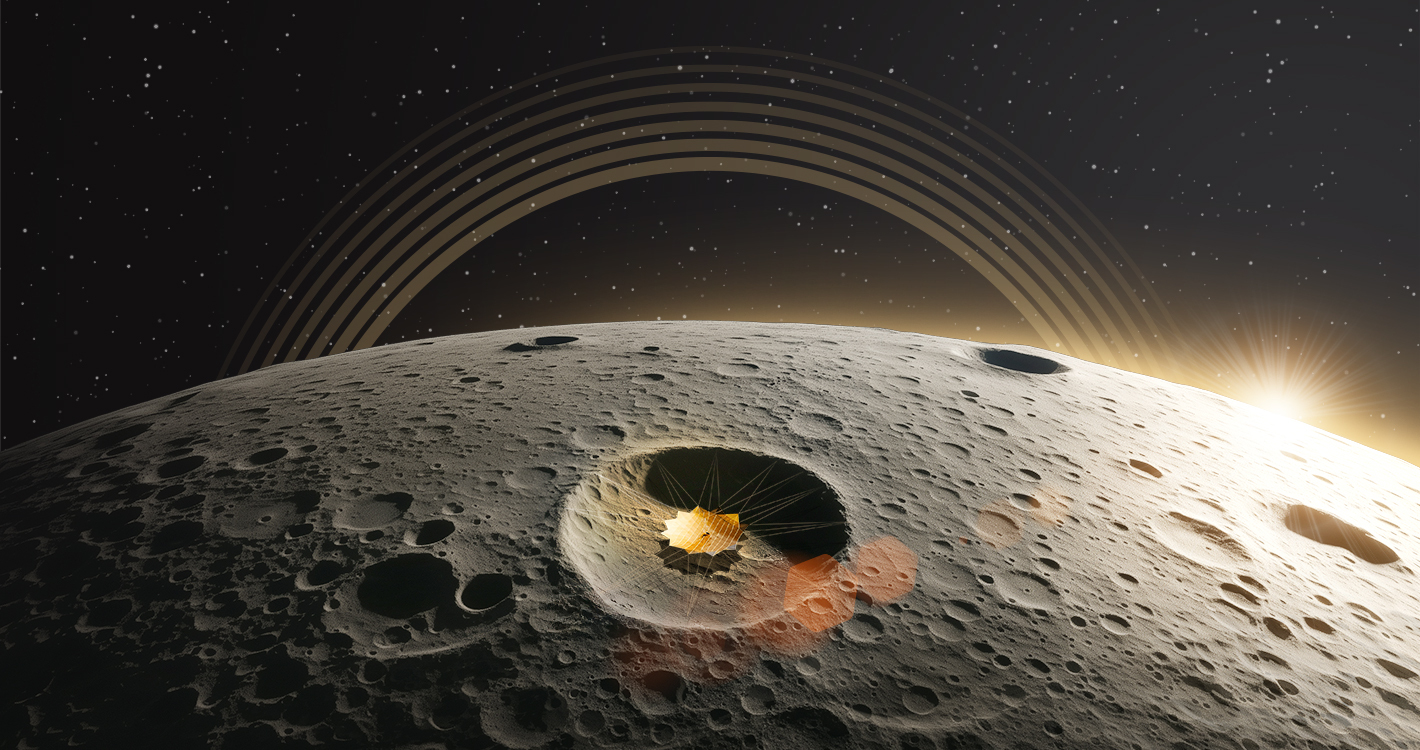
A radio telescope in a natural crater
The idea of placing a radio telescope on the far side of the Moon has been around for quite some time. The fact is that the part of the satellite facing away from us is “radio quiet,” meaning that research will not be interfered with by electromagnetic noise from mobile communication systems, television, satellite internet, and various electrical equipment on Earth. The Sun is also a powerful source of radio emissions, but half the time, such a telescope will be reliably protected from it.
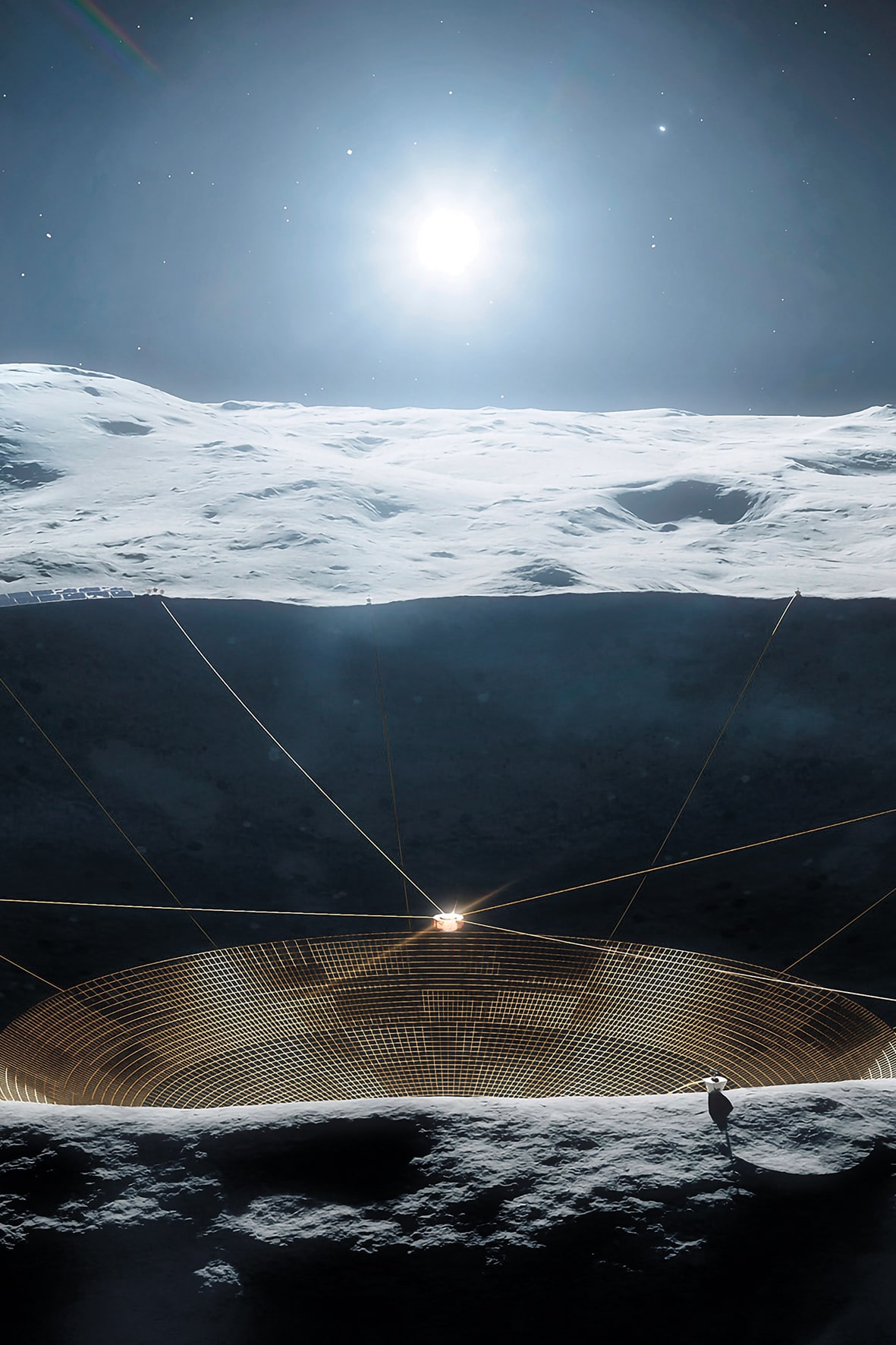
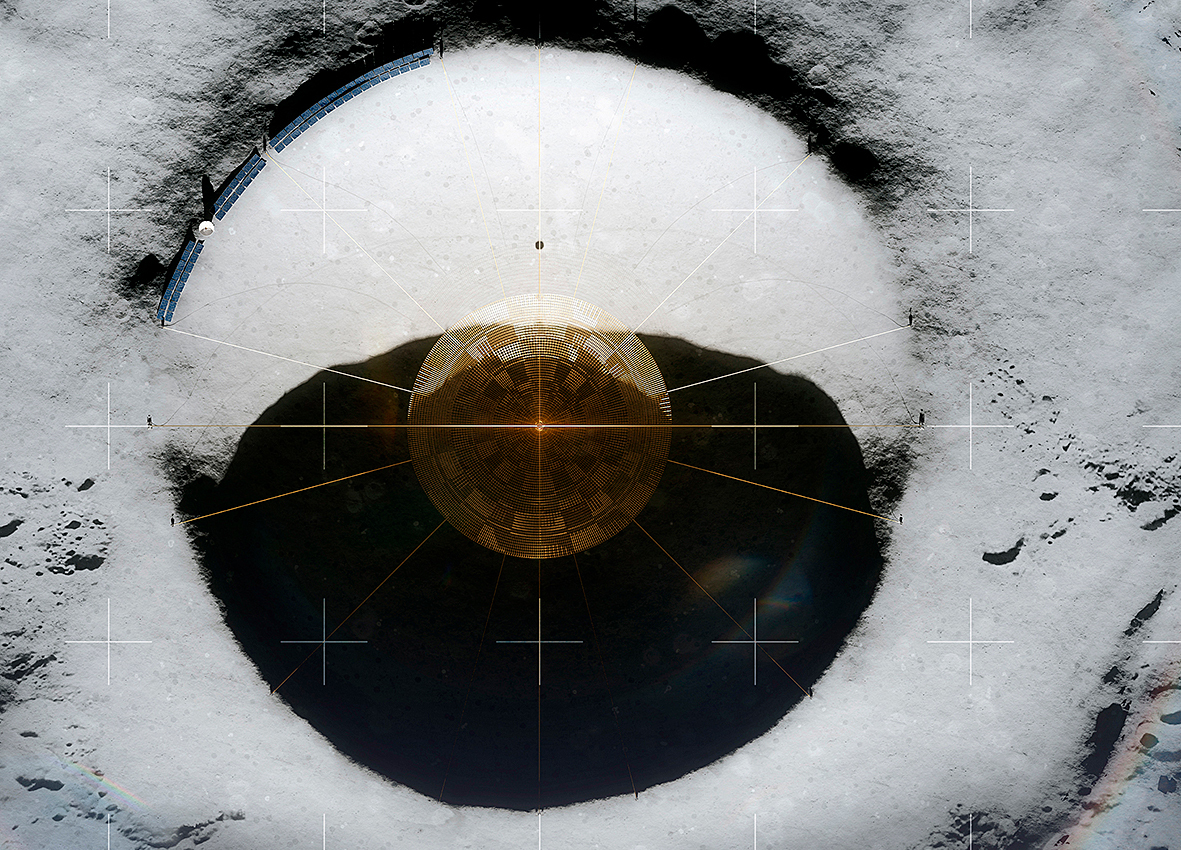
Since 2020, a project for a radio telescope in a lunar crater, the Lunar Crater Radio Telescope (LCRT), has been actively under development. An impact crater measuring approximately 3-5 km is planned for such a telescope. Two DuAxel climbing robots will deploy a 350 m diameter wire mesh at the bottom and suspend a receiver above it. One robot will remain outside and serve as an anchor, while the other will descend to perform the work directly.
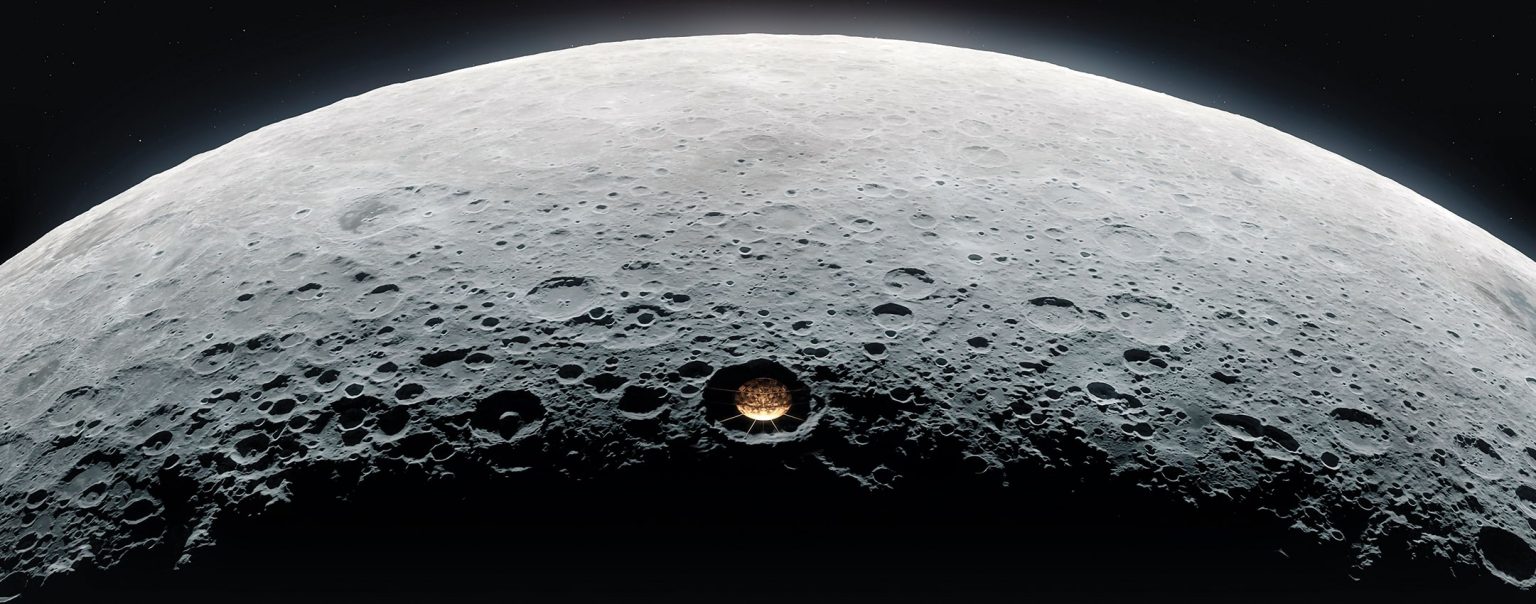
Such a telescope on the far side of the Moon is a dream come true for cosmologists. Long-wave radio observations would reveal the “dark ages” of our universe – the first hundreds of millions of years after the Big Bang, when neither stars nor galaxies existed. With a sufficiently large radio telescope, astrophysicists could track their formation and perhaps even find clues about the nature of dark matter.
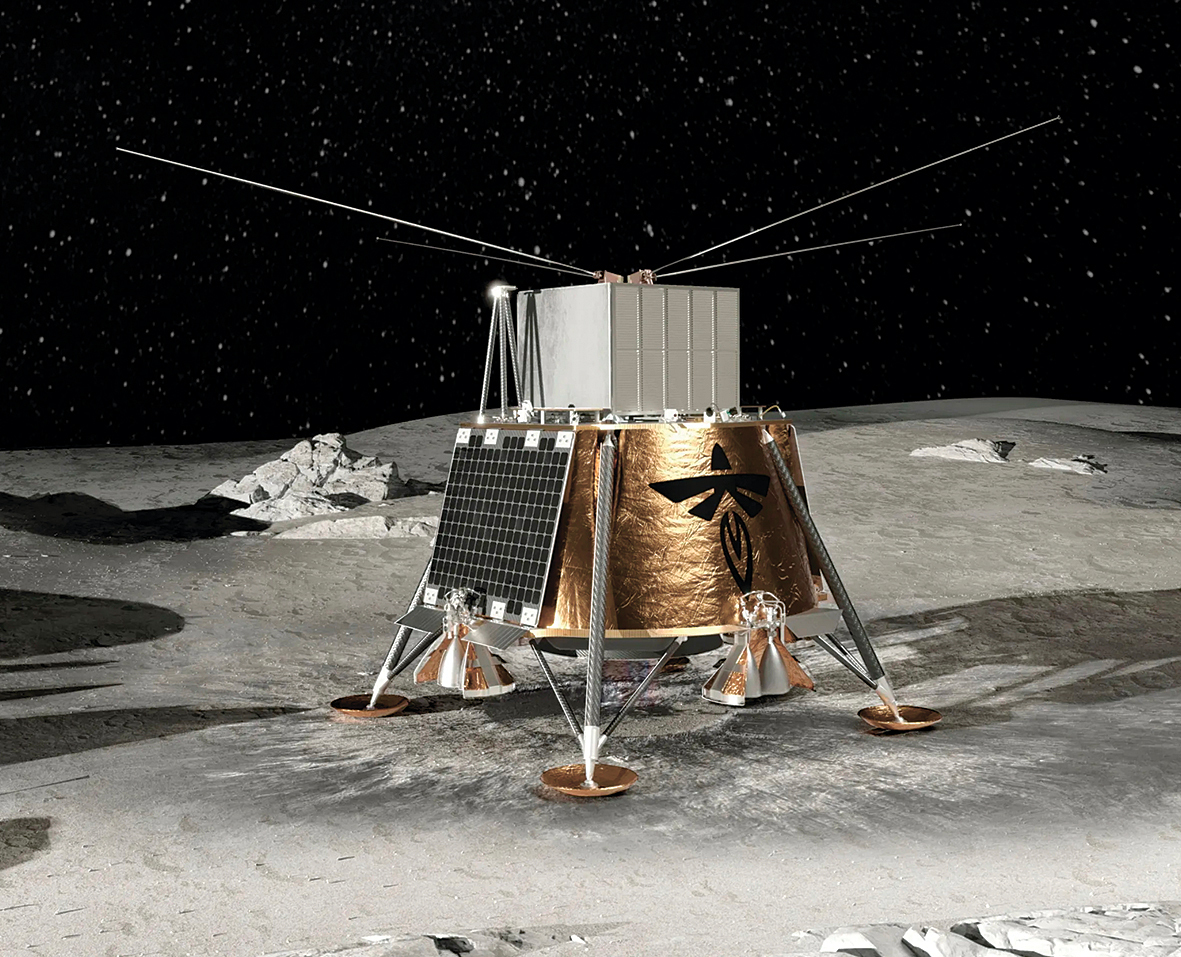
A more compact and simpler alternative could be the LuSEE-Night (Lunar Surface Electromagnetics Explorer Night system) autonomous device, which is scheduled to be deployed on the far side of the Moon in 2026. LuSEE-Night is a joint project between NASA and the US Department of Energy. Four three-meter monopole antennas will be installed on top of the Blue Ghost 2 landing module, developed by the private American-Ukrainian company Firefly Aerospace. A rotating platform will allow the orientation of the antennas to be selected. Such a telescope will operate at low frequencies, and its main task will be to measure radiation in the early period of the evolution of the universe.
Infrared telescope at the pole
The location of the infrared telescope must be chosen with particular care. To prevent background noise, such an instrument must be constantly cooled to very low temperatures. Fortunately, there are regions on the Moon where sunlight never reaches, such as the Shackleton crater at the south pole. The rim of this impact crater is almost constantly illuminated by the Sun, but its interior is always in shadow, forming a so-called cold trap where temperatures reach -183°C.
French astronomer Jean-Pierre Maillard has been developing a lunar infrared telescope over the past few years. He proposes the ALLURE (Astronomical Large LUnar infraRed Explorer) project with a 13-meter segmented mirror. Its location inside a permanently shaded crater will allow the telescope to operate longer and more efficiently than even the famous James Webb, thanks to passive cooling and a mirror area four times larger. Its main tasks could be the study of exoplanets, distant galaxies, and their evolution, as well as the most energetic processes in the universe. However, a significant problem will be that only half of the sky will be accessible to the telescope.
Optical telescope system
The advantage of placing optical telescopes on the Moon is the absence of turbulent flows, which significantly impair the image quality of ground-based instruments. For large telescopes, this problem is solved by a complex and cumbersome system of adaptive optics, which largely compensates for image distortion. On the Moon, where there is virtually no atmosphere, even small instruments promise extraordinary efficiency.
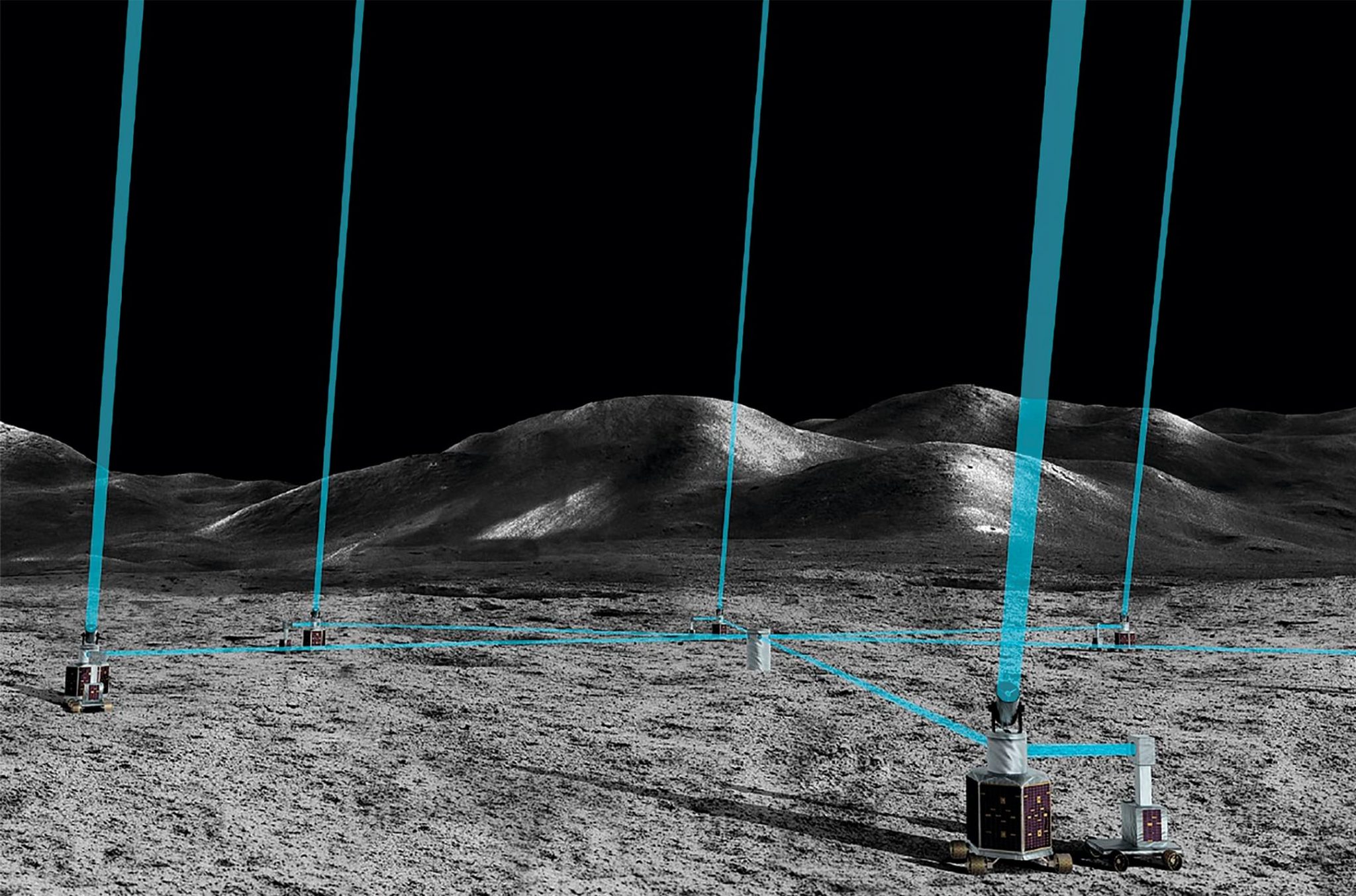
Source: Kenneth Carpenter, Hubble Operations Project Scientist
The theoretical resolution of a telescope depends on its diameter: the larger it is, the smaller the details that can be seen. However, modern astronomy mainly relies on observations with an ultra-long baseline. This approach involves collecting light from smaller instruments located far apart, followed by specific processing that simulates a large “artificial aperture.”
A research team at NASA’s Goddard Space Flight Center has proposed a design for a long-baseline lunar optical interferometer, called AeSI (Artemis-enabled Stellar Imager), to capture images in the visible and ultraviolet ranges. According to scientists, the construction of such a design can begin with two or three small telescopes spaced at a relatively short distance. Subsequently, the base will need to be extended, and the number and diameter of optical elements increased. In the absence of atmospheric distortions, the idea has enormous scientific potential: it opens up opportunities for studying the surfaces of stars, the structure of protoplanetary disks around young stars, and even accretion disks surrounding black holes.
Problems and challenges
The most obvious problem is the huge temperature fluctuations on the Moon. A day here lasts about two weeks, during which the temperature reaches approximately +120°C at almost any point illuminated by the Sun. Night lasts just as long, with temperatures dropping below -170°C. This means that engineers will have to develop special materials and technologies to protect equipment.
Ensuring energy sources are no less important. This will be solved partly by solar panels and partly by nuclear reactors or devices such as RITEG (radioisotope thermoelectric generator). The latter have no moving parts, require no maintenance, and can operate for decades.
Observatories located on the far side of the Moon will transmit data to Earth for further processing by scientists. Therefore, relay satellites must be launched into orbit to maintain communication. An alternative to a space relay is a large-scale system similar to a cellular network, through which data will first be transmitted to the side of the Moon closest to us, and from there to Earth.
Natural disasters can be a real challenge. The Moon is still gradually cooling down, which causes it to contract, and temperature fluctuations during sunrise and sunset, and tidal interactions with Earth are additional sources of seismic vibrations. Studies using seismographs installed on the surface show that moonquakes can reach a magnitude of 5.5 on the Richter scale. Because of this, certain areas of the surface suddenly become unstable.
Another danger comes directly from space: about 100 meteorites weighing up to one ton fall on the Moon every year, and even micrometeorites measuring a few millimeters can damage sensitive equipment. Upon colliding with Earth, such bodies would burn up completely in the atmosphere. On the Moon, however, they simply fall onto the surface, raising a certain amount of dust, just like any robots there. And dust from lunar regolith, unlike soft Earth dust, is very sharp and abrasive and will accumulate on the exposed parts of instruments. Penetrating the smallest cracks, it poses a danger to both people and equipment. In particular, it can damage the surface of solar panels, camera lenses, telescope mirrors, and get stuck in moving mechanisms, blocking their operation.
A look into the future
Astronomical equipment will inevitably require periodic maintenance. At present, humanity is still far from colonizing the Moon, building bases, and maintaining a permanent crew of astronauts on its surface. This is especially true of the far side of the Moon, where even during the heyday of the Apollo program, no human has ever set foot. We are equally far from creating the grandiose structures that would allow us to take full advantage of the benefits of such observatory locations.
However, a huge number of modern space missions seemed like science fiction when they were just ambitious ideas. The good news is that, in parallel with the Artemis program, scientists and engineers are moving forward with the development of various lunar observatory projects. It is quite possible that in two or three decades, they will finally be turned into reality.
This article was published in issue No. 2 (191) of Universe Space Tech magazine in 2024. You can purchase this issue in electronic format from our store.

