

The Royal Observatory in Greenwich has announced the results of the 17th Astronomy Photographer of the Year competition. It is the largest and most prestigious competition for astrophotographers in the world. This year, 5,880 entries were submitted from 68 countries.
This year, the competition consisted of eight main categories: “Our Sun”, “Our Moon”, “Galaxies”, “Auroras”, “Planets, Comets, and Asteroids”, “People and Space”, “Stars and Nebulae”, and “Sky Landscapes”. The judges also presented several special awards, recognizing newcomers to astrophotography and innovations in imaging.
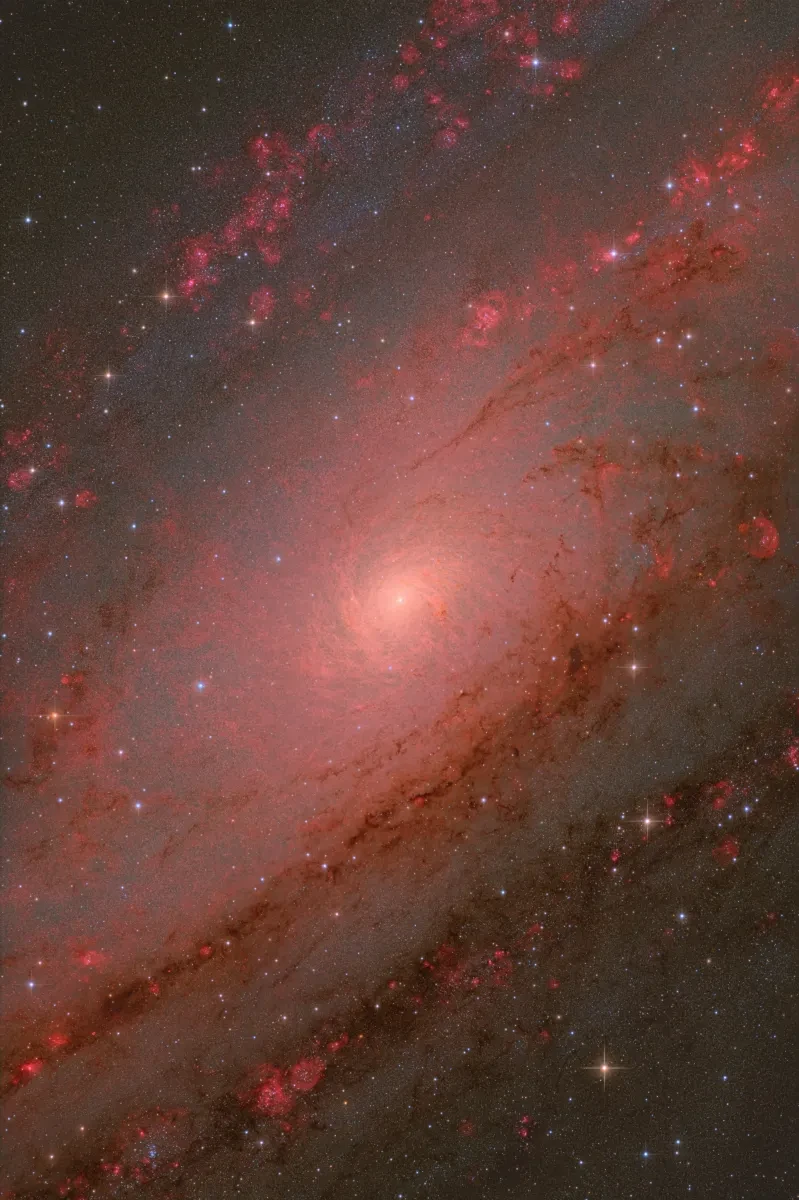
In 2025, Chinese photographers Weitang Liang, Qi Yang, and Chuhong Yu, who submitted their work in the “Galaxies” category, became the overall winners of the competition. They photographed the core of the Andromeda Galaxy, the largest neighboring galaxy of the Milky Way, located 2.5 million light-years from Earth.
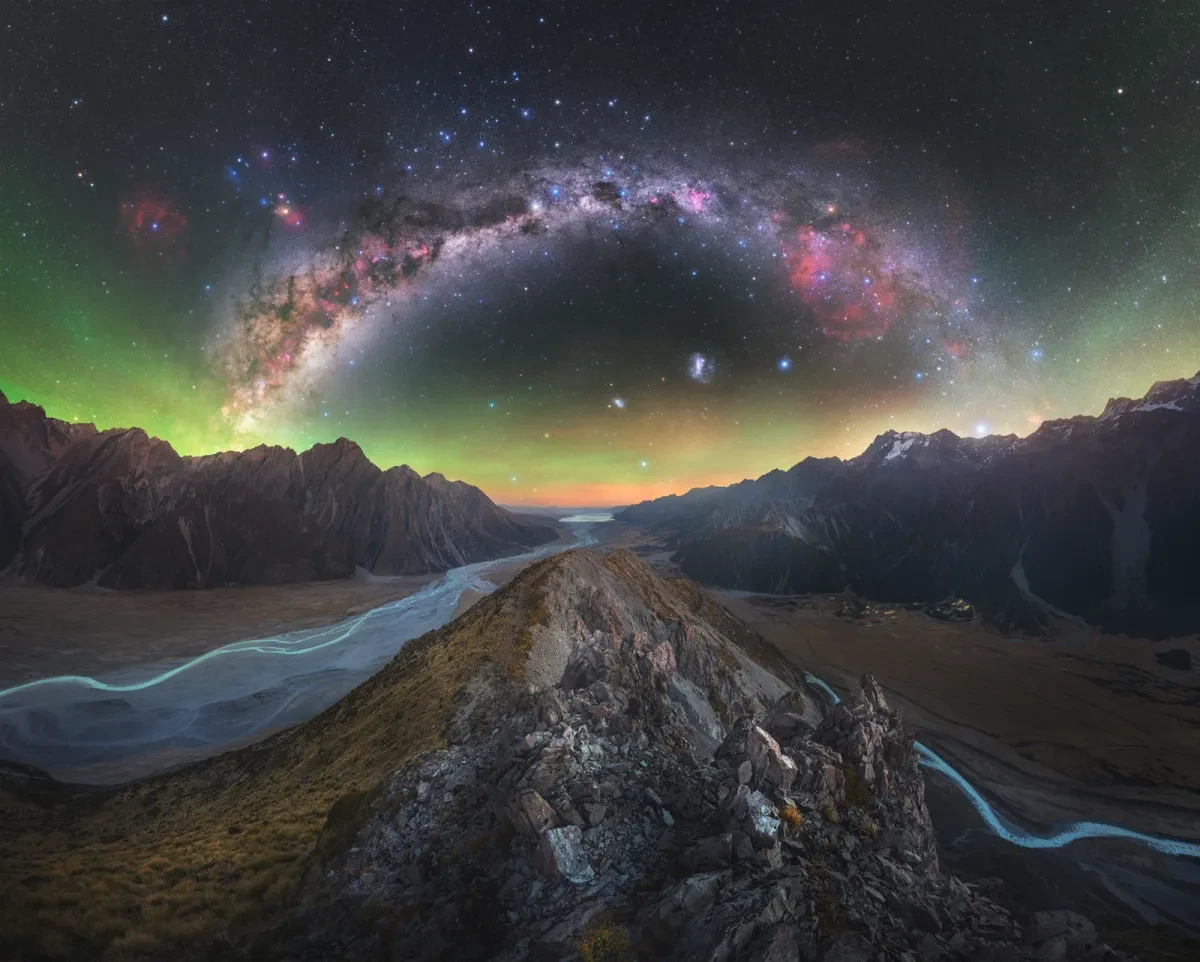
Tom Rey won the “Sky Landscapes” category for the second year in a row. He captured the Milky Way stretching across New Zealand’s Aoraki/Mount Cook National Park.
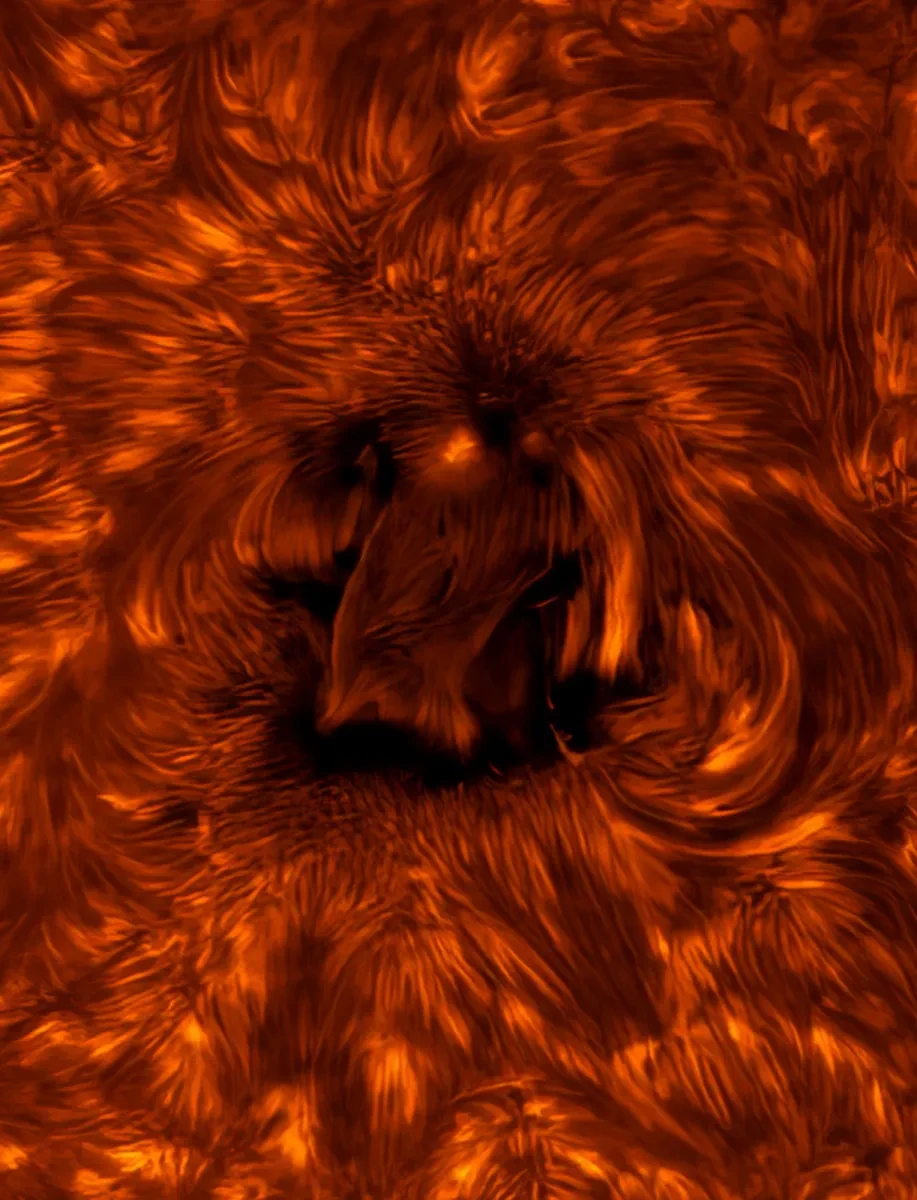
James Sinclair won in the “Our Sun” category. He photographed an active region of the solar chromosphere.
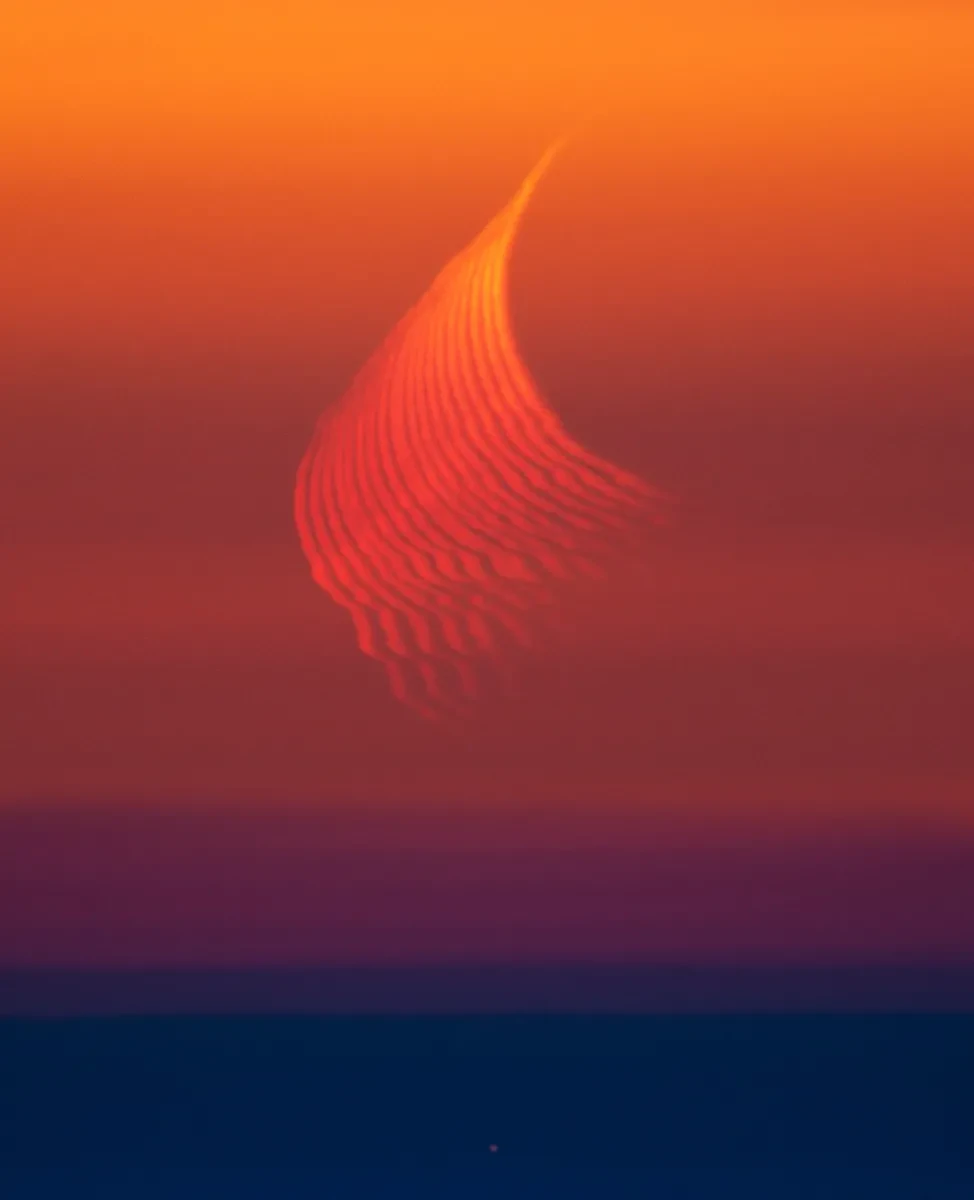
The photo by Marcella Giulia Pace, winner in the “Our Moon” category, shows how much the refraction effect can distort the shape of the setting moon.
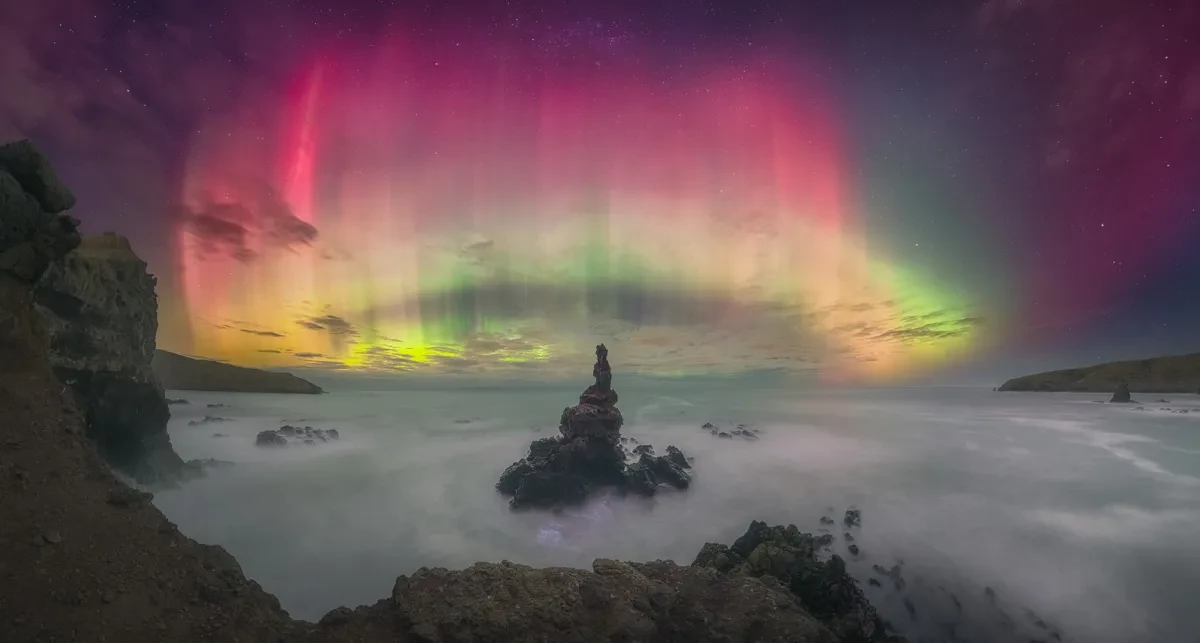
The winner in the “Aurora” category was a photograph by New Zealand astrophotographer Kavan Chay. He captured the aurora caused by the most powerful geomagnetic storm that hit Earth on May 10, 2024.
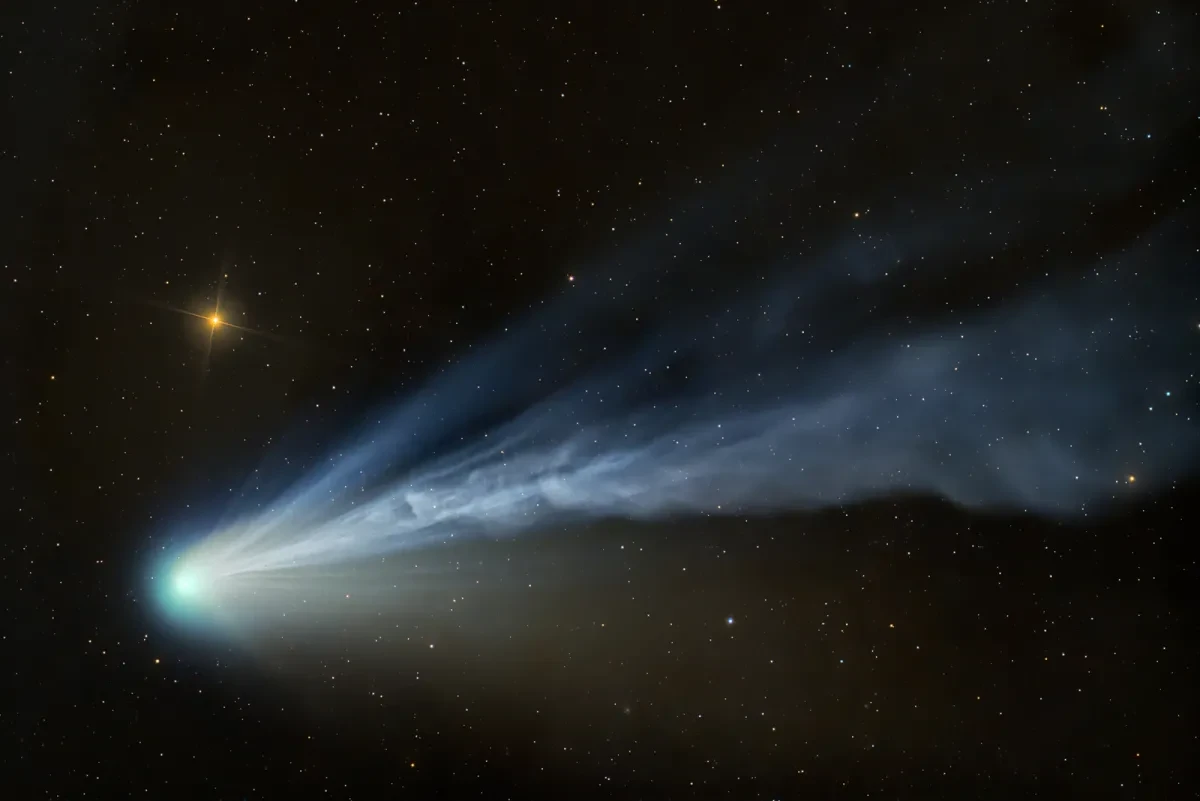
Dan Bartlett celebrated his victory in the “Planets, Comets, and Asteroids” category. His photograph shows the Pons-Bruce comet.
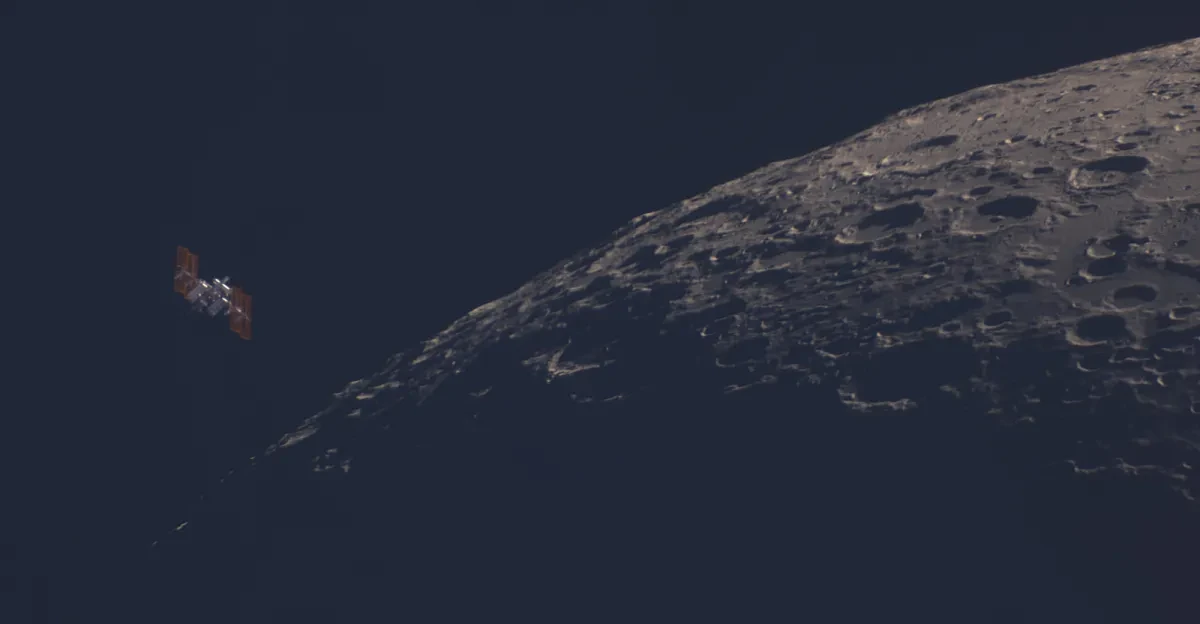
As in the previous year, Tom Williams’ photograph won again in the “People and Space” category. He managed to capture the transit of the ISS against the backdrop of the Moon.
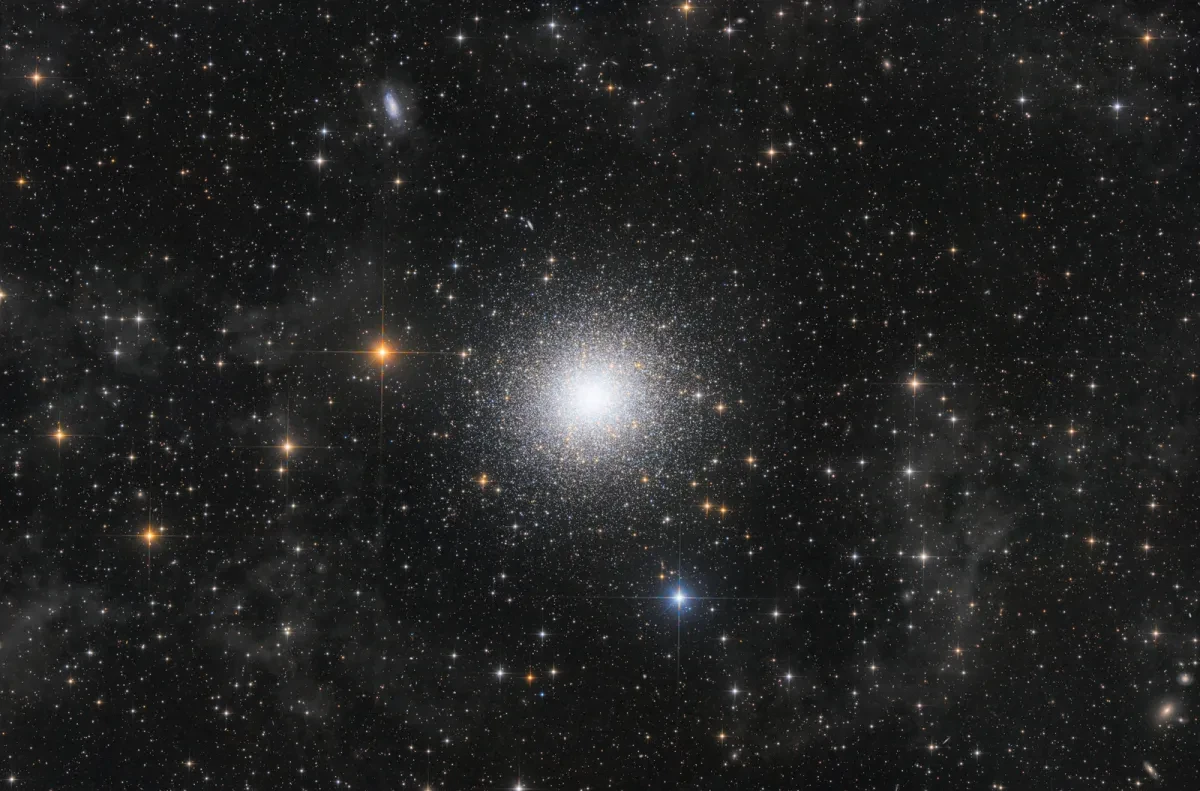
The winner in the “Stars and Constellations” category was the Distant Luminosity Astrophotography Association. They photographed the globular cluster M13.
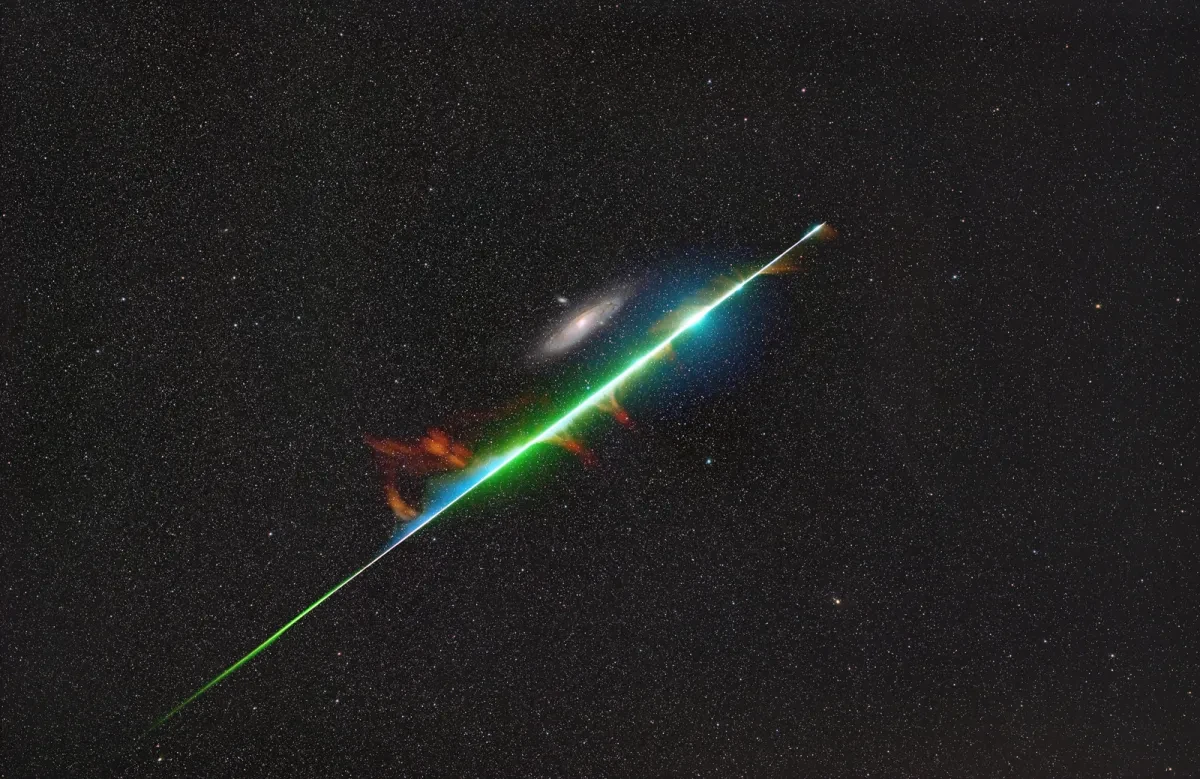
The Sir Patrick Moore Award for best newcomers went to Yurui Gong and Xizhen Ruan. They managed to capture a meteor flying across the Andromeda galaxy.
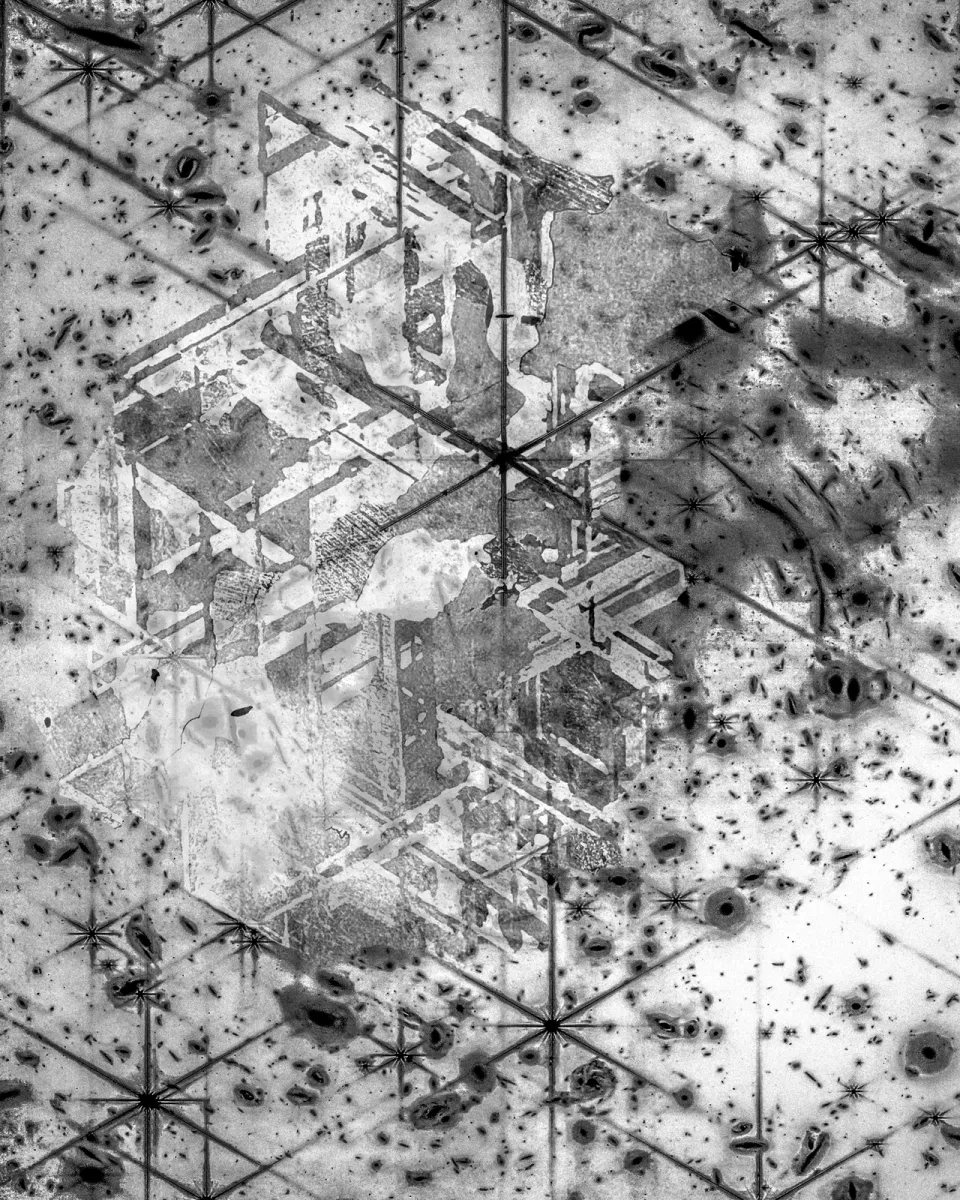
The photo that won the Annie Maunder Prize for Image Innovation in the Astronomy Photographer of the Year competition. Source: Leonardo Di Maggio went to Leonardo Di Maggio. His image combines two phenomena that are usually hidden from view: a gravitational lens captured by the James Webb Space Telescope and the complex internal structure of a meteorite.
The winner in the youth category was Daniele Borsari. The photo shows the Orion Nebula, the Horsehead Nebula, and the Flame Nebula at H-alpha wavelength.
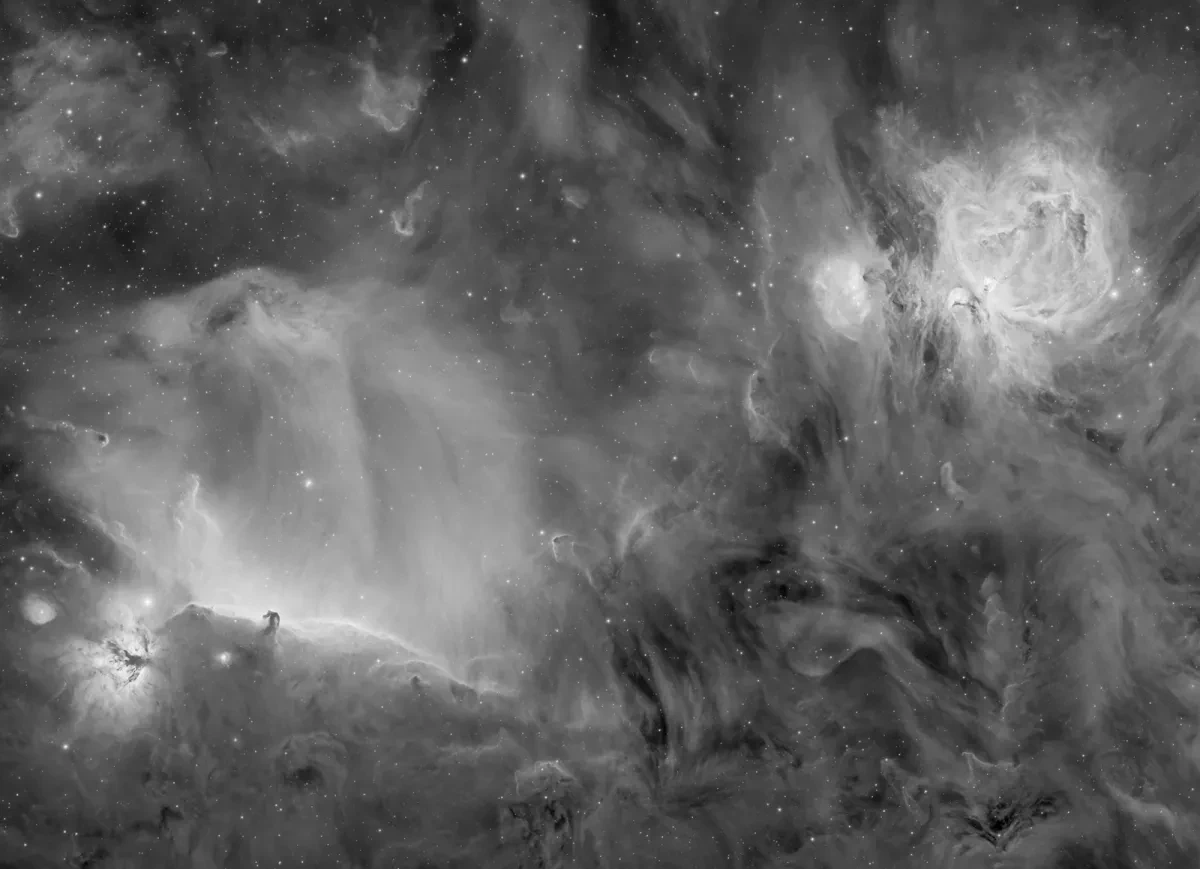
Source: Daniele Borsari
All winning photographs are on display at the National Maritime Museum in Greenwich.

