

The first manned flight around the Moon in several decades has sparked renewed interest in the video game Kerbal Space Program. It is a highly realistic space program simulator.
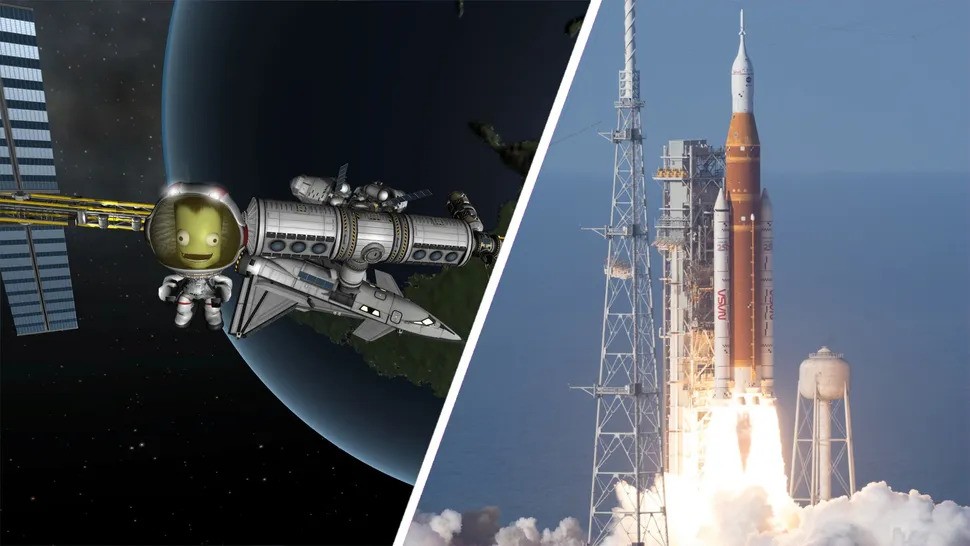
Flight around the Moon and a computer game
The Artemis II mission became one of the major events of April 2026, overshadowing even fears of a third world war. The first flight of four astronauts around the Moon since 1972 is discussed time and again, although it’s not all that easy for the average person with no background in orbital dynamics to understand what exactly happened there.
It’s no surprise that this event has sparked considerable interest in anything that might help ordinary people have an experience similar to that of the astronauts and mission engineers. For example, Kerbal Space Program is a computer game that allows you to build your own rocket and send it on a flight around the Moon.
The Kerbal Space Program is far from a new game. It first appeared on Steam back in 2015, and by that point, fans of the genre were already familiar with it from earlier versions. However, on April 1, 2026, during the launch of the Artemis II mission, it experienced a surge in player activity unlike anything seen since its release.
At its peak, the number of people playing Kerbal Space Program reached 12,434, whereas it usually has between 3,000 and 4,000 players. The game also has a sequel, but it isn’t as popular, so the increase in the number of players wasn’t as noticeable.
Why is Kerbal Space Program so popular?
In general, anyone who has heard of video games but not of Kerbal Space Program might be surprised by such widespread interest. What’s even more surprising is that people are still playing a game that’s officially 11 years old.
But for those who know it well, there’s nothing surprising about that. Over the years, Kerbal Space Program has become a true cultural phenomenon among people with a serious interest in space.
The thing is, although it depicts the space program of the green-skinned, somewhat cartoonish Kerbals, the rockets themselves, their engines, fuel tanks, and capsules are rendered with absolute realism from a physics standpoint. The force of an action is equal to the force of the reaction and is equal to the product of acceleration and mass. The orbits of spacecraft are the result of the interplay between velocity and gravity.
It’s no surprise that many people view Kerbal Space Program as an educational tool for both children and adults. It is even used to host virtual model rocket competitions. Many of those who are closely following the journey of the four astronauts these days first became acquainted with the basics of real space travel through this very game.
According to www.space.com

