

The UK Space Agency has announced the allocation of £75.6 million (€87.3 million). This money will be spent on implementing the country’s first-ever mission to actively clean up space debris.
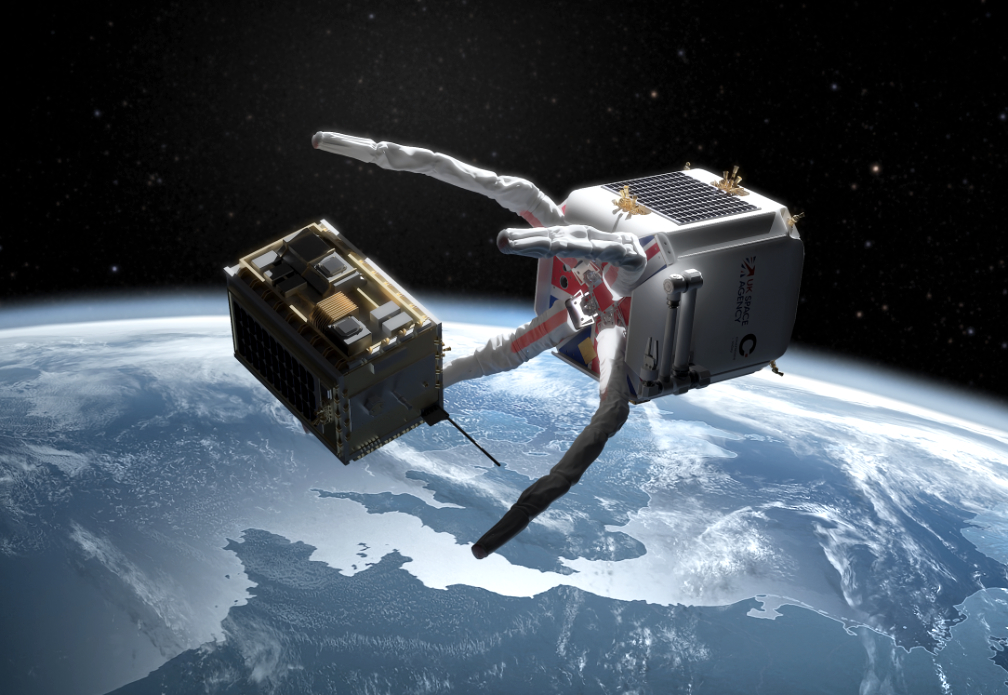
The goal of the Active Debris Removal (ADR) mission announced on July 3 will be to capture and bring down two non-functional British satellites from low Earth orbit. The UK Space Agency intends to sign a contract with a single supplier, and the mission is expected to launch by the end of 2028.
“By tackling the growing threat of space debris head-on, we are protecting the infrastructure that supports everything from national security to everyday connectivity, whilst also creating high-skilled jobs and securing the UK’s leadership in the growing space economy,” said the country’s space minister, Sir Chris Bryant.
According to a press release from the UK Space Agency on July 3, the ADR mission marks a shift in the agency’s approach to critical technologies, moving away from traditional grant funding to competitive contract opportunities. This change, as explained in the press release, is intended to “stimulate private investment and create highly skilled jobs across the country.”
The most likely recipient of the ADR contract is the Swiss company ClearSpace, which has already completed several key preliminary stages of mission development. In October 2021, the UK Space Agency signed a contract with it to conduct an initial feasibility study. Two months later, the company announced the opening of its first office in the United Kingdom. By September 2022, it had completed its research and secured a £2.2 million contract to carry out the initial phase of mission design.
In April 2024, ClearSpace announced the completion of a preliminary review of the project, after which it received another contract to assess the technological readiness of the preliminary project prior to its critical review. In March 2025, the company published its latest update, confirming the successful completion of phase 2, bringing the total investment in the mission to approximately £11 million.
According to Europeanspaceflight

