

Scientists have made a new assessment of how far away the nearest technologically advanced civilization might be from us. It is at least 33,000 light years away. Researchers came to this conclusion based on estimates of the prevalence of planets with atmospheres of oxygen and carbon dioxide and tectonic activity in the Universe.
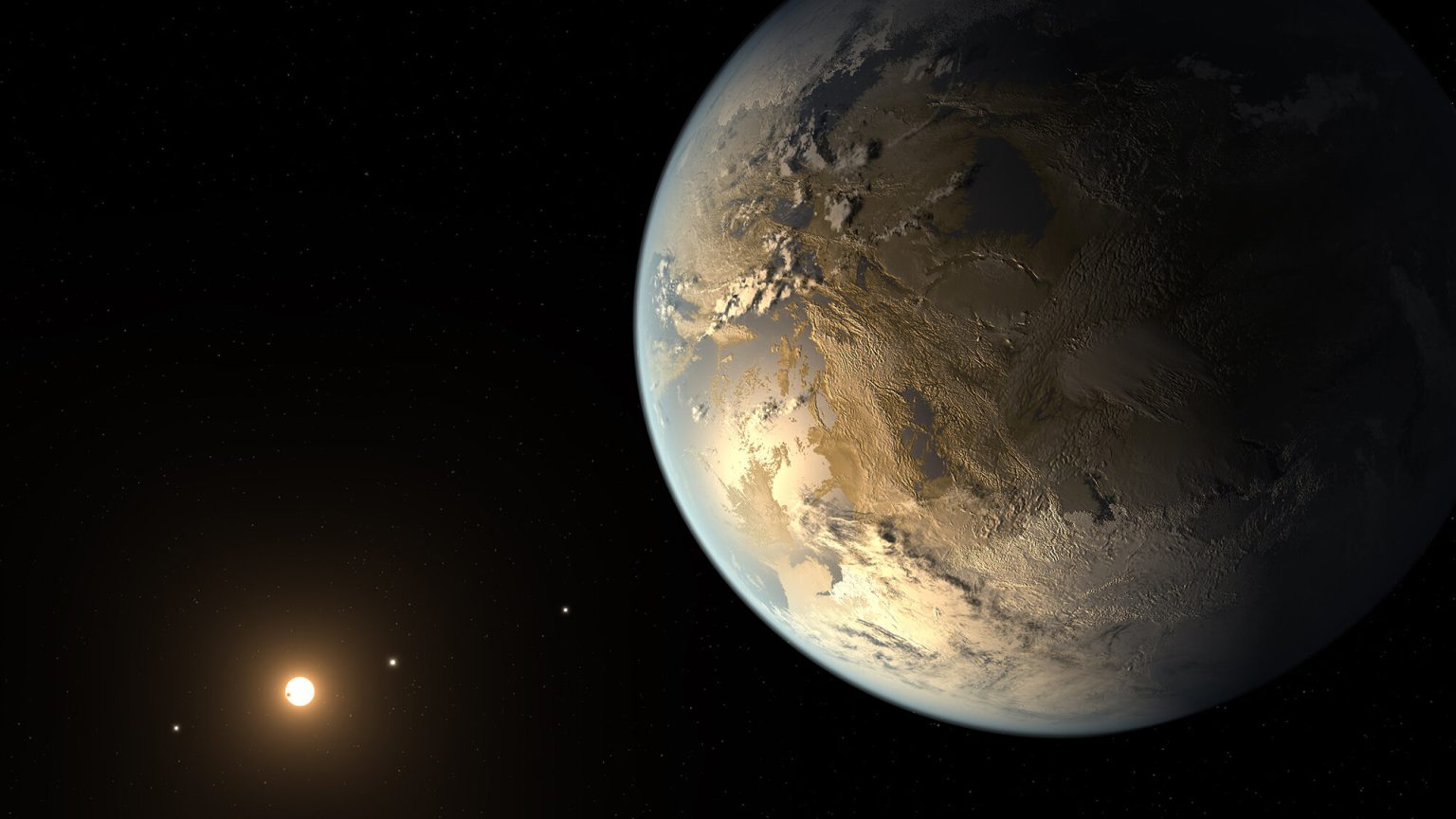
The closest inhabited planet to us
The closest technologically advanced civilization to us is located 33,000 light years away. At least, that is what Dr. Manuel Scherf and Professor Helmut Lammer from the Institute for Space Research at the Austrian Academy of Sciences in Graz claim.
This is usually just one of several possible estimates, but it is actually based on scientific data — the expected frequency of finding Earth-like planets with atmospheres consisting of oxygen, carbon dioxide, and tectonic activity.
Carbon dioxide, tectonic activity, and civilization
The latter may seem a bit far-fetched at first glance, but there is actually a certain logic to it. The fact is that when tectonic plates move, they expose rocks that have not previously been in contact with the atmosphere. They extract carbon dioxide kerosene from it and make a significant contribution to maintaining its balance.
In turn, carbon dioxide in the atmosphere is the main factor in the greenhouse effect. It is absolutely essential, because without it the planet would freeze and photosynthesis would be impossible. However, when there is too much of this substance, the planet begins to heat up uncontrollably.
This factor becomes particularly noticeable when considering the increase in the star’s luminosity over time. For example, on Earth, the combination of these two factors will make life impossible in just 1 billion years. Scientists have calculated how often a planet in the galaxy can maintain a balance of carbon dioxide and survive for 4.2 billion years, which they believe is sufficient for intelligent life to arise.
Life spans
The figure of 33,000 light years means that a planet with intelligent beings could be located on the other side of the Milky Way’s core. It is interesting to note that even this assessment has its own condition. It is only true if another civilization has existed for at least 280,000 years. Otherwise, we and the aliens have missed each other in time.
According to a new assessment, life in our galaxy is very rare. The same researchers say that for 10 civilizations to exist simultaneously, their average lifespan has to be 10 million years.
According to phys.org

