

We associate Valentine’s Day with cards, flowers, declarations of love, and gifts. However, the traditional attributes of this holiday are found not only on our planet, but also throughout the universe.
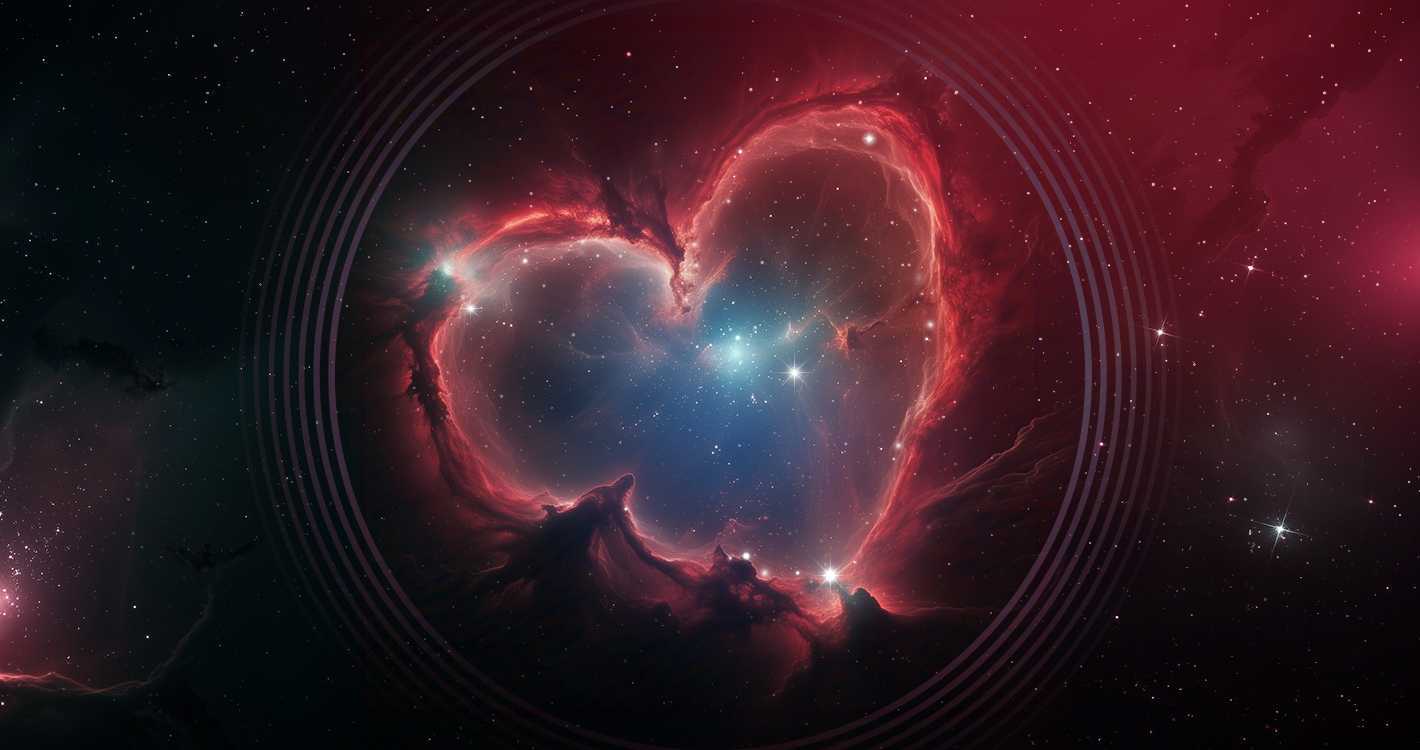
In honor of Valentine’s Day, the editors of Universe Space Tech have prepared a selection of photos of space objects with the most romantic names – from nebulae to distant galaxies.
Heart Nebula
The main visual symbol of Valentine’s Day is heart-shaped cards. And in space, you can find several objects that have a similar shape. One of the most famous of these is the IC 1805 nebula, also known as the Heart Nebula.
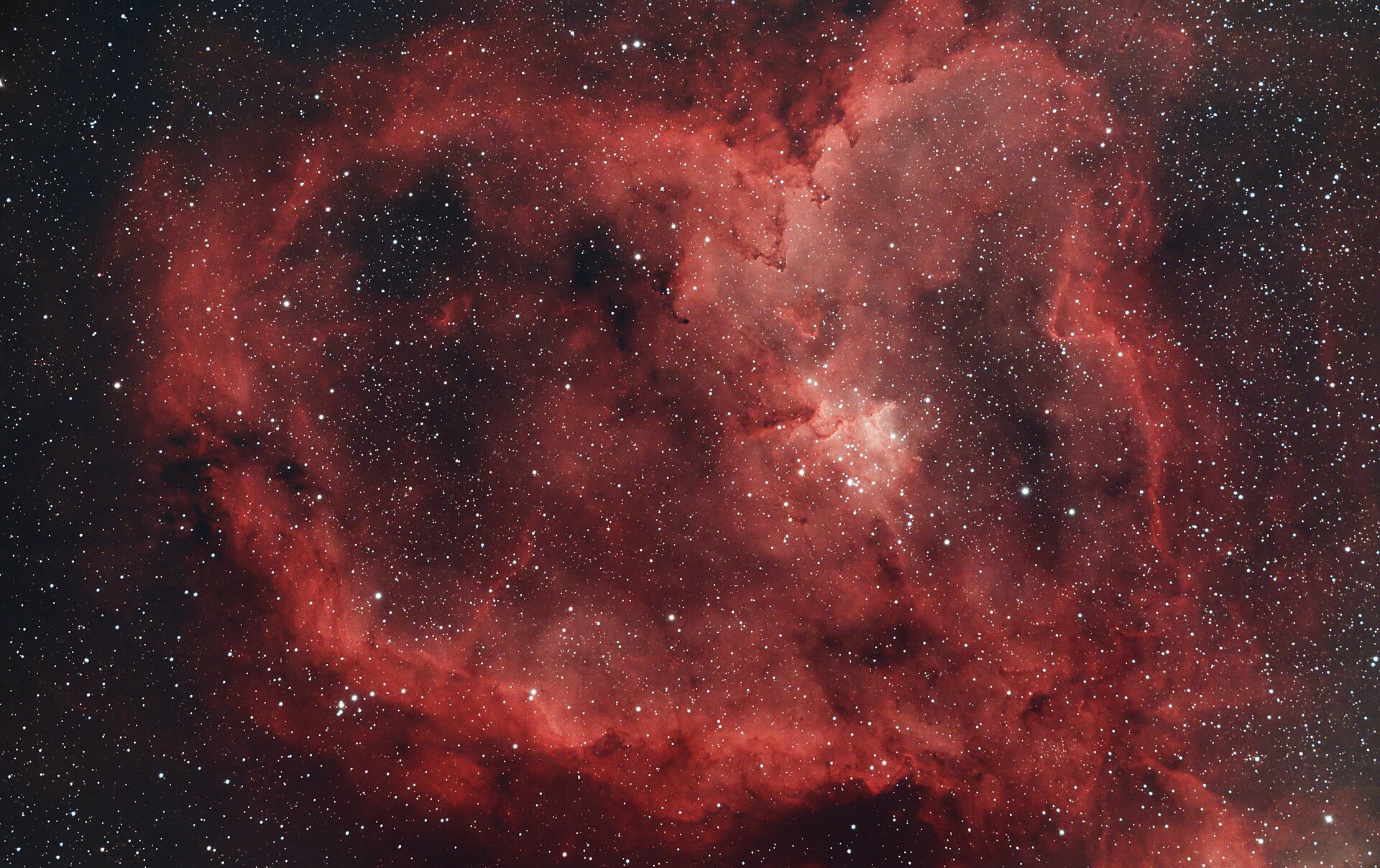
The Heart Nebula is located 7,500 light-years from Earth in the constellation Cassiopeia. It is a vast cloud of gas. The nebula glows due to the ionization of its atoms by radiation from stars located at its center.
Soul Nebula
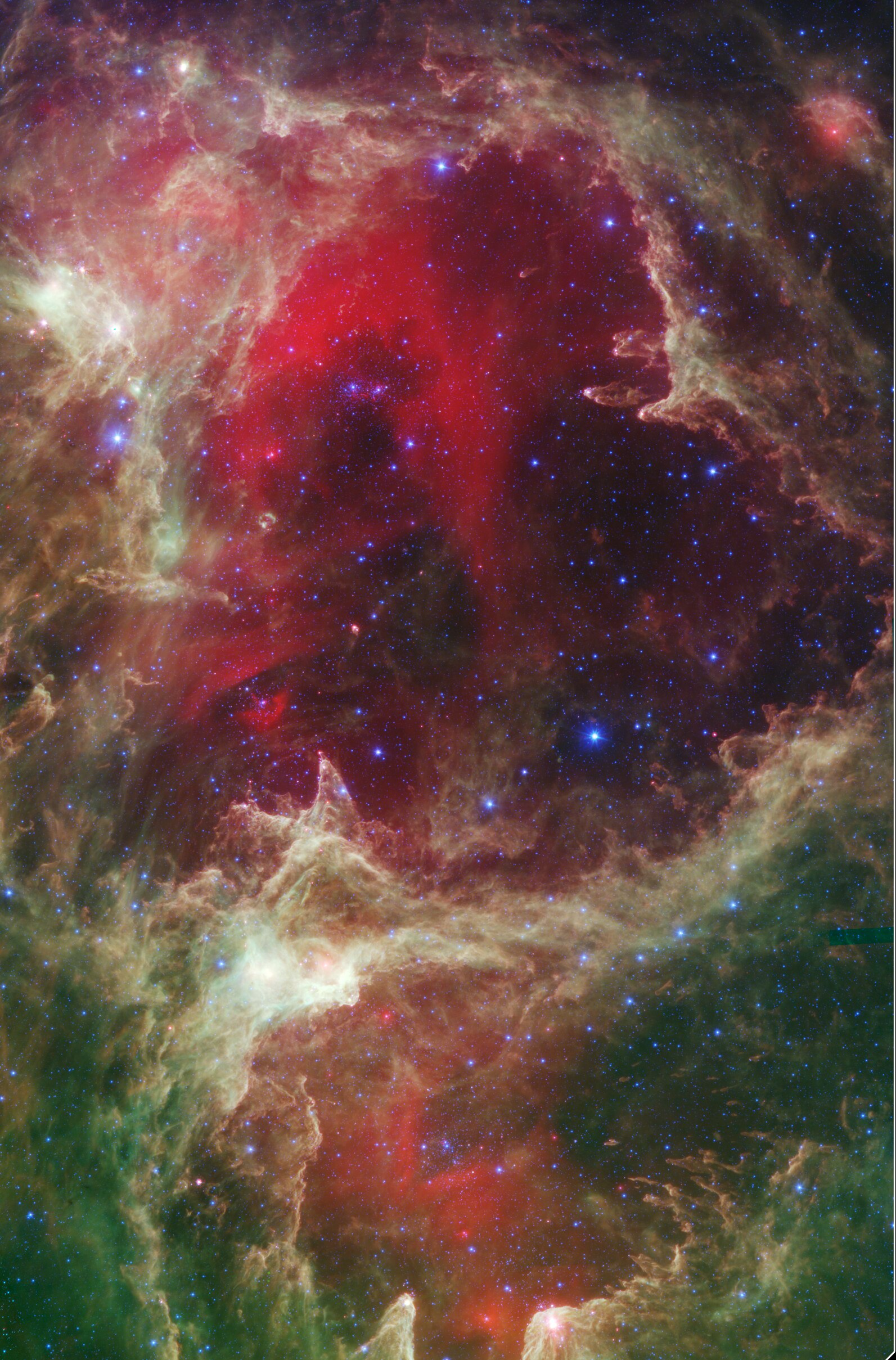
In the vastness of space, one can find not only the heart, but also the soul. This poetic name was given to the Westerhout 5 nebula, located next to IC 1805. It is home to several star clusters, whose radiation causes the gas to glow and forms cavities in it, giving it its characteristic shape. The Soul Nebula is also undergoing active star formation processes.
The Hearts of the Solar System
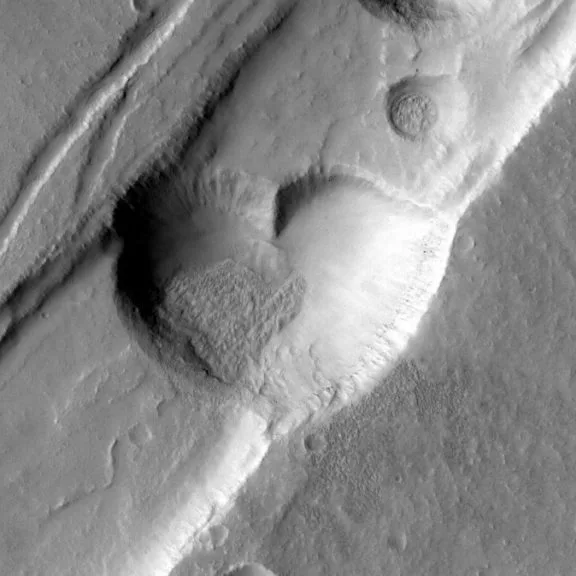
Hearts can be found not only in deep space, but also in our solar system. For example, on Mars. Studying images taken by spacecraft, scientists have found a crater with a distinctive shape on the surface of the Red Planet. Its diameter is 2.3 km.
However, the most famous heart in the Solar System is located on Pluto. We learned of its existence in 2015, when the New Horizons spacecraft visited the dwarf planet.
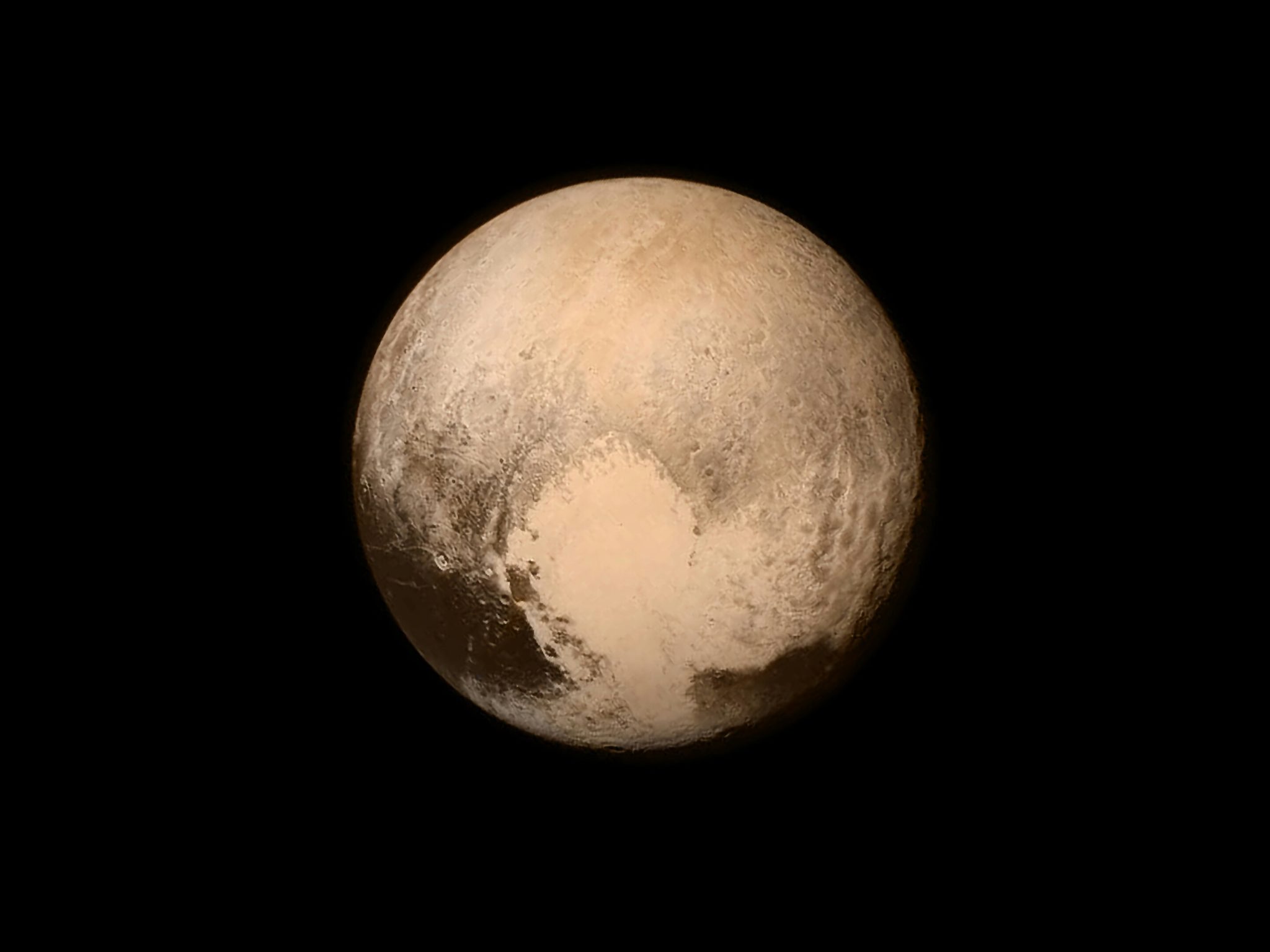
The official name of Pluto’s heart is the Tombaugh Regio. Its diameter exceeds 2,000 km, and it consists of two regions: an older one covered with mountains of water ice, and a huge bright nitrogen plain where not a single crater has been found.
Cosmic roses
No Valentine’s Day is complete without flowers, especially roses. They can be found not only on Earth, but also in space. We are talking about the NGC 2237 nebula, also known as the Rosette Nebula, which resembles a rose.
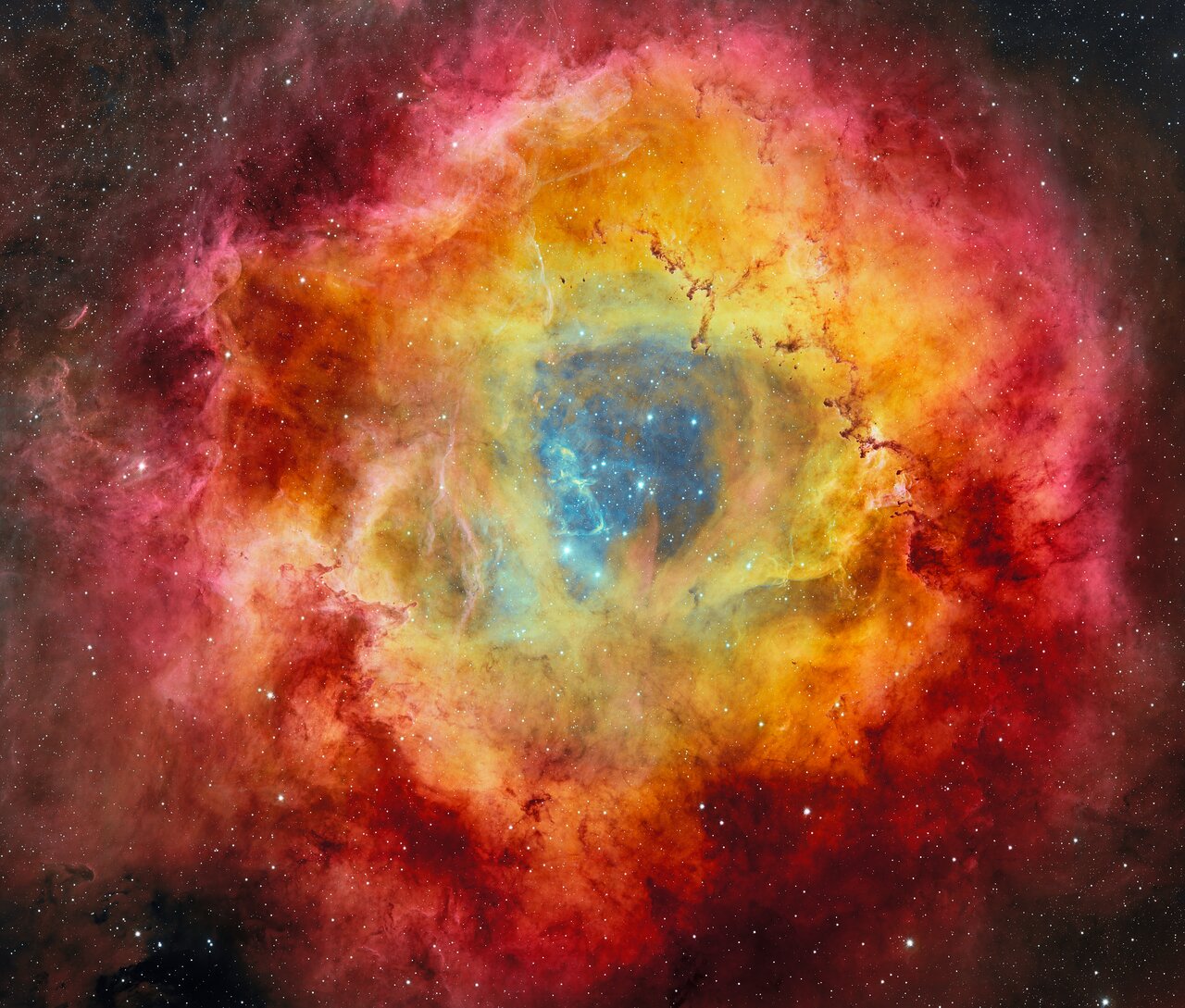
The Rosette Nebula is located in the constellation Monoceros, 5,200 light-years from Earth, and is a giant star-forming complex with a diameter of about 130 light-years. Inside it, gas and dust are compressed by their own gravity to give birth to a new generation of stars. Under the influence of their radiation, the mixture of glowing gas and dark dust forms complex patterns that resemble clouds of smoke swirling around a fire.
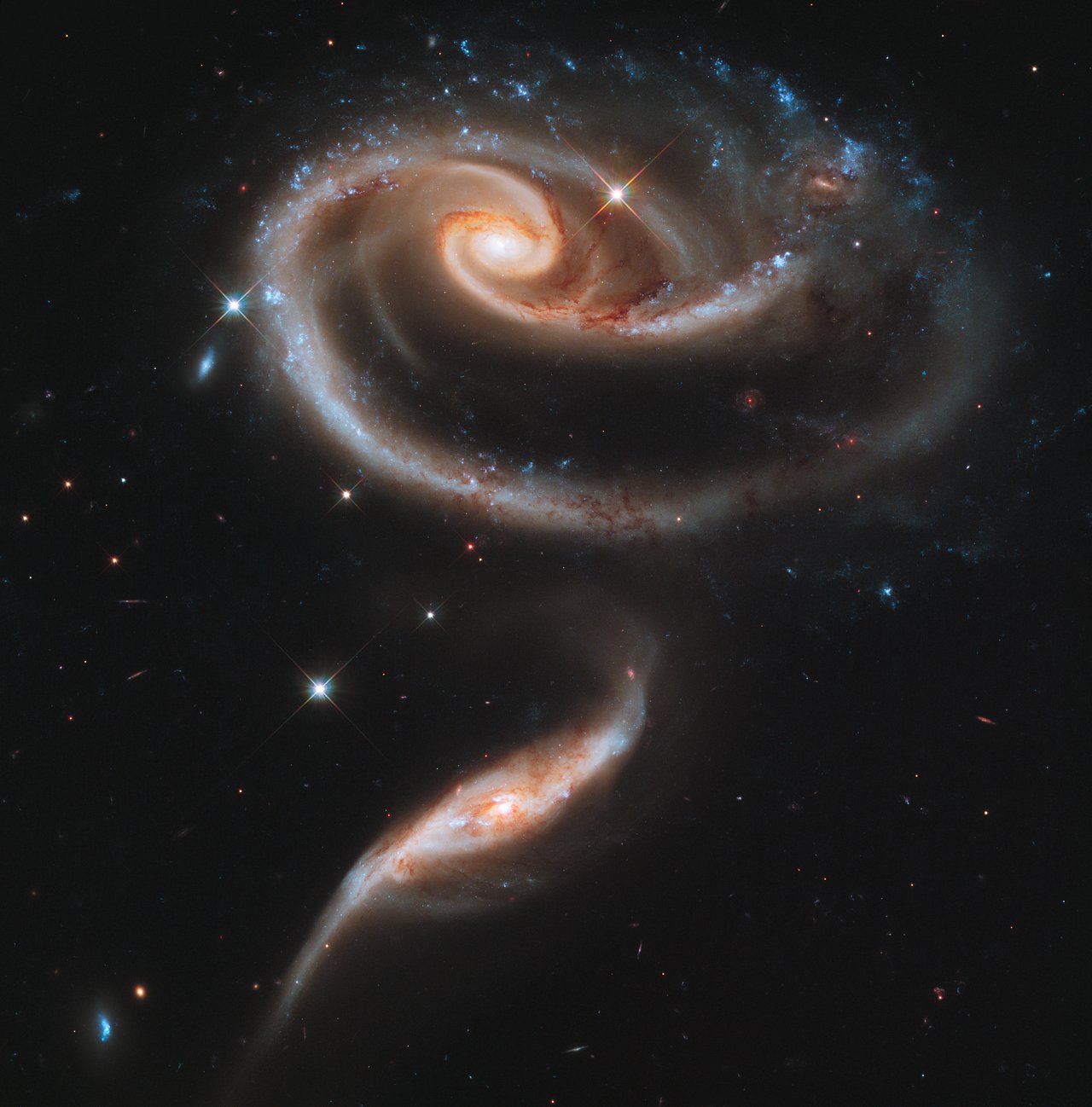
Source: NASA, ESA, and the Hubble Heritage Team (STScI/AURA)
In addition to the Rosette Nebula, there are also a pair of galaxies in space that are often referred to as the Rose due to their appearance. They are located 300 million light-years from Earth and are believed to have passed through each other in the past. This led to gravitational perturbations that distorted their shape, giving them the appearance of a giant cosmic flower.
Space jewels
Valentine’s Day is not only about flowers and cards, but also gifts. For example, a necklace. The planetary nebula with the corresponding name is located 15,000 light-years from the Sun in the constellation Sagitta.
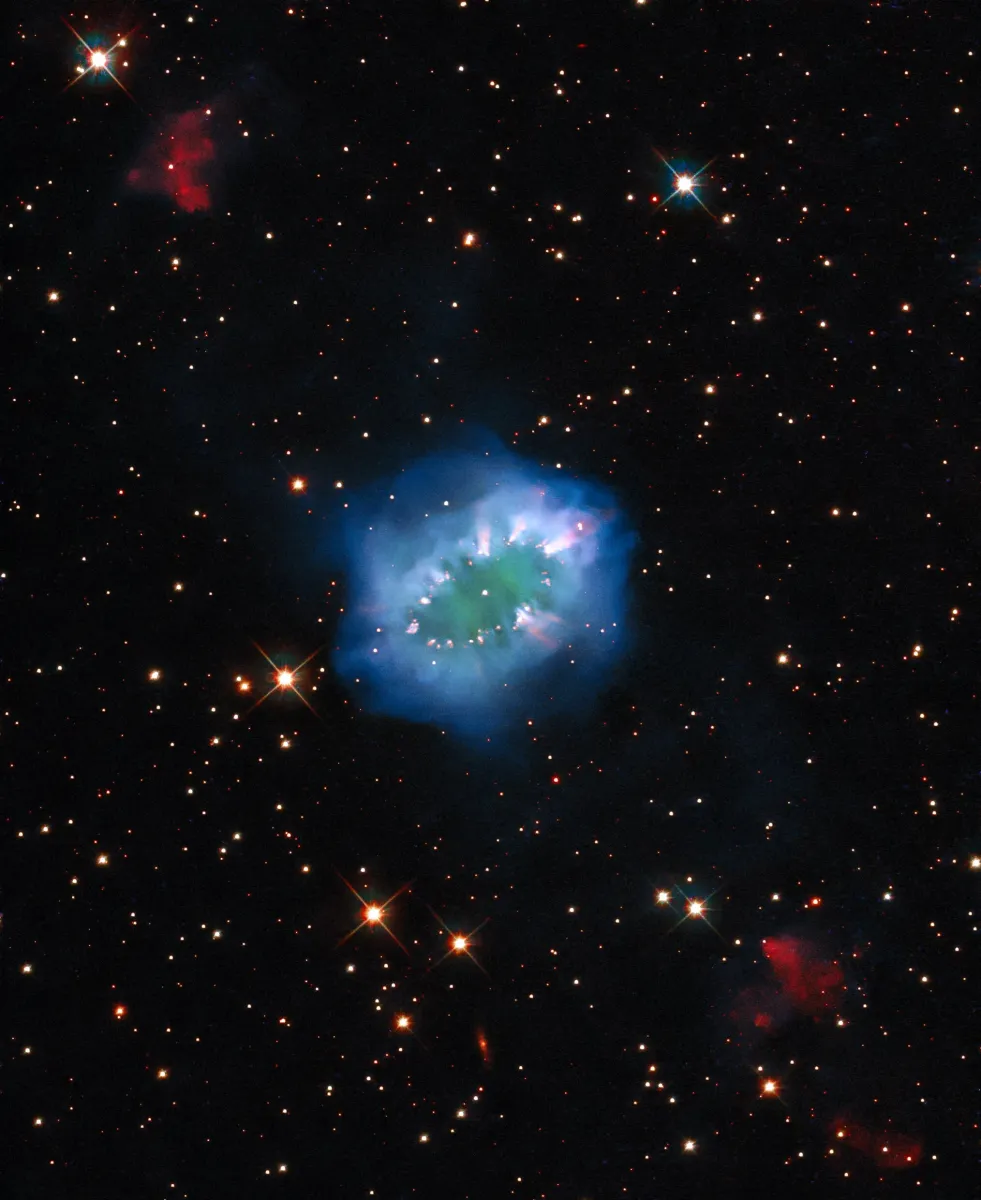
The Necklace Nebula has a very interesting history. It consists of two stars, one of which expanded and turned into a red giant, causing its companion’s orbit to pass through the outer layers of its atmosphere. This, in turn, led to an increase in the rotation speed of the giant star. Under the action of centrifugal force, it began to lose gas from its equator, which formed a characteristic ring with a diameter of about 2 light-years.
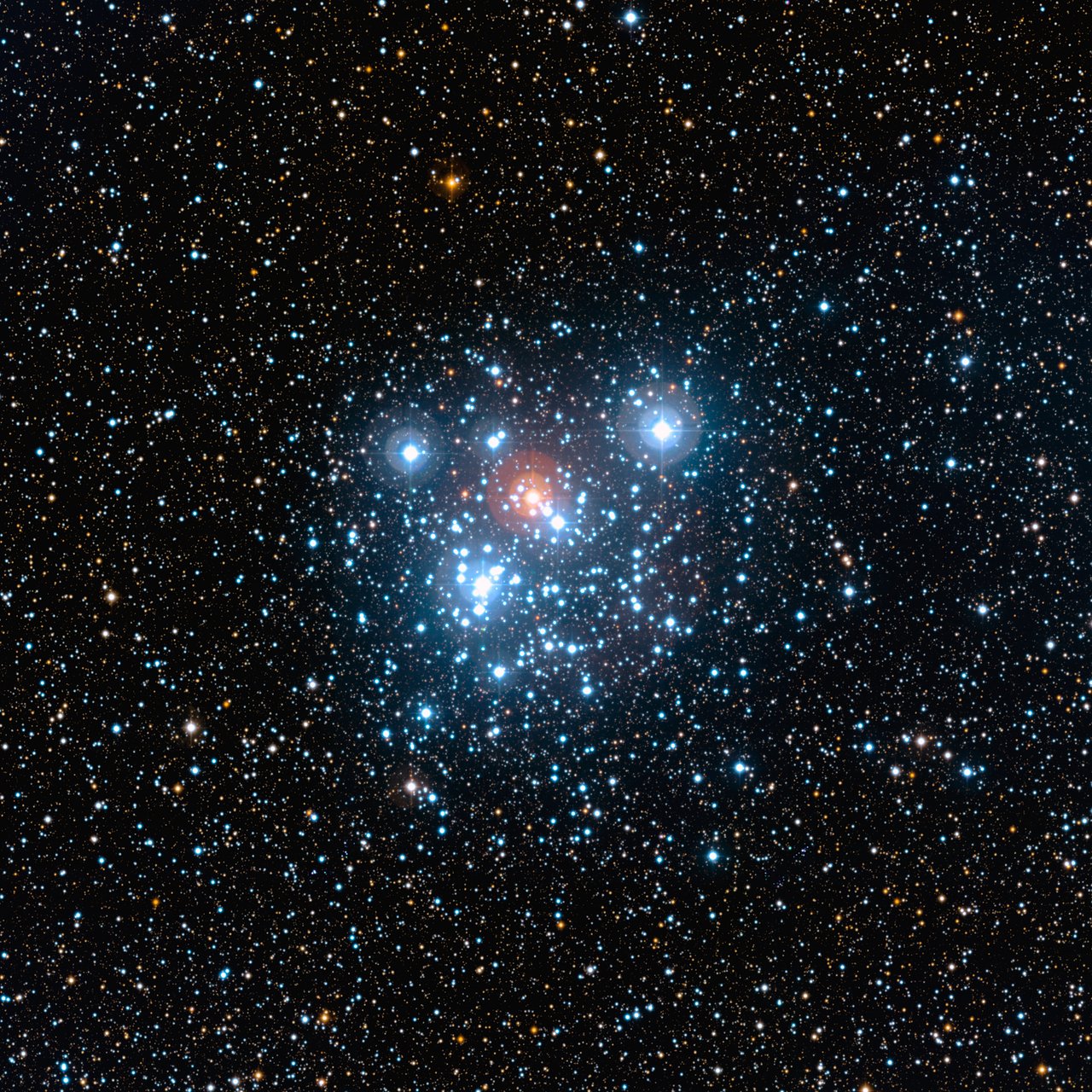
A real treasure chest can be found in space. We are talking about the star cluster NGC 4755. It is located in the Crux constellation and is considered one of the most beautiful objects in the southern sky. The name “jewel box” was coined by astronomer John Herschel, who compared the colorful stars of the cluster to exquisite gemstones.

