

In the past, comets were observed that were so large and bright that they were visible even during the day. The last of these was the Ikeya-Seki comet, which was discovered exactly 60 years ago. Most of them are believed to be part of one giant body that was destroyed 900 years ago after colliding with the Sun.
Can comets be seen during the day?
Comets approaching the Sun inevitably become the subject of sensational news reports. This happens even when they are not bright enough to be seen with the naked eye. If they are visible enough to see both the coma and the tail without binoculars, they are guaranteed to be one of the brightest comets of recent decades.
It should be noted that, according to historical observations, such objects are not particularly remarkable. After all, astronomers have encountered “tailed guests” that matched or even exceeded the brightness of the Moon.
Sixty years ago, on September 18, 1965, two Japanese astronomers, Kaoru Ikeya and Tsutomu Seki, discovered comet C/1965 S1, which became the brightest comet of the last century. This was because the comet, named after them, approached the Sun at a distance of 450,000 km. This is approximately equal to the distance from Earth to the Moon.
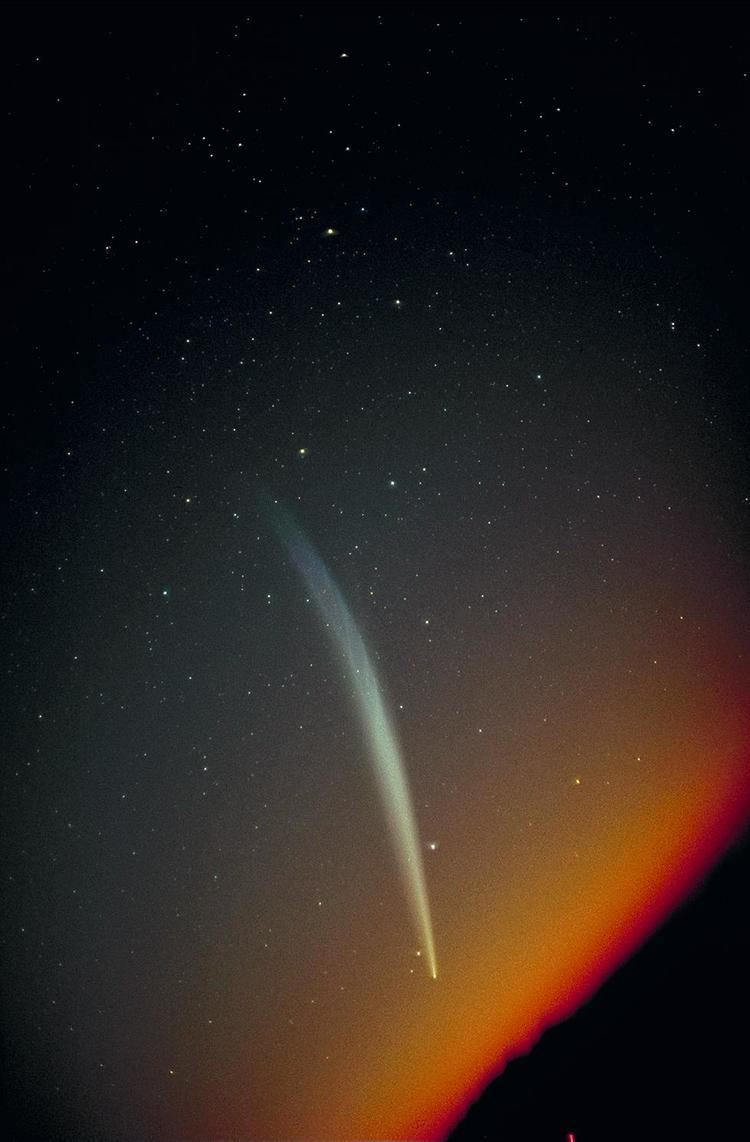
Thanks to this, the brightness of Comet Ikeya-Seki reached at least magnitude -10. However, immediately after passing perihelion, this celestial visitor began to fade rapidly. Apparently, its nucleus was at least partially destroyed.
However, all this is only part of the grand history associated with the Ikeya-Seki comet. It belongs to the Kreutz family of comets, which also includes other Great Comets, and is linked to an interesting, almost detective-like story.
Great Comets
It all began on November 14, 1680, when German astronomer Gottfried Kirch discovered a comet that would later become visible to the naked eye and one of the brightest comets of the 17th century. It was during this period that astronomers, including Edmond Halley, actively discussed the possibility of these objects returning to the Sun.

Therefore, many assumed that this was the return of another celestial body that had been observed in 1106. The comet passed its perihelion on December 18 of that year and continued to be observed until March 19, 1681. We now know that its orbital period is 10,000 years, and at the farthest point of its orbit, it is 889 AU from the Sun.
Nowadays, the connection between the comets of 1680 and 1106 is considered doubtful, but the first of these celestial bodies made such an impression on astronomers that when a new Great Comet appeared in 1843, everyone discussed the possibility that it was the return of the guest of 1680, even though they already knew that this was impossible.
Indeed, the comet of 1843 moved along a very similar trajectory, also approaching our Sun at a very short distance and also becoming very bright because of this. After it passed its perihelion on February 27, it was clearly visible even during the day, with its tail reaching 2-3°, which was 4-6 times larger than the visible diameter of the Moon.
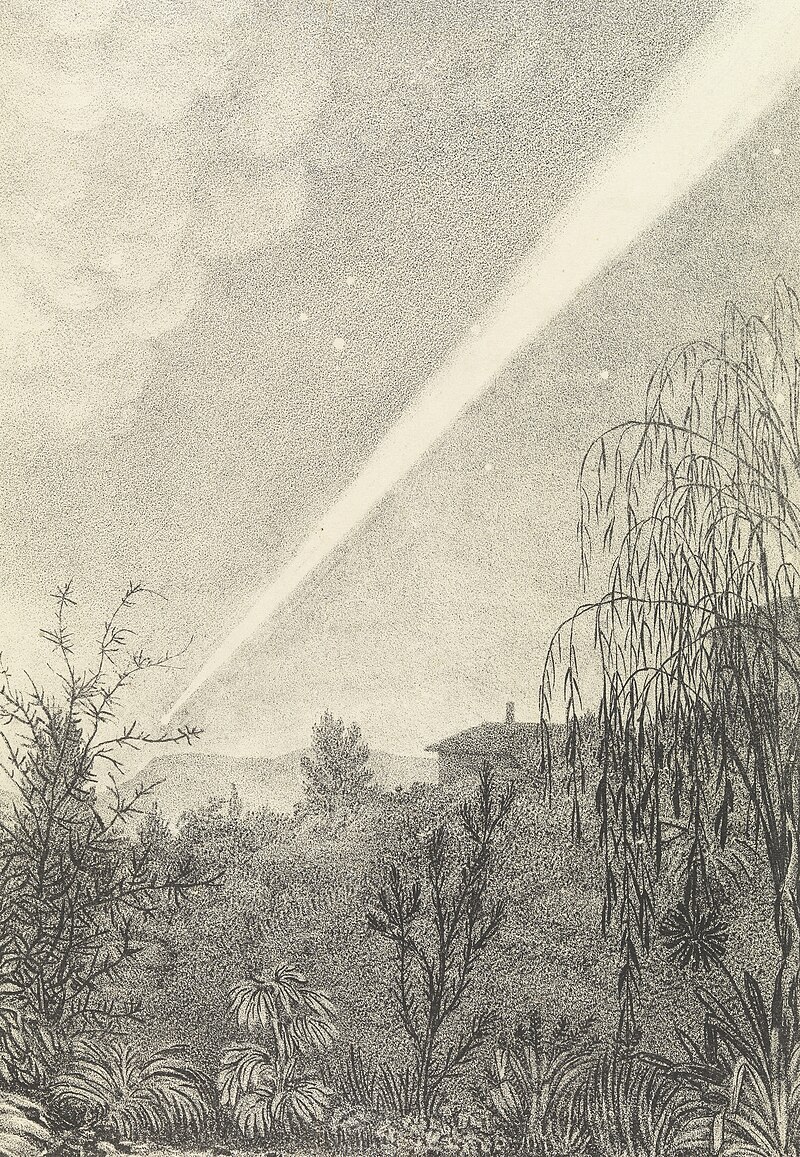
There were different opinions about the comet’s orbital period, but it quickly became clear that it was several centuries. How many centuries exactly is still debated, with figures ranging from 600 to 800 years being most commonly cited.
In 1880 and 1882, two more large comets appeared, which also moved in very similar orbits, had perihelions extremely close to the surface of the Sun, and were even visible during the day. The second of these is the brightest in the last two centuries. In addition, it is known that it broke up into at least two fragments, although there may have been more. This time, the accuracy of observations and calculations was higher, thanks to which scientists learned that their orbital period is about 700-800 years, so it is quite possible that the last time they visited the central regions of the Solar System was in 1106.
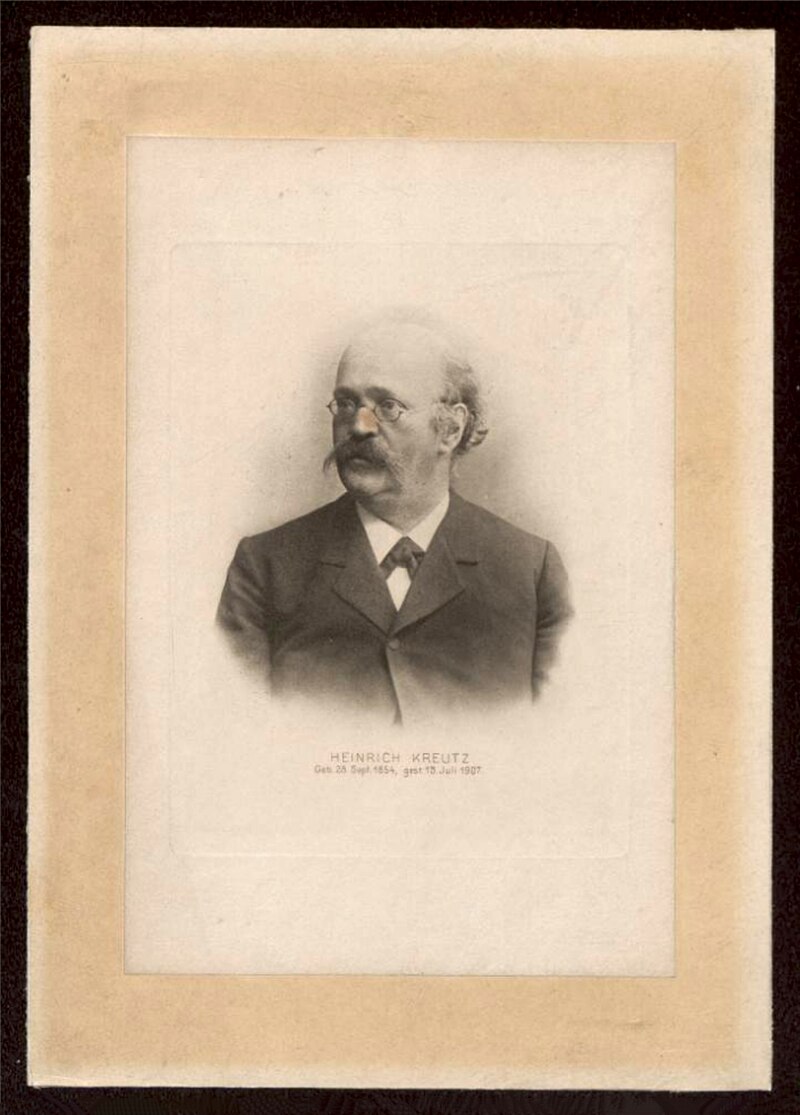
In 1888, Heinrich Kreutz published a paper in which he first suggested that the large comets of 1843, 1880, and 1882 might be a family, that is, part of some large celestial body that had broken up in the past. However, until 1945, no new comets with similar orbits were observed, so his assumption was of no interest to anyone for a long time.
Interest in large comets that almost touch the surface of the Sun at perihelion was revived in the 1960s after three such objects were observed over a period of 20 years. In addition to the Ikeya-Seki comet, these were the du Toit comet in 1945 and the Pereyra comet in 1963. Since then, astronomers have been watching comets approaching the Sun more closely and have discovered a large number of less bright members of the Kreutz family among them.
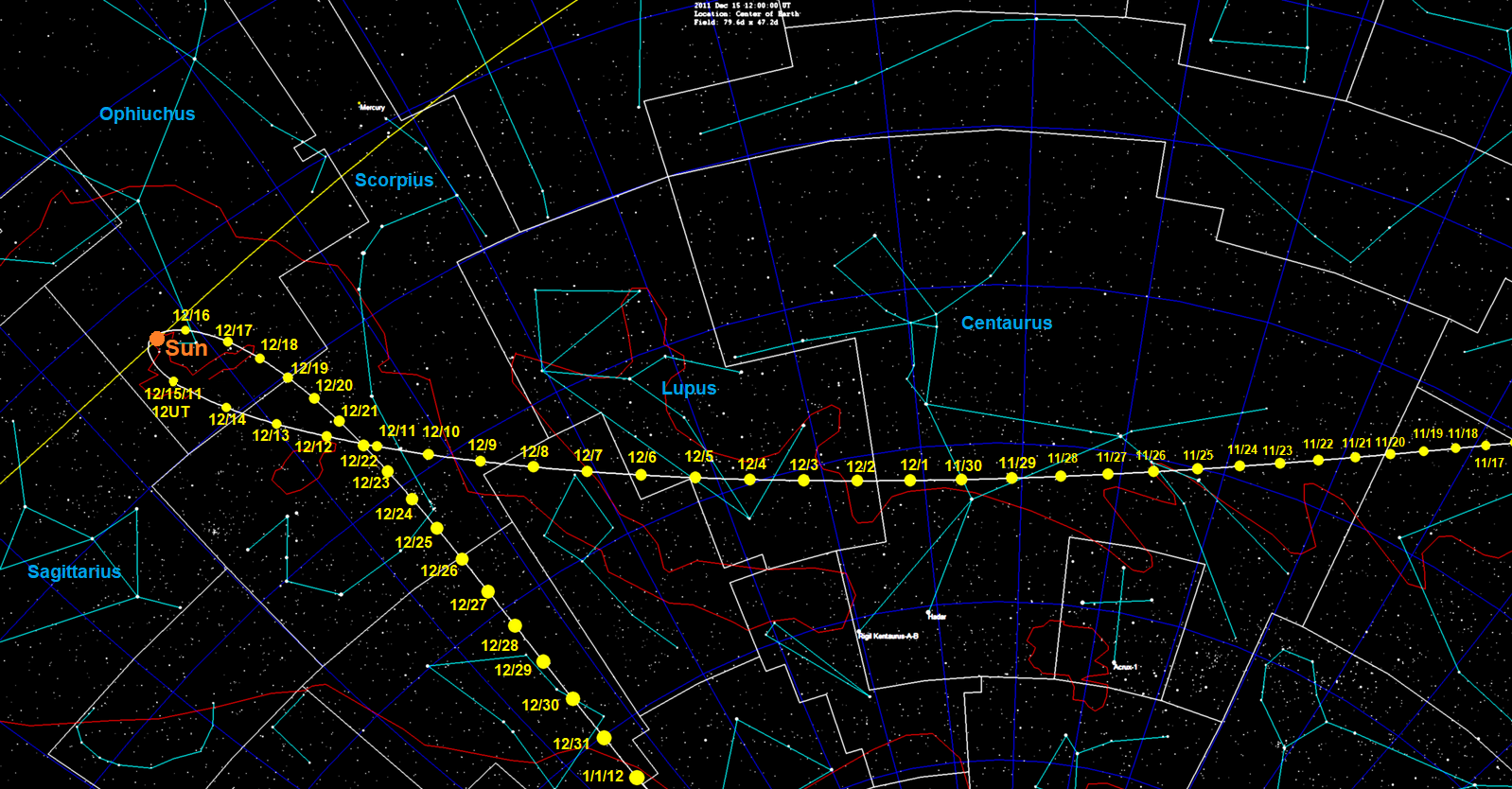
These include, for example, the 2011 Lovejoy comet and last year’s C/2024 S1 (ATLAS), which disintegrated before reaching perihelion. The number of significantly smaller objects, with a diameter of about 100 m, is measured in the tens.
Evolution of objects
Since all comets in the Kreutz family have an orbital inclination of about 144° and a perihelion longitude of 280-282°, but differ significantly in other orbital parameters, it was possible to develop a theory describing the origin of these objects.
Long ago, in the Kuiper Belt on the outskirts of the Solar System, there was a fairly large body with a diameter of 100 km. By comet standards, it was extremely large, because, for example, Hale-Bopp, which is considered the record holder in terms of core size, has a diameter of only 40 km.

Due to certain events, it changed its orbit and headed towards the center of the Solar System. Perhaps this process took place in several stages, but in any case, somewhere between the 3rd and 5th centuries BC, this body approached the Sun at a distance that would later become characteristic of all Kreutz comets and broke into two parts.
The most likely candidate for this event is a comet that was observed in 371 BC. Sources that have come down to us from those times report that it was not only very bright but also observed for many months, as would be expected in the case of such a large body. One observer even describes its disintegration into two parts, but his testimony is questionable.
The fragments, judging by the unequal number of comets they produced, were of different sizes. It seems that the larger of them was the comet observed in 1106. The smaller one, based on the orbits of the comets that formed from it, should have approached the Sun 50 years earlier, but it was not possible to correlate it with any known comet.
In any case, during previous passages, both fragments were destroyed, resulting in a large amount of debris, each of which received its own orbit, but still had the same perihelion close to the Sun.
It is believed that the comets of 1668, 1695, 1843, 1880, and 1963 were formed from the first fragment, while the comets of 1689, 1702, 1882, 1945, and 1965 were formed from the second. However, there are still many objects that cannot be confidently assigned to either subgroup. This raises the suspicion that they may have separated from the parent body before its disintegration.
This raises a much broader question about how many revolutions around the Sun this body managed to make during its disintegration. The same applies to its two largest fragments. After all, these must have been truly remarkable events that people would have observed in the early Middle Ages or in ancient times.
No less interesting is the question of whether we will see more bright comets from the Kreutz family. It is impossible to answer this question with certainty due to the lack of accurate information about previous passages, but judging by the fact that the number of discoveries of smaller members of this family is not decreasing, the appearance of a new Great Comet can be expected as early as next year.

