

Chinese scientists have announced the discovery of a previously unknown crater named Jinlin. It was formed after the end of the last ice age.
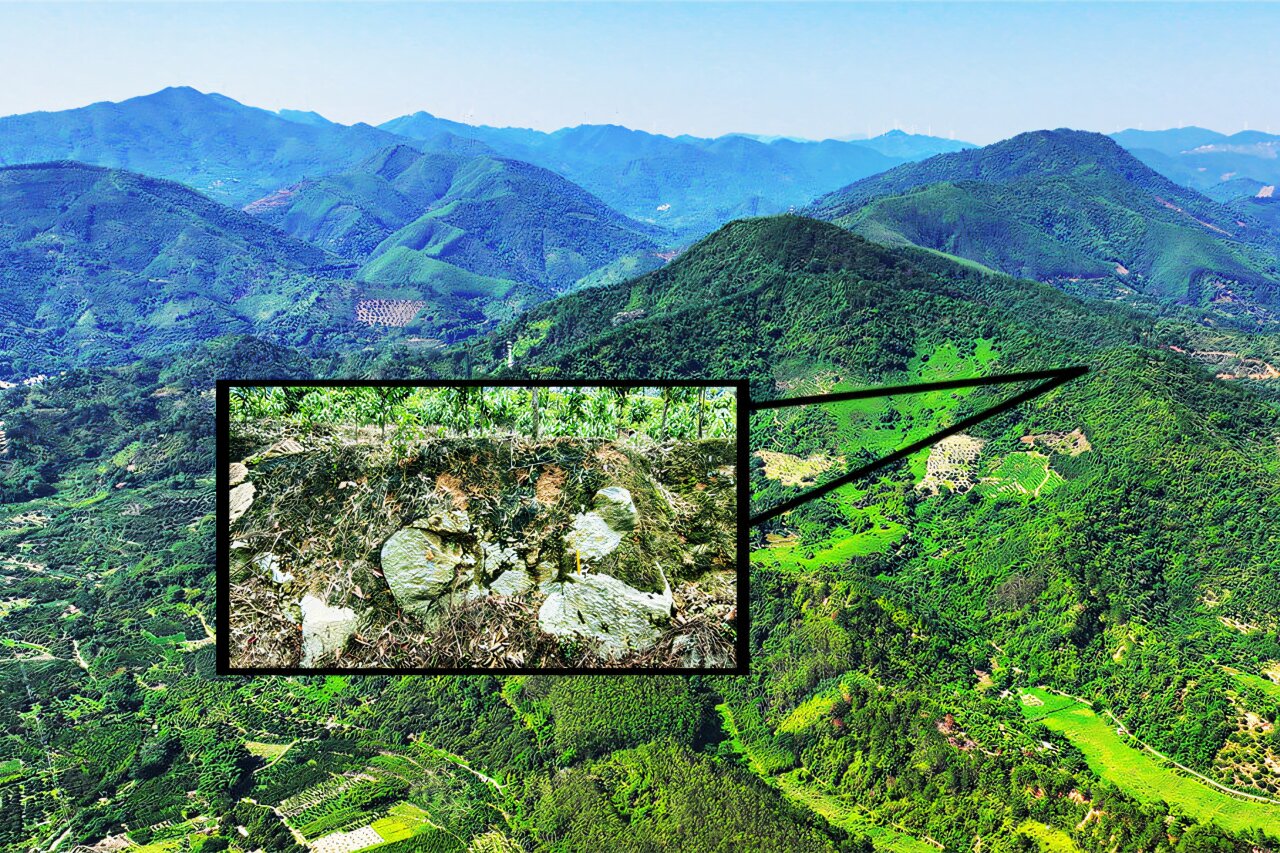
The Jinlin crater is located in Zhaoqing, Guangdong Province. The impact structure is located on a hillside, preserved under a thick granite weathering crust. Its diameter is 900 meters.
According to scientists’ estimates, the crater is very young. It was formed in the early to mid-Holocene epoch, our current geological era, which began after the end of the last ice age about 11,700 years ago. This makes Jinlin the largest impact crater in modern human history. In terms of size, it significantly exceeds the Macha crater, which was formed in the Holocene and has a diameter of only 300 meters.
One of the most remarkable features of the Jinlin crater is its good preservation, considering the climatic conditions. The region where it is located is characterized by monsoons, heavy rains, and high humidity. In the granite layers that helped protect and preserve its structure, researchers found many pieces of quartz with unique features that prove its impact origin.
According to scientists, the crater was formed by the impact of a small asteroid. However, the research team has not yet determined whether it was made of iron or stone.
At present, there are about 200 confirmed impact craters on Earth. In reality, there were many more, but due to erosion and plate tectonics, many of them have completely disappeared without leaving any traces. This makes the discovery of the Jinlin crater particularly significant. It shows that the scale of impacts of small extraterrestrial objects on Earth during the Holocene was much greater than previously thought.
Earlier, we reported on another crater recently discovered in China, which was photographed by a NASA satellite.
According to Eurekalert.org

