

On July 30, Australian company Gilmour Space launched its first small rocket, Eris. It ended in failure. The rocket fell onto the launch pad shortly after the engines were ignited.
Eris rocket
Gilmour Space was founded in 2013 and initially focused on designing and manufacturing high-precision space flight simulators and models for aerospace exhibitions. In 2015, it took the next step and announced the start of development of its own rockets. After several suborbital rockets, the company began developing a space launch vehicle called Eris.
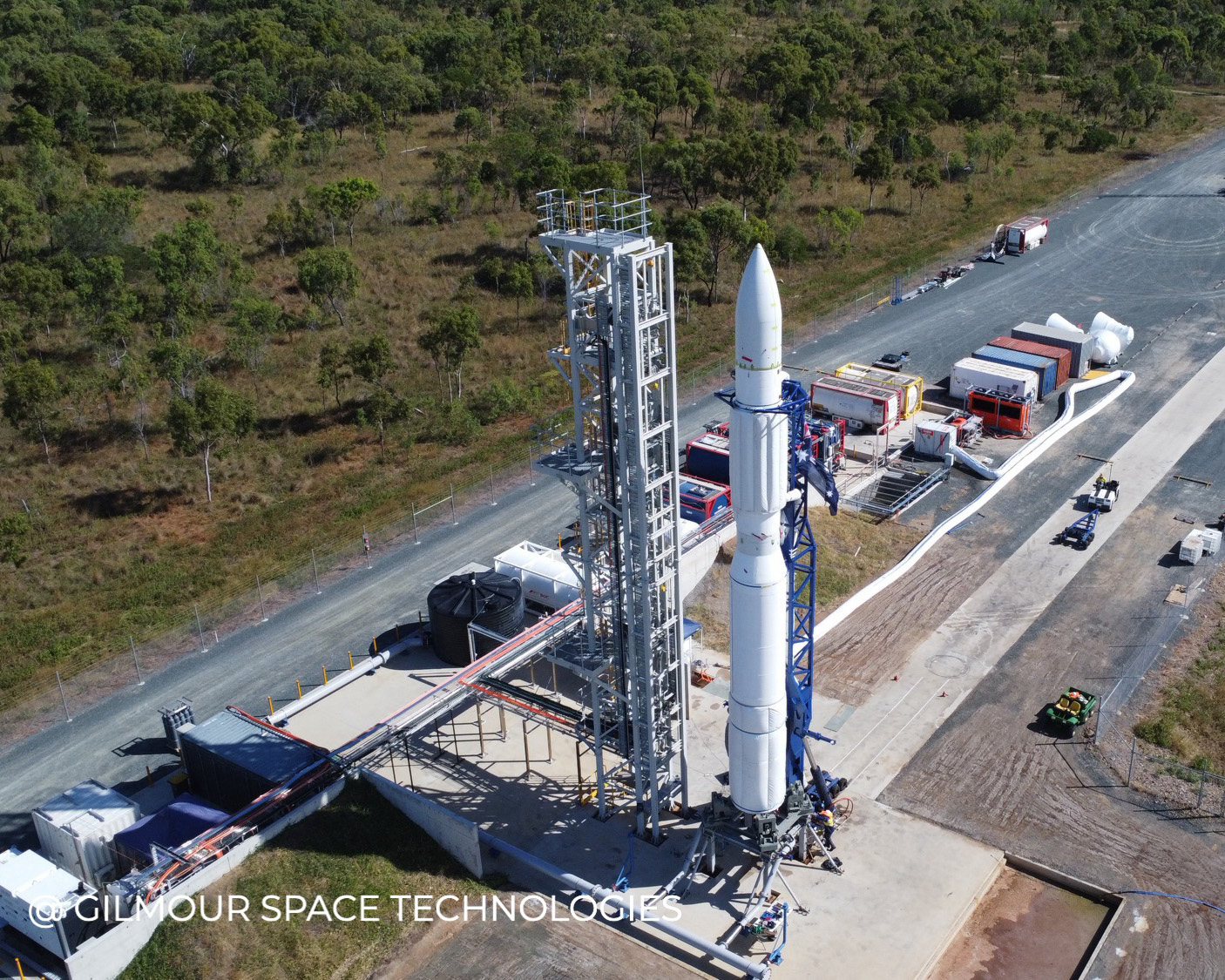
The Eris rocket has a three-stage design. It is 25 meters long and weighs 35 tons (when fueled). The first stage of Eris has a diameter of 2 meters and is equipped with four Sirius hybrid engines running on solid fuel and hydrogen peroxide, which is used as an oxidizer. Fuel for Eris is printed on 3D printers.
The second stage of Eris has a diameter of 1.5 meters and is equipped with a single Sirius engine, similar to those installed on the first stage. The third stage of the rocket is equipped with a liquid engine that runs on a fuel mixture of kerosene and liquid oxygen.
According to the designers, Eris is capable of delivering up to 215 kg of cargo to a 500-kilometer sun-synchronous orbit and up to 300 kg to a 500-kilometer equatorial orbit.
Eris’ first flight
The first attempt to launch Eris was supposed to take place back in May. However, the rocket did not fly at all because it lost its fairing shortly before refueling began. Initially, a parrot was blamed for the incident, allegedly for chewing through the wires, but engineers later determined that the cause was a power surge.
After several delays and postponements, Eris was finally launched on July 30. Unfortunately, its flight was very short — only 14 seconds. Two seconds after ignition, one of the engines shut down on the first stage, and another power unit shut down five seconds later. As a result, the rocket ceased to generate the thrust necessary to gain altitude and fell onto the launch pad. No one was injured during the incident. There were no satellites on board the rocket: the payload was a jar of Vegemite, Australia’s national food.
Despite the setback, Gilmour Space called the launch and the data obtained during it an important step toward reaching space. The company has already announced that it is preparing for Eris’ second flight. However, it is not yet known when exactly it will take place.

