

In our search for extraterrestrial intelligence, we traditionally gaze into the starry sky, hoping to catch a radio signal. However, according to new research, alien civilizations could be exploring the galaxy using self-replicating robotic probes. Moreover, some of them may have already visited our Solar System, and traces of their presence can be found close to us.
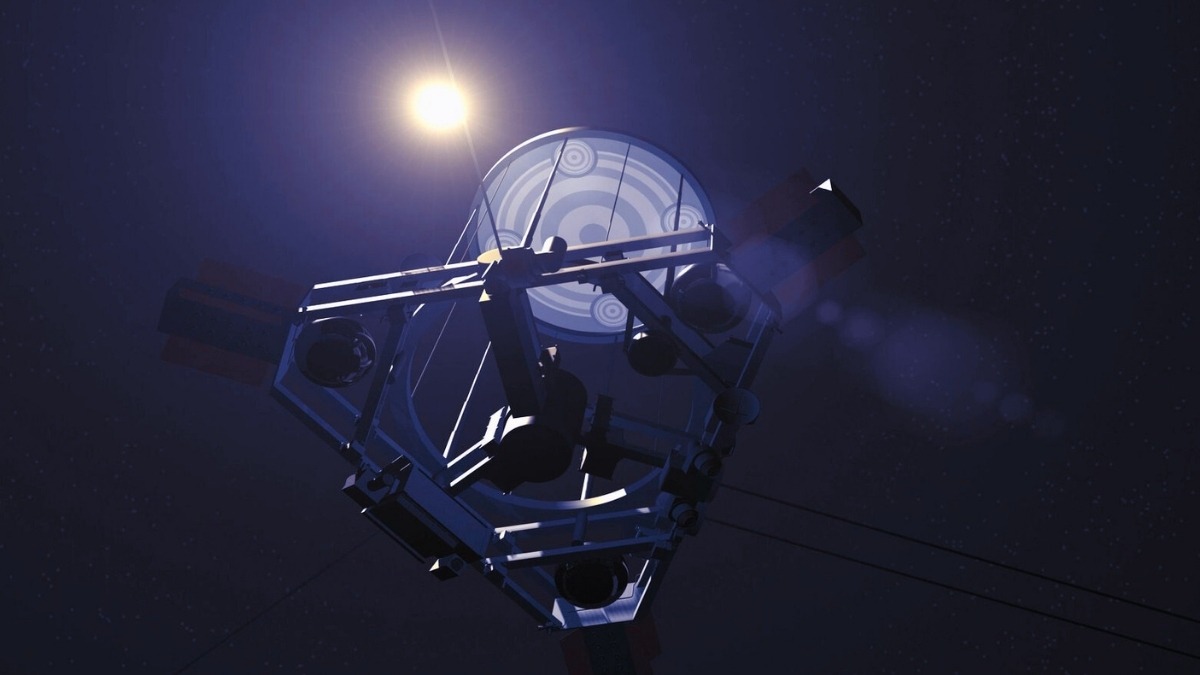
The idea of self-replicating probes, known as “Von Neumann probes,” dates back to 1949, when mathematician John von Neumann introduced the concept of a “universal constructor.” He suggested that a theoretical machine could create copies of itself using local resources. Later, SETI scientists began to consider how advanced civilizations could use such probes to colonize the galaxy in a relatively short time on a cosmic scale.
Why might the probes already be here?
Professor Alex Ellery of Carleton University argues that such probes could already have visited us. In his opinion, the main driver for interstellar travel is survival, not pure knowledge. A civilization may seek to ensure its existence in the face of the threat of a star’s demise, a collision with another civilization, or its own technologies.
Self-replicating probes are the most effective way to do this. They have no biological limitations, can withstand high accelerations, and do not need supplies or air, obtaining all necessary resources on site.
What do the probes do?
Ellery describes a typical scenario for the operation of such probes in a new planetary system:
- Resource extraction. Probes will target easily accessible asteroids and moons to extract metal and other materials.
- Base construction. They will establish production bases on resource-rich bodies such as the Moon.
- Self-reproduction. Based on these foundations, they will begin to create new generations of probes for further exploration.
- Task completion. The final phase may include the construction of settlements for future colonists or even attempts to populate planets (directed panspermia).
Where to look for such probes?
Instead of searching for radio signals, Ellery suggests focusing on finding “technosignatures” — evidence of technological activity. The most promising place to search is our own Solar System, particularly the Moon, which is an ideal base—it is rich in metals, has a stable environment, and could serve as an ideal site for the self-replication of probes.
Powering such large-scale operations will require energy. Ellery suggests that the probes could use nuclear reactors built from local resources. Such reactors would leave characteristic isotopic traces, such as thorium-232 or neodymium-144, which could be detected.
An interesting possibility is that advanced civilizations could have left “gifts” on the Moon—technological artifacts buried alongside resources. These will only become accessible once humanity reaches a certain technological level.
Future human space exploration is inextricably linked to the search for resources on the Moon and asteroids. Before embarking on large-scale construction, it is worth thoroughly exploring these bodies. And, in addition to minerals, we may discover something incredible—evidence that we are not alone in the Universe, waiting for us literally under our feet.
Earlier, we reported on how preparations had already begun for hunting interstellar objects from other worlds.
According to sciencealert.com

