

The X5.1-class eruption from sunspot AR4274 is the most powerful flare of the year, accompanied by a coronal mass ejection. Our planet is in its path.
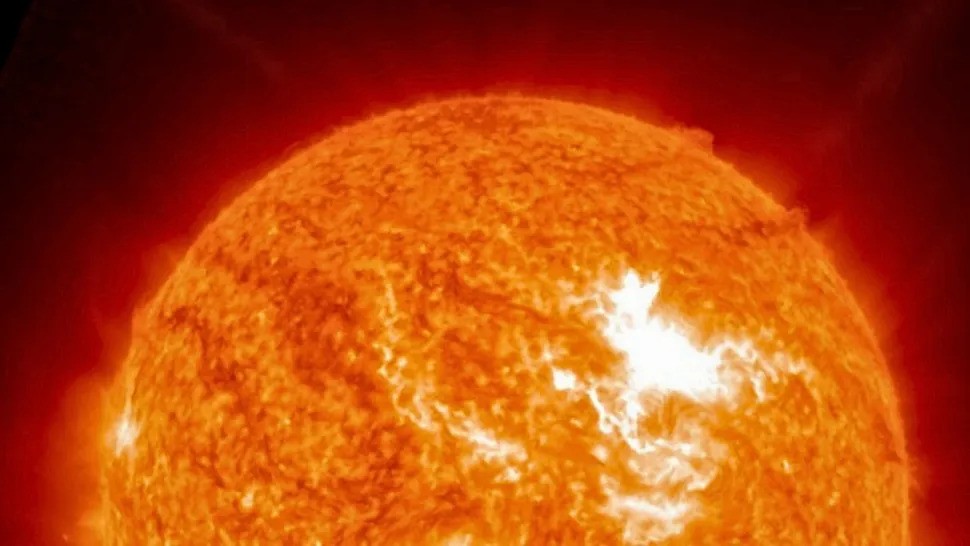
X5.1-class solar flare
On the morning of November 11, the Sun exploded in spectacular fashion, releasing a powerful X5.1-class solar flare, the strongest since 2025 and the most intense since October 2024.
The explosion peaked at 5 a.m. Eastern Standard Time (10:00 GMT) from sunspot AR4274, which has been very active in recent days. The flare caused severe (R3-level) radio interference in Africa and Europe, disrupting high-frequency radio communications on the sunlit side of the Earth.
Danger of geomagnetic storms
This flare is the latest in a series of intense flares from AR4274, which also caused an X1.7 flare on November 9 and an X1.2 flare on November 10. These flares were accompanied by coronal mass ejections (CMEs) that could combine and affect Earth tonight, possibly causing strong (G3) geomagnetic storms and widespread auroras, according to the NOAA Space Weather Prediction Center. Today’s coronal mass ejection may also join them, as it is moving toward Earth at a speed of 4.4 million miles per hour. NOAA predicts that the CME could affect Earth around noon on November 12. With this third CME, we may experience strong (G4) geomagnetic storms.
Solar flares are classified by strength into five classes: A, B, C, M, and X, with each step corresponding to a tenfold increase in energy output. X-class solar flares are powerful, and the number after X describes the intensity of the flare. With an intensity of X5.1, this latest flare is at the top of the scale.
Peak solar activity
The eruption resulted in a stream of X-rays and extreme ultraviolet radiation toward Earth, ionizing the upper layers of the atmosphere and causing a significant deterioration in radio signal quality. Severe (R3) radio interference was recorded over Africa and Europe.
This active region has become one of the most prolific sources of solar flares in the 25th solar cycle, marking the peak of activity in what has already been an extraordinary week for solar activity.
According to forecasts, the coronal mass ejection that occurred this morning during the X5.1 solar flare will reach Earth on November 12. According to NOAA, the coronal mass ejection could cause a strong (G4) geomagnetic storm on November 12.
According to www.space.com

