

The third phase of construction of the Murchison Antenna Array has been completed in Australia. Now this giant radio telescope consists of 8,192 individual receivers operating as a single unit. This creates a new place for research on many space objects.
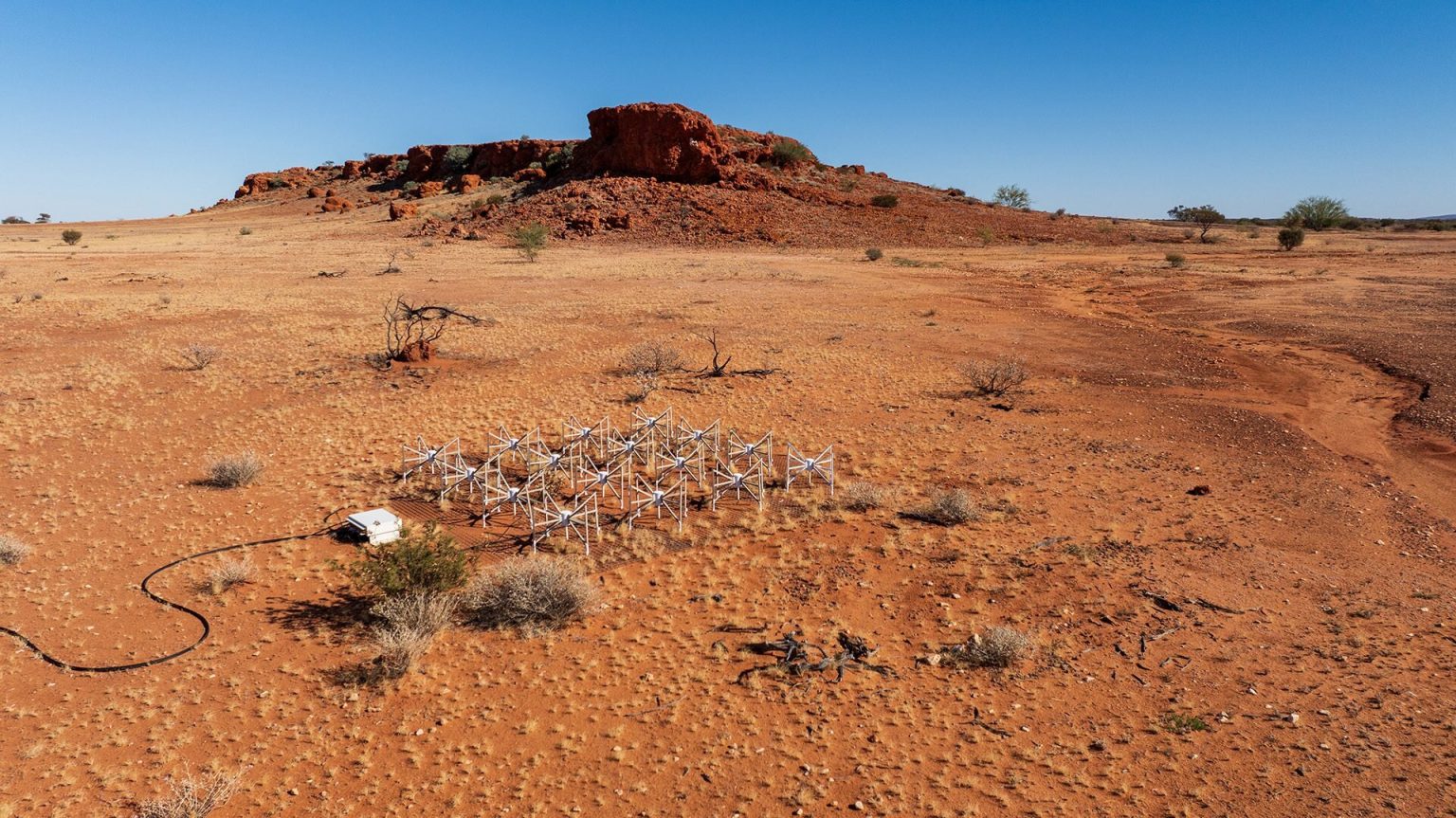
Murchison Radio Telescope
The possibilities for studying the sky in the radio range have recently expanded significantly. And all thanks to the official launch of the third phase of the Murchison Widefield Array.
This radio telescope is located in Western Australia in a fairly unpopulated area. After the second stage of construction, it consisted of 4,096 antennas scattered over an area of 20 km3. They work together and, thanks to this extensive base, represent one of the most sensitive astronomical instruments on Earth.
The third phase of construction doubled the number of antennas to 8,192. Obviously, the area they cover has also increased. Now the radio telescope occupies 30 km3. In order to process all the signals coming from the antennas, a new correlator was needed — a computer that would combine them all. Ultimately, this led to a fourfold increase in the amount of data.
Future of radio telescopes
The new improvement will enable the Murchison Widefield Array to perform its core tasks at a new level. And they are very wide: from observing the Universe in the era of reionization to tracking transient events.
But the topic it has focused on in recent years is strange radio rings. These extremely subtle structures are located in extragalactic space, and no one knows for sure the origin of these structures, as they are not associated with any visible objects.
New research awaits the Murchison Widefield Array in the future. Next, it will be further refined. Then, it will be replaced by its successor — a radio telescope with an area of one square kilometer.
According to phys.org

