

October is not just about pumpkin lattes and cozy evenings under a blanket. The cool autumn air makes the sky clearer, making it the perfect time for stargazing. Have you ever dreamed of catching a shooting star to make a wish? Then mark the night of October 21-22, 2025, in red on your calendar. It is your moment to shine!
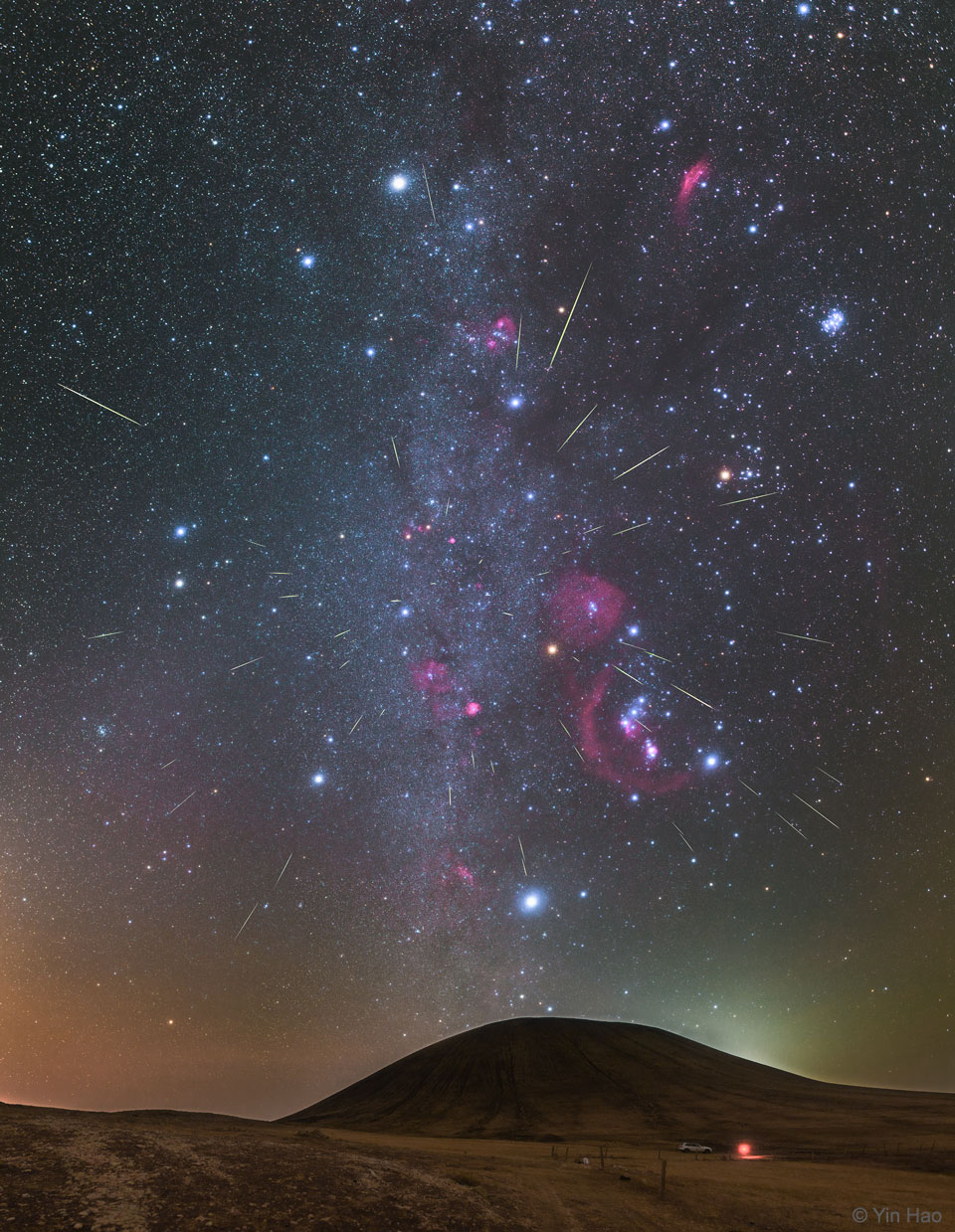
Image Credit & Copyright: Yin Hao
That is when one of the most spectacular shows will unfold in the sky – the Orionid meteor shower. These are not just nameless cosmic pebbles, but particles of the legacy of one of the most famous comets in the history of the universe. So get your thermoses ready, gather your friends, and let’s figure out how not to miss this amazing meteor shower.
Where do the Orionids come from?
All meteor showers originate from the dust trail left behind by comets or asteroids. The Orionids are the legacy of a comet. When this cosmic wanderer approaches the Sun, its heat triggers a process of sublimation in its icy core. The ice, bypassing the liquid phase, turns into gas, which escapes into space and picks up a huge cloud of stone and metal particles.
Every year, Earth’s path crosses this cloud, and dust particles crash into our atmosphere at a crazy speed – about 66 km/s. It is like covering the distance from Kharkiv to Uzhhorod in less than 20 seconds! The intense friction with the air causes these particles to ignite like matches. These are meteors: the spectacular finale of a long cosmic journey.
The Orionids: Halley’s Comet – the source of the meteor shower
The Orionids owe their birth to the most famous comet, 1P/Halley. Each of its appearances in the sky was considered by our distant ancestors to be an omen that evoked both excitement and superstitious horror. It was even woven into the famous Bayeux Tapestry, which depicts the bloody Battle of Hastings in 1066, when England fell to the Normans.
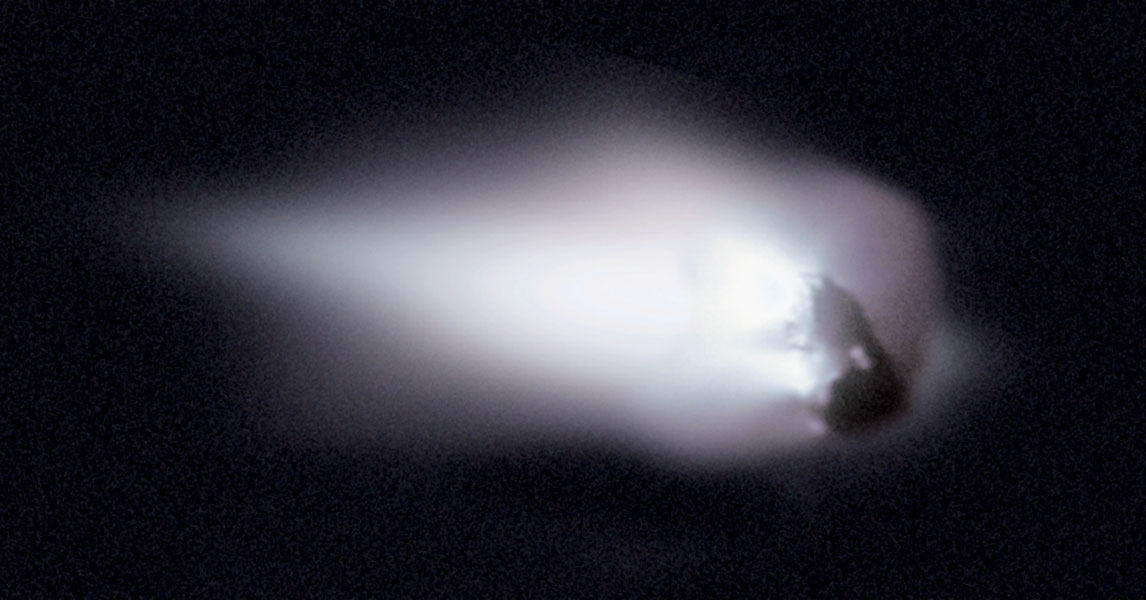
Image Credit & Copyright: Halley Multicolor Camera Team, Giotto Project, ESA
Halley’s Comet is a short-period comet, as it takes about 76 years to complete one full orbit around the Sun. It was last seen in 1986, and its next visit is expected in 2061. Fortunately, we don’t have to wait half a century to receive a “package” from it. The October meteor shower is Halley’s annual message to us. By the way, the comet has another “stellar” brother stream, the Eta Aquariids, which can be seen in May.
Why is the meteor shower called the Orionids?
Why the Orionids, then, and not, say, the Halleyids? The point is the “place of registration.” In astronomy, there is a term called “radiant.” It is an imaginary point in the night sky from which meteors fly out like sparks from a bonfire. In our case, this point is located in one of the most recognizable constellations – Orion. It is easy to find: look for three bright stars in a row in the southeastern sky – this is the famous Orion Belt.
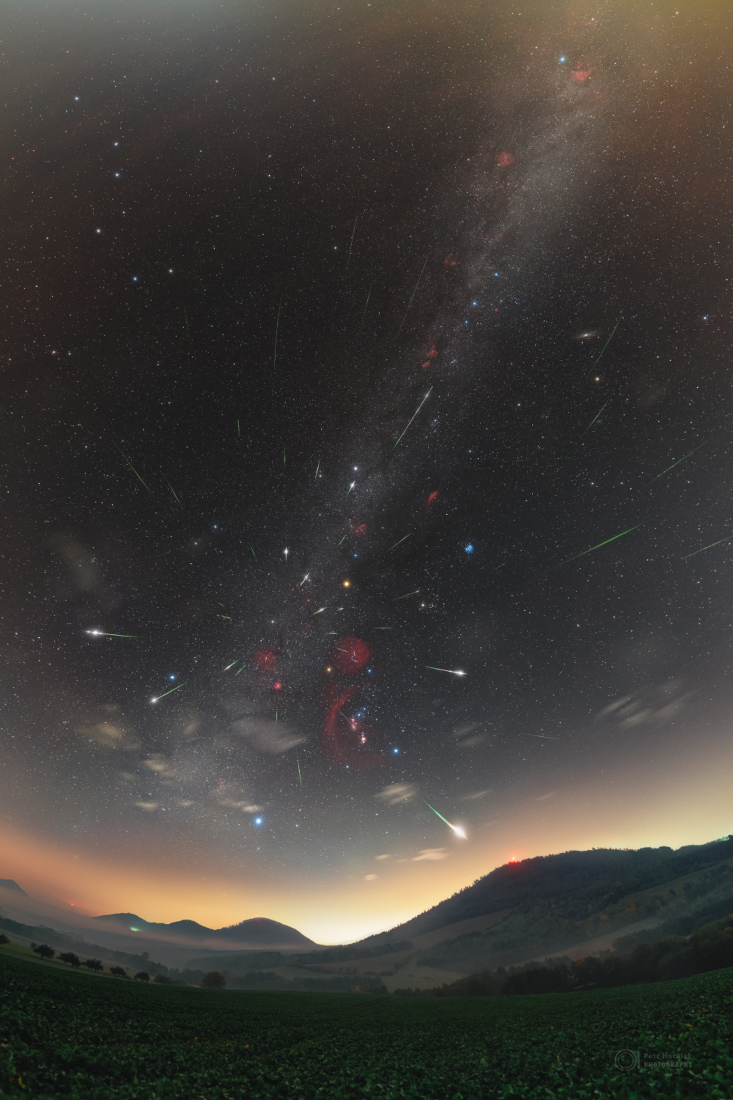
Image Credit & Copyright: Petr Horalek / Institute of Physics in Opava
Of course, this is just an optical illusion. In reality, the meteors fly in parallel courses, but from an earthly perspective, it seems as if they are emerging from a single center. Therefore, although the “source” of the stream is located in the Orion constellation, it is not worth looking only there – the longest and brightest trails can cross any part of the sky.
Tips for observing the Orionid meteor shower
Ready to hunt for shooting stars? Great news: you do not need a telescope or other complex optics, because the best tool is your own eyes. Here are some simple tips for success.
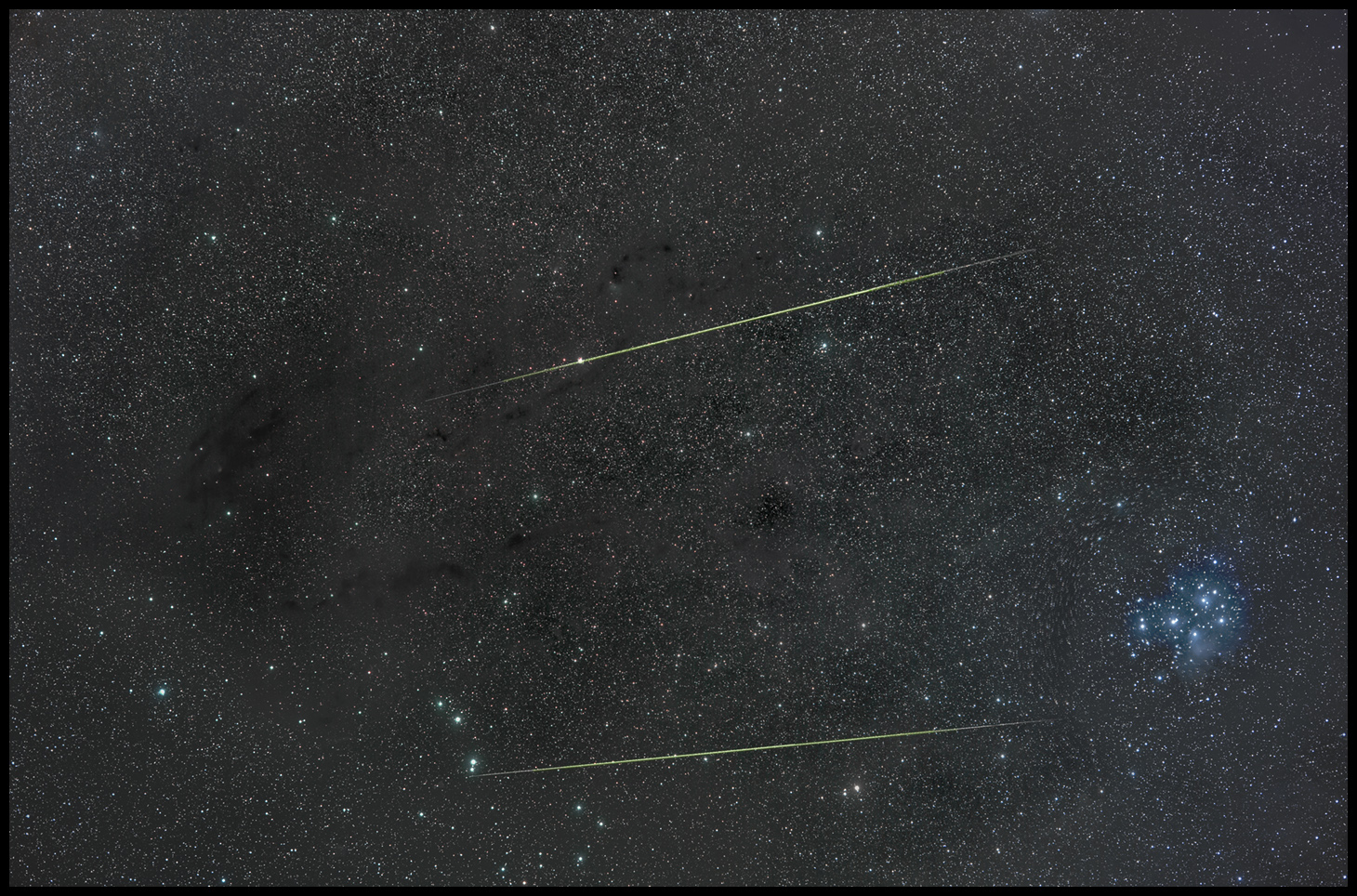
Image Credit & Copyright: David Cortner
- Escape from the city. Light pollution “eats away” most meteors, so the further away from streetlights, the better. Ideally, a field, hill, or riverbank outside the city.
- Patience and adaptation. It takes about 20–30 minutes for your eyes to adjust to the darkness. During this time, please refrain from looking at your smartphone. If you need light, use a flashlight with a red filter.
- The best time. It is worth watching the meteors after midnight and until dawn, when the constellation Orion rises high above the horizon.
- Comfort. A folding chair or mat will allow you to look up without straining your neck. And to make sure you do not get lost in the constellations, you can check out EarthSky for tips.
After all, a meteor shower is a great opportunity to get together with friends and enjoy the grandeur of space. Do not miss this opportunity in October, when the beautiful Orionids will light up the night sky.

