

AES Andes has announced that it will abandon plans to build the INNA industrial complex in Chile’s Atacama Desert. The implementation of this project could jeopardize astronomical observations.
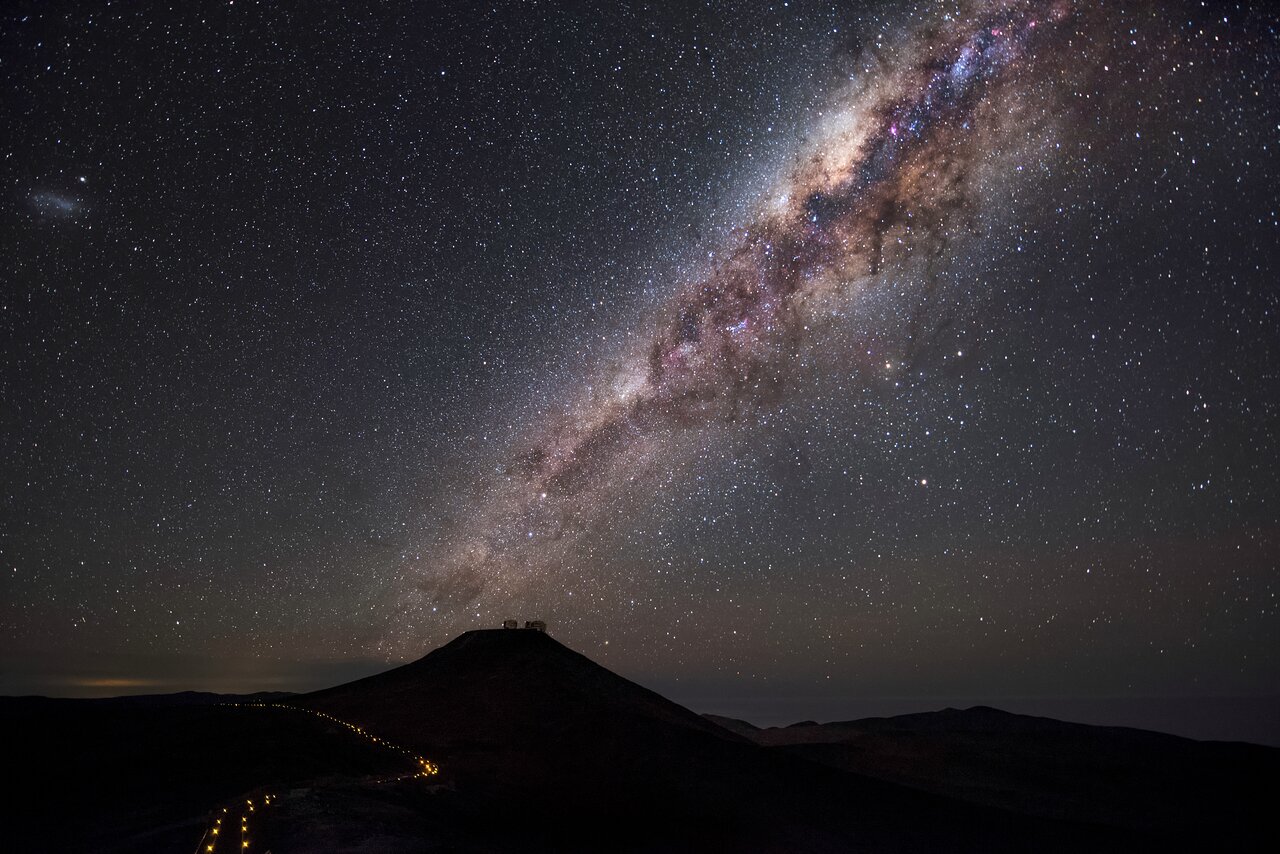
The Atacama Desert is considered one of the best places on Earth for astronomy. Its combination of dry climate, high altitude, and lack of light pollution has made it home to numerous telescopes that have made a number of landmark discoveries. The Paranal Observatory, built and operated by the European Southern Observatory (ESO), stands out in particular. During its operation, it has, among other things, captured the first image of an exoplanet, confirmed the accelerated expansion of the Universe, and made an important contribution to the study of the black hole at the center of the Milky Way, which was recognized with the 2020 Nobel Prize in Physics.
In addition, construction of ESO’s Extremely Large Telescope is underway on Cerro Armazones, a mountain near Paranal. Once operational, it will be the most powerful ground-based observatory in history, radically changing our understanding of the Universe.
Unsurprisingly, when AES Andes announced its intention to build a large industrial complex called INNA just 5–11 kilometers from the Paranal Observatory at the end of 2024, it caused alarm among the scientific community. Its territory was to cover over 3,000 hectares. The plan included the construction of a port, ammonia and hydrogen production plants, and thousands of power stations.
A detailed technical analysis conducted by ESO showed that INNA would cause serious and irreversible damage to the dark sky of Paranal and the ability of its telescopes to operate as designed. Therefore, astronomers issued a statement calling for the project to be moved to another location.
Fortunately, this call was heard. On January 23, AES Andes announced that it had decided to discontinue INNA in order to focus on its renewable energy portfolio. “When the cancellation is confirmed, we’ll be relieved that the INNA industrial complex will not be built near Paranal,” said ESO Director General Xavier Barcons. “Due to its planned location, the project would pose a major threat to the darkest and clearest skies on Earth and to the performance of the most advanced astronomical facilities anywhere in the world.”
The INNA case once again highlights the urgent need for clear protective measures in areas surrounding astronomical observatories. They are essential for scientists to continue their work, especially in a region that is considered the best in the world for optical astronomical objects due to the exceptional darkness of the sky.
According to ESO

