

Every August, a special full moon, known as the Sturgeon Moon, lights up the night sky. This name, which has been passed down to us from ancient times, is a wonderful reminder of our connection to the rhythms of nature. The full moon that will grace August 2025 promises to be unique, as it combines an interesting cultural history with unusual astronomical conditions, which we will discuss.
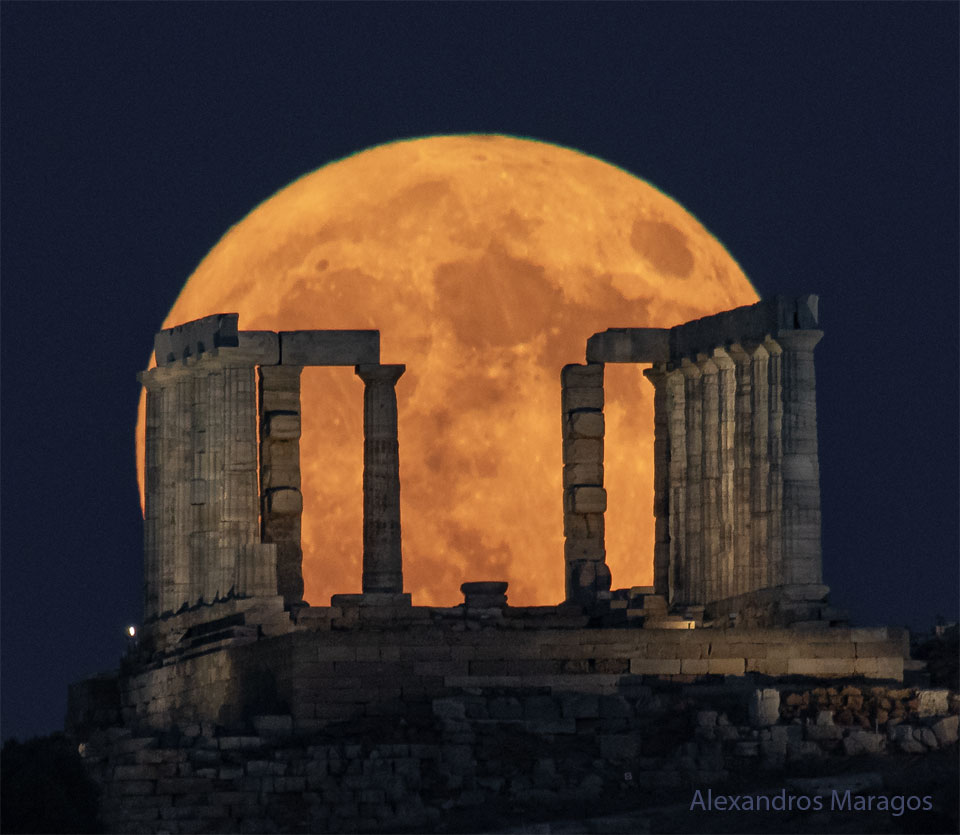
Credit: Alexandros Maragos
The Sturgeon full moon: the origin of the name
The name “Sturgeon Moon” has nothing to do with the appearance of the Moon. It comes from the indigenous tribes of North America who lived in the Great Lakes region. For them, August was the best time to catch sturgeon, and the full moon served as a reliable signal that it was time to start fishing. Thus, the distant celestial body became part of earthly concerns.
Other names for the August full moon
The August full moon has other names that reflect seasonal phenomena in different parts of the world:
- The Green Corn Moon, or Grain Moon. For the Native Americans, this name symbolized the period of corn ripening, while for the Anglo-Saxons, it referred to barley and wheat.
- The Moon of Controversy is a Celtic name that may be related to the beginning of the period of struggle for resources before winter.
- The Herbal Moon is a name found in some neo-pagan traditions (Wicca) and is associated with the collection of medicinal herbs.
- The Moon of First Flight is a poetic name from the Cree tribe that refers to the time when young birds finally took flight.
- The Moon of Lightning is a logical name for the northern regions, where the end of summer is traditionally the season of the most powerful thunderstorms.
Such a variety of names demonstrates how closely the lunar calendar was connected to people’s daily lives long before the advent of modern astronomy.
The Sturgeon Moon on August 9: when to observe
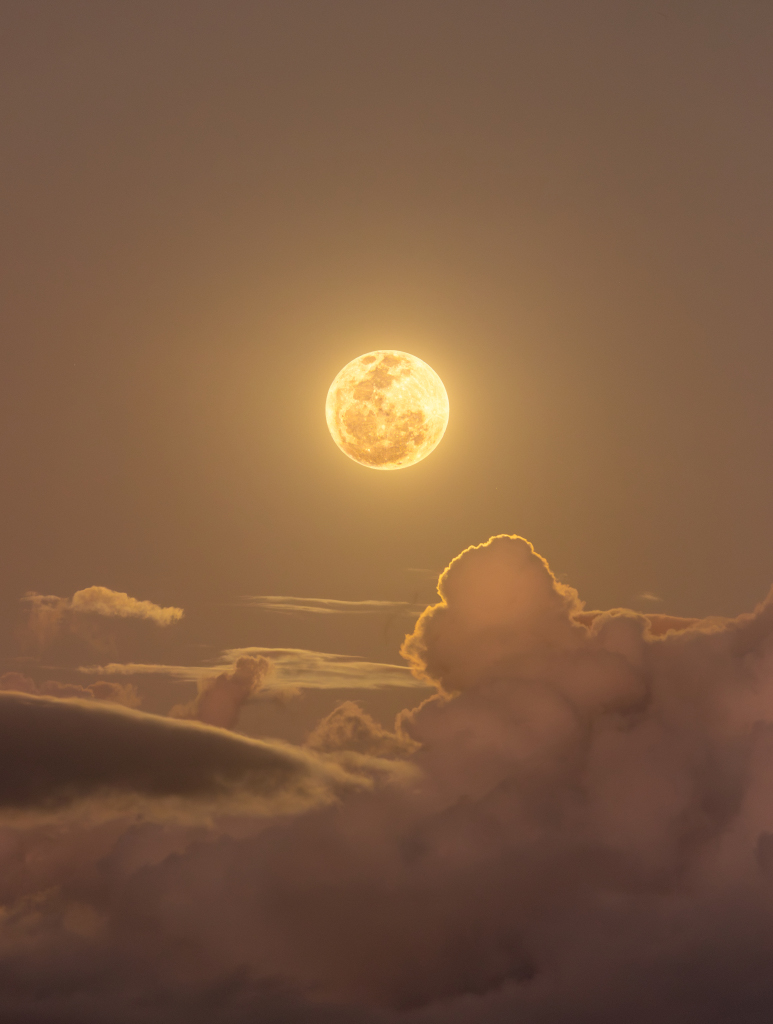
Credit & Copyright: Alexsandro Mota
The key date to note on your calendar is Saturday, August 9, 2025. The peak of the full moon will be at 10:55 Kyiv time (07:55 GMT). Don’t worry that it’s morning! The moon will look perfect, full, and spectacular throughout the night of August 8-9, as well as the night after the fullness.
Useful tips for observers
- Find a dark place. Getting away from the city lights is the number one rule. Light pollution is disturbing, so the best views are in nature: in a field, on a hill, or near a body of water.
- Do you need optics? Usually, the glow of the full Moon is perfectly visible to the naked eye. However, if you want to see the details, ordinary binoculars will come in handy – you can see the dark “seas” (lunar plains) and the largest craters through them. A telescope will allow you to dive even deeper into the details.
- Let your eyes get used to it: Before you start observing, spend at least 15 minutes in the dark. During this time, your eyes will adapt and you will be able to distinguish many more details.
Following these simple tips will help you fully enjoy the majesty of the night sky and the beauty of the August full moon.
Features of observation in different latitudes
The path of the full Moon in the sky is never the same – it all depends on the season and your location. In the Northern Hemisphere, August is summer. The Sun rises high at this time, so the full Moon opposite it follows a low trajectory. At the same time, in the Southern Hemisphere, where August is the winter month, the Moon, on the contrary, describes a high arc, passing almost over the heads of observers in Australia, South Africa, and South America.
Supermoon or not? Impact of perigee and apogee
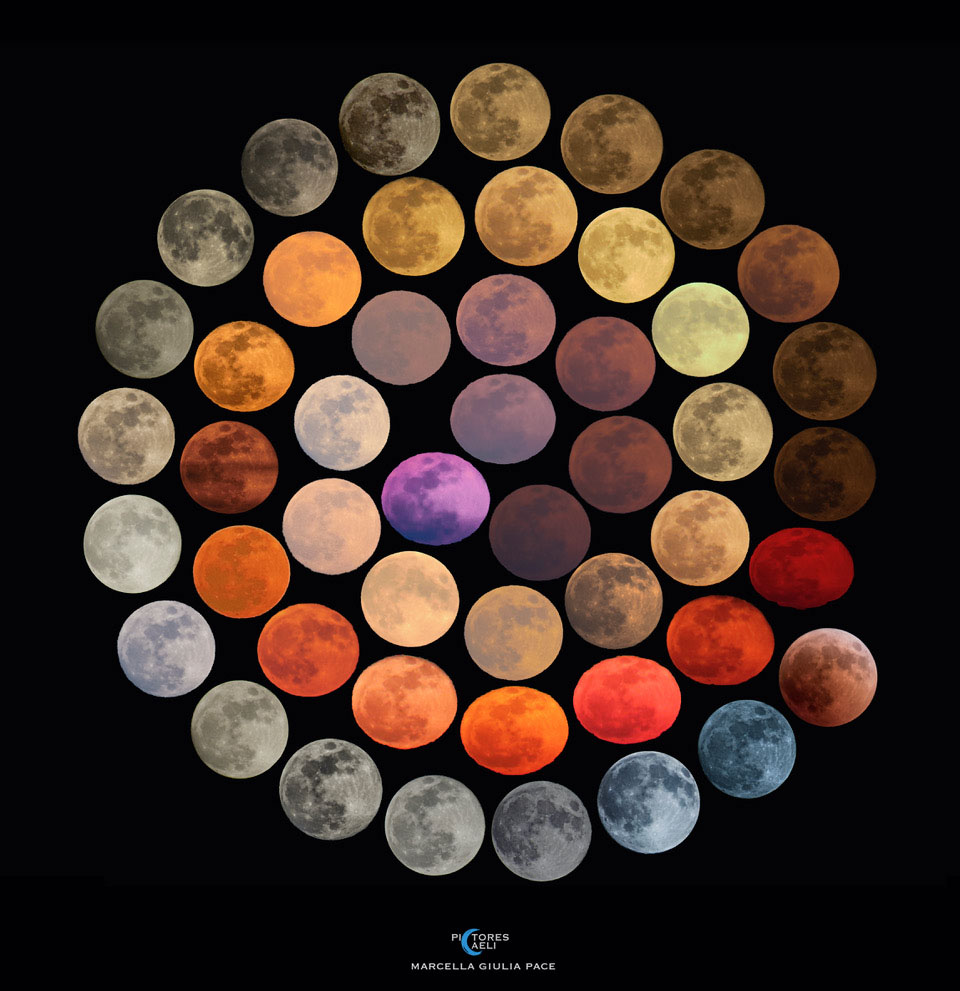
Image Credit & Copyright: Marcella Giulia Pace
The 2025 Sturgeon Full Moon will not be a supermoon. A supermoon occurs when the full moon coincides with the Moon’s perigee, the closest point to the Earth in its orbit. In August, the situation will be the opposite: our satellite will be near the apogee, the most distant point. Because of this, it will look a little smaller and dimmer than usual. This phenomenon is called a micromoon. Also, the event will not be a “Blue Moon” because it is the only full moon in August.
Tradition and modern meaning
Since ancient times, the full moons have been endowed with special powers, and the August one was no exception. It was associated with the first harvest, so it was a time of gratitude and abundance. People celebrated what they had grown and harvested and thanked nature for its gifts.
In addition, the bright light of the full moon was believed to dispel the darkness not only on earth but also in the mind. Our ancestors believed that it helped to see the truth, dispel illusions, and understand what it was time to say goodbye to (old habits, fears, relationships) to make room for the new that autumn would bring. The Sturgeon Moon is also a great opportunity to escape from everyday life and just enjoy the moment.
The Sturgeon full moon 2026
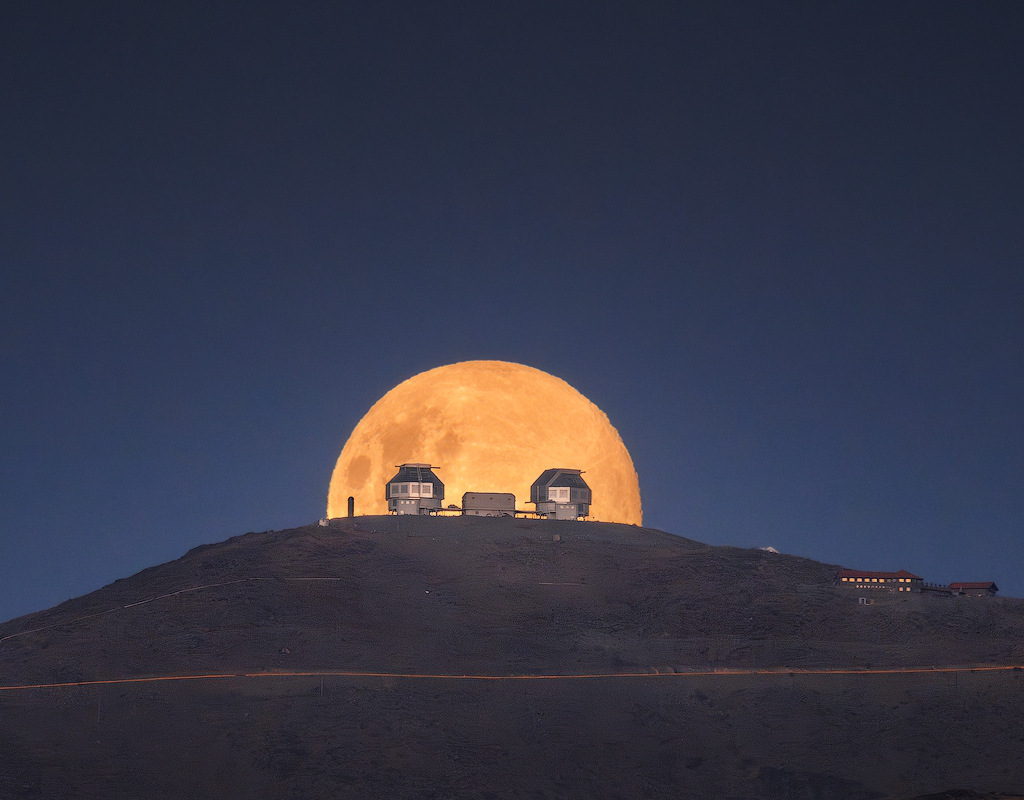
Image Credit & Copyright: Yuri Beletsky (Carnegie Las Campanas Observatory, TWAN)
Do you like to plan? Then take note: in 2026, the Sturgeon Moon is expected to occur on August 28, at 07:18 Kyiv time (4:18 GMT). This will be another great opportunity to enjoy the majesty of the night sky.

