

American scientists have published the results of a study on the properties of planets around white dwarfs. It shows that, contrary to popular belief, they may be suitable for life.
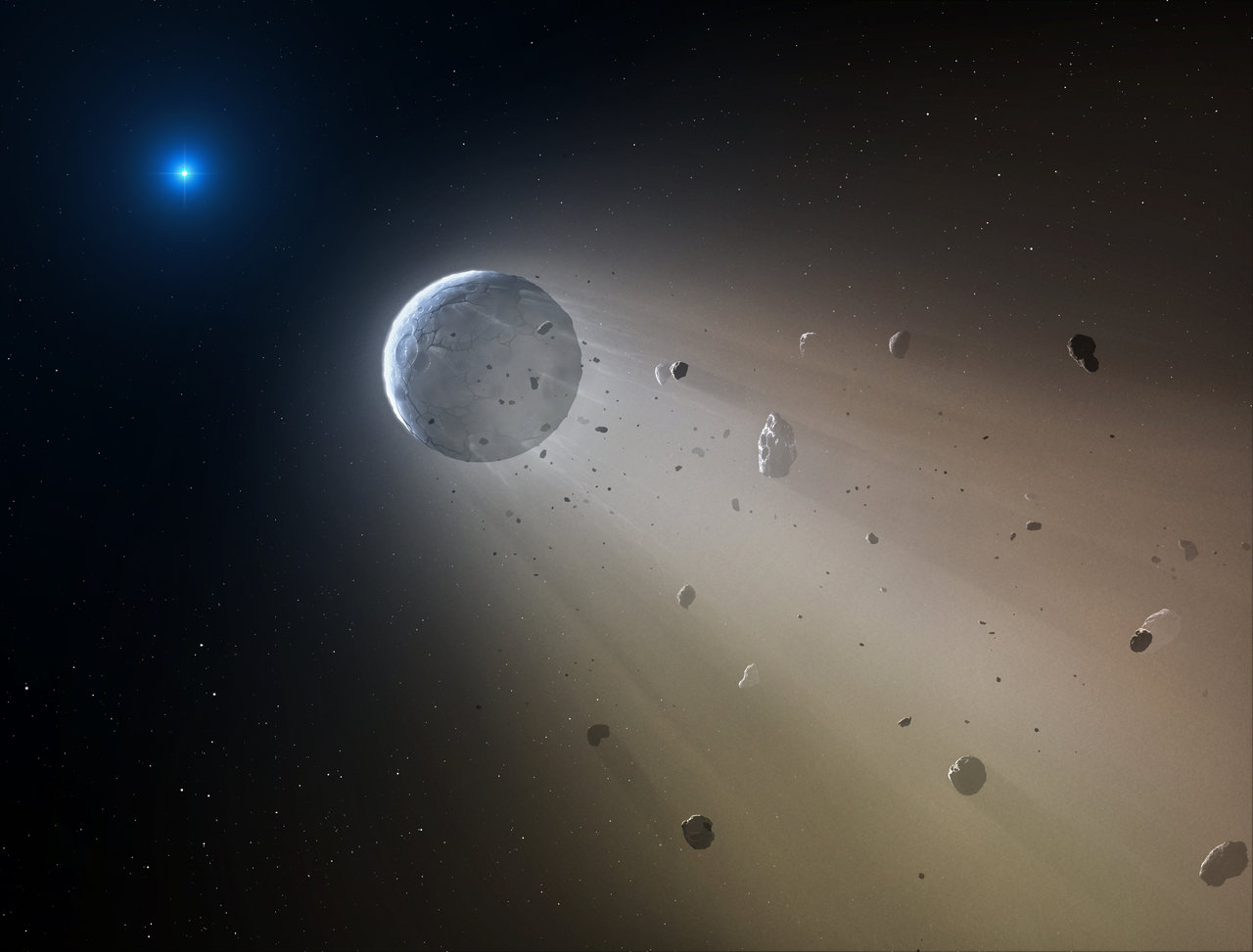
In our search for extraterrestrial life, we usually look for planets orbiting stars similar to the Sun and icy moons. But there is another possible candidate — planets orbiting white dwarfs, the hot, dense remnants of dead stars.
A white dwarf is formed when a sun-like star exhausts its hydrogen fuel and sheds its outer layers, leaving only the core. With dimensions comparable to the diameter of the Earth, such objects have a mass comparable to that of the Sun. The main problem is that white dwarfs emit thousands of times less heat and light than ordinary stars. This means that the habitable zone (the area where liquid water can exist on the planet’s surface) in their systems is limited to a few million kilometers from the star, which is an extremely close distance from an astronomical aspect.
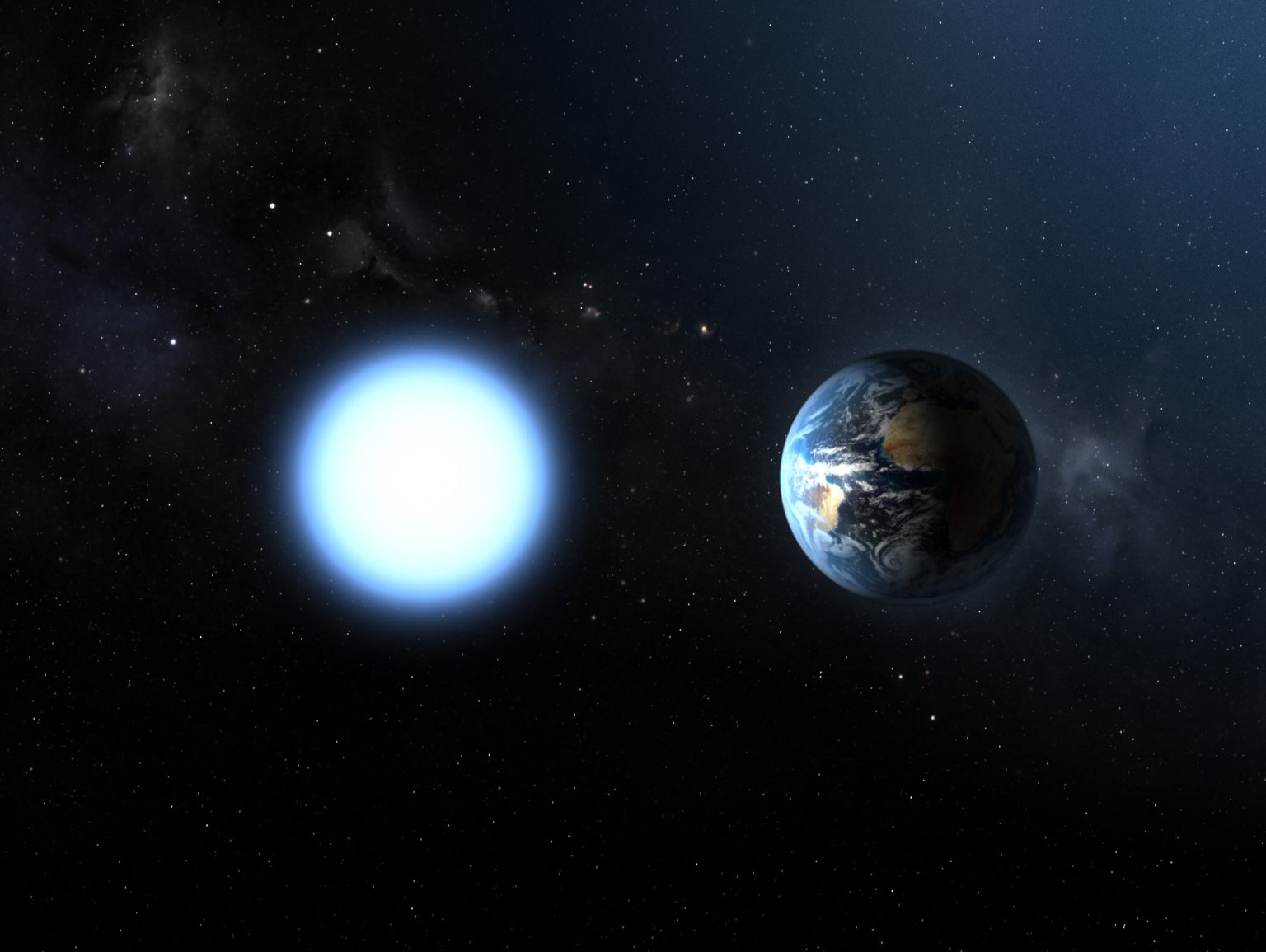
Although scientists have actually managed to discover large planets around white dwarfs, until recently it was believed that life on them was impossible due to tidal forces. These forces are amplified when a neighboring planet stretches the orbit of the inhabited planet into an oval shape. This stretches and compresses the planet’s interior, generating heat that can cause a deadly greenhouse effect. It causes all surface lakes and oceans to evaporate and makes the planet uninhabitable.
However, using computer simulations, scientists at the University of Wisconsin-Madison have shown that Einstein’s general theory of relativity (GTR), which describes the effects of gravity on very large scales and at high speeds, can stabilize the planet’s orbit.
They discovered that the powerful gravity of the white dwarf caused the planet’s orbit to slowly rotate. This force prevents the oval shape of the orbit from increasing excessively, despite the gravitational pull of the neighboring planet. This keeps tidal heating low and, as a result, keeps liquid water on the surface, potentially making it habitable.
To verify their calculations, the researchers conducted simulations with and without taking into account the effects of GR. They confirmed that without the effects of GR, most planets in the habitable zone with neighboring companion planets would be overheated and uninhabitable. However, with GR, the habitable zone is significantly larger, which helps avoid an uncontrollable greenhouse effect.
According to scientists, their discovery provides new opportunities in the search for extraterrestrial life and the selection of promising targets for research using advanced instruments such as the James Webb Space Telescope.
Earlier, we reported on a white dwarf that was “dining” a Pluto-like world.
According to Phys.org

