

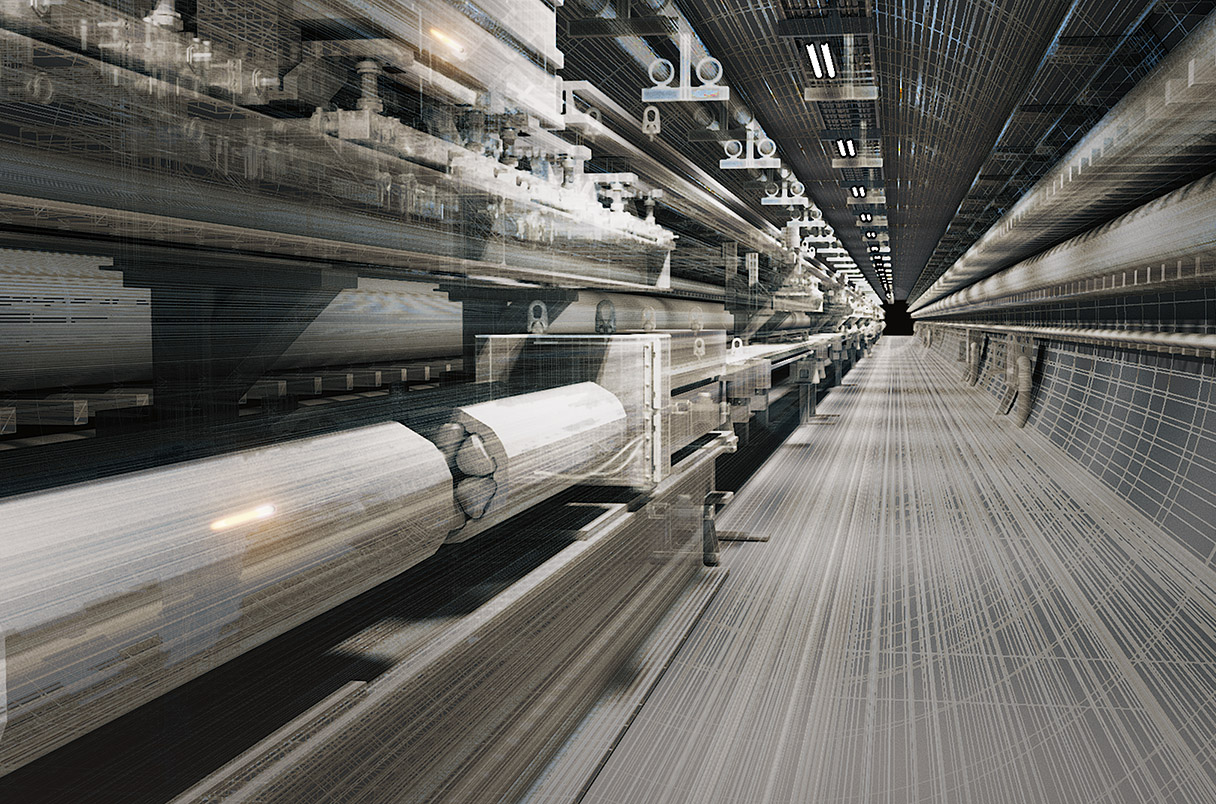
European physicists have officially decided to build the largest particle accelerator in human history. The 91-kilometer-long circular collider will be housed in a new tunnel near Geneva. It is expected to become operational by the mid-2040s.
What exactly will be built?
The new accelerator has been named the Future Circular Collider (FCC). The decision was announced by representatives of the European Organization for Nuclear Research (CERN) during a press conference on May 22, 2026. This is the result of a two-year strategic planning process by the European physics community.
The decision does not yet oblige CERN to begin construction, as the project still faces significant financial challenges. However, the inclusion of the FCC in the European particle physics strategy elevates the concept to an official plan. The CERN Council is not expected to make a final decision until at least 2028.
How will the accelerator work?
The project consists of two phases. First, the FCC-ee electron-positron collider will be installed in the tunnel, where electrons will collide with positrons at energies of up to 0.365 tera-electron volts (TeV). These collisions will generate a large number of Higgs bosons, which were discovered in 2012.
Despite having lower collision energies compared to the current Large Hadron Collider (LHC), which collides protons, the electron-positron FCC-ee has a significant advantage. When electrons and positrons collide, they produce a much cleaner signal, allowing physicists to study the Higgs boson with unprecedented precision.
Once the FCC-ee program is completed, the equipment will be dismantled and replaced with the much more powerful FCC-hh proton collider. The same tunnel will be used for this purpose, which accounts for nearly half the cost of the first phase. The FCC-hh will collide protons at an energy of 100 , which is seven times higher than that of the LHC. However, it is not scheduled to be launched until the 2070s.
How much will it cost?
The cost of FCC-ee is estimated at 15 billion Swiss francs, or approximately 19 billion dollars. CERN’s budget will cover only about half of that amount. The remainder is to be provided by the European Union, which is expected to contribute approximately 20% of the total cost, philanthropists contributing around one billion dollars, and international partners. In particular, the strategic plan developed by U.S. physicists calls for a contribution of between one and three billion dollars.
CERN is repeating a strategy that has already proven effective. In 1983, the laboratory began construction of a 27-kilometer tunnel for the Large Electron-Positron Collider (LEP), and later replaced it with the LHC in the same tunnel. Now this approach is being scaled up.
According to science.org

