

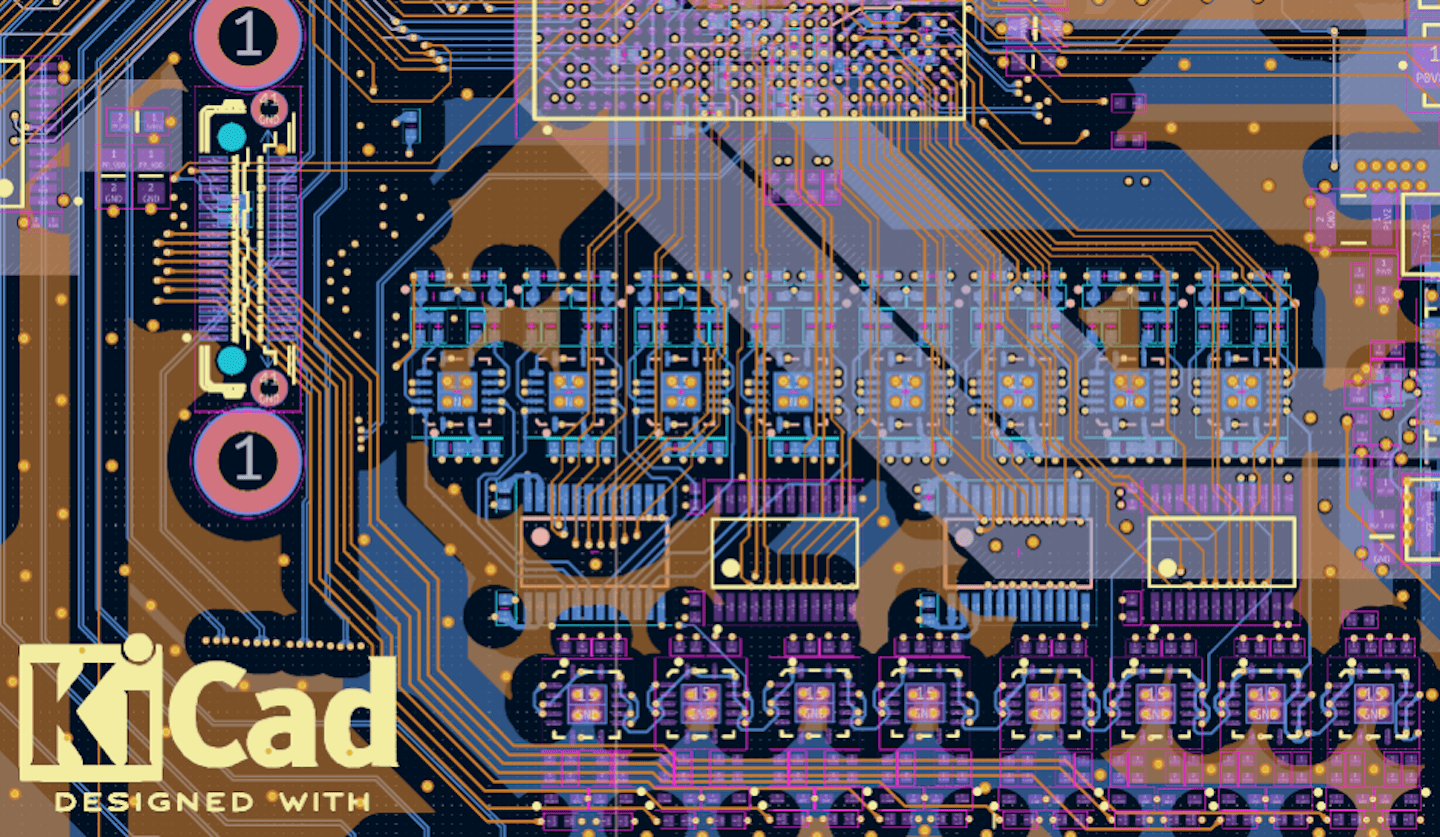
The European Organization for Nuclear Research (CERN) has made a complete library of electronic components for printed circuit board design available for free. Developers from around the world can now freely use more than 17,000 pre-designed symbols and footprints in KiCad, a free and open-source tool.
What exactly is available?
Scientists at CERN develop complex electronic equipment for experiments at the Large Hadron Collider on a daily basis. The researchers usually draw up the circuit diagrams themselves, while the final layout of the circuit boards is entrusted to the organization’s Design Bureau.
For many years, this office maintained an internal library of component symbols (for schematics) and footprints (for layout), comprising more than 17,000 entries. On May 7, 2026, CERN released this collection under an open license.
Why is this important?
KiCad is a free and open-source software suite for printed circuit board design developed by French programmer Jean-Pierre Charras since 1992. Its main advantage is that no project participant needs to purchase an expensive commercial license.
But a truly open-source project requires not only free software, but also open-source component libraries. These were precisely what was missing, as KiCad users have until now been forced to create their own symbols from scratch or rely on scattered third-party collections.
A tradition of transparency
The European Organization for Nuclear Research has consistently upheld the philosophy of open science since 1994, when it released the World Wide Web software under a free license. Since then, it has been promoting open hardware (through the CERN Open Hardware License), open access to scientific publications (through the SCOAP³ consortium), and open data from experiments at the collider.
The new library complements the collection of projects already available in the Open Hardware Repository—a public repository of open-source hardware designs.
The launch of the library means that anyone—from students to startups—can take components that have been tested in one of the world’s most demanding research laboratories and immediately use them in their own projects. This speeds up development, reduces errors, and allows users to focus on the creative aspects of their work.
CERN also provides 3D models of these components, allowing developers to visualize the future circuit board in three dimensions even before production begins, so they can verify whether it will fit inside the case.
According to home.cern

