

When people change time from summer to winter or vice versa, it affects not only them, but also things as far removed from earthly matters as the detection of gravitational waves. It’s all about people’s daily activities, which scientists have to take into account.
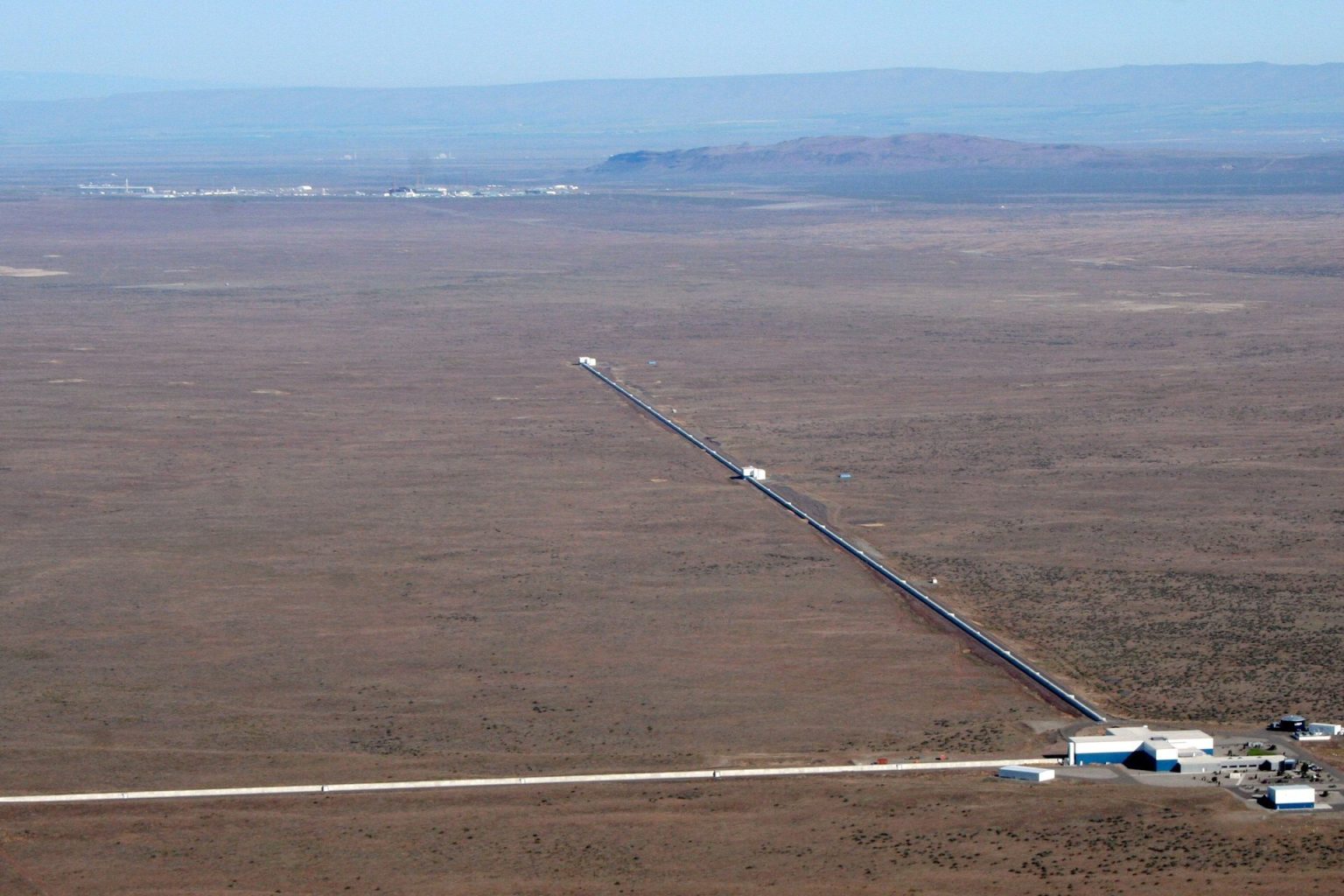
Study of the sensitivity of the LIGO gravitational wave detector
Human interference has always been a problem for astronomical observations. Radio astronomy is known for its sensitivity to random interference, which is why there are “radio silent” zones near telescopes where the use of mobile phones is prohibited. But gravitational wave astronomy is experiencing an even greater impact than radio astronomy, according to a new paper published on the arXiv preprint server by Reed Essick of the University of Toronto.
In an article entitled “Can LIGO Detect Daylight Savings Time?” the author examines how a human invention such as daylight time can affect gravitational waves caused by the merger of black holes billions of light years away.
In fact, Dr. Essick discovered that there were noticeable patterns in LIGO’s sensitivity related to the timing of typical human activity.
To do this, he used a technique called an “injection campaign,” where scientists deliberately inject data resembling gravitational waves on top of the normal background noise that the detector usually picks up. The two injection campaigns he used were conducted for observation cycle 3, between 2019 and 2020, and the initial part of observation cycle 4, between 2023 and 2024, which was the most recent observation cycle available.
Human activity and sensitivity of LIGO
There was a weekly pattern where the system’s sensitivity decreased for five consecutive days and then did not drop significantly for two days, following a pattern of working days/days off. In particular, he noted that sensitivity was also significantly reduced on Tuesday and Wednesday, when the instruments were undergoing maintenance. This usually happened on Tuesdays, and the detectors were turned off, but this maintenance could also continue until Wednesday, which reduced overall sensitivity.
Dr. Essick also discovered the daily rhythm of the day/night cycle. On weekdays, sensitivity decreased significantly during working hours, when people were most active. Then there was a noticeable increase in sensitivity after 6 p.m., when people’s activity at the facility decreased.
The most important thing for the title of the article is that this daily cycle changed when the LIGO observatories switched to daylight saving time and back. He noted that the difference in sensitivity changes at the facility was 74 minutes when daylight saving time was in effect compared to when it was not — almost exactly matching the expected shift in the time change.
Correct interpretation of gravitational waves
This is not necessarily a surprising discovery — human activity has been influencing astronomical observations for years. Seismologists have also noticed weekly and daily rhythms in seismic noise caused by daily commutes and human activity. Even at the LIGO facilities themselves, these weekly cycles of activity were observed earlier. Interestingly, the article examined data not only from LIGO, which has facilities in Washington and Virginia. Background noise from Virgo, located in Italy, and KARGA, located in Japan, was included. However, as the weighting of the US-based LIGO detectors in the overall network was too high, the weekly and daily cycles were most consistent with the US working schedule.
This discovery is more than just an interesting nuance of gravitational wave astronomy — it has implications for the types of gravitational waves that the system is capable of detecting. Gravitational waves depend on the direction from which they come, so data from a single wave can be distorted depending on the season, time of day, and day of the week. Taking these changes into account will be key to understanding the full picture of gravitational wave astronomy — unless we build one of those giant space interferometers that are indifferent to patterns of human activity. But until that happens, correctly detecting gravitational waves without warning will remain a challenge.
According to phys.org

