

The space industry is approaching a new era, and 2026 promises to be a year of important breakthroughs. Let’s take a look at ten innovations and projects that are currently being tested or planned for implementation. Each of these technologies is important for space, astronauts, and future colonization. So, which space technologies of 2026 will pave the way to the future?
1. Orbital refueling station
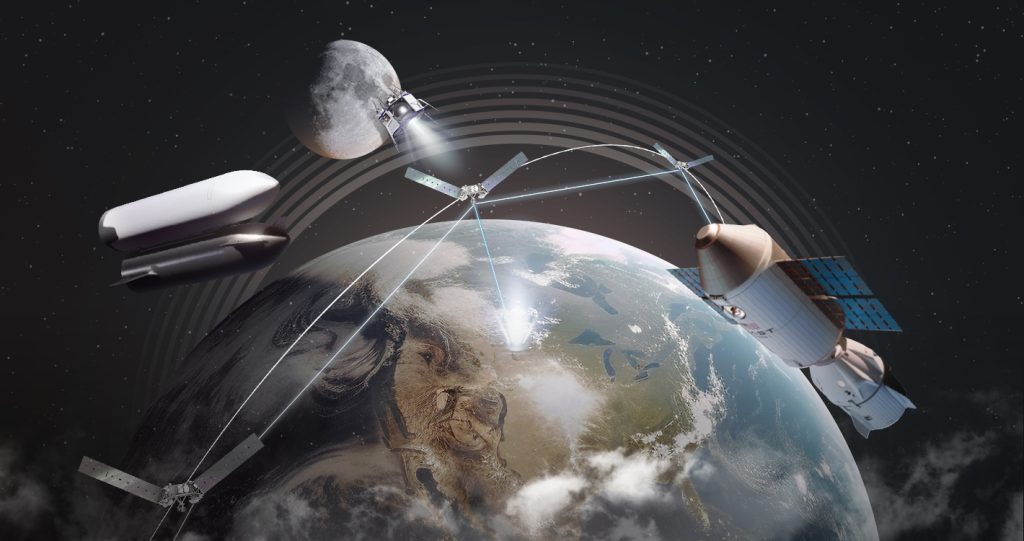
Imagine a space refueling station in orbit where ships refuel like planes from tankers or cars on the highway. Orbital refueling is a technology that allows fuel to be transferred between spacecraft directly in space. Simply put, instead of launching from Earth with fully fueled tanks (which is very difficult), a spacecraft can launch into orbit lighter and then refuel from a tanker. This is extremely important for long-distance missions – for example, a flight to the Moon or Mars in a large spacecraft will become possible if it is refueled in low Earth orbit. SpaceX is already planning such an experiment: Starship is to transfer fuel between two Starships in orbit for the first time – this demonstration is expected in 2026.
In addition, startups are collaborating with the military: Orbit Fab and Astroscale will launch a satellite refueling system in geostationary orbit in June 2026 – a small “fuel truck” will refuel a military satellite, refuel itself from an orbital fuel storage facility, and then proceed to refuel the next object.
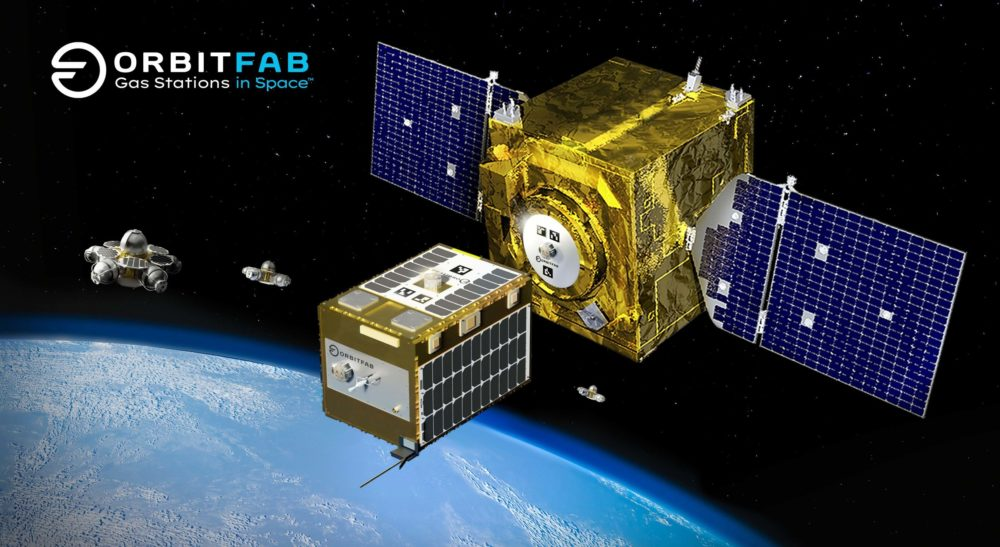
The chances that we will see successful refueling in 2026 are very high: the technology has already been funded and is being prepared for testing. Orbital refueling paves the way for continuously maneuverable satellites (which can dodge threats and change orbits as needed) and long-distance expeditions, where refueling in space will save huge amounts of money on launching extra fuel from Earth.
2. Commercial space stations
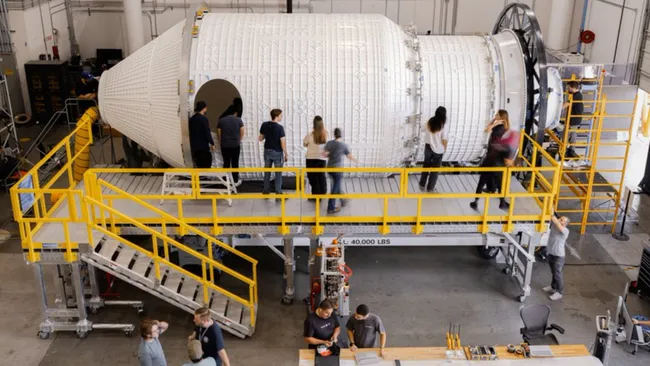
The era of the International Space Station is coming to an end, and private orbital stations are taking its place. The first of these, built by a company rather than a government agency, could appear as early as 2026. One of the projects is Haven-1 from California-based startup Vast. It is a compact space module designed for a small team, which is planned to be launched on a Falcon 9 rocket in the second quarter of 2026. Haven-1 will be the first independent commercial platform in low Earth orbit, a true mini-station. The module weighs about 14 tons and can accommodate up to four astronauts for 10 days during each mission. It is planned that over three years of operation, Haven-1 will host several short expeditions – researchers or even space tourists will arrive for 10-day “business trips” and return to Earth.
Source: Vast Space
This will be an important turning point for manned spaceflight: for the first time, a private company will own its own living platform in orbit. The chances of implementation are high – the module has already been assembled and is undergoing final testing. Human survival in space will become partly a private endeavor, which could reduce costs and open up orbit to a wider range of people. In addition to Haven-1, other projects are in the pipeline: Axiom Space is already building its own modules, which will first be docked to the ISS and then converted into an independent station. If 2026 brings us a functional Haven-1, it will prove that business can thrive in orbit and pave the way for a new generation of space hotels and scientific laboratories.
3. Laser communication: Internet from orbit at the speed of light
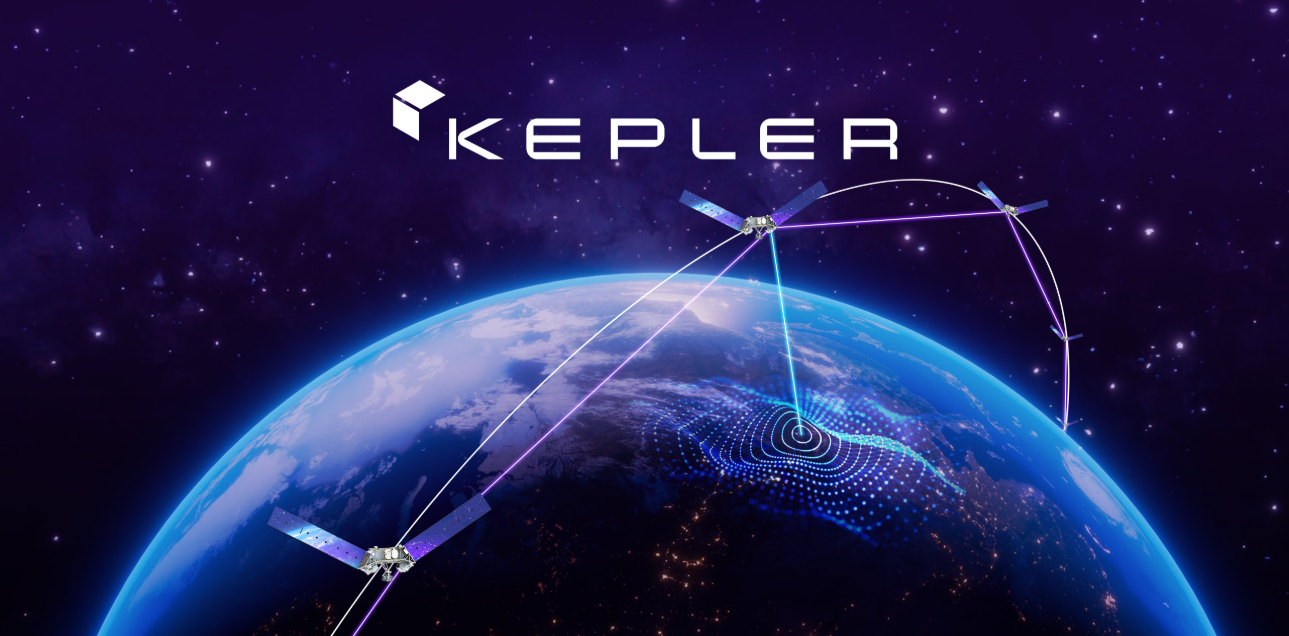
Conventional radio waves in space are getting a high-tech successor: optical (laser) communication. This technology uses laser beams to transmit data between satellites and to Earth. The advantages are striking: a laser can transmit dozens of times more information per second than radio, and with less delay. Imagine real-time “space internet” – this is what several companies are currently working on. For example, Canada’s Kepler Communications launched the first 10 satellites of its orbital laser constellation in January 2026. Each satellite weighs about 300 kg and is equipped with high-speed laser terminals and onboard computers that can process data directly in orbit. The essence of the network is to receive data from other satellites or stations (e.g., images of Earth, scientific information), instantly transfer it by laser to another satellite or ground receiver, creating a data cloud in orbit. This will allow, for example, astronauts on the Moon to have high-definition video communication with Earth without delays, or remote sensing satellites to transmit gigabytes of images in minutes rather than hours.
NASA is also testing laser communication: an experimental LCRD repeater is in operation, and future Artemis missions plan to use laser communication links between the Moon and Earth. The chances of seeing widespread use of laser communication in 2026 are high – Kepler plans to launch the next batch of satellites and provide its first services to customers in the second half of that year. This means that the era of waiting for data from space and filtering it through a narrow “radio channel” is becoming a thing of the past. Optical communications will make space projects more efficient, from Martian rovers (which will be able to send HD-quality video) to spy satellites (which will transmit information instantly). The popularization of this technology is a real breakthrough in space communications.
4. Manufacturing in microgravity (space factories)
Weightlessness is not only about difficult living conditions for astronauts, but also about unique conditions for industry. Manufacturing in microgravity takes advantage of the fact that there is virtually no weight in space: there is no convection, sedimentation, or many other processes that interfere with the production of ideal materials on Earth. In space, it is possible to make ultra-clean and ultra-precise things. A striking example is fiber optics. It is known that the best quality optical cables are produced when they are drawn in weightlessness (without gravitational defects), and experimental production of such high-quality thread has already been established on the ISS. Another area is pharmaceuticals. In 2023, the startup Varda Space Industries synthesized drugs in zero gravity for the first time and returned them to Earth: a batch of crystals of an experimental drug for HIV/AIDS landed in a capsule. In space, crystals grow more evenly, without microdefects, so drugs can be cleaner and more effective.
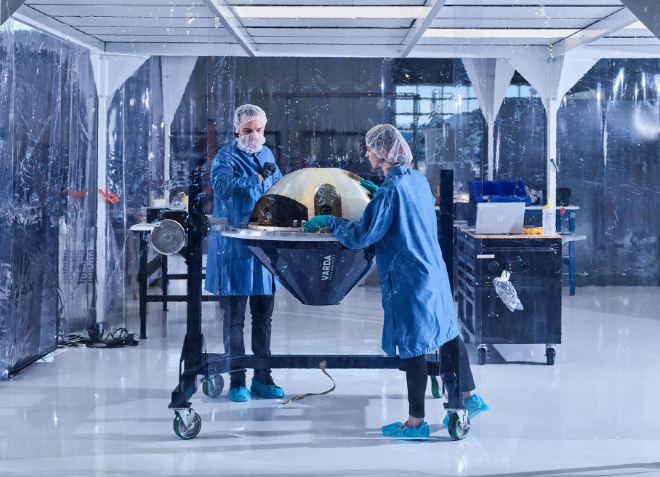
Photographer: Spencer Lowell for Bloomberg Businessweek
2026 promises to be a boom year for such mini-factories: Varda plans to launch production capsules into orbit almost every month to meet demand from both government and commercial customers. The chances of this happening are very high – the technology is already working on a small scale, now it’s just a matter of scaling up. Importantly, only particularly valuable products are planned to be manufactured – for example, medical drugs or semiconductor crystals, which cost millions on Earth. If microgravity can improve their quality by even a few percent, it will justify the launch costs.
So imagine: instead of giant factories, compact automated modules in orbit quietly creating new materials and medicines, and then capsules with finished products returning to Earth. The year 2026 is likely to be the year of the first commercial shipments of goods from space, paving the way for an entire space manufacturing industry.
5. Space planes
Does a spacecraft necessarily have to land in the ocean with parachutes? The new trend is spaceplanes: vehicles that go into space and return by gliding through the atmosphere and landing on a runway like ordinary airplanes. The idea is not new (space shuttles were partly like this), but now smaller, cheaper, and reusable space planes from private companies are appearing. The prime example is Sierra Space’s Dream Chaser. This compact winged spacecraft, which looks like a small shuttle, is capable of delivering cargo (and eventually people) to orbit and back. Dream Chaser is expected to make its first flight under a NASA contract to supply the ISS by the end of 2026. The spacecraft will launch inside the rocket fairing, reach the International Space Station, and return on its own: it will enter the atmosphere and land smoothly on a runway at an airbase (for example, it is planned to land in California at Vandenberg Air Force Base).
The advantages of the spaceplane are obvious. First, it is reusable: Dream Chaser is designed for dozens of flights, so you just need to check it out, and you can launch it again. Second, it can land softly: fragile cargo or experiments that need quick access can be brought back on board (it lands on the runway, and in a minute, the techies get the results). Third, versatility: the spaceplane can be launched by different rockets and land at many airfields, eliminating the need for ocean-going ships to search for the capsule.
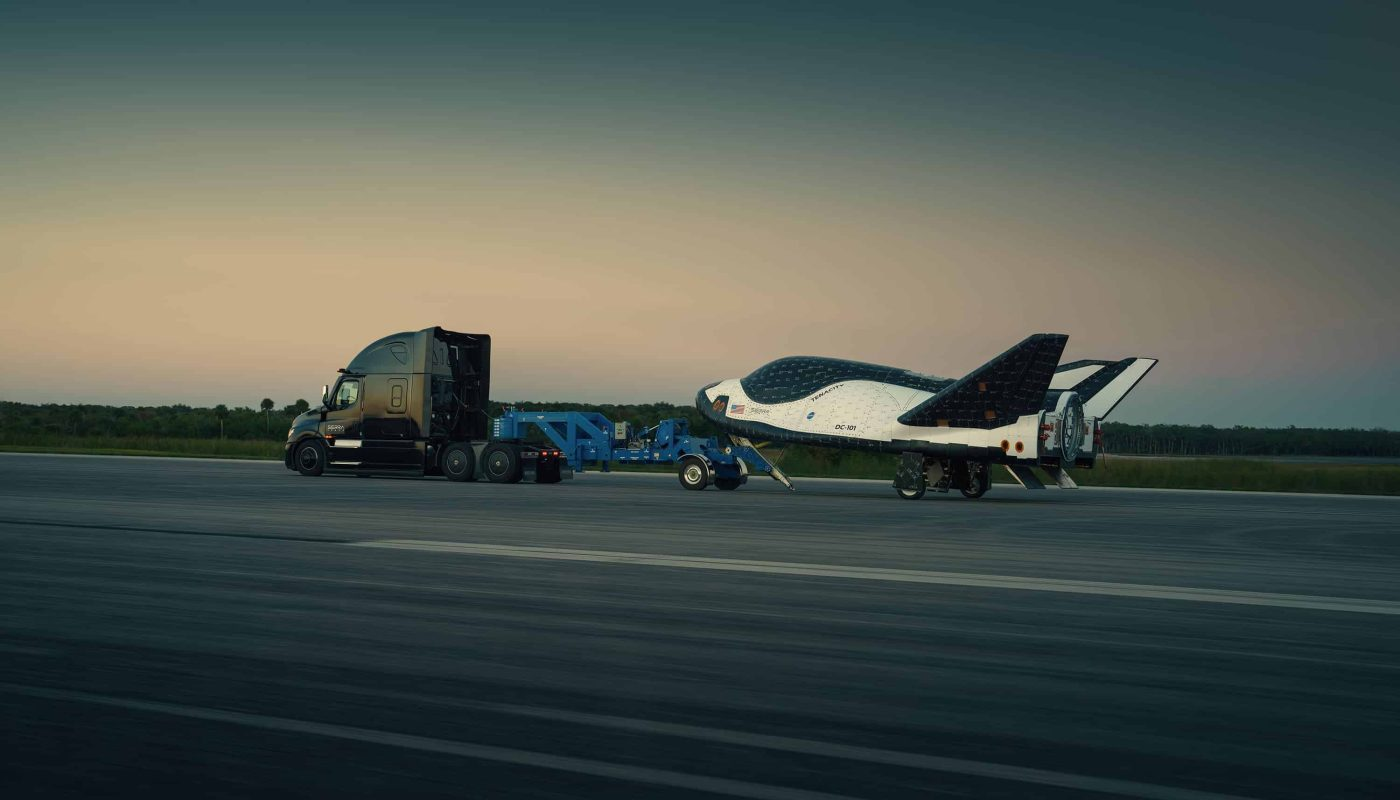
The cargo version of Dream Chaser has already undergone ground tests: its tractor towed it along the runway, checking the chassis and control systems. The chances of seeing this spaceplane in the sky in 2026 are high – Sierra Space says the aircraft is ready for final testing, and NASA is interested in its services. If everything goes well, this will pave the way for a whole fleet of “space planes”: companies are talking about passenger versions of space planes for tourists and military aircraft for rapid launch into orbit. A future where astronauts do not return in a capsule on a parachute but fly to an airfield is becoming a reality.
6. The latest landing gear
After the Apollo program, humans did not land on the Moon for almost 50 years. But now, several companies are developing a new generation of lunar landing modules capable of landing softly on the surface and then taking off again.
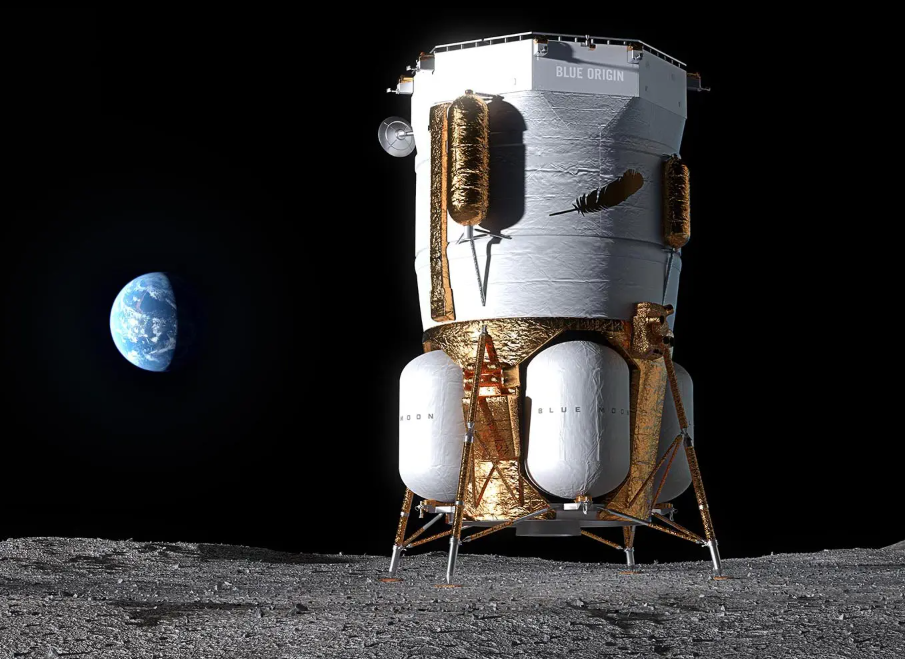
One of the most ambitious projects is Blue Moon by Blue Origin. Blue Moon is a large landing craft designed to deliver cargo and crew to the Moon. To test the technology, Blue Origin is preparing a demonstration mission called Pathfinder in 2026: the launch of an unmanned Blue Moon Mark 1 landing module. This module is to land in the southern polar region of the Moon and test critical landing systems. In particular, they will test the new BE-7 liquid hydrogen engine, the precision guidance and landing system (designed for accuracy to within 100 m), and technology for operating in lunar dust conditions. This test lander is partially funded by NASA as part of the Commercial Lunar Payload Services (CLPS) program: it will even carry a small scientific instrument on board – cameras that will film the rocket plume lifting lunar soil. The success of this mission will pave the way for larger vehicles: Blue Origin is simultaneously developing Blue Moon Mark 2, already for landing astronauts as part of the Artemis program at the end of the decade. The chances that we will see the Blue Moon Mark 1 land in 2026 are quite high: the company plans to launch it on the new New Glenn rocket (for which this will also be a test).
New landing craft will make the Moon more accessible. They can be used as “lunar trucks” – to transport equipment for bases, power stations, rovers, and then people, ensuring a permanent presence. If we see a successful demonstration of the Blue Moon landing in 2026, it will be a sign that humans are about to return to the Moon, and this time they will stay there longer. In addition, testing on the Moon will help to develop technologies for landing on other bodies – Mars, asteroids – because a precise soft landing with a heavy weight on board is one of the most difficult tasks in space exploration.
7. Orbit cleaners: technologies for disposing of space debris
Over decades of space exploration, humanity has left countless traces in orbit – spent satellites, rocket debris, fragments from collisions. This space debris has become a serious threat: a piece of metal the size of a nut, flying at breakneck speed, can destroy a working satellite. In 2026, we will finally see active orbit cleaning technology in action. Astroscale is the leader in this field. It has already tested the capture of a small dummy satellite in the ELSA-d experiment and is now preparing a full-fledged ELSA-M (End-of-Life Service by Astroscale – Multi) mission. Its goal is to remove a real broken satellite from orbit for the first time. In collaboration with European operator OneWeb, Astroscale will launch a special ~600 kg “tug” equipped with a magnetic capture device in 2026. This device will fly up to the disabled OneWeb satellite in orbit at ~1,200 kg, dock with it using a special plate (OneWeb has begun installing such plates on its devices), and pull the satellite into low orbit, where it will quickly burn up in the atmosphere. Interestingly, ELSA-M is designed for several “clients” rather than just one: once refueled, it will be able to remove 3-4 satellites in a single launch. It is like a space garbage collector that travels along a route and collects trash. The chances of implementation in 2026 are high – the project has received funding from the European Space Agency and the British government, because the problem of space debris must be solved immediately.
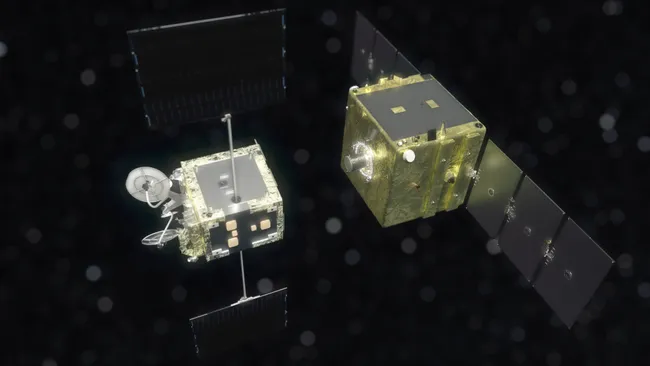
In addition, Orbit Fab (mentioned in the refueling topic) plans to supply fuel to such service vehicles – that is, an entire ecosystem of services is being formed in orbit. If Astroscale successfully demonstrates debris removal, the next step could be larger projects: ESA is preparing the ClearSpace-1 mission to capture a Vega rocket fragment, and NASA is considering robots that will collect a lot of small debris. Clean orbits are critical to the future of the industry; the risk of a chain reaction of collisions (the Kessler scenario) could render space unusable. 2026 may go down in history as the year when humans first cleaned up after themselves in space, opening up a new market – the market for space cleaners.
Each of these technologies will make space a little closer and more understandable to us in 2026. Orbital refueling and reusable rockets lower the barrier to large-scale expeditions. Laser communications and space manufacturing promise new opportunities for business and science. Polar landings on the Moon, new landing modules, and the use of local resources are all building blocks for a future extraterrestrial base, whether on the Moon or Mars. Commercial stations and spaceplanes herald a new economy in orbit, where not only governments but also private companies compete in innovation. Waste disposal technologies demonstrate our responsibility and foresight in space exploration. Of course, not all projects are guaranteed to be completed on time – space often makes adjustments. But the very fact that these areas are in the testing stage in 2026 indicates that we are on the verge of major changes. If even a fraction of them are successfully implemented, the future of the space industry will change forever, from the way we travel and communicate to the possibility of living on other worlds. Space is becoming increasingly accessible, developed, and connected to Earth, and each of the technologies described is a step toward a space future that was pure fantasy not so long ago.

