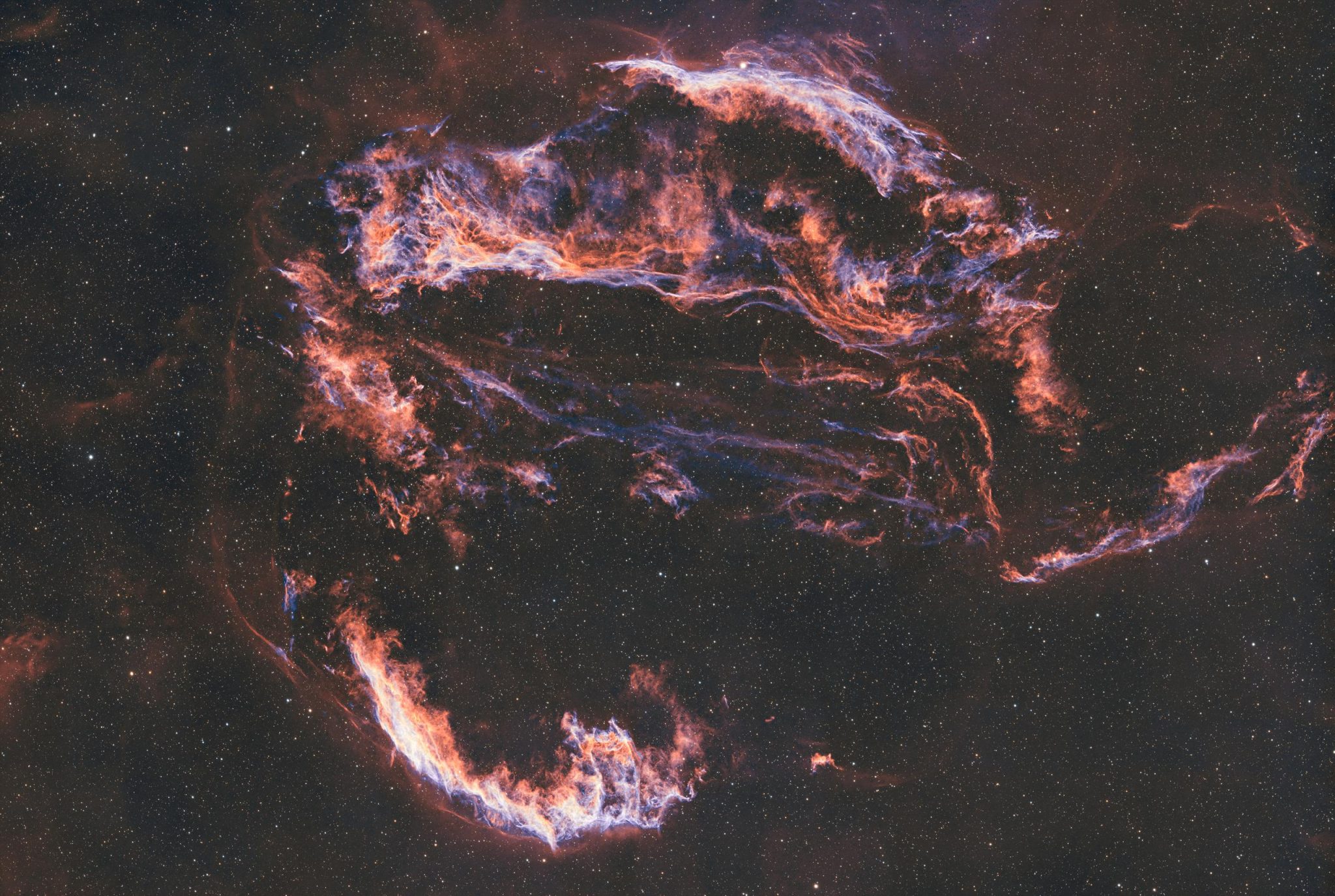
September will bring us a bunch of interesting astronomical events, including one of the most anticipated ones this year. At the end of the first week, there will be a total lunar eclipse, which will be visible across most of Eurasia, Africa, and Australia. Lunar and solar eclipses always occur in pairs (and sometimes even in threes), separated by 14-15 days. So, two weeks after the lunar eclipse, there will be a partial solar eclipse, but it will only be visible in a very limited and sparsely populated area.
Another rare phenomenon in September is the lunar occultation of Venus. However, in Ukraine, it will take place in the daytime sky, so observation will be quite difficult. This event will be much more visible in Canada.
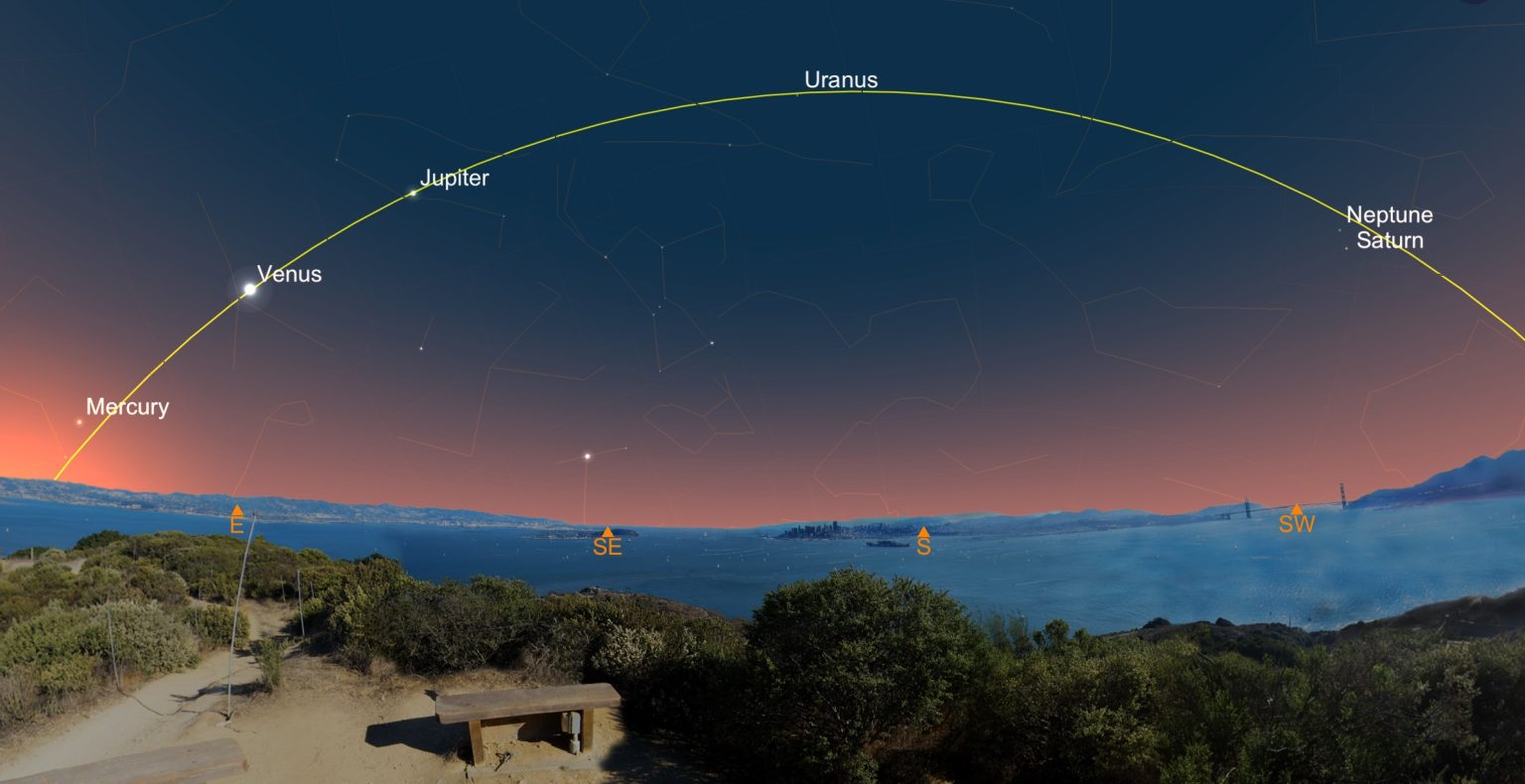
During the first days of August, all planets except Mars will be visible in the morning sky. But Mercury, slowly approaching the Sun, will gradually dissolve in its rays and will be in conjunction this month. Saturn and Neptune will remain in the constellation Pisces, Jupiter will adorn Gemini, and Venus will slowly migrate from Cancer to Leo.
In addition, September will see the opposition of two giant planets – Saturn and Neptune. And while Neptune does not change its appearance much, Saturn offers a chance to observe the Seeliger effect – an increase in the brightness of its rings during opposition.
List of events
? ? ? September 7 – full moon and total lunar eclipse, maximum eclipse phase at 9:12 p.m. Kyiv time (6:12 p.m. UTC)
? ? ? September 8 – conjunction of the almost full Moon (98%) with Saturn (+0.7m) and Neptune (+7.7m). The minimum angular distance to the first planet will be 2.5°, and to the second 1.6°. The phenomenon will be visible throughout the night, but the Moon will gradually move away from the planets.
? ? ?September 12/13 – the Moon (67%) occults the Pleiades cluster.
? ? ? September 16 – conjunction of the waning crescent Moon (16%) with Jupiter (-2.1m). At 2:06 p.m. (11:06 a.m. GMT), the bodies will be at an angular distance of 4.6°, so dawn on both September 16 and 17 will be good for observation.
? ? ? September 19 – Venus (-3.9m) will pass 0.5° from Regulus (α Leo, +1.35m), the exact time of the event is 5:59 p.m. Kyiv time (2:59 p.m. GMT), i.e., during daylight hours (for Ukraine), so the event can be observed on September 19 or 20 before dawn.
? ? ? September 19 – Lunar (6%) occultation of Venus (-3.9m). The time and circumstances of the event vary slightly depending on your geographical location, but Venus will disappear behind the Moon approximately at 3:24 p.m. (Kyiv time) or 12:24 p.m. GMT, and reappear at 4:24 p.m. (1:24 p.m. GMT).
? ? ? September 21 – Saturn (+0.6m) at opposition.
? ? ? September 21 – the new moon, the exact time is 7:54 a.m. UTC. On the same day, there will be a partial solar eclipse, but it will only be visible in the southern hemisphere, particularly in New Zealand and partially in Antarctica.
? ? ? September 22 – the autumn equinox, the beginning of astronomical autumn; the exact time of the event is 9:20 p.m. Kyiv time (6:20 p.m. UTC).
? ? ? September 23 – Neptune (+7.7m) at opposition. The planet will be visible throughout the night, but it will not be particularly bright. Due to the great distance to Neptune, its brightness does not change significantly throughout the year, so binoculars or a telescope will be needed for observation.
A detailed overview of the most interesting events
September 7: “Blood Moon”
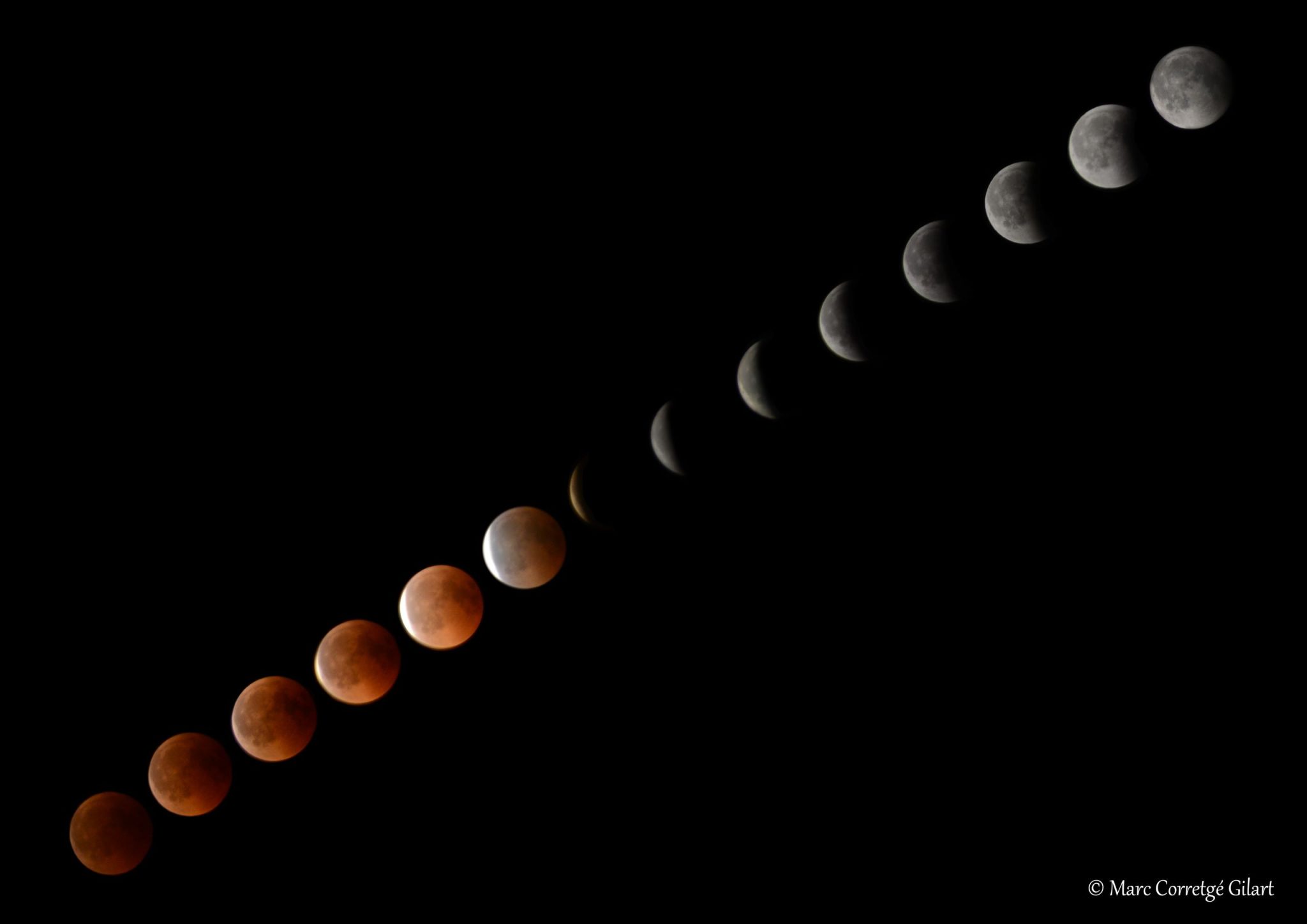
A lunar eclipse occurs when the Sun, Earth, and its natural satellite line up perfectly, and the Moon is in the penumbra or even in the umbra of the Earth. Unlike a solar eclipse, lunar eclipse is visible at any point of Earth where the Moon is above the horizon at that moment. This time, up to 85% of the planet’s inhabitants will be able to see certain phases of the eclipse – all of Eurasia, Africa, and Australia.
In particular, the total phase will be visible averywhere in Ukraine. The most favorable conditions will be in the eastern part of the country: the Moon will rise before the total phase, and will appear slightly darker than usual, as it will already be in the Earth’s penumbra. In western Ukraine, it will be possible to see the totality, followed by the partial and penumbral phases.
The Earth’s atmosphere effectively scatters the blue part of solar spectrum, but allows red light to pass through. Red light is refracted by the atmosphere and partially reaches the surface of the Moon, giving it a dark crimson color. It is because of this color that the lunar eclipse is popularly known as the “Blood Moon”. According to Kyiv time, the chronology of the total lunar eclipse will be as follows:
6:28 p.m. – the Moon begins to enter the Earth’s penumbra;
7:27 p.m. – the Moon begins to enter the umbra, its edge is tinted a coppery red;
8:31 p.m. – the Moon is completely in the Earth’s umbra and turns a deep red color;
9:12 p.m. – maximum eclipse phase;
9:53 p.m. – the Moon begins to emerge from the Earth’s umbra;
10:56 p.m. – partial eclipse ends, the Moon is in penumbra;
11:55 p.m. – the Moon leaves the penumbra, end of the eclipse.
September 12/13: The Pleiades hide behind the Moon
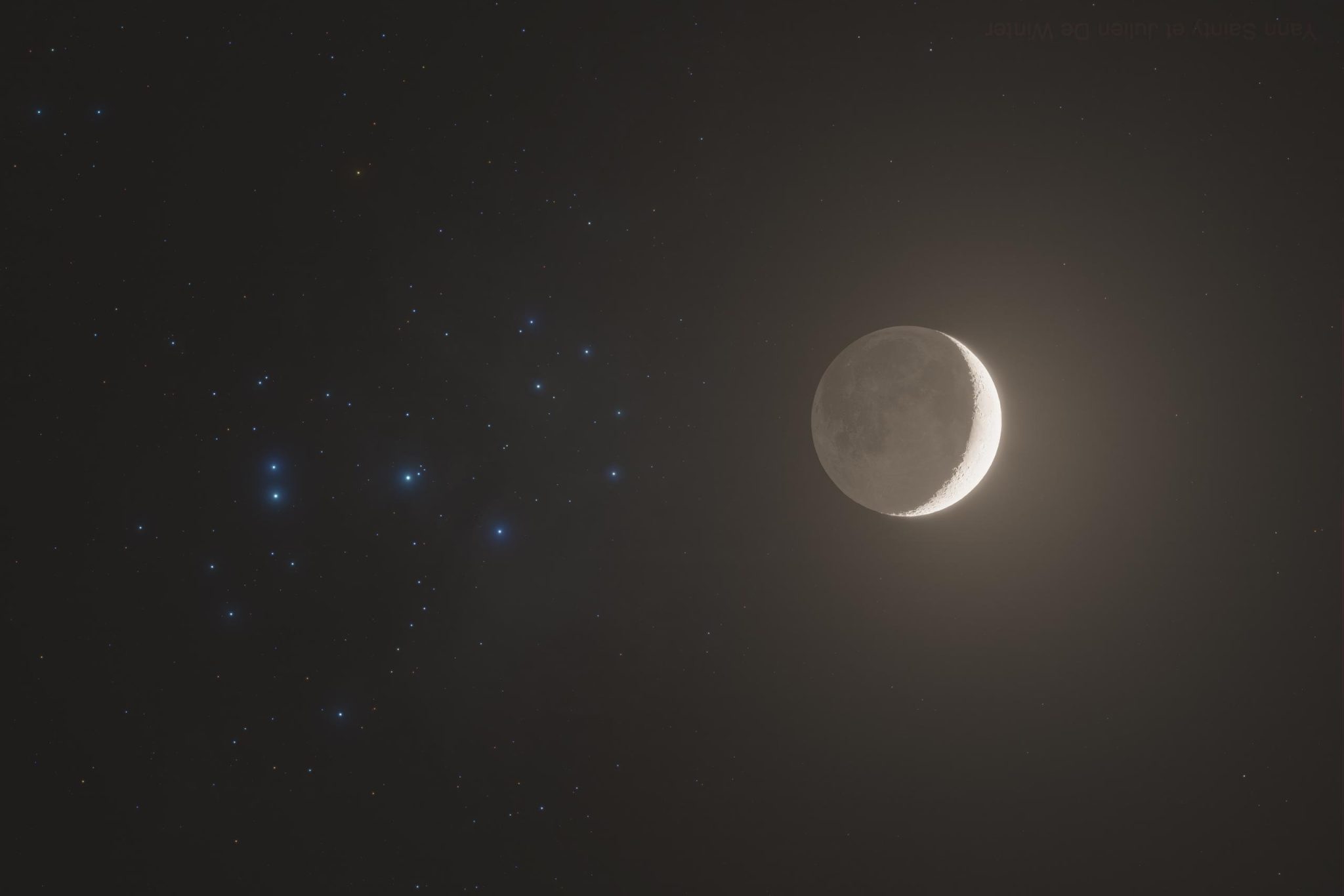
The well-known Pleiades cluster (M45), or Seven Sisters, located in the constellation Taurus, is situated not far from the ecliptic plane. This means that the Pleiades occasionally find themselves behind the Moon, which also does not stray far from this plane. This does not happen every lunar cycle – due to the precession of the natural satellite’s orbit, its trajectory against the background stars constantly changes. But on the night of September 12-13, the Moon will pass right through the Pleiades.
Our natural satellite moves across the sky fairly quickly. The approximate time of occultation is from 10:20 p.m. on September 12 to 1:45 a.m. on September 13 (Kyiv time). During this time, you will be able to see the stars of the cluster one by one setting behind the illuminated side of the Moon, while others appear from its dark side.
Although the Pleiades are usually clearly visible in the night sky and can now be seen throughout the night, the bright glow of the moon makes visual observation virtually impossible. Small binoculars are sufficient to follow the occultation. However, a telescope will, of course, be able to show more.
September 19: Lunar occultation of Venus
Like all other planets in the Solar System, Venus does not stray far from the ecliptic and, therefore, is occasionally covered by the Moon. On average, this phenomenon occurs twice a year. However, it is not visible from every point on the planet.
First of all, the Moon and Venus got to be above the horizon. Second, as in the case of a solar eclipse, there is a certain strip within which the phenomenon is visible, since we see the Moon at slightly different angles from different points on Earth. Third, these two bodies must be far enough from the Sun. And the last factor is the weather, which often prevents us from seeing the most interesting astronomical events. Thus, in the best-case scenario, we are lucky once every few years.
The last time Lunar occultation of Venus was visible in Ukraine happened on November 9, 2023. As was the case then, the September 19 occultation will take place not just in the light sky, but in broad daylight. In addition, both bodies will be quite close to the Sun, so it is necessary to remember the safety rules: if even a tiny ray of sunlight enters the telescope lens, it can lead to irreversible vision loss. This year’s observations will be more difficult than last year’s, as the Moon’s phase will be only 6%, closer to the 2020 event, when 4% of the crescent Moon remained, rather than 15% as it was in 2023. Therefore, finding the Moon in the daytime sky will be a very difficult task.
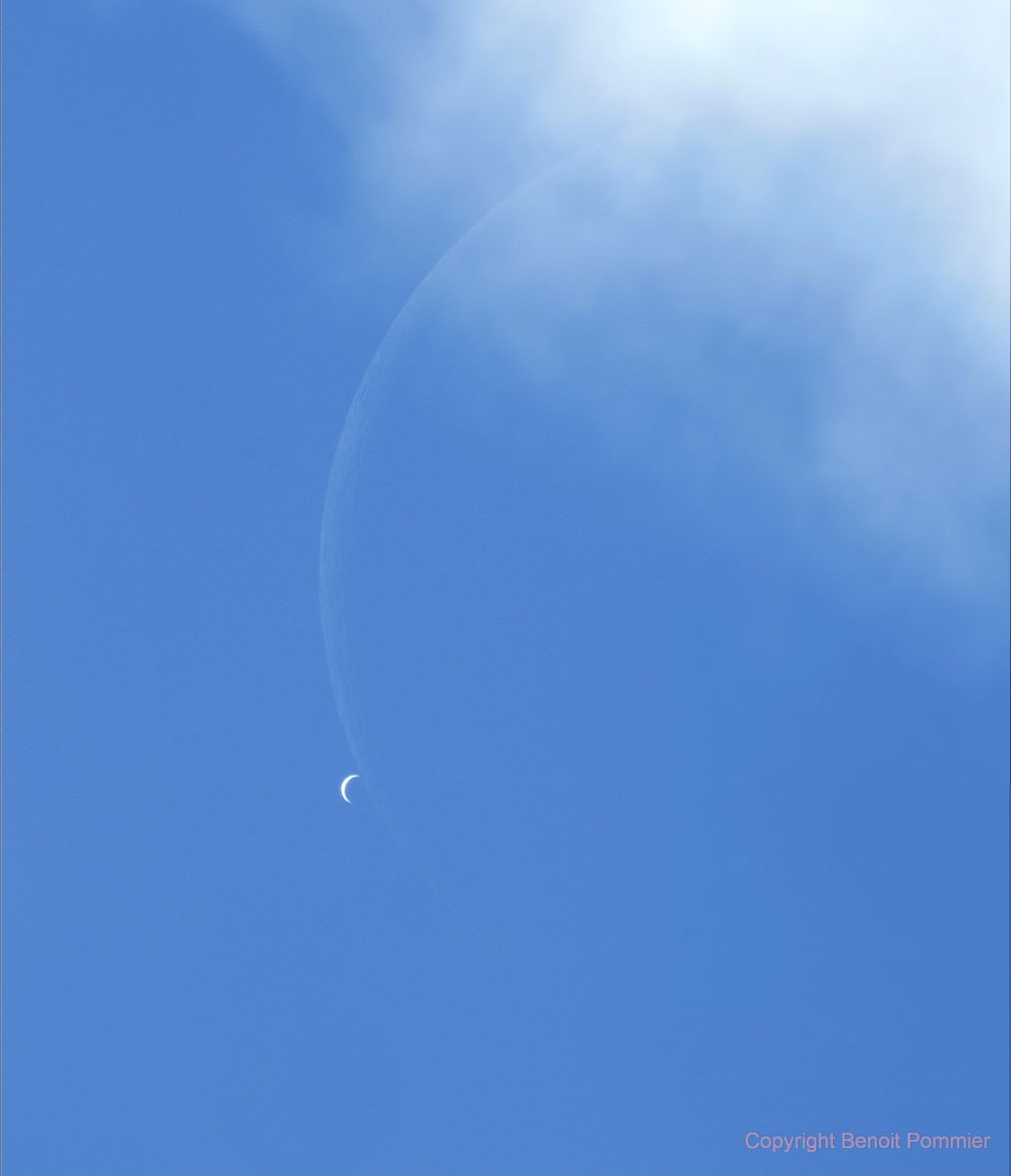
Technically, the occultation will be visible throughout Europe (including Ukraine), North Africa, Greenland, and northern Canada. The best conditions will be in Canada, where it will be possible to observe the Moon approaching Venus in the twilight sky before dawn.
There are two most interesting moments in this event: when Venus hides behind the Moon and when it peeks out from behind it. Both periods are very short, literally 30 seconds each. For Kyiv, the Moon will occult Venus at 15:23:55–15:24:25; from 15:24:25 to 16:24:36, the planet will not be visible at all; and from 16:24:36 to 16:25:03, it will appear from the unlit side of our natural satellite.
September 21: Saturn at opposition
Opposition is the best time to observe outer planets. Opposition refers to a configuration in which the Sun, Earth, and planet are (almost) in a straight line. During this period, the planet is at its closest distance from us, so it appears largest and brightest, and is visible for most of the night.
Currently, Saturn is the most prominent “star” in the constellation Pisces. At opposition, its brightness will reach +0.6 magnitude – slightly dimmer than Vega, but slightly brighter than Altair (α Aql). If you are unlucky with the weather at the time of opposition, do not be disappointed: for about a couple of weeks before and after that, there will be no significant differences in the appearance of the planet.
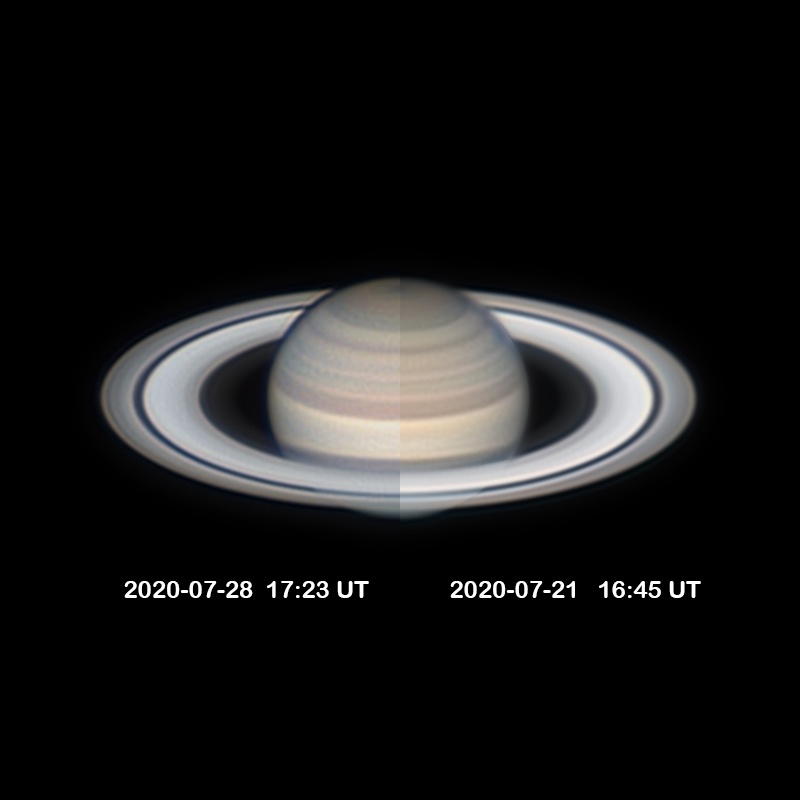
Photo: Michael Wong.
But there is a rather subtle effect that experienced observers try to catch during Saturn opposition. On the night of opposition and approximately 2-3 days before and after it, the planet’s rings become slightly brighter. This phenomenon is called the Seeliger effect, or opposition effect. It occurs when the light source (in this case, the Sun) is located directly behind the observer. Thanks to this, the particles that make up Saturn’s rings reflect sunlight directly at us without casting shadows. An additional contribution is made by the so-called coherent backscattering mechanism, which works on the smallest dust particles in the rings.
September 21: New moon and solar eclipse
The partial solar eclipse on September 21 will accompany the total lunar eclipse on September 7. However, unlike the lunar eclipse, the solar eclipse will be visible to a very limited number of people. The eclipse path will pass through New Zealand, touch the eastern edge of the Australian coast, and reach Antarctica. At its maximum phase, the Moon will obscure 85.5% of the Sun’s diameter, leaving a bright crescent.
Although the September new moon will not delight us with an eclipse, we will still be able to enjoy the dark sky and explore deep-space objects. From an astrophotography perspective, this is a good time for nebulae in such constellations as Cygnus and Cassiopeia. Cygnus contains the large hydrogen Veil Nebula, North America Nebula, and Pelican Nebula, as well as the Crescent Nebula, inflated by a massive Wolf-Rayet star. In Cassiopeia, the Pacman Nebula is worth noting.
For planetary nebulae lovers, objects such as the Dumbbell Nebula (M27) in the constellation Vulpecula, the Little Dumbbell Nebula (M76) in Perseus, and the compact Blinking Planetary (NGC 6826) in Cygnus are available. The Pleiades cluster is also returning to the night sky, which is pleasant to observe with the naked eye, as well as binoculars, or a low-magnification telescope.