

Where sunlight fades into a faint glimmer, the realm of true cosmic wonders begins. Trans-Neptunian objects are not merely icy bodies at the edge of the solar system, but dynamic worlds with nitrogen glaciers, mysterious rings, and shapes that defy the laws of gravity. We lift the veil on the darkest corners of our cosmic home.
Where does the Solar System end?
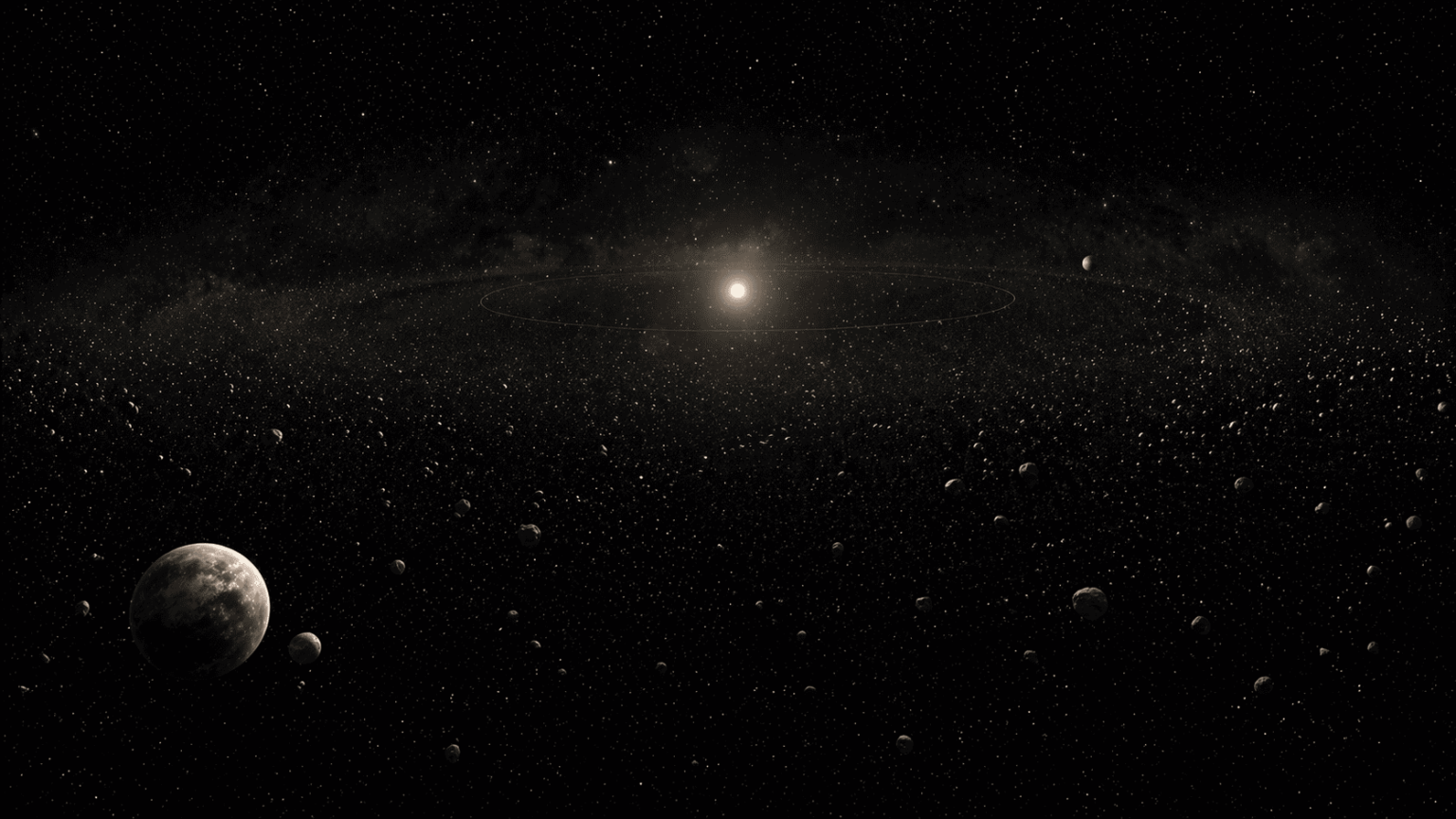
Imagine yourself as a crew member of a spaceship whose mission is to venture beyond the known and explore trans-Neptunian objects on the outskirts of the Solar System. We have already left Neptune’s orbit behind, and the Sun now shines only as a distant, cold star in the porthole. Ahead lies darkness. And for a long time, it was believed that there was almost nothing out there. But the very first signals from our instruments are changing that perception.
We are entering a region where thousands of icy worlds exist – silent witnesses to the birth of planets. Astronomers call it the Kuiper Belt – a giant ring of frozen bodies located approximately 30 to 50 astronomical units from the Sun. It is here that remnants of the primordial material from which the Solar System formed have been preserved.
Billion-year-old space refrigerators
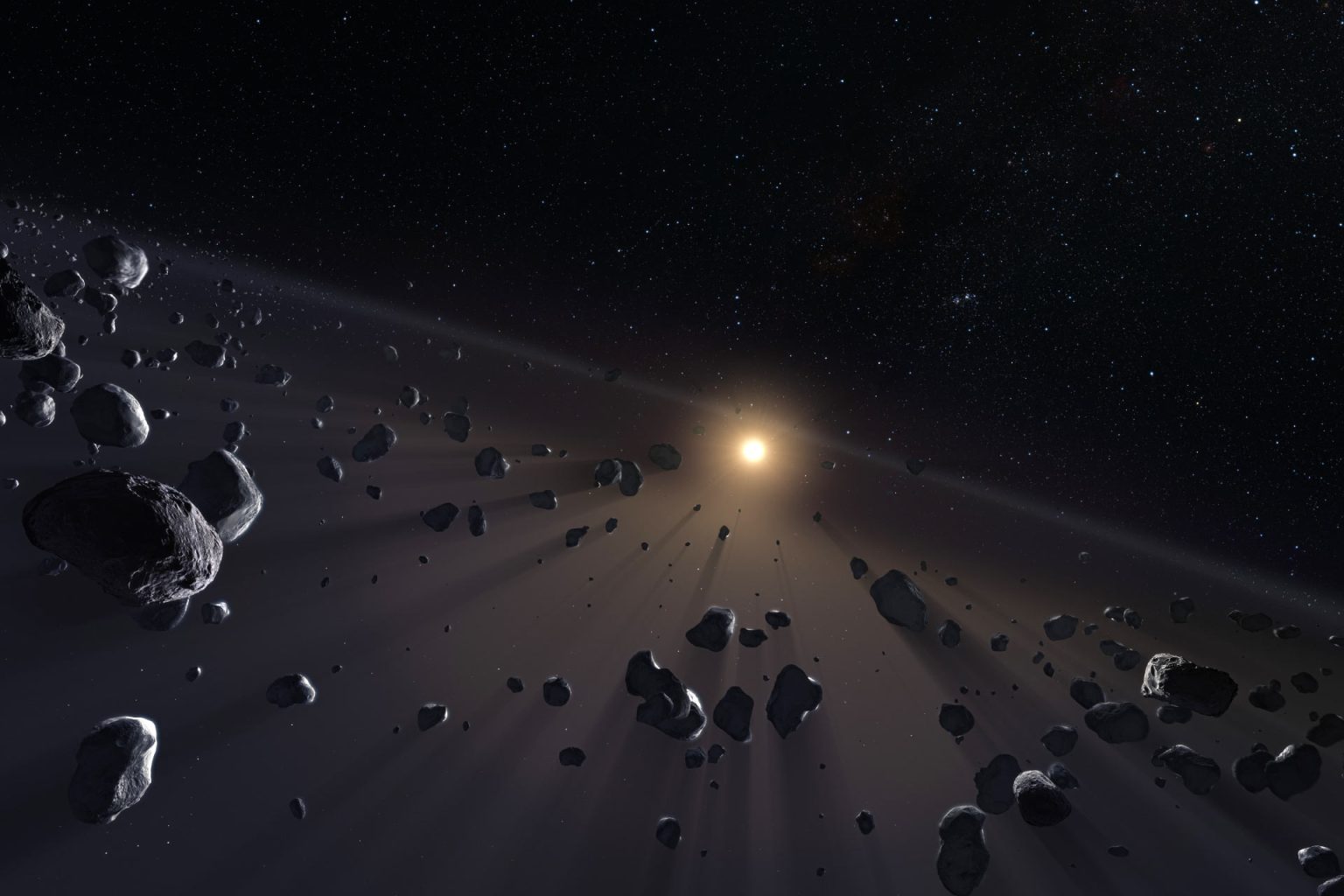
The Kuiper Belt is often compared to the asteroid belt between Mars and Jupiter – and for good reason: both belts are collections of small bodies orbiting the Sun. But that is where the similarity ends. While asteroids are mostly rocky fragments, trans-Neptunian objects consist mainly of ice. These bodies formed in the cold conditions of the outer part of the protoplanetary disk and have remained virtually unchanged for billions of years.
That is why they are sometimes called “cosmic freezers” – they preserve information about the early Solar System. The orbits of objects in the Kuiper Belt vary. Some of them move in a stable, nearly circular path. Others are in resonance with Neptune. For example, Pluto completes two orbits around the Sun while Neptune completes three – this is known as a 3:2 resonance. This synchronization is not random: it is the result of the gravitational influence of the giant planet.
Pluto: An Icy Heart With Volcanoes
We’re moving on. And now, before us, lies Pluto – the first object that forced astronomers to seriously rethink their understanding of the outer regions of the Solar System. Thanks to data from the New Horizons mission, we know that it’s not just a frozen rock, but a complex and active world.
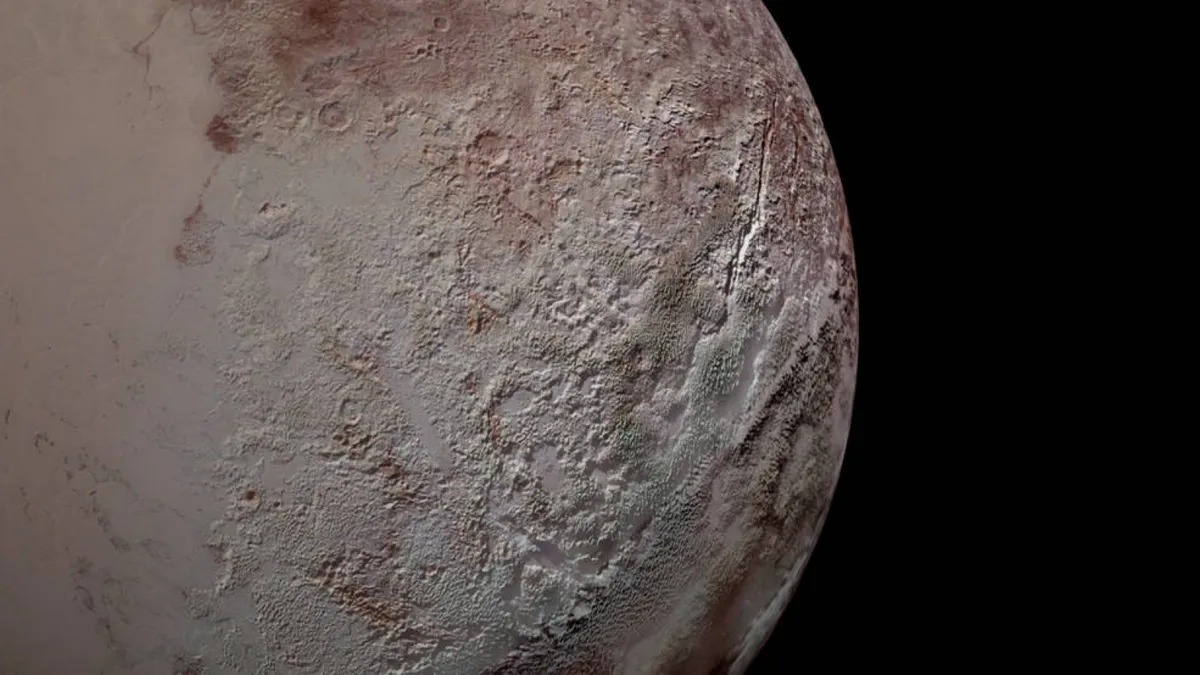
Its surface is covered with nitrogen glaciers, the most famous of which is the Sputnik Planitia. It has almost no craters, indicating that the surface is relatively young – geologically active processes “erase” the traces of ancient impacts. Take a look at these nitrogen glaciers: they flow slowly, much like those on Earth, and even form peculiar “dunes” of ice particles.
The surface temperature of Pluto ranges from –228 °C to –238 °C, but geological processes are still possible there even under such conditions. Our spacecraft’s instruments are also detecting signs of cryovolcanism – volcanoes that erupt not molten lava, but water, ammonia, or other volatile substances in the form of ice. One such volcano, Wright Mons, reaches a height of 4 kilometers.
Pluto’s atmosphere consists mainly of nitrogen, with traces of methane and carbon monoxide. It is so thin (the pressure is 100,000 times lower than Earth’s) that it freezes and settles on the surface when the planet moves away from the Sun. Interestingly, due to its weak gravity, Pluto’s atmosphere extends into space for a distance of up to 1,700 km, according to NASA – that’s about 1.4 times the planet’s radius.
Pluto also has its own “heart.” That’s the name given to the region known as Tombaugh Regio, which is visible in the New Horizons images. The left half of this heart is the Sputnik Planitia plain, while the right half is a mountainous region covered in methane ice. And there is another amazing fact: some mountains on Pluto, specifically the giant ice ridges of Hillary and Tenzing, reach heights of up to 6 kilometers – twice as high as our Carpathian Mountains – but they are not made of rock, but of water ice, which at such temperatures is harder than Earth’s granite.
And despite all this, according to models based on geophysical data, there may be a liquid water ocean hidden beneath Pluto’s surface, warmed by residual heat – if this is confirmed, then this icy world at the edge of the Solar System may possess all the conditions necessary for extraterrestrial life.
Eris, which changed the definition of a planet
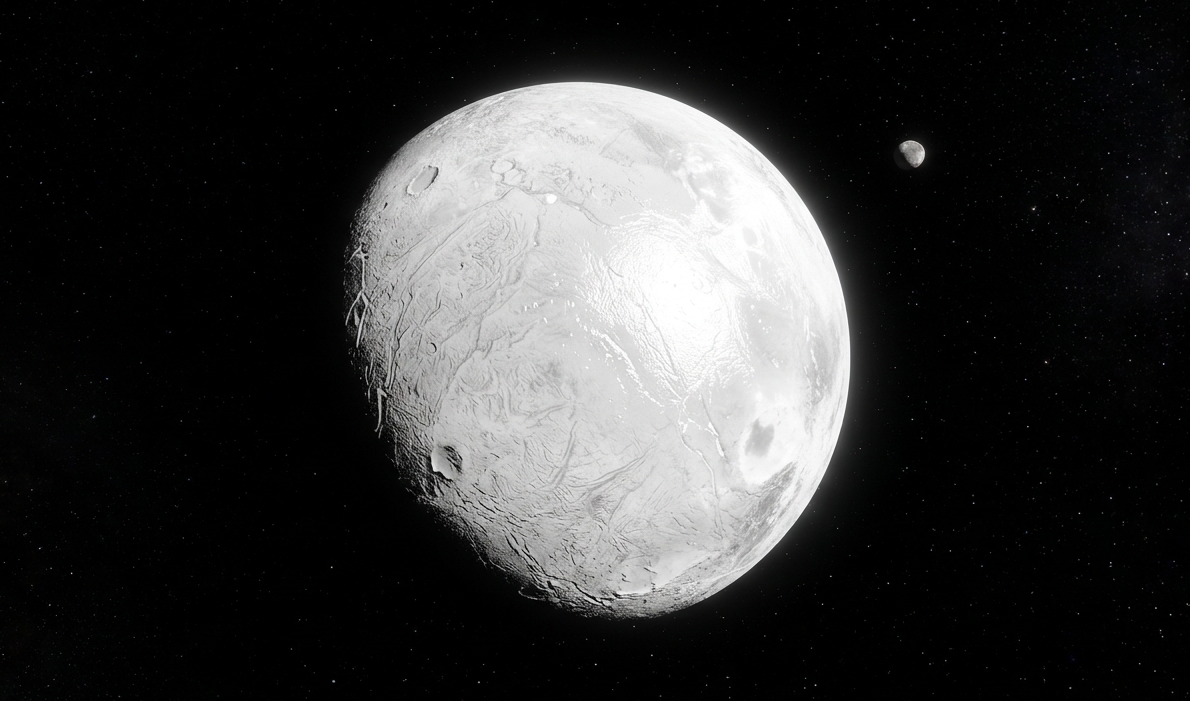
Other worlds lie ahead of us, for Pluto is just one of many large objects in the Kuiper Belt. In the porthole of our ship lies Eris. Humanity discovered it as recently as 2005, and this event sent shockwaves through the astronomical community. With a diameter nearly identical to Pluto’s, Eris is significantly more massive – its mass is approximately 21% greater. Its surface is likely covered in frozen methane, which reflects a significant portion of sunlight, making Eris one of the brightest objects in the Kuiper Belt.
It was the discovery of Eris that prompted a reevaluation of planetary classifications and led to the creation of the “dwarf planet” category. It even has its own moon – Dysnomia, named after the daughter of Eris, the mythical goddess of discord.
Haumea: a planet shaped like a rugby ball
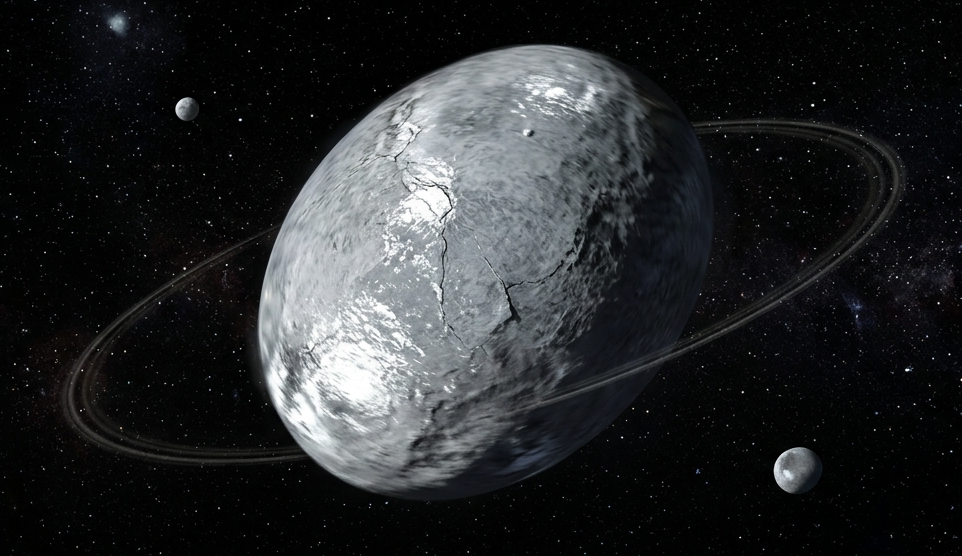
We move on, and there before us appears Haumea – one of the most remarkable worlds on the outskirts of the Solar System. Due to its extremely rapid rotation around its axis – one rotation in less than four hours – it has an elongated, ellipsoidal shape. Its equatorial radius is approximately 1,161 km, which is almost twice the polar radius of 569 km – it resembles a rugby ball more than a typical planet. Our scanners confirm: this is one of the few small bodies in the Solar System around which a ring has been detected.
In addition, Haumea has its own “family” of objects – fragments formed as a result of an ancient collision, which likely accelerated it to such a tremendous speed. It has two known moons – Hi’iaka and Namaka – named after Hawaiian deities.
By the way, Haumea is the only dwarf planet covered in crystalline water ice, which is a mystery, since such a structure would have been destroyed by cosmic radiation over hundreds of millions of years. This suggests that the surface is relatively young, likely less than 100 million years old.
Makemake: The Island God at the Edge of Darkness
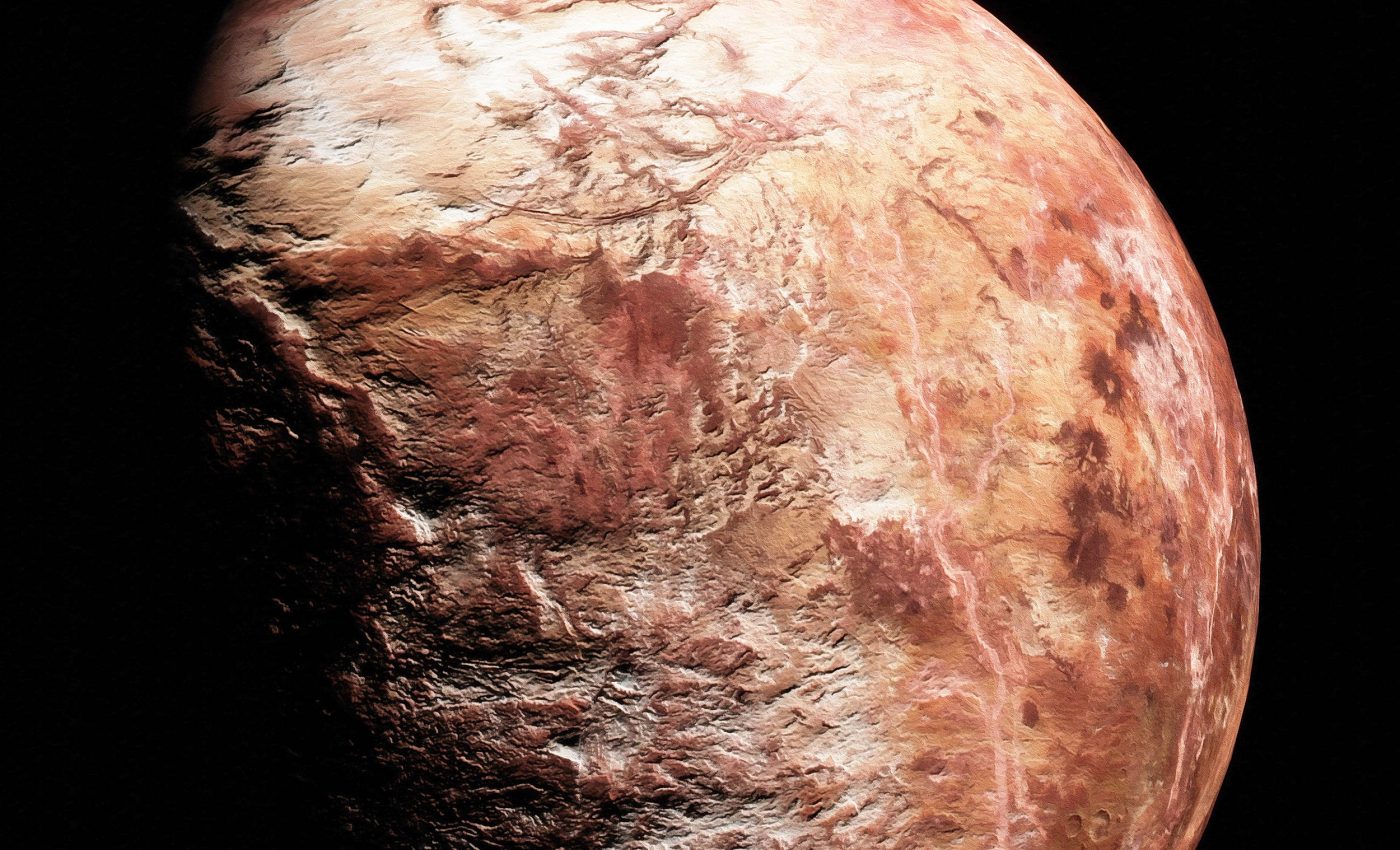
Now let’s take a look at Makemakeм – another dwarf planet named after the creator of humanity in Easter Island mythology. It is slightly smaller than Pluto and even a bit brighter thanks to a surface covered by a thick layer of methane ice. Makemake has a very thin or temporary atmosphere, which, like Pluto’s, may disappear as the planet moves away from the Sun.
In 2016, the Hubble Space Telescope discovered a moon orbiting it, which has been informally named MK2. Its orbit passes very close to the surface, and scientists believe that, like Haumea’s moons, it is the result of an ancient collision.
Arrokoth: A Relic of the Birth of the Planets
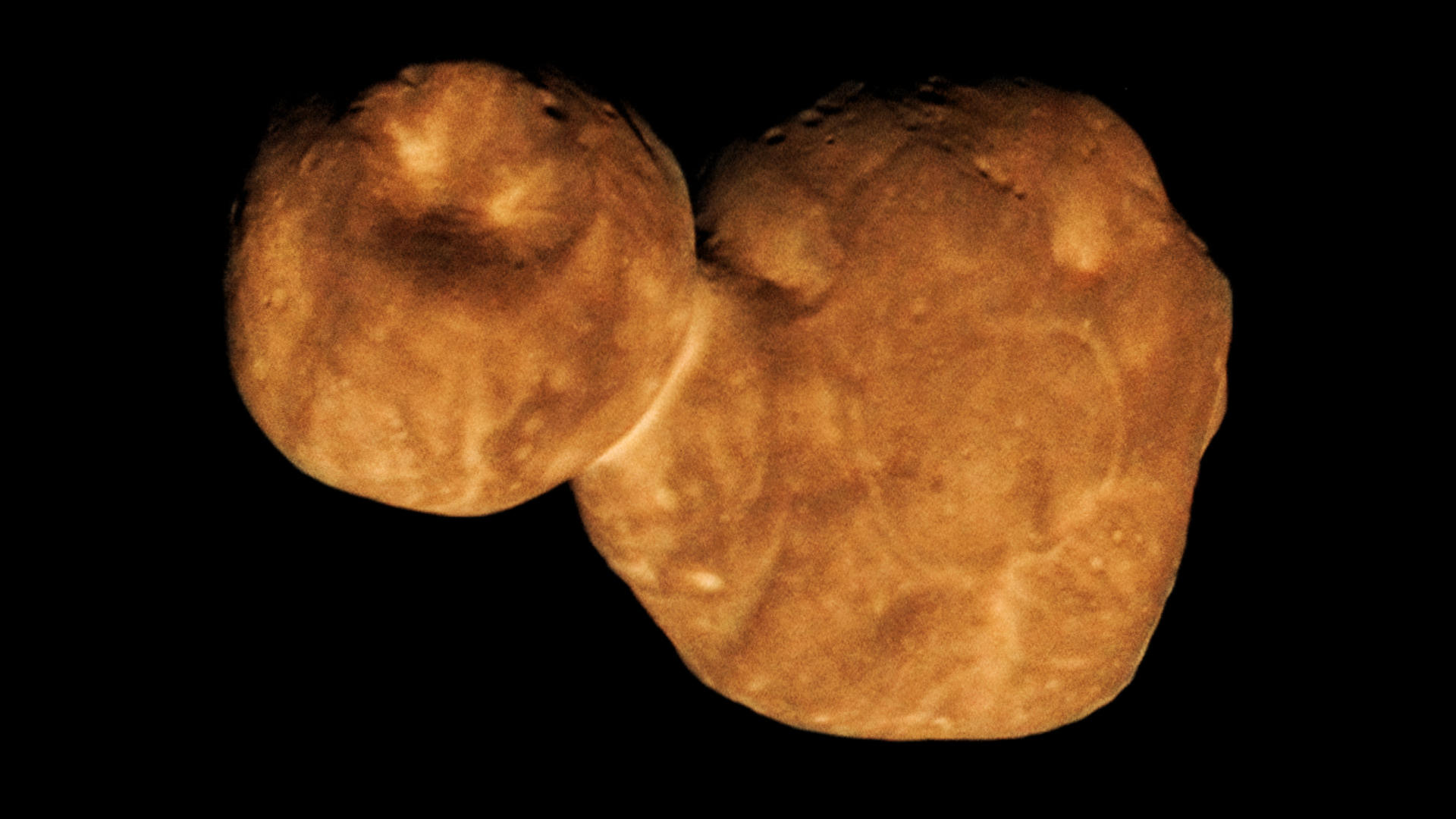
Our journey continues. And one of the most valuable objects we are studying firsthand is Arrokoth. It is what is known as a binary contact object – a body consisting of two parts that merged during the early stages of the Solar System’s formation. Importantly, this process occurred without a catastrophic collision, allowing the original structure to be preserved.
Arrokoth’s surface is dark and reddish – a typical result of cosmic radiation acting on simple organic molecules. This is yet another argument in favor of the idea that such objects may have played a role in delivering organic matter to early Earth.
The Scattered Disk: Traces of Ancient Chaos
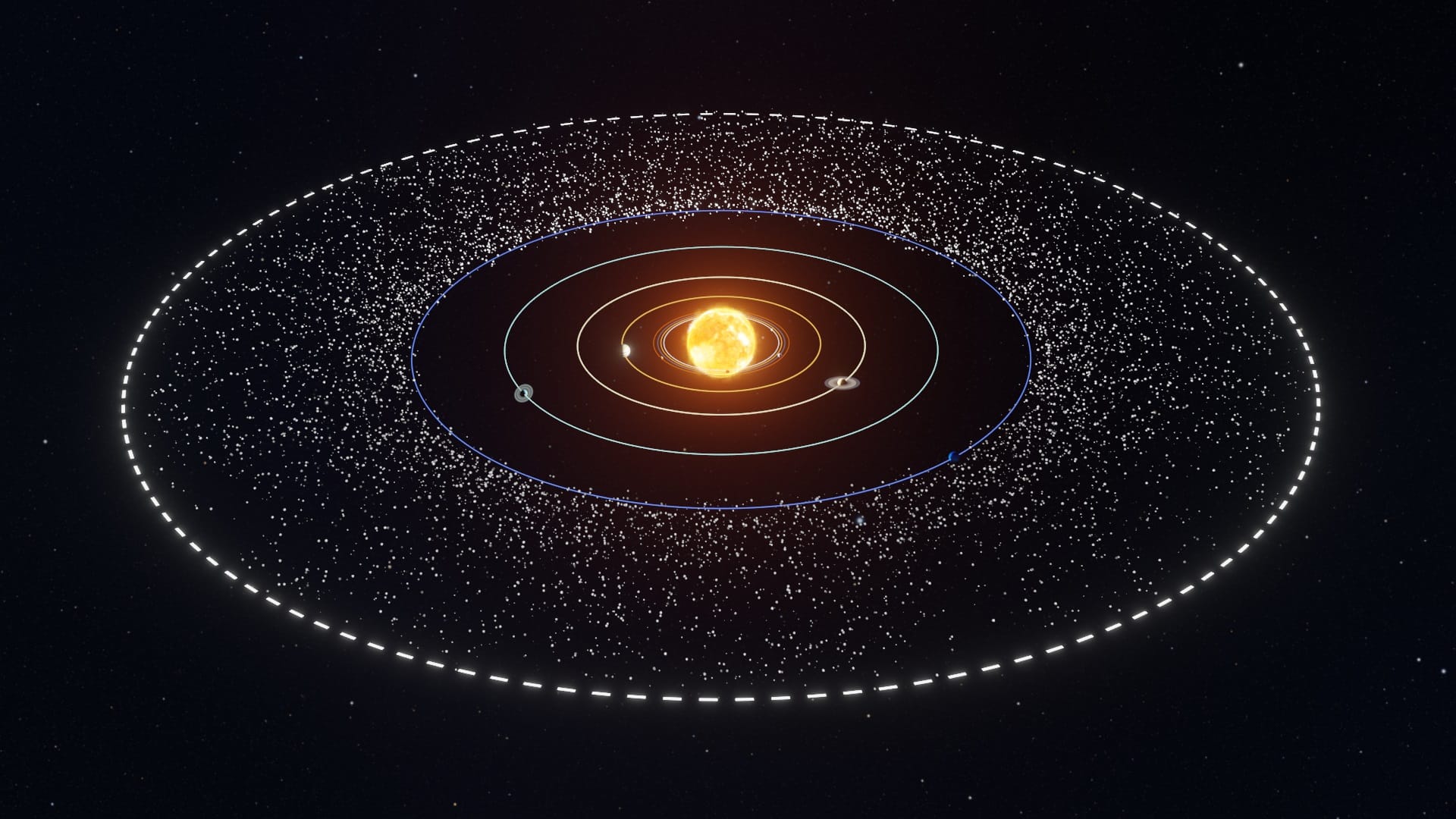
We are leaving the main Kuiper Belt and moving on. Beyond its boundaries, we observe a different population of objects – the scattered disk. Their orbits are highly elongated, and their distances from the Sun can range from tens to hundreds of astronomical units. Such trajectories cannot be explained by a peaceful evolution. They indicate that in the past, these objects were subjected to a powerful gravitational influence.
We are leaving the main Kuiper Belt and moving on. Beyond its boundaries, we observe a different population of objects – the scattered disk. Their orbits are highly elongated, and their distances from the Sun can range from tens to hundreds of astronomical units. Such trajectories cannot be explained by a peaceful evolution. They indicate that in the past, these objects were subjected to a powerful gravitational influence.
Sedna and its eccentric orbit
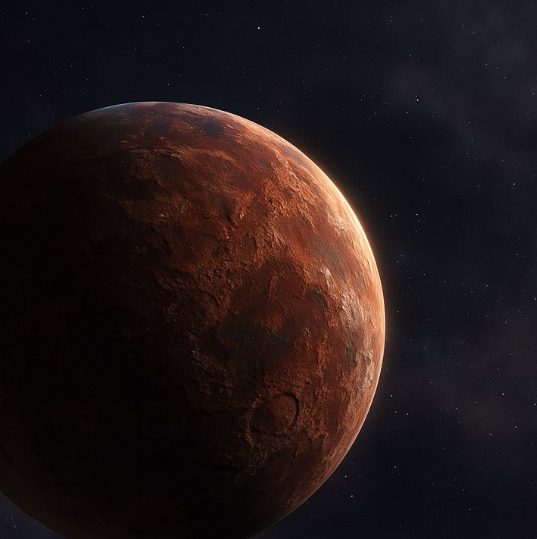
Now we go even further and come across objects that do not even fit into this picture. Sedna is one of the most famous examples. Its orbit is so elongated that it never comes close to Neptune: at perihelion, it is 76 astronomical units from the Sun, and at aphelion, it moves an incredible 937 AU away. This means that Neptune’s gravity alone could not have formed such a trajectory – another mechanism was at work here.
Such “isolated objects” exhibit another curious feature: according to some mathematical models, their orbits tend to align in a certain way, with their long axes grouped in the same direction. Although some astronomers consider this merely an illusion caused by observational bias, proponents of the “Planet Nine” hypothesis see in this the influence of a massive invisible body that “orchestrates” these distant worlds.
Planet Nine: Myth or Hidden Giant?
And now we come to the most intriguing mystery. This alignment formed the basis for one of the most fascinating hypotheses in modern astronomy – the existence of the so-called Planet Nine, proposed by astronomers Konstantin Batygin and Michael Brown in 2016. We are talking about an object with a mass about three times that of Earth, moving in a highly elongated orbit with an orbital period of thousands of years.
It has not been observed directly yet. But computer models suggest that such a planet could explain the observed anomalies in the orbits of distant trans-Neptunian objects. For now, this is just a hypothesis. Alternative explanations also exist, including observational selection effects or the more complex dynamics of the entire population of objects. But the search continues.
The Oort Cloud: Where the Solar System Blends Into the Stars
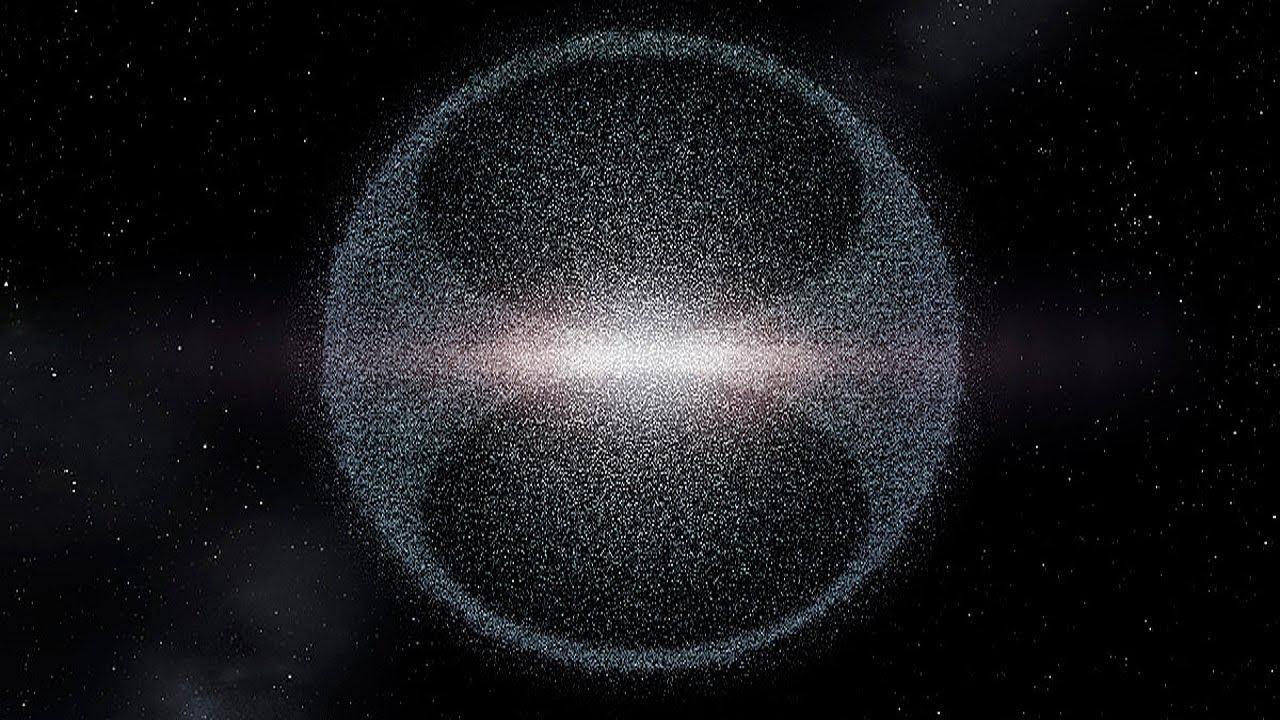
Our mission extends to the limits that we cannot yet observe directly. Beyond that lies a region that astronomers call the Oort Cloud. It is a hypothetical spherical shell that may contain trillions of icy bodies.
It is believed that long-period comets, which sometimes appear in the inner Solar System, originate from there. Its outer boundaries can extend to tens of thousands of astronomical units – almost half the distance to the nearest stars.
Not an end – but a beginning
When we look back through the porthole of our spacecraft, it becomes clear that our understanding of the Solar System has changed dramatically over the past few decades. Instead of a clear boundary, we see a complex, multi-layered structure that extends far beyond Neptune’s orbit.
The New Horizons mission was just the first step. Future survey telescopes, including the Vera Rubin Observatory, promise to discover thousands of new trans-Neptunian objects and, perhaps, answer the question of whether Planet Nine exists.
We are returning to the inner part of the system, knowing that its edge is not the boundary. It is merely the beginning of a vast region that we have only just begun to explore. And as our ship heads home, imagine: this entire immense structure – from the inner planets to the Oort Cloud – is flying through interstellar space at a speed of about 220 kilometers per second.
Our Solar System is not a static island, but a speeding ship in the boundless ocean of the Galaxy. It orbits the center of the Milky Way once every 225–250 million years. Ahead of us lie new frontiers, new mysteries, new worlds, and new horizons.
Sources:
NASA — New Horizons: The First Mission to the Pluto System and the Kuiper Belt.
NASA JPL — Solar System Dynamics: Small-Body Database Search Engine.
NASA Science — Planetary Science: Dwarf Planets and Their Known Satellites.
USGS — Gazetteer of Planetary Nomenclature: Nomenclature for the Pluto System.
IAU — Minor Planet Center: Trans-Neptunian Objects Database.
ESO — Trans-Neptunian Objects and Centaurs: Observations at Paranal Observatory.
NASA — Vera C. Rubin Observatory / LSST: Solar System Science.

