

Minister of Digital Transformation Mykhailo Fedorov announced the first field tests of Starlink Direct to Cell in Ukraine in collaboration with Kyivstar: during the demonstration, he and the operator’s CEO Oleksandr Komarov exchanged SMS messages without ground coverage, using regular 4G smartphones.
“Thanks to satellite technology, users do not need to purchase expensive equipment — all they need is a 4G smartphone with a SIM or eSIM card. The main condition is direct visibility of the sky,” Fedorov noted.
According to him, Ukraine is introducing Direct to Cell simultaneously with the US, Australia, Japan, Canada, and New Zealand; the service is currently in beta testing, the official launch for subscribers is expected in the autumn of 2025.
What does that mean?
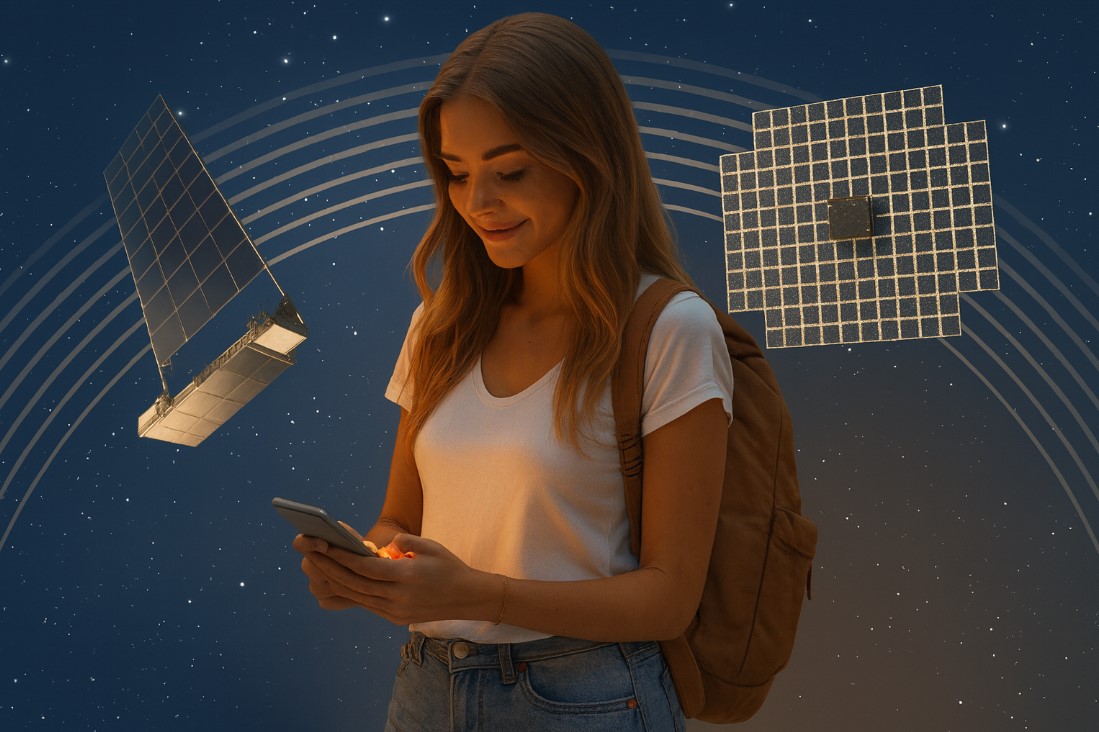
Direct to Cell turns Starlink satellites into space base stations: they directly see smartphones in standard LTE bands, so no terminals are required for basic services. Text messages will be available first, followed by voice and mobile data. According to estimates by operators and SpaceX, the mass launch of messaging is planned for the end of 2025, with broader services coming in 2026.
It is important to consider the limitations: the bandwidth of a direct satellite channel will be lower than that of ground-based networks (approximately 10–100 times lower), so the first scenarios are communication in remote areas, during natural disasters, and blackouts. Indicative prices for the market have not yet been announced; preliminary estimates suggest that the cost may be close to existing Starlink rates, but details will depend on operator conditions.
For more information about the technology, launch dates, and possible rates, please refer to our article “Satellite communications 2025: when will it become available on smartphones and how much will it cost?”

