

The Sich-2-30 satellite, which Ukraine launched into space, deorbited in early 2022. It was designed to observe the Earth’s surface in the visible and infrared ranges. Expert Serhii Antoniuk reported that the spacecraft had gone off course, citing the celestrak.org catalog.
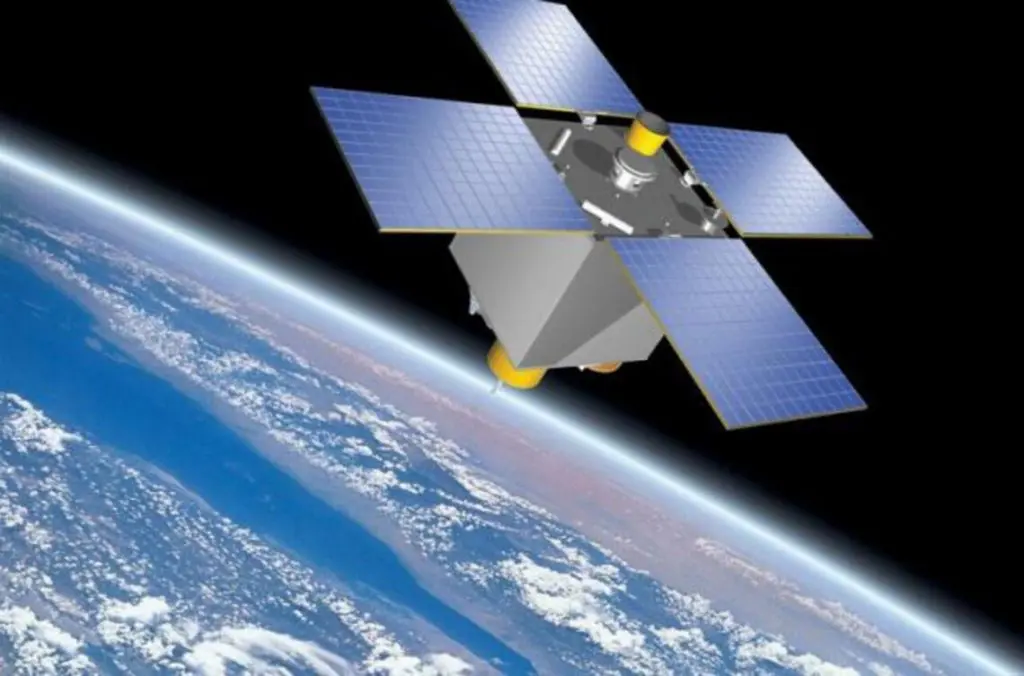
Satellite loss
Ukraine has lost its Sich-2-30 satellite. According to expert Serhii Antoniuk, it was supposed to leave orbit and burn up in the atmosphere on October 9. This is rather unpleasant news, but after all we haven’t lost that much.
The spacecraft, later named Sich-2-30, was assembled in 2011 at the Pivdenne Design Office in collaboration with the Production Association Yuzhny Mashinbuilding Plant. It was the “backup” for the Sich-2 satellite, which was launched into space that same year. Both were designed to observe the Earth’s surface in the infrared and visible ranges with a resolution of 7 m.
Plans to launch this spacecraft into space emerged after Sich-2 failed in 2012. It was originally planned to be launched in 2017 under the name Sich-2-1. However, this did not happen at that time.
A new launch attempt was planned for the 30th anniversary of Ukraine’s independence, which was celebrated in 2021. This is indicated by the number 30 in its new name. But even then, it was not launched on time, and as a result, it only went into space on January 13, 2022, on a Falcon 9 rocket.
Failure
As of 2022, the 7-meter resolution was already significantly outdated, especially for defense purposes. At that time, devices with a resolution of several tens of centimeters already existed. However, Sich-2-30 still had its initial value and was planned to be incorporated into the European Copernicus network.
The Sich-2-30 could be used to update maps of the Earth’s surface, monitor the condition of fields and natural lands, and other similar tasks. Even some of the simplest tasks, such as identifying enemy units in a specific area or providing a very general assessment of the condition of airfields, were within its capabilities, although there was no question of any detail.
However, even this could not be achieved. After launch, it was not possible to establish stable communication with Sich-2-30. The reasons for this were described rather vaguely; it was clear only that, as a result of some error during preparations for the cluster launch, the satellite ended up in the wrong position in orbit and its solar panels were receiving too little sunlight.
In fact, for the last three years, it remained inactive and gradually lost altitude due to atmospheric friction. It was known as early as the beginning of October that it could fall. According to data from celestrak.org, the satellite burned up in Earth’s atmosphere sometime between 1 and 5 a.m. on October 9.
According to antsergiy.tech

