

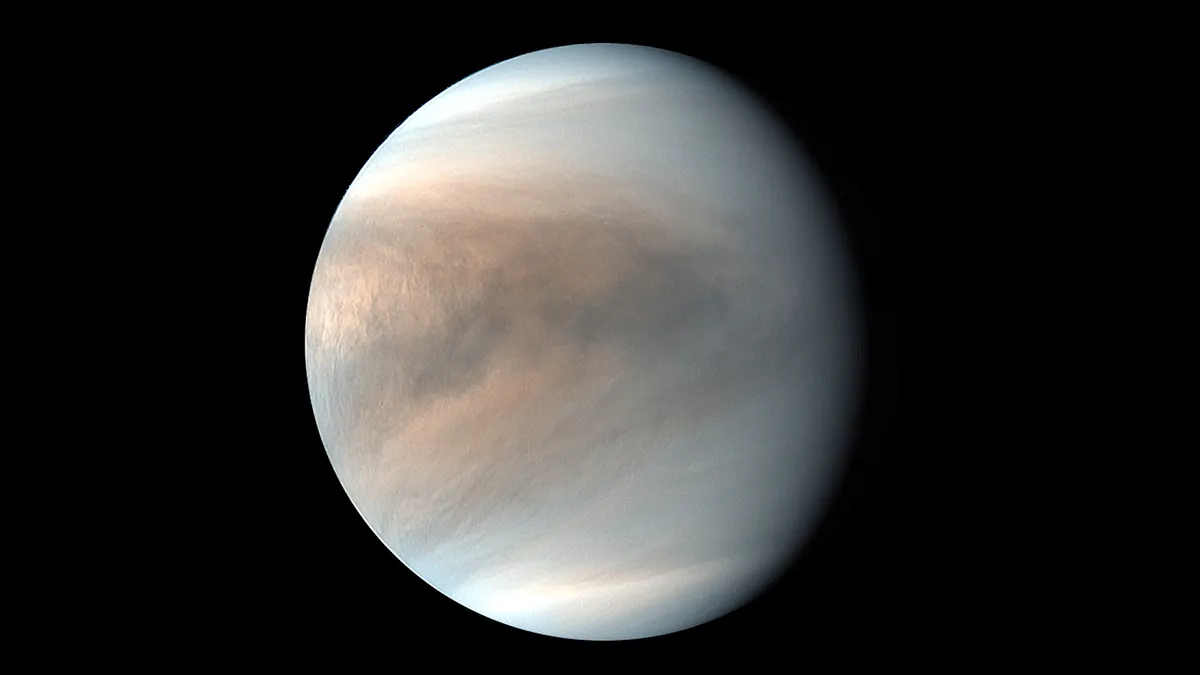
Venus’s atmosphere has held a mystery for decades. Every few days, a massive wall of acidic clouds encircles the entire planet, although no one has been able to explain why it exists at all. Now the answer has been found, and it came from a completely unexpected source.
A cloud front as wide as a continent
Scientists at the University of Tokyo, led by Professor Takeshi Imamura, have uncovered the nature of one of the most mysterious phenomena in the Solar System. At an altitude of about 50 kilometers above Venus’s surface, a wall of clouds stretches 6,000 kilometers along the equator, racing around the planet at a speed of approximately 328 kilometers per hour.
This object was first detected by the Japanese spacecraft Akatsuki in 2016, but scientists have only now managed to understand the mechanism behind its formation.
What’s happening in the sink
The mechanism behind this process is well known to engineers and hydrologists. Turn on the faucet over the sink and watch the water: it hits the bottom in a thin, fast stream, but at a certain point it suddenly slows down and spreads out into a wider, deeper ring. This sudden transition is what is known as a hydraulic jump. The same effect occurs in rivers, at dams, and in the Earth’s atmosphere above mountain ranges.
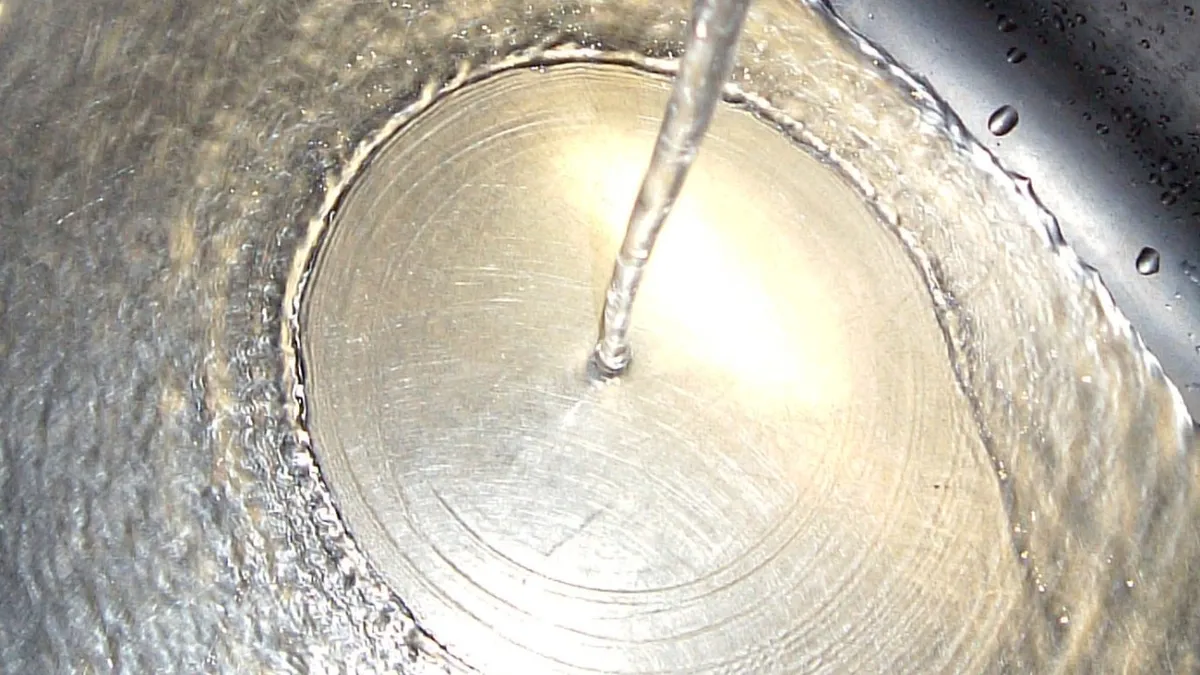
On Venus, the role of a liquid is played by a dense atmosphere composed of carbon dioxide and saturated with sulfuric acid. The trigger is the Kelvin wave—a large-scale atmospheric wave that moves along the equator accompanied by supersonic winds. As this movement slows down, the gas masses behind it compress, sulfuric acid vapor is forced upward and condenses into a dense cloud front, which Akatsuki’s cameras detect in the infrared spectrum.
Super-rotation and its maintenance
Venus rotates on its axis extremely slowly—it takes 243 Earth days to complete one rotation. In contrast, its atmosphere circles the planet in just four days, which is dozens of times faster than the solid surface. This phenomenon is known as “super-rotation” and has long fascinated planetary scientists.
It turns out that the hydraulic jump not only forms a cloud wall but also actively sustains this flow: the angular momentum from the Kelvin wave is transferred to the general atmospheric flow via the jump.
A gap in the simulations
The new discovery has revealed a significant gap in existing climate models of Venus. All of them were based on the structure of Earth-like planets and did not account for the hydraulic jump—a mechanism that links global horizontal flows with local vertical movements.
Data from Akatsuki showed that the cloud front has existed since at least 1983—it’s just that the cameras on previous missions did not have sufficient resolution to detect it in the deep layers of the atmosphere. The study’s findings were published in the Journal of Geophysical Research: Planets.
According to space.com

