

Martian ice is buried under layers of rock and dust, and until now, no one knew exactly how deep it lay. Researchers at the University of Arizona have shown that drones equipped with radar can solve this problem—and have already tested the technology on glaciers on Earth.
Why depth matters
Scientists at the Lunar and Planetary Laboratory at the University of Arizona have found that the difference between one meter and ten meters of rock above the ice is the difference between successful drilling and a waste of resources.
Orbital radars such as SHARAD (SHAllow RADar) aboard NASA’s Mars Reconnaissance Orbiter have confirmed the presence of vast ice reserves in the mid-latitudes of the Red Planet. However, it is impossible to see fine details from orbit—exactly how much material lies above the ice and where it comes closer to the surface.
Tests on Earth’s glaciers
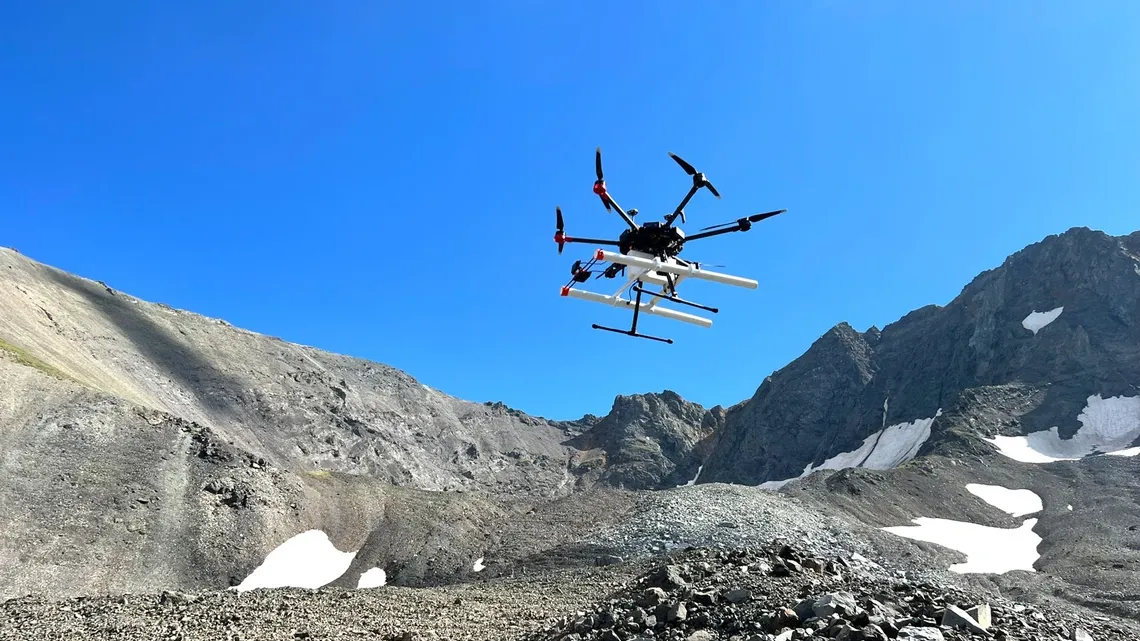
The team flew over glaciers in Alaska and Wyoming—they resemble Martian ice deposits in structure, covered with clastic rocks. A drone equipped with ground-penetrating radar flew at low altitude, mapping the thickness of the ice, detecting layers of debris several meters thick, and revealing the internal structure of the ice sheets.
The results were cross-checked with field measurements taken during excavations and drilling. Computer simulations further confirmed that the radar signals were indeed coming from beneath the layer of fragmented rock, rather than being reflected off the surface.
Layer between the orbit and the surface
According to the researchers’ plan, drones will not replace orbital spacecraft or rovers, but will complement them: orbital equipment identifies large areas of ice, drones refine the map with high resolution, and ground missions carry out drilling at the most promising locations.
This approach will reduce risks and make the missions more accurate. The idea is based on the experience of NASA’s Ingenuity helicopter, which was the first to demonstrate flight in the thin Martian atmosphere.
Scientific and practical value
The underground ice on Mars serves both as an archive of the planet’s climate history and as a potential resource for future crewed missions: drinking water, oxygen production, and food cultivation.
Pinpointing the exact locations of these deposits will also increase the chances of discovering traces of ancient life. The study’s findings were published on March 24 in the Journal of Geophysical Research: Planets.
According to space.com

