

Earth has a permanent “residence permit” in the Solar System. But there are solitary planets traveling in our galaxy, expelled from their places of origin. They are difficult to detect because they are dark and distant. But an international team of astronomers has achieved the nearly impossible: for the first time, they have accurately measured the mass and distance of one such orphan planet. The study was published in the journal Science.
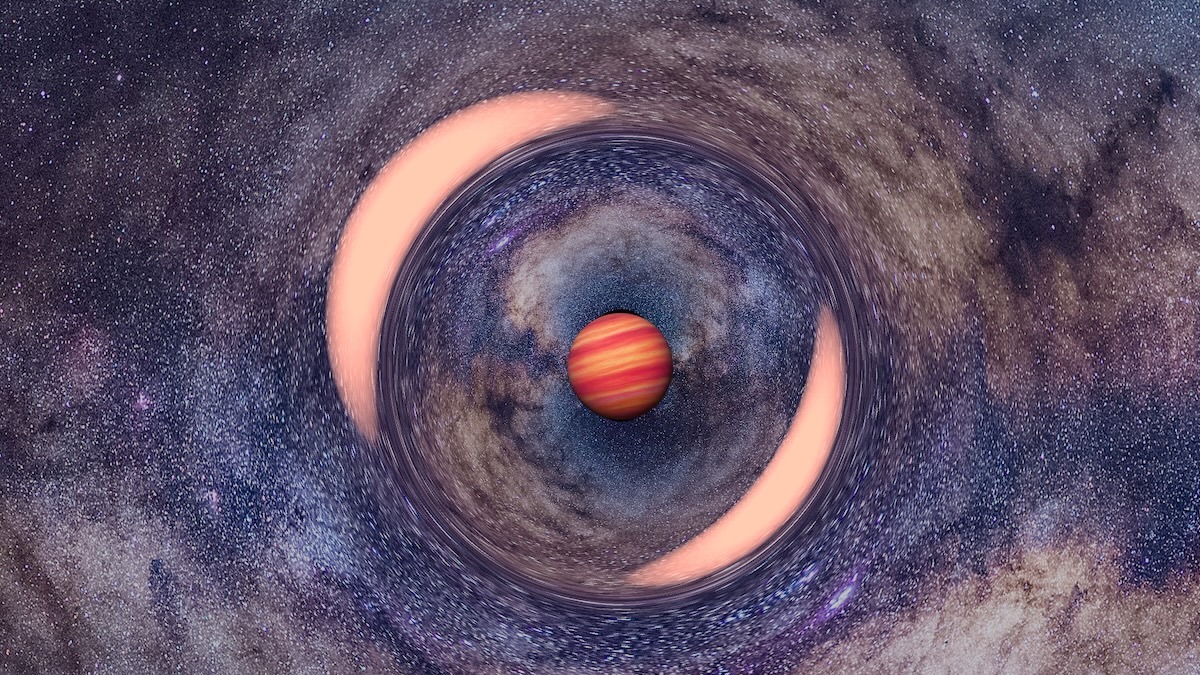
Wandering planets do not emit light, so they are detected using the gravitational microlensing effect. When such a planet passes in front of a distant bright star, its gravity acts like a lens, distorting and amplifying the star’s light for a short time. However, to calculate the mass of a planet, it is necessary to know its exact distance, which is usually the most difficult task.
Happy coincidence and a brilliant idea
On May 3, 2024, several ground-based telescopes and the Gaia space telescope simultaneously recorded the phenomenon of microlensing from a single planet. The key factor was that Gaia was located 1.5 million km from Earth. This provided two different angles of observation of the event, similar to how our eyes see the world in 3D.
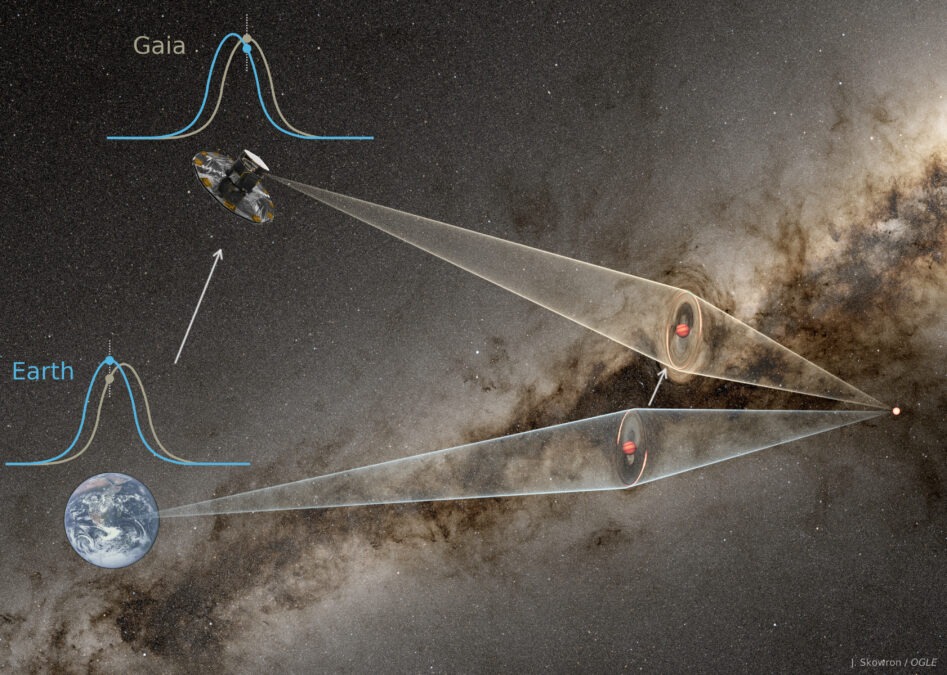
After analyzing this stereoscopic data, scientists were able to locate the object in space. The result: a planet with a mass one-fifth that of Jupiter (22%) located 9,785 light-years away from us in the direction of the center of the Milky Way. Its size confirms the hypothesis that it most likely formed in a planetary system and was then ejected by gravitational forces.
This discovery demonstrates the power of coordinated observations. Astrophysicists such as Gavin Coleman believe that the technique will become even more effective after the launch of the Nancy Grace Roman telescope in 2027. Its capabilities will allow it to scan the sky 1,000 times faster than Hubble, significantly increasing the chances of finding new orphan planets and unraveling the mysteries of their origins.
Earlier, we explained where orphaned binary planets come from.
According to sciencealert.com

