

Pisces is a zodiac constellation that astrologers usually mention last out of the 12. And this is completely unfair to it. After all, astronomers know that it should actually be first. Read on to find out why this is so and what other interesting things can be seen in it.
The constellation Pisces in the sky
On March 12, the Sun will enter the constellation Pisces. However, astrologers claim that it has been there since February and will leave it on March 20. Well, at least we will have a little over a week when the opinions of pseudoscientists coincide with what can actually be seen in the sky. With other signs of the zodiac, the situation may be much worse.
This article explains the reasons for this. In short, the main reason is the precession of the Earth’s axis, which causes the vernal equinox to shift constantly, and with it the actual time when our sun enters each constellation. The definition of their exact boundaries, which took place at the beginning of the 20th century, also plays a role.
Incidentally, the vernal equinox is currently located in Pisces. Since the list of zodiac constellations usually begins with Pisces, theoretically, Pisces should be mentioned first. However, astrologers use data that is 2,000 years out of date, which is why this constellation is mentioned last.
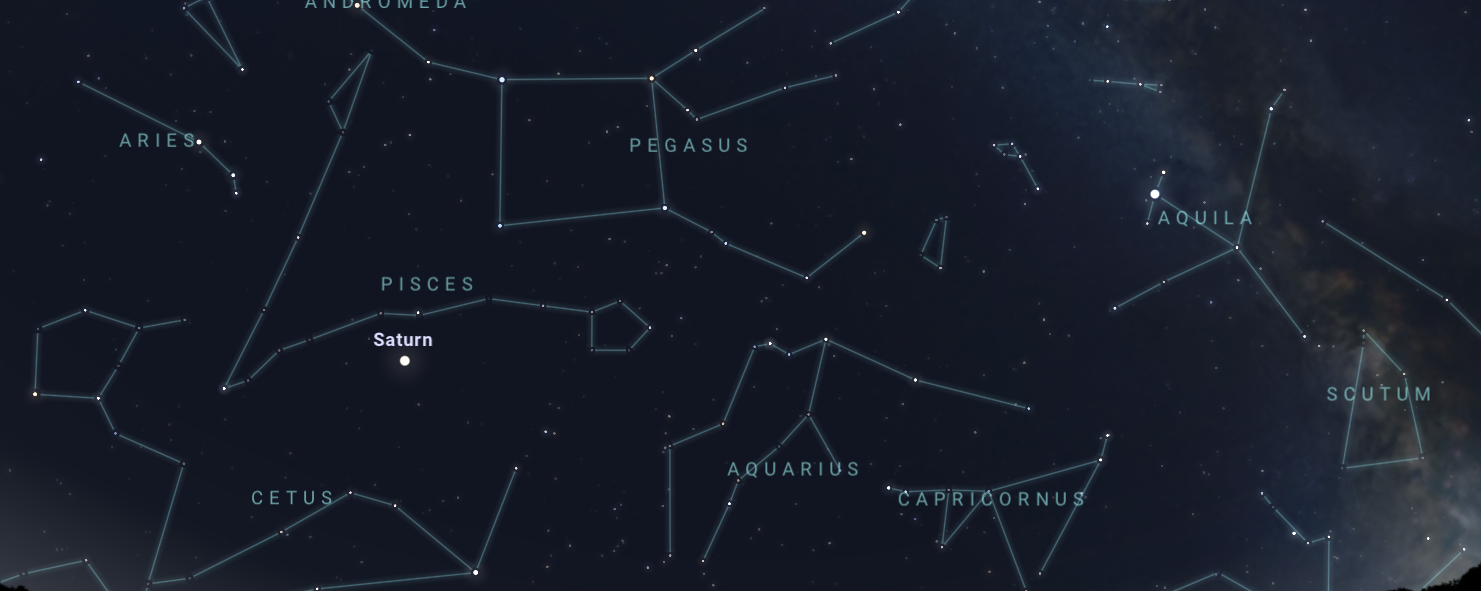
In any case, it is inconvenient to observe the constellation Pisces now: the Sun is in it, so it appears in the sky during the day, not at night. It is much better to wait six months until the end of summer or the beginning of spring. Then Pisces rises in the evening and climbs high enough above the horizon.
The Pisces constellation does not contain very bright stars, so it is not so easy to find it in the sky. Andromeda can serve as a landmark here. It’s three stars form a very noticeable arc in the sky. On one side of them is a nebula, which is actually the closest spiral galaxy to us. On the other side, a long chain of not very faint stars stretches downward.
Near the star Alrescha (Alpha Piscium), another “chain of stars” joins it from the west. Together, they form the most prominent part of the Pisces constellation. However, February is not the best time to observe it. This month, it appears in the evening immediately after sunset above the western horizon, but quickly disappears behind it.
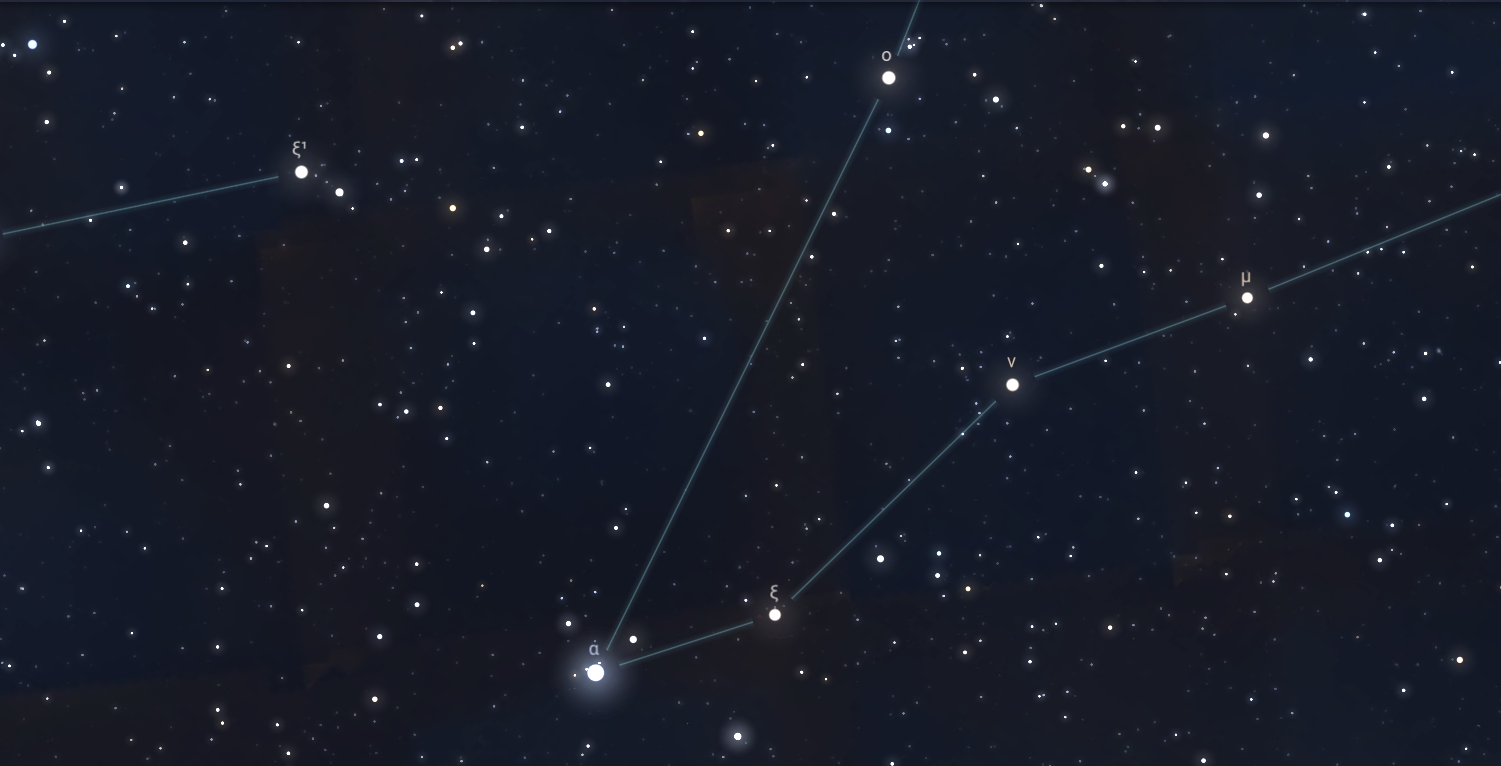
The constellation Pisces at different times
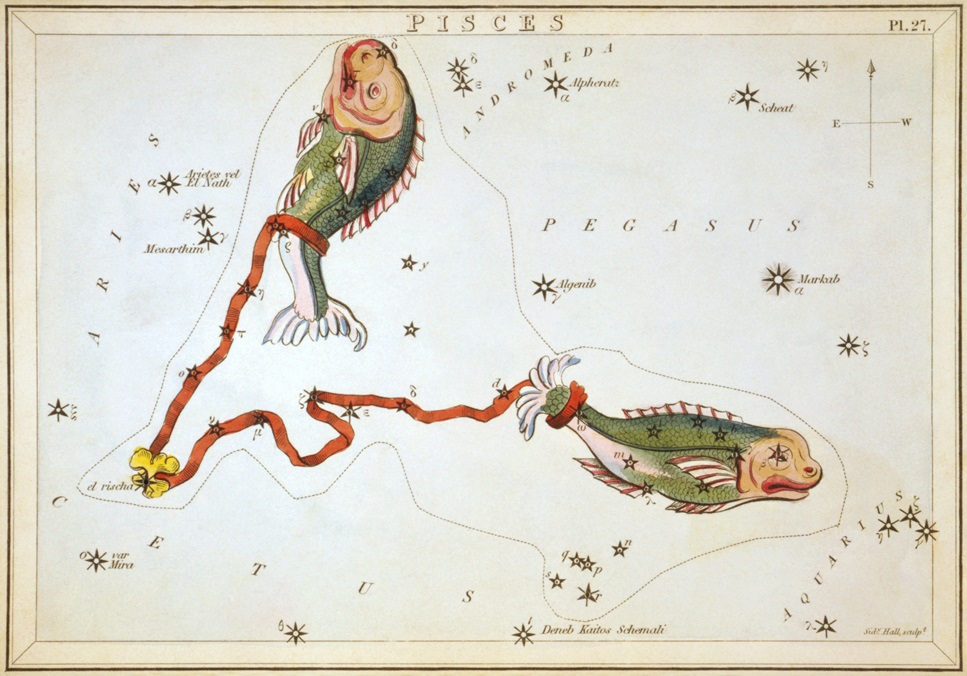
Pisces is a zodiac constellation known since ancient times. However, unlike Capricorn and Aquarius, the ancient Greeks did not inherit it from the Babylonians. The latter saw two separate figures in this place: a large swallow in the place of the “western Pisces” and the goddess Annunitum, patroness of the city of Akkad.
As for the Greeks, they have the following myth associated with this constellation. Once upon a time, the monster Typhon attacked Mount Olympus, and the gods began to flee from him. The goddess of love, Aphrodite, and her son Eros ended up in Syria, but Typhon caught up with them there. So they jumped into the Tigris River and turned into a pair of fish.
Another interesting story involving the constellation Pisces occurred later on. In 1754, British botanist and writer Joe Hill proposed separating a faint asterism in its southern part into the constellation Lyra. However, this proposal was rejected by other astronomers.
The brightest stars of Pisces
In our sky, the constellation is represented mainly by stars that are not particularly impressive, but are still quite noticeable. The brightest of them is Eta Piscium, or Alpherg. Its apparent magnitude is 3.62.
In fact, it is a double system, located 350 light-years away from us. The main star is a yellow giant with a mass of 3.78 solar masses and a radius 28 times greater than that of the Sun. Alpherg is 408 times brighter than our star.
A satellite orbits around the main star. Not much is known about it, except that it completes one revolution approximately every 850 Earth years. It is believed to be a subgiant star whose spectral class differs slightly from that of the main component.
The second brightest star in the system is Gamma Piscium, or Simmah. Its apparent magnitude is 3.7. It is a yellow giant, located 135 light-years away from us. This star is very old, over 12 billion years old. That is why, with a mass of 97% of the Sun’s, it has already swelled to 11 times its radius.
In 2021, a giant planet was discovered in the Gamma Piscium. It is 34% heavier than Jupiter and completes one revolution every 555 Earth days, orbiting with significant eccentricity.
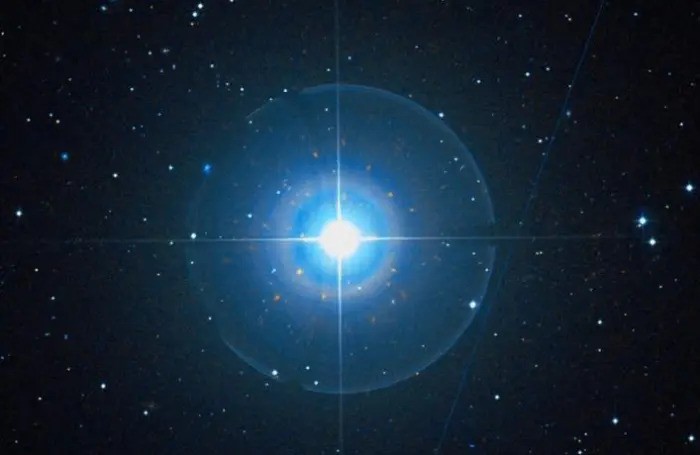
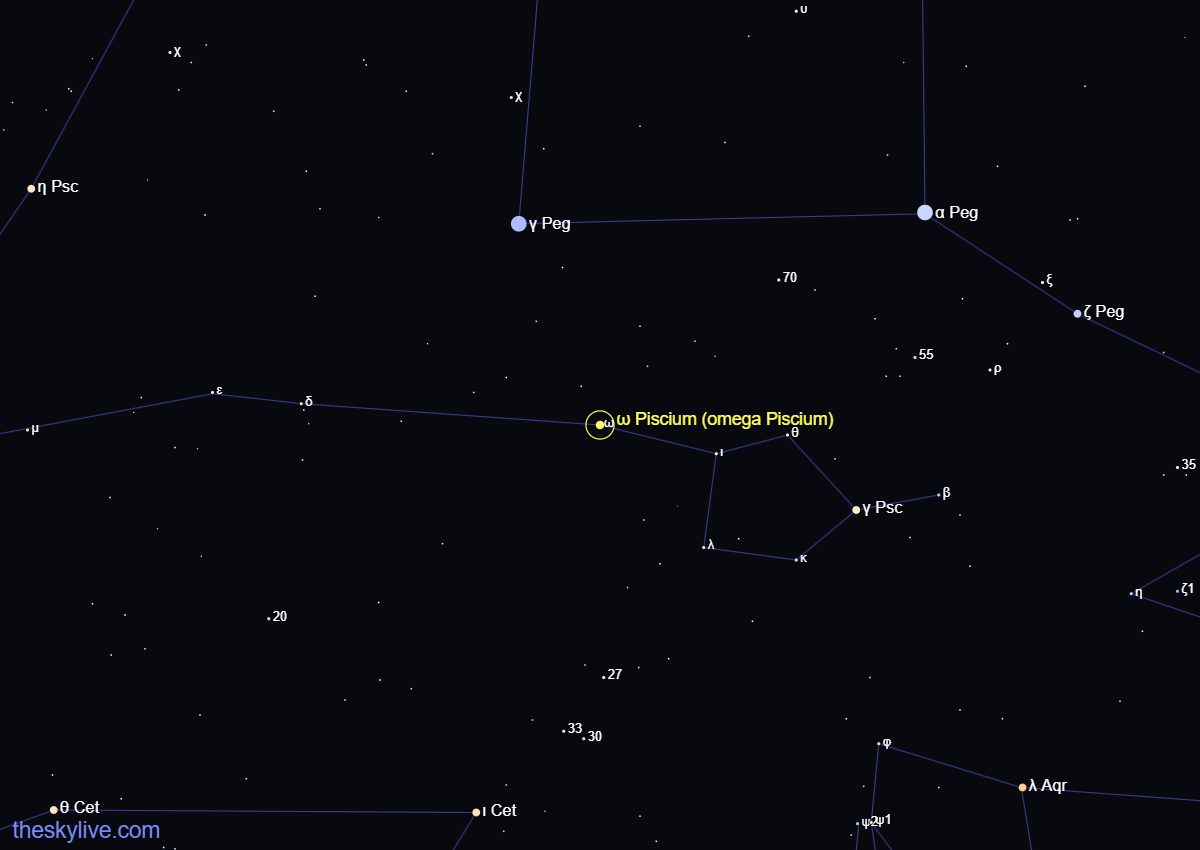
The third brightest star is Omega Piscium, or Dzaneb al Samkat. It has a spectral class of F (yellowish-white) and is 106 light-years away from us. It is suspected that it is actually a close pair of two separate stars, but there is no evidence for this. If we consider it a single star, its mass must be 22% greater than that of the Sun.
Which stars of Pisces are closest to us?
The closest star to us in the constellation Pisces is Van Maanen’s Star, a white dwarf. Among single white dwarfs, it is considered the closest to Earth. Only Sirius B and Procyon B are closer, but they are part of binary star systems.
White dwarfs were once stars similar to the Sun. However, they exhausted their hydrogen fuel, turned into red giants, then shed their outer shells, and their cores contracted and heated up significantly.
Currently, Van Maanen’s star has a radius of about 1.1% of the Sun’s, but 67% of its mass. In other words, a volume slightly larger than Earth’s contains a mass dozens of times greater than Jupiter’s. All this makes this star extremely dense.
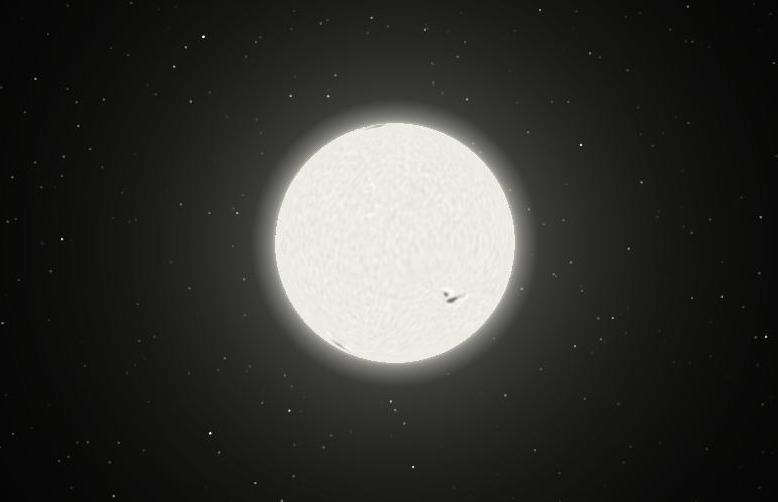
For a long time, astronomers saw no signs of any planet orbiting Van Maanen’s Star. It was only in 2022 that a gas giant was discovered. Its mass is between 0.4 and 1.1 times that of Jupiter, and its distance from the star is 6.5 AU.
The second most distant star in the constellation is HD 4628. With the naked eye, this orange dwarf is barely visible in a very dark sky. It is located 24.3 light-years away. Its mass is 78%, and its radius is 76% of the Sun’s. No planets have been discovered around it yet.
The third most distant star in the constellation is 107 Piscium. Its distance is almost the same as that of HD 4628 – 24.8 light-years. It is also an orange dwarf. Its mass is 86%, and its radius is 82% of the Sun’s.
Other interesting objects
Among other objects that can be observed in the constellation Pisces, TX Piscium is particularly noteworthy. It is a tiny object of the fifth magnitude in the sky, but it is worth taking a closer look at.
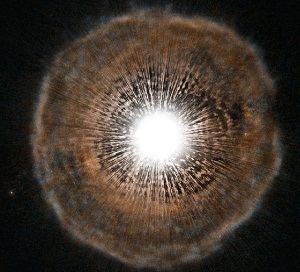
The fact is that TX Piscium is one of the reddest stars visible to the naked eye. If a blue light filter is applied, its brightness decreases by a factor of 2.6. The reason for this is that it is one of the closest carbon stars to us.
The distance to this star is 800 light-years, its mass is 1-3 solar masses, and its radius is almost 300 times greater than that of our sun. However, this is not what makes TX Piscium interesting. It has already completely exhausted its hydrogen fuel, and now helium is “burning” in thermonuclear reactions. Moreover, this occurs in the outer shell, which is enriched with carbon. The core of the star has long been carbon and helium. In the future, TX Piscium will turn into a small carbon white dwarf.
Another interesting object in Pisces is the galaxy Messier 74 (M74). It is located 30 million light-years away from us. This spiral system is turned toward us, so astronomers can study it quite well. Intense star formation is taking place in it, and in 2003, a bright supernova explosion was observed.
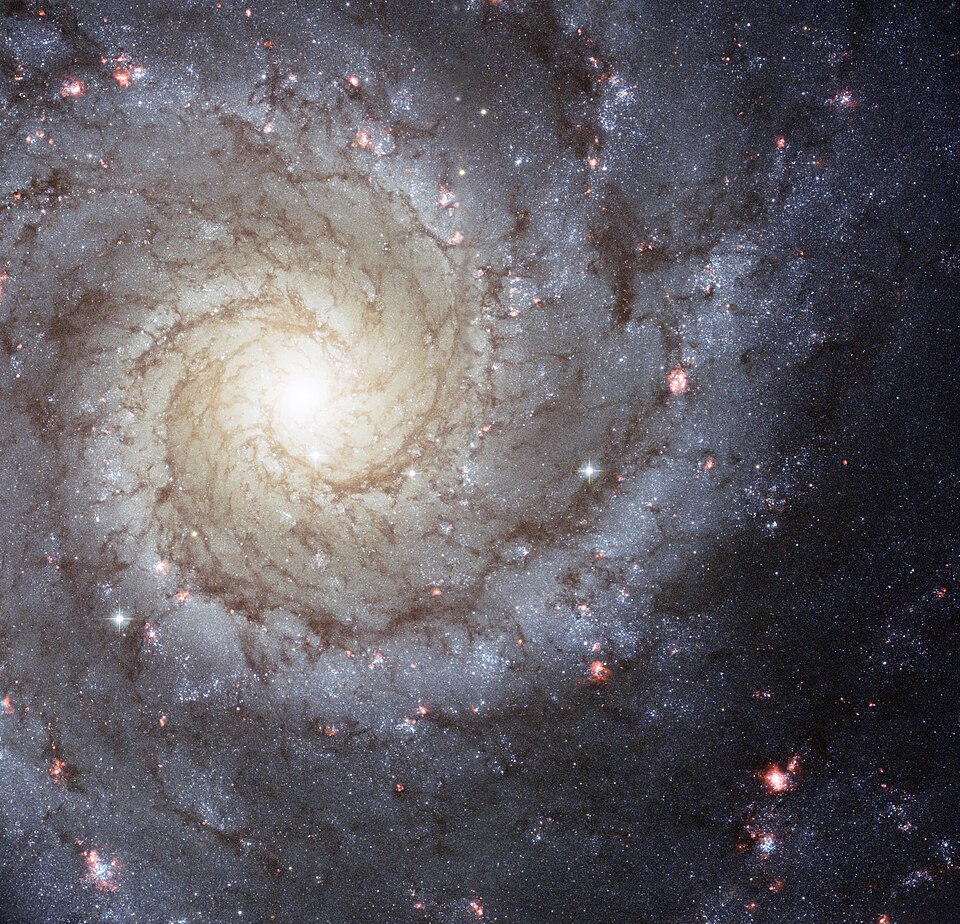
The diameter of the M74 galaxy is 85,000 light-years. It contains approximately 100 million stars and is the largest and brightest member of its group, which includes at least four other star systems, but there may actually be many more.
Pisces is also home to the giant galaxy cluster CL0024+17. It is located about 3.6 billion light-years away from us and has a mass of approximately 8.1 × 10¹⁴ solar masses. Such a colossal mass causes a gravitational lensing effect: the gravitational field of the cluster distorts space-time and acts as a cosmic lens. Thanks to this, astronomers can observe distorted and amplified images of even more distant galaxies located behind it.

