

On the third anniversary of the launch of the James Webb Space Telescope, scientists discuss its capabilities for studying rocky planets. They hope that by observing the atmospheres of these planets, it will soon find ones that are truly Earth-like.
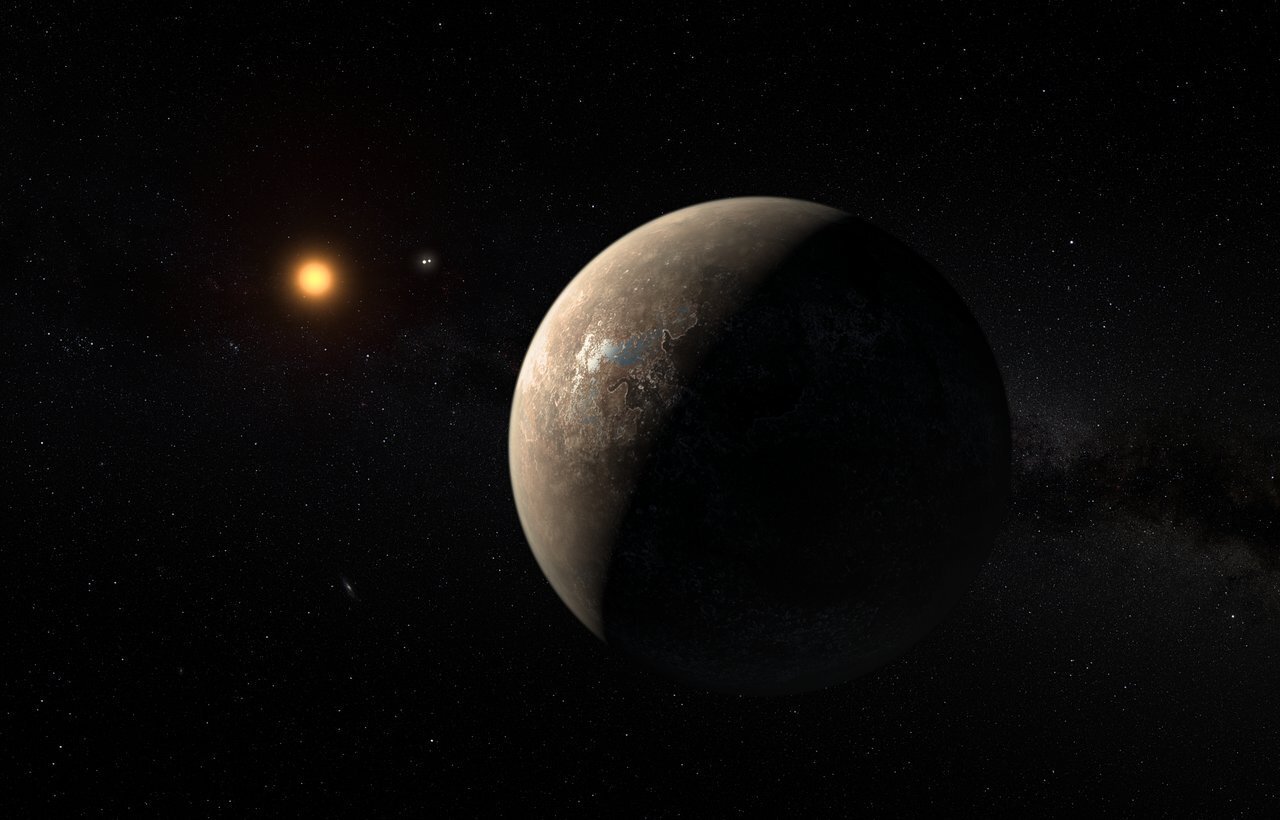
Earth-like planets
Scientists have been discovering new exoplanets for many years. Currently, there are several thousand confirmed exoplanets. However, there are only 217 planets that scientists can say with certainty are rocky like Earth.
This does not mean that there are no more of them, but it is not so easy to explore them and determine how dense the atmosphere is, whether the planet is similar to Earth or Neptune. Fortunately, for three years now, scientists have had a truly powerful instrument for this task: the James Webb Space Telescope.
Exploring the chemical composition of exoplanets in search of life has been one of the telescope’s main tasks from the very beginning. And now scientists have presented the first results of their work in this field. They focused particularly on those worlds that orbit red dwarfs.
Research results
Scientists claim that James Webb has enabled them to obtain the most accurate spectra of exoplanet atmospheres. However, it is important to understand what they are happy about. The telescope made it possible to obtain this information from planets with temperatures of around 100°C.
The study demonstrated that atmospheres can be formed by many physical processes, including volatile elements delivered by comets and asteroids, atmospheric loss, interaction with the internal atmosphere, and biological processes.
Research into the processes of atmospheric loss by planets, which is associated with the flare activity of red dwarfs, is also extremely important. It is believed that many planets may cease to be Earth-like in this way.
Meanwhile, scientists have developed a concept known as the “shoreline.” According to it, the more massive a planet is and the farther it is from its star, the greater the chances that its atmosphere will survive. However, the obtained dependencies do not take into account that the luminosity of many stars changes over time. This means that more observations are needed. And this should be James Webb’s main task for the coming years.
According to phys.org

