

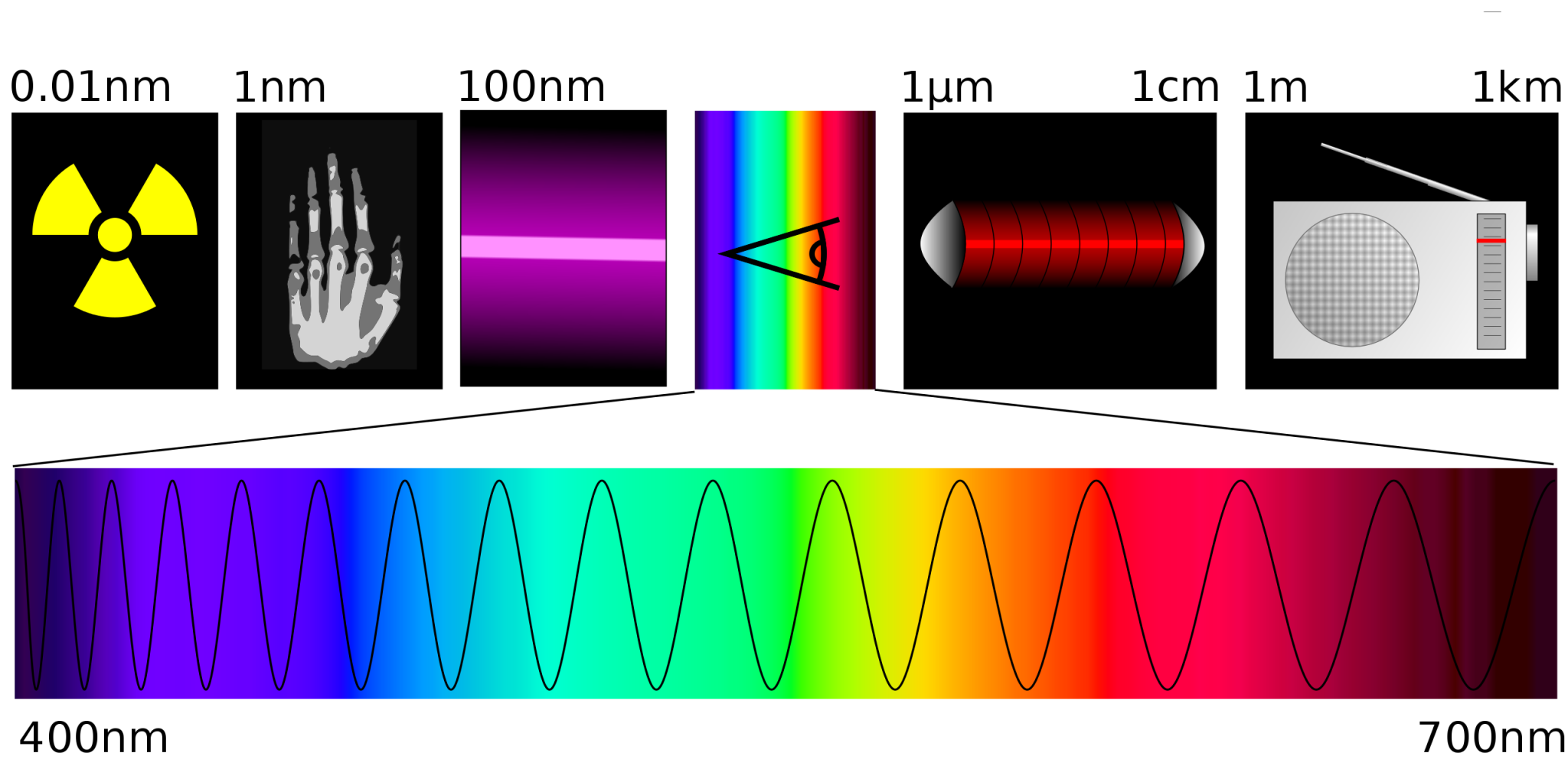
X-rays are part of the electromagnetic spectrum that lies beyond ultraviolet radiation. Their existence was first reported in December 1895 by German physicist Wilhelm Röntgen. However, the history of this discovery is quite complicated, and from the moment of its discovery to the present day, its primacy has been questioned.

Discharge in a glass tube
On December 27, 1895, German physicist Wilhelm Röntgen (whose surname would be more correctly written as “Röntgen” in Ukrainian) published a scientific paper in which he informed the world of his discovery of invisible rays. He discovered them while experimenting with a cathode ray tube, and their main feature was their ability to pass through certain objects and leave marks on photographic film.
On December 27, 1895, German physicist Wilhelm Röntgen (whose surname would be more correctly written as “Röntgen” in Ukrainian instead of “Rentgen”) published a scientific paper in which he informed the world of his discovery of invisible rays. He discovered them while experimenting with a cathode ray tube, and their main feature was their ability to pass through certain objects and leave marks on photographic film.
Because Röntgen’s primacy is questioned by many. In particular, there is an opinion that X-rays were actually discovered by Ukrainian Ivan Puluj almost fifteen years before his German colleague. But in order to understand all this, we need to start with events that took place long before either of them.
Back in the 17th century, physicists learned how to create reduced pressure inside a hermetically sealed glass vessel. And at the beginning of the 18th century, an interesting thing was discovered. Even then, scientists knew how to create short-term electric currents and knew that if a charged conductor was brought close to an uncharged conductor, a spark would jump between them.
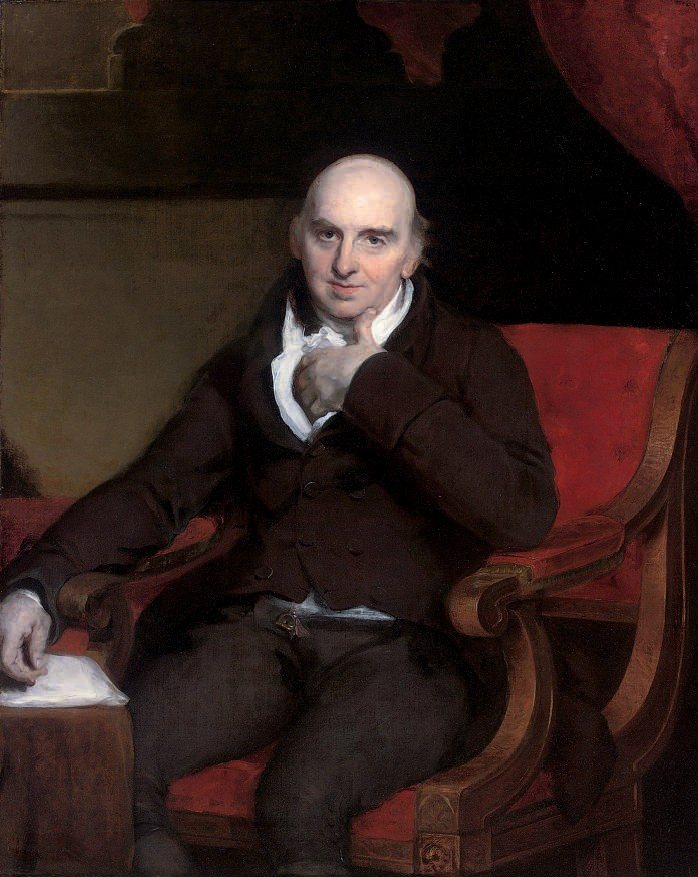
So, it turned out that in a glass with reduced pressure, these sparks travel a greater distance. Experiments with them continued, but without much interest, until in 1785, English amateur experimenter William Morgan began to study various light effects observed when passing current through highly rarefied media, and at some point, the light in it seemed to become invisible.
It is believed that at this very moment, Morgan could have obtained X-rays a hundred years before Röntgen, but at that time, his report attracted little interest, and it is written in such a way that it is impossible to say for sure.
Morgan’s research attracted interest at the turn of the 18th and 19th centuries, when the eminent physicist Humphry Davy began to study sparks in a flask. In 1802, he succeeded in producing an arc discharge in it – a stable spark between two electrodes, which we now know mainly thanks to electric welding. At the same time, the arc discharge in the flask can be considered the very first electrically lit device.

Davy’s experiments were continued by his student, Michael Faraday. In 1838, he obtained a uniform column of light inside a vacuum flask, next to which was a space where the rarefied gas did not glow. It became clear that, in addition to the electric spark itself, processes could occur in rarefied media that generated light as if from nowhere. This was exactly what William Morgan had written about several decades earlier.
Cathode ray
The next step in understanding what was glowing there was taken in the 1850s. It turned out that the result of passing a spark through a rarefied medium depends on what it is filled with. This phenomenon is called fluorescence. Thanks to this, in 1857, German physicist Heinrich Geißler created a tube named after him, in which neon glowed evenly between two electrodes: a negatively charged cathode and a positively charged anode. In essence, it was a prototype of the modern neon lamp.
Two years later, Julius Plücker and Johann Hittorf, while experimenting with various designs based on Geissler tubes, realized that the glow of gas was caused by invisible rays that somehow reacted to a magnetic field. But it was not until 1876 that Eugen Goldstein proved that they emanated from the cathode and named them cathode rays.
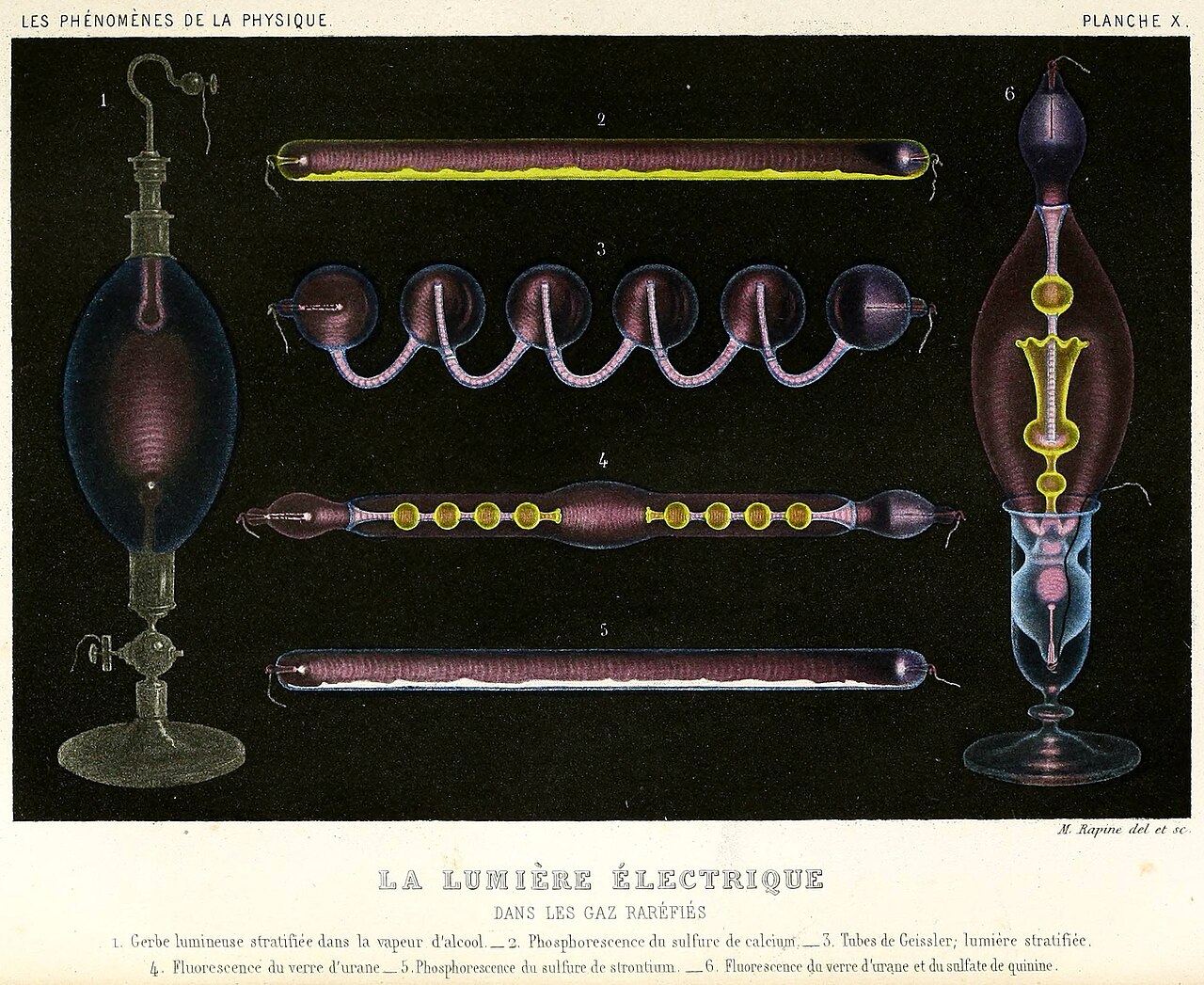
In the 1850s and 1880s, many scientists experimented with cathode lamps, visible light, and invisible rays inside them. Even then, everyone understood that they were potentially dealing with the light source of the future. Dozens of different designs of what is now called a cathode ray tube were created, but scientists still did not understand what these cathode rays were.
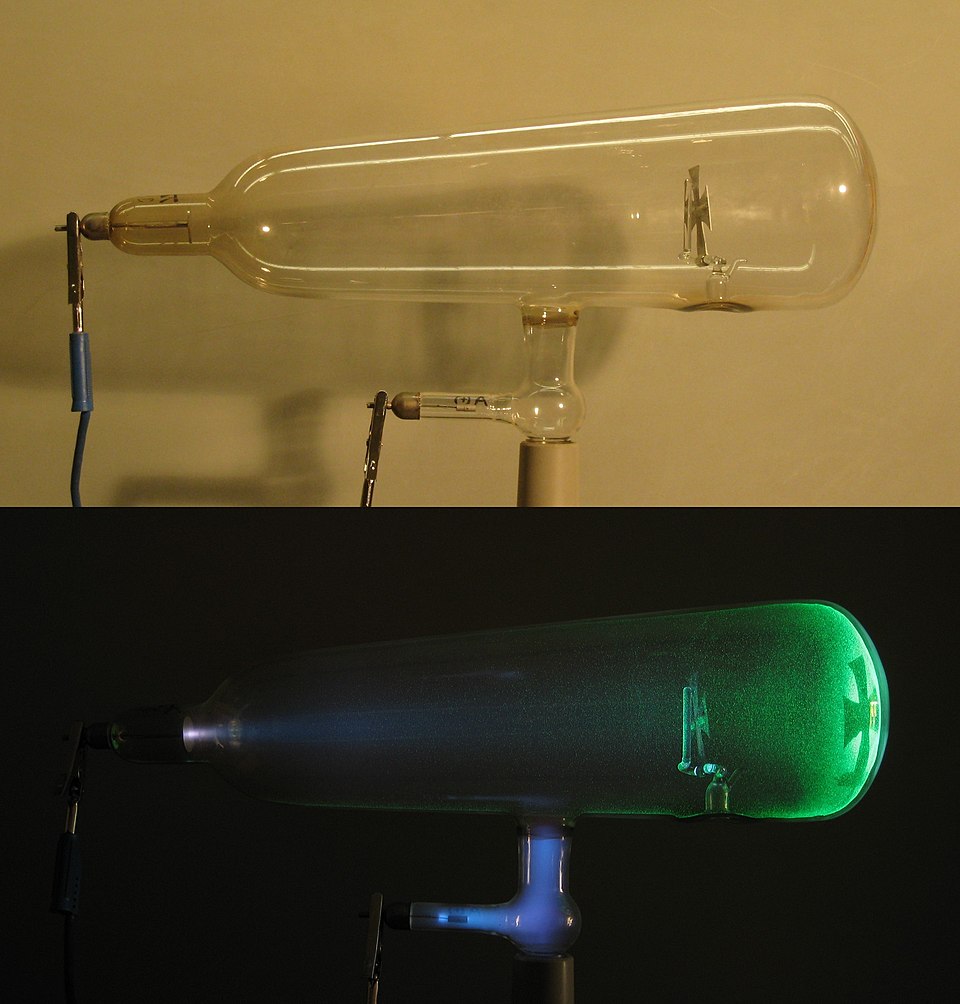
In 1875, British scientist William Crookes improved Geißler’s tube, making it more convenient for observing cathode rays. In his device, the cathode was in its usual place, the anode was on the side, and directly opposite the cathode was an extension covered with a fluorescent substance. Thanks to this, not the entire volume of the bulb glowed, but only the part that resembled a screen.
X-rays
Crookes tubes quickly gained popularity and began to be actively used for experiments with cathode rays. The main question regarding them was whether they were something similar to ions or molecules, i.e., sufficiently large particles, or electromagnetic oscillations.
However, in the second half of the 1880s, a new mystery emerged: scientists began to notice that photographic plates would light up next to Crookes tubes. Sometimes this would happen even when they were tightly closed.
Philipp Lenard made particular progress in this area, creating a small foil window in Crookes tube in the hope that cathode rays would pass through it, and he would be able to experiment with them. And something did indeed pass through this window and expose the photographic plate, even though this happened in complete darkness.
However, nothing appeared on the paper covered with the fluorescent substance. Lenard was unlucky in choosing the fluorescent substance that reacted to cathode rays but not to X-rays.
But because Lenard bought it all, Röntgen had to look for another one. Late one evening in November 1895, left alone, he began his experiment: he turned on the current, completely covered the Crookes tube with thick cardboard, and prepared a screen coated with barium platinocyanide.
And it was there that he saw a miracle: a spot of light appeared where invisible rays should have been coming out of a completely closed lamp. Further experiments showed that this radiation is not deflected by a magnetic field, illuminates photographic plates, and passes through objects of different densities in different ways. In particular, they could pass through the soft tissues of the human body and be blocked by bones. This made it possible to examine the condition of human bones for medical purposes.
Ivan Puluj
On December 27, 1895, Röntgen published a paper stating that while everyone was studying cathode rays, others were hiding inside them. It was a sensational discovery, but immediately, a bunch of people appeared who questioned his primacy. In particular, Lenard claimed for many years that the glory should actually belong to him.
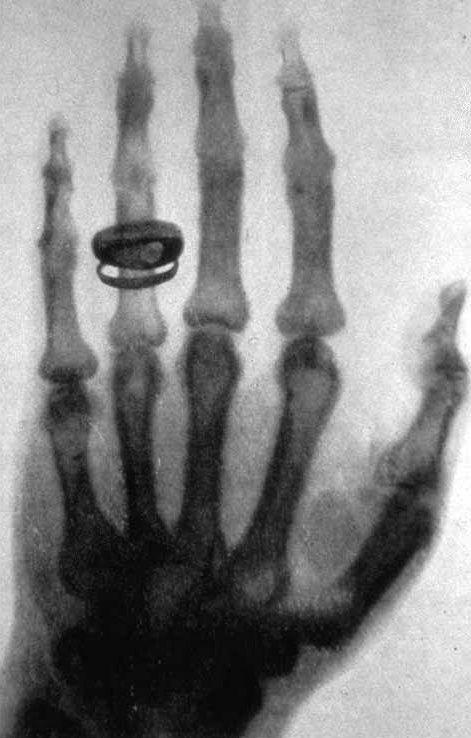
Nowadays, many people say that X-rays were actually discovered by Ukrainian Ivan Puluj, who was working at the Prague Polytechnic University at the time. In reality, things were a little different. Puluj did indeed conduct many experiments with cathode lamps in the 1880s. And when Röntgen made his announcement, he was one of the first to confirm his observations in the laboratory.
In two of his works published in 1896, he refers to the new type of radiation as “the rays reported by Mr. Röntgen,” that is, he does not claim primacy, but affirms the priority of the German researcher, with whom he was personally acquainted.
However, Puluj not only confirmed what Röntgen had seen, but also asked an important question: where do these new rays come from? From the cathode, like those that caused luminescence, or from somewhere else? The Crookes tube, in which only one side acted as a screen and with which scientists mainly worked, was not very suitable for this.
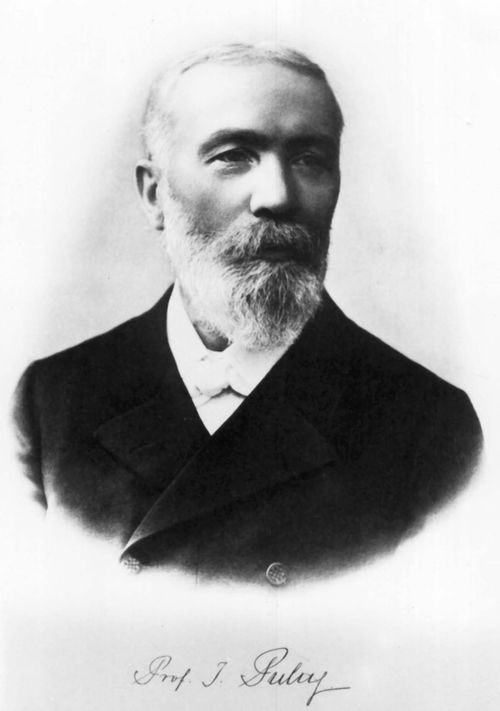
However, Puluj had a lamp that he had developed in the early 1880s. At that time, he created it as a household lighting device. It won awards at exhibitions and was even manufactured industrially for some time, but something went wrong, and it did not become a commercially successful product.
However, Puluj’s lamp had some design features that allowed it to be used as a laboratory device for studying X-rays. It had a spherical shape, and the entire sphere was covered with a fluorescent compound. In the center was a mica-covered anode, which was struck by cathode rays.
So Puluj covered the lit lamp with a cardboard cylinder and began to walk around it with a fluorescent screen, observing where and how the light spot appeared. He soon realized that the new radiation was generated at the anode and spread only in a certain direction from it. Today, we know that this happens due to the sharp deceleration of electrons, which generate high-energy photons.
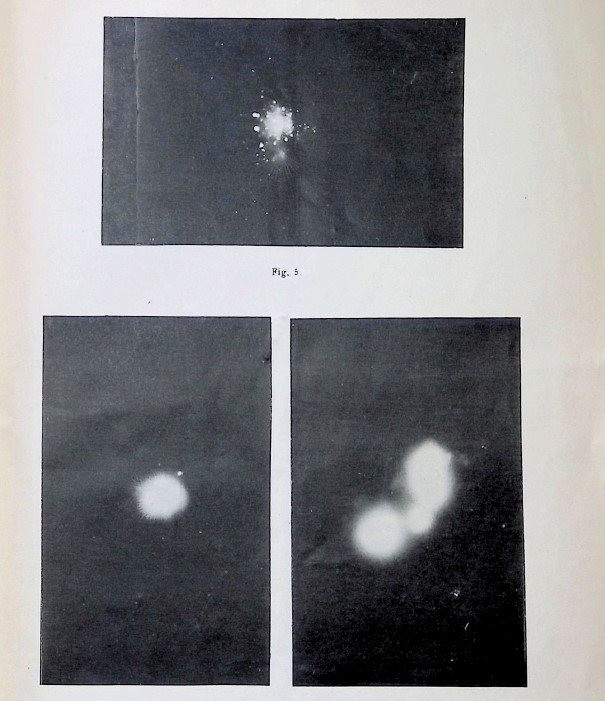
Source: Über die Entstehung der Röntgen’schen Strahlen und ihre fotografische Wirkung
In addition to purely physical experiments, Puluj also conducted experiments using X-rays to detect the condition of bones. He was one of the first to prove their usefulness in medicine.
How it all ended
Both Röntgen and Puluj understood that the new rays could only be what are now called electromagnetic oscillations. However, at that time, this concept did not exist in its modern form, and it was not clear what was oscillating and how. Scientists thought that X-rays were transverse oscillations, while cathode rays were longitudinal.
Incidentally, the latter remained a mystery at that time. Only a year after Puluj’s work, English physicist Joseph Thomson proved that cathode rays were a stream of particles smaller than atoms. They were later named “electrons” and gave rise to research into the internal structure of atoms.

Ten years after the discovery of X-rays, Albert Einstein explained the photoelectric effect by linking photons and electrons together. In doing so, he laid the foundations for quantum mechanics, which later led to the development of the theory of bremsstrahlung.
As for X-rays, they have found application not only in terrestrial medicine. As with all electromagnetic radiation, they can be collected from a large area and thus used for astronomical observations.
So, X-ray astronomy has been developing successfully for several decades. Thanks to it, scientists have been able to see many objects and phenomena that remained invisible in visible light.

